Gabriel Bortoleto Reflects on Fernando Alonso’s Masterful DRS Tactic at the Austrian Grand Prix
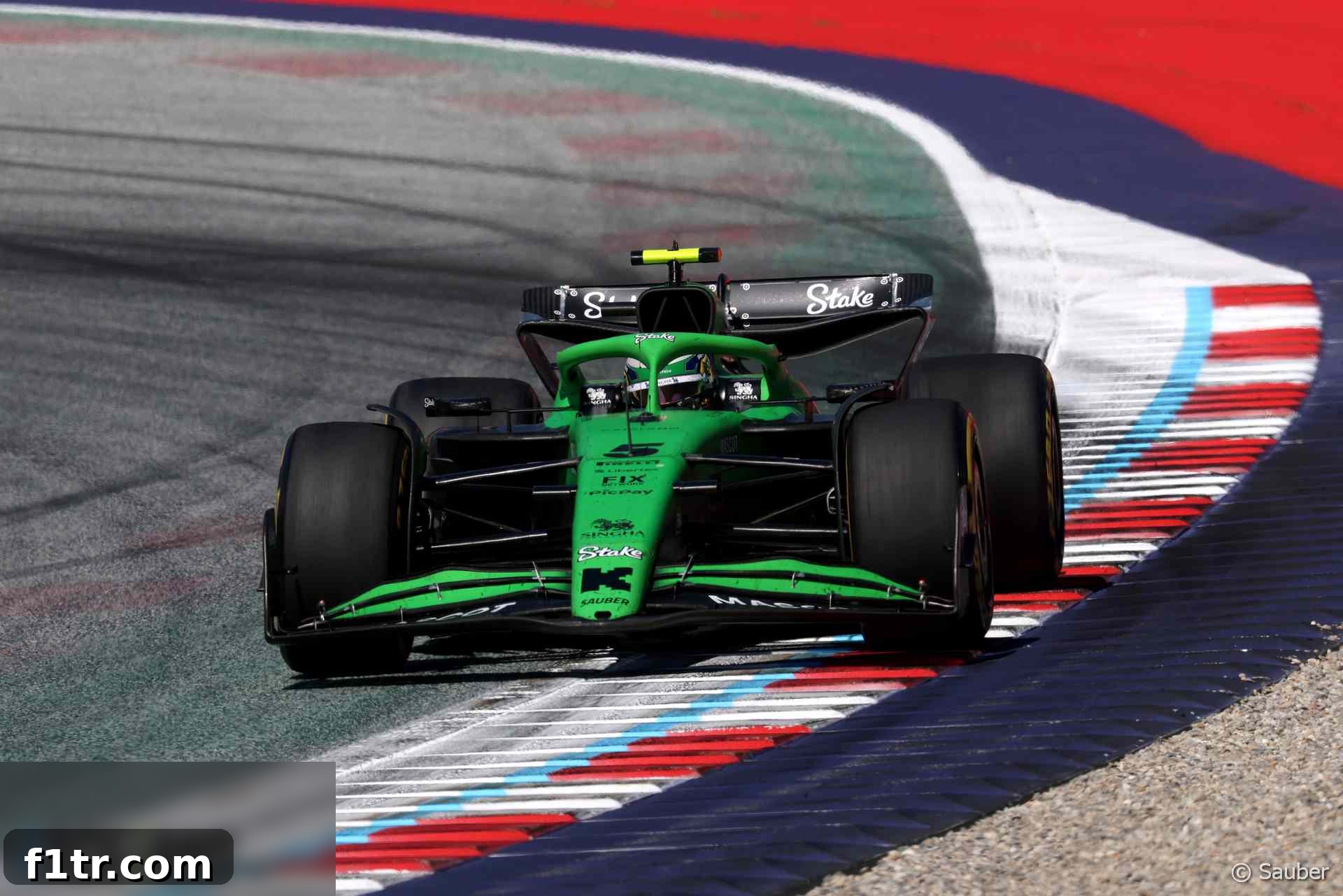
In a thrilling display of seasoned strategy versus burgeoning talent, Gabriel Bortoleto found himself outmaneuvered by his mentor, two-time World Champion Fernando Alonso, during an intense battle for seventh place at the recent Austrian Grand Prix. The Sauber rookie, who secured his first-ever Formula 1 points during the race, openly admitted to falling victim to Alonso’s cunning DRS tactics, highlighting a crucial learning moment in his nascent F1 career.
The incident unfolded as the race neared its climax at the Red Bull Ring. Bortoleto, displaying audacious intent, launched an attack on Alonso into Turn 3. It was a bold move, indicative of a young driver hungry for position. However, what followed was a testament to Alonso’s legendary race craft and his unparalleled ability to exploit every nuance of the regulations to his advantage.
The Tactical Chess Match: Alonso’s DRS Deception
The DRS (Drag Reduction System) is a powerful tool in modern Formula 1, designed to aid overtaking. It allows a driver to open a flap on their rear wing, reducing drag and increasing top speed, provided they are within one second of the car ahead at a designated detection point. The activation zone, where DRS can be used, typically follows shortly after the detection point.
Bortoleto’s move into Turn 3 was well-executed, pushing his Sauber alongside Alonso’s Aston Martin. However, Alonso, known for his shrewdness and an almost psychic understanding of race dynamics, had a counter-play ready. As Bortoleto committed to the overtake, Alonso strategically slowed down more than the young Brazilian anticipated. This subtle yet critical deceleration meant that Alonso reached the DRS detection line at the exit of Turn 3 *after* Bortoleto had already passed it. By doing so, Alonso ensured he was the car *behind* at the crucial detection point, thereby gaining the right to activate DRS in the subsequent straight.
“I think I made a mistake on my side that I went for a move in T3 and then he got the DRS at the line,” Bortoleto candidly explained to media, including RaceFans, at Silverstone. “So if I maybe waited a bit more just before hitting the line and getting the DRS on exit, probably I would have got him there. That was a key moment.” Bortoleto elaborated on the split-second decision-making, acknowledging that his early commitment cost him dearly. “When I went for the move, he really slowed down at that moment. I tried to slow down as well, but I was already committed to the move and I couldn’t stop before the line. So I passed the DRS line before him. I think that was a moment that he played very smart and he managed to overtake me back and keep me behind for another lap.”
This exquisite piece of tactical driving from Alonso demonstrated why he remains one of the most revered figures in the sport, capable of turning seemingly disadvantageous situations into opportunities through sheer intellect and experience. It was a harsh but invaluable lesson for Bortoleto on the unforgiving nature of top-tier motorsport.
The Blue Flag Dilemma and Missed Opportunities
The disappointment of being outmaneuvered was compounded by external factors that further dashed Bortoleto’s hopes of reclaiming the position. As he regrouped for another potential attempt to pass Alonso, the blue flags began to wave. Race leader Lando Norris was rapidly approaching, necessitating Bortoleto to yield to the faster car. This administrative requirement effectively ended any chance the Sauber driver had of challenging Alonso again on the final lap.
“I had Lando with the blue flags and obviously I needed to let him pass so I could not even try to overtake Fernando again,” Bortoleto lamented. “That was quite complicated.” Such is the intricate dance of Formula 1, where a driver’s immediate battle can be abruptly interrupted by the demands of the wider race, especially when fighting for midfield positions while leaders lap backmarkers.
A Unique Rivalry: Mentor vs. Protégé
Adding another layer of intrigue to this captivating duel was the personal dynamic between the two drivers. Fernando Alonso is not just a competitor to Gabriel Bortoleto; he is also his manager. This unique relationship brought an unusual flavor to their on-track skirmish, which Bortoleto acknowledged felt “a bit weird.”
“Obviously he’s my manager and it’s Fernando at the same time: a guy that I’ve been watching racing since I started racing, and he was there already for many years,” Bortoleto reflected. The reverence for his childhood hero and professional guide was palpable. However, once the helmet visor comes down, the professional racer’s instinct takes over. “But when you have the visor down, when you are fighting, you don’t think so much about who it is. Obviously it’s a bit different, still, I am not going to lie. But I gave it everything.”
This moment, while perhaps personally conflicting, served as an ultimate test of Bortoleto’s professionalism and resolve. To battle head-on with a figure of Alonso’s stature, regardless of their off-track relationship, is a defining experience for any young driver. It highlights the cutthroat nature of F1 where even a mentor will not yield an inch on track. Alonso’s fierce defense, even against his own protégé, demonstrates his unwavering commitment to competition and, perhaps, an indirect way of teaching Bortoleto invaluable lessons about the demands of the sport.
First Points and Future Potential: A Learning Curve
Despite the bittersweet nature of the battle with Alonso, the Austrian Grand Prix marked a significant milestone for Gabriel Bortoleto: his first career points in Formula 1, finishing in eighth place. While a commendable achievement for a rookie, Bortoleto couldn’t help but ponder what might have been, believing a higher finish, possibly P6, was within reach.
“More is always possible,” said Bortoleto, reflecting on his performance. “There is no perfect scenario or situation. I think we still did a good job on maximising things, but obviously I think P6 was quite realistic there because obviously I was in a two-stop strategy while Fernando and Liam [Lawson], they were on a one-stop.” This strategic difference meant Bortoleto had a tire advantage, which he felt could have been exploited to pass both Alonso and Liam Lawson had the initial move on Alonso succeeded.
“I think if I managed to overtake Fernando in the first try – when I didn’t, he did a good job in defending – probably I would have been able to catch Liam from the tyre advantage I had and maybe overtaken him as well. But it’s always ‘maybe, maybe’ and ‘possibly’. At the end of the day we finished P8 and that was the position I’ve been able to finish.”
Bortoleto’s analysis underscores the razor-thin margins in Formula 1 and the critical impact of every strategic decision and on-track maneuver. Finishing P8 is a solid foundation for his rookie season, providing him with confidence and a clear understanding of the areas where he can improve. The experience against Alonso, in particular, will undoubtedly serve as a potent learning tool, preparing him for future battles with the sport’s elite.
The Enduring Art of F1 Strategy
Fernando Alonso’s defensive masterclass at the Austrian Grand Prix is a stark reminder that Formula 1 is as much a chess match as it is a speed contest. His ability to manipulate the DRS detection zone showcases a level of strategic thinking and experience that few drivers possess. It wasn’t merely about raw pace; it was about understanding the rules, anticipating an opponent’s move, and exploiting every available advantage, however subtle.
For Gabriel Bortoleto, this encounter, while resulting in a loss of position, was a priceless education. Battling a legend like Alonso, and being outsmarted by him, provides a crucible for growth. It forces a driver to analyze their own actions, learn from mistakes, and adapt their approach for future encounters. These are the moments that shape future champions, transforming raw talent into formidable racecraft.
Conclusion: A Promising Start for a Rising Star
The Austrian Grand Prix, therefore, was more than just a race for Gabriel Bortoleto. It was a baptism of fire, a validation of his speed with his first points, and a profound lesson delivered by one of the sport’s greatest tacticians. While he finished P8, the valuable experience gained in fighting Fernando Alonso, even if it meant being outfoxed, will undoubtedly contribute significantly to his development. As Bortoleto continues his journey in Formula 1, these early experiences against the sport’s seasoned veterans will be crucial in refining his skills and helping him ascend the ranks, proving that sometimes, the most important lessons are learned when you are outsmarted by the best.
More from the F1 World
- Piastri explains “f*** me up” radio message after third run-in with an Alpine at Austrian GP
- Tsunoda on longest point-less run for a Red Bull driver in 16 years: Austrian GP stats
- “Confused” Russell couldn’t tell if Leclerc was “trying to help me or Lewis” at start