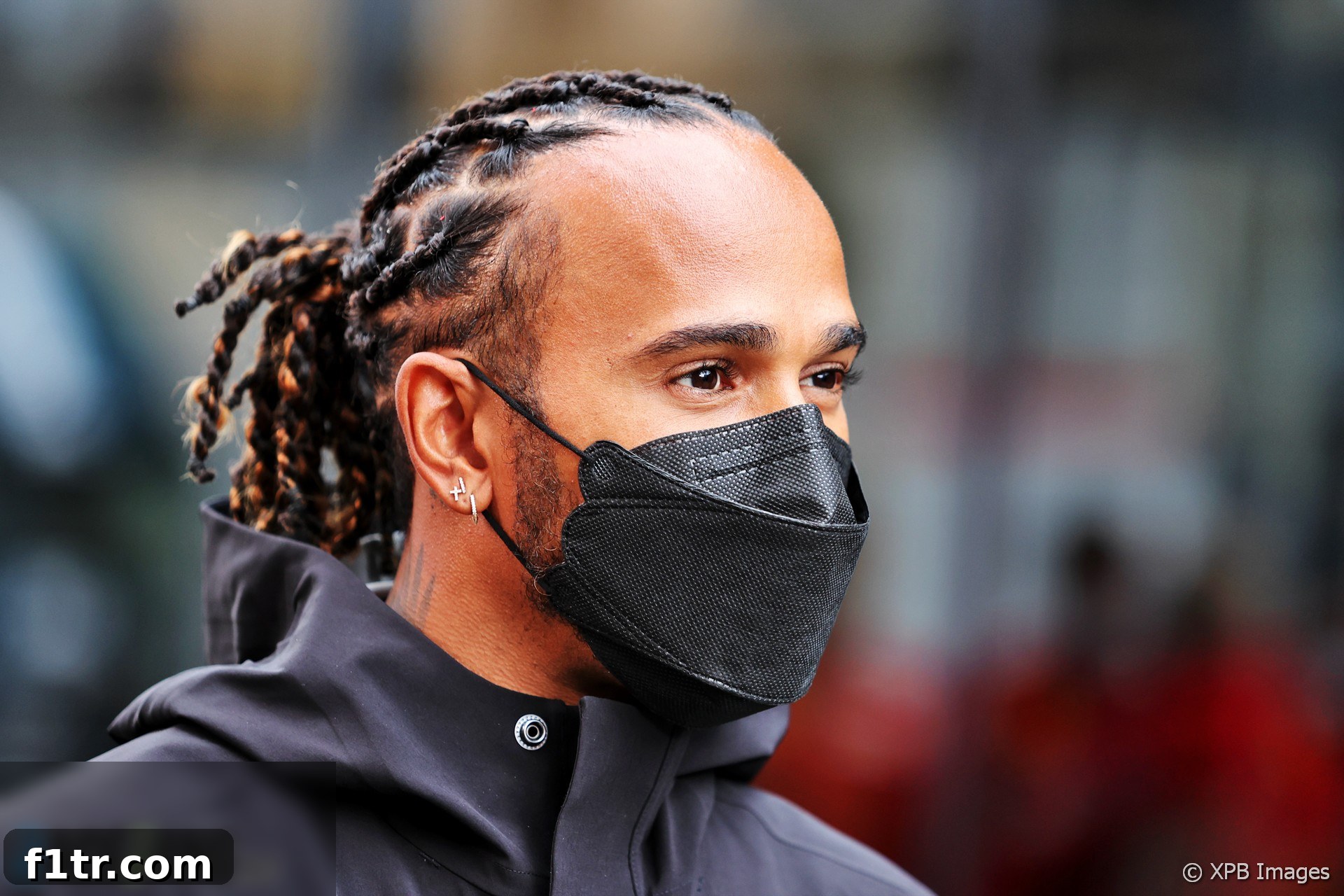
Lewis Hamilton has fully embraced the strategic needs of the Mercedes-AMG Petronas F1 Team in the crucial decision-making process for their 2022 F1 season driver lineup, according to Team Principal Toto Wolff. Wolff revealed that Hamilton has “taken the driver’s hat off,” demonstrating a mature, team-first approach as discussions continue regarding whether Valtteri Bottas will retain his seat or if rising star George Russell will step into the highly coveted Mercedes cockpit next year.
Lewis Hamilton’s Evolving Role and Influence at Mercedes F1
Lewis Hamilton, whose extended contract sees him driving for Mercedes until at least 2023, is set to complete an impressive 11 years with the Brackley-based squad. This tenure underscores a relationship that transcends the typical driver-team dynamic in Formula 1. Toto Wolff emphasized this unique bond, stating, “Lewis is a very important part of the team. He’s really not a driver: drivers are normally contractors, they come and then maybe they go for another opportunity. Lewis has been with us, I think we’re in the ninth year together, [he has] such an incredible importance like all these guys.” This perspective highlights Hamilton’s integral position, viewing him as a foundational pillar rather than merely an employee.
Wolff further elaborated on Hamilton’s pivotal role in the strategic planning, especially concerning the 2022 F1 driver lineup. He explained that Hamilton actively participates in brainstorming sessions, contributing invaluable insights into what would best serve the team’s long-term ambitions. “He’s part of the discussions, he and I are brainstorming what’s best for the team,” Wolff noted. The significance of Hamilton “taking the driver cap off” is profound; it signifies a shift from purely self-interest – knowing what’s good for him as a driver – to adopting a broader, collective perspective. This deep alignment between Hamilton and the team principal ensures that decisions are made with a unified vision, looking beyond immediate personal gains towards sustained team success in the fiercely competitive world of Formula 1.
This level of trust and collaboration between a driver and team management is rare in any sport, particularly in F1 where individual performance often dictates trajectory. Hamilton’s willingness to engage in such high-level strategic discussions demonstrates his profound commitment to Mercedes and his understanding of the bigger picture. His input is not merely anecdotal; it’s a foundational element of how Mercedes operates, leveraging the experience and insight of its most successful asset to shape its future. Such a partnership becomes even more critical as the sport braces for significant regulatory changes in the 2022 F1 season, demanding meticulous planning and a unified front from all stakeholders to navigate the new technical challenges and maintain a competitive edge.
The Bottas vs. Russell Conundrum: Experience vs. Youthful Potential
The core of Mercedes’ dilemma lies in balancing the proven consistency and team integration of Valtteri Bottas with the undeniable potential and burgeoning talent of George Russell. This choice is not simply about who is faster, but who best fits the team’s long-term strategic objectives and immediate championship aspirations, especially as Formula 1 enters a new regulatory era.
Valtteri Bottas: A Case for Consistency and Unlucky Form
Valtteri Bottas, 31, has been a loyal and effective teammate to Lewis Hamilton since joining in 2017, securing nine Grand Prix victories during his tenure. He has played a crucial role in Mercedes’ unprecedented streak of Constructors’ Championships. However, during the same period, Hamilton has amassed 45 wins and every championship title, highlighting the stark performance differential often perceived at the sharp end of the grid. This comparison frequently overshadows Bottas’s true pace and contribution, a point Toto Wolff was keen to emphasize.
Wolff staunchly defended Bottas, suggesting that his results often belie his genuine speed and performance. “Valtteri seems to have bad luck glued to his steering wheel,” Wolff lamented, implying that external factors and unfortunate incidents have frequently hampered the Finn’s opportunities to shine. “So he could have looked much better, maybe not won the amount of races that Lewis did, but he is much better than that. And you see on pace every Friday, every Saturday he is right there, if not quicker.” This perspective paints a picture of a driver who, despite perceived setbacks, consistently delivers competitive pace, often matching or even exceeding the formidable Hamilton in practice and qualifying sessions. His ability to perform under pressure and secure vital points has been indispensable for the team’s championship campaigns.
The stability Valtteri Bottas has provided to Mercedes cannot be overstated. His consistent points scoring and willingness to play a supportive role have been instrumental in Mercedes’ unprecedented constructors’ championship streak. In an environment as high-pressure as Formula 1, a reliable and known quantity like Bottas offers invaluable team cohesion and a predictable performance baseline. His experience working within the Mercedes structure, understanding its engineering philosophies, and contributing to car development are assets that a new driver, regardless of talent, would take time to fully integrate. However, the relentless pursuit of ultimate performance and the need to always look ahead mean that even a strong, consistent performer like Bottas can find his position under scrutiny when an exceptional talent emerges on the horizon.
George Russell: The Future Prospect and Generational Change
At 23 years old, George Russell has long been hailed as one of F1’s most exciting young talents. His impressive junior career, culminating in the 2018 F2 Championship, set high expectations, which he has largely met and often exceeded during his challenging tenure with Williams. Russell’s standout performance at the 2020 Sakhir Grand Prix, where he deputized for an unwell Lewis Hamilton, further solidified his credentials. He came agonizingly close to victory in the Mercedes W11, a powerful audition that demonstrated his immediate capability to extract performance from top-tier machinery and compete at the highest level.
Wolff acknowledged the broader trend in Formula 1, where top teams are increasingly investing in young, highly promising drivers. “But there is a generational change and every other of the top teams has one of those highly promising kids. So there is definitely an argument that we also need to look to the future going forward,” he stated. This “generational change” refers to drivers like Max Verstappen, Charles Leclerc, and Lando Norris, who are already challenging for race wins and championships. Bringing Russell into the fold would align Mercedes with this strategic imperative, ensuring they have a long-term successor plan and a fresh injection of talent capable of leading the team into the next era of Formula 1, especially with the radical new regulations arriving in 2022.
Russell represents not just raw speed, but also a meticulous approach to engineering and an impressive ability to communicate with his team, attributes crucial for developing and optimizing a car under new regulations. His potential to grow within a championship-winning team like Mercedes, learning from the best in the business like Lewis Hamilton, makes him an exceptionally attractive prospect for the future of the Mercedes F1 team. The move would signal a clear intent from Mercedes to cultivate its next generation of talent, ensuring continued competitiveness and dominance for years to come, a critical consideration for any top-tier sporting organization.
Toto Wolff’s Delicate Balancing Act and Decision-Making Process
The decision regarding the second driver for the 2022 F1 season is undoubtedly one of the most significant strategic choices facing Toto Wolff and the Mercedes management. It’s a complex equation involving performance metrics, team dynamics, commercial considerations, and a long-term vision for sustained success. Wolff had previously indicated a decision would be made during the summer, later clarifying that an official announcement would not come before the subsequent month, highlighting the intricate, multi-faceted nature of the process rather than a straightforward performance evaluation.
Wolff stressed the importance of a thoughtful and considerate approach, emphasizing that the team’s responsibility extends to securing the futures of both drivers involved. “For us it was always important, whatever step we take, we need to know what would happen to George or to Valtteri if we decide for one of them, and that is something that I’m considering all the time,” he explained. This holistic view means Mercedes is not merely picking a driver; they are managing careers and ensuring stability, even for the one who might not secure the highly coveted seat. “And we are not going to take a decision unilaterally without knowing where the direction goes for the other one,” Wolff affirmed, underlining a commitment to fairness, respect, and a coordinated strategy for their valued talent within the broader Formula 1 paddock.
This careful consideration prevents immediate destabilization and ensures that both Bottas and Russell have clarity regarding their respective paths in Formula 1. Such an approach reflects Mercedes’ reputation as a team that values its personnel and plans meticulously. The urgency, however, remains, with Wolff stating the matter would preferably be settled “sooner rather than later, because both drivers that are in the run for this cockpit need to know.” The implications of this decision ripple across the entire F1 grid, as the driver who doesn’t land the Mercedes seat will become a highly sought-after commodity, potentially triggering a chain reaction in other team lineups and affecting the competitive balance. Therefore, Mercedes’ driver decision is not just about their own team’s success, but also about the broader landscape of the sport in 2022 and beyond.
The Stakes for the 2022 F1 Season and Beyond
The 2022 F1 season marks a pivotal moment for Formula 1 with the introduction of entirely new technical regulations designed to promote closer racing and reshape the competitive order. Mercedes’ driver selection is therefore more than just filling a seat; it’s about strategically positioning the team for sustained dominance in this new era. The partnership between Lewis Hamilton and whoever joins him will be crucial in developing the new car, maximizing its potential, and ensuring seamless integration within the team’s operational framework.
Whether it’s the experienced hand of Valtteri Bottas providing stability, known capabilities, and continued support, or the youthful dynamism of George Russell injecting fresh energy, long-term potential, and a hunger to prove himself, the chosen driver will play a critical role in Mercedes’ pursuit of future championships. The decision will not only impact the team’s performance but also its brand image and long-term legacy in the sport. The careful deliberation led by Toto Wolff, with the active and mature involvement of Lewis Hamilton, underscores Mercedes’ methodical approach to maintaining its competitive edge and ensuring every piece of the puzzle is optimally placed for continued success.
The anticipation surrounding this announcement is immense, not only for the drivers involved but for the entirety of the Formula 1 community. It represents a strategic crossroads for a team that has achieved unparalleled success, and its choice will undoubtedly shape the team’s trajectory and influence the competitive landscape of Formula 1 for years to come. The world watches keenly to see which direction Mercedes will take, solidifying their path into the sport’s exciting new chapter.
2021 Belgian Grand Prix Insights
The discussion around driver lineups often coincides with reflections on recent race performances and team dynamics, such as those observed during the 2021 Belgian Grand Prix. While the weather-affected event offered limited racing action, it highlighted the unpredictable nature of Formula 1 and the constant need for teams to adapt and make decisions under pressure. Here are some related articles concerning that event:
- Spa spectators who saw no racing offered prize draw for 2022 tickets
- ‘Wrong to award points for a couple of laps behind the Safety Car’ – Horner
- Hamilton offers “exclusive gift” to fans who attended Belgian GP wash-out
- Change rules to give points for qualifying if race can’t happen – Seidl
- “I apologised to the entire team for my mistake” – Perez
Browse all 2021 Belgian Grand Prix articles