Toto Wolff Expresses Disappointment After Mexico City Grand Prix Start Sees Verstappen Seize Control
Mercedes team principal Toto Wolff candidly shared his frustration following a challenging start for his team at the Mexico City Grand Prix. Despite securing a promising front-row lockout during Saturday’s qualifying session, both Mercedes drivers, Valtteri Bottas and Lewis Hamilton, were swiftly overtaken by Red Bull’s Max Verstappen in a decisive move that set the tone for the entire race. Wolff’s comments highlighted a palpable sense of disappointment regarding the strategic execution at the critical opening moments, which ultimately cost the team a significant advantage.
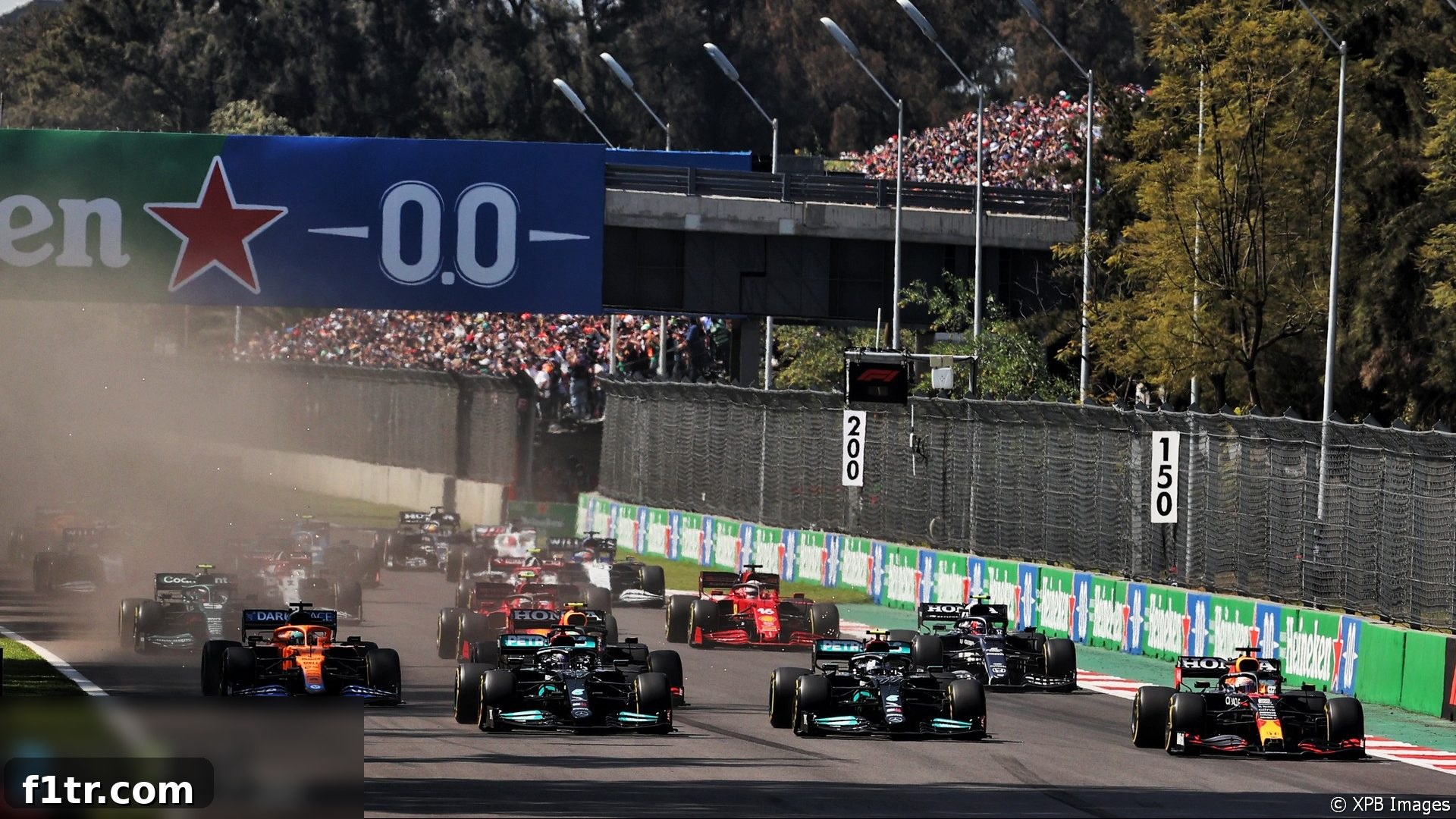
The highly anticipated race began with Valtteri Bottas on pole position, flanked by his teammate Lewis Hamilton, creating an ideal scenario for Mercedes to dictate the pace. However, the advantage proved fleeting. Verstappen, starting from third on the grid, executed a brilliant maneuver, driving around the outside of both W12s into Turn 1 to snatch the lead. This unexpected turn of events immediately put Mercedes on the back foot, forcing them to chase rather than control the race.
The Controversial Start: “That Should Not Happen”
Wolff did not mince words when discussing the start. He openly acknowledged that Bottas, positioned on pole, inadvertently left a crucial gap on the racing line, which Verstappen expertly exploited. This provided the Red Bull driver with the necessary room to draw alongside and then ahead of both Mercedes machines. “That should not happen,” Wolff told Sky Sports, his frustration evident. “I think we had two cars in front and seemed to open up the seal for Max to come around the outside.”
The team’s pre-race strategy likely centered around Bottas holding the lead and Hamilton providing cover, potentially creating a slipstream advantage. However, Verstappen’s aggressive yet precise move dismantled this plan within seconds. The sight of a rival car sweeping past two cars that had dominated qualifying was a bitter pill for the Mercedes garage. It highlighted a missed opportunity to convert a strong grid position into early race control, a factor that is often paramount on a circuit like Autódromo Hermanos Rodríguez, where clean air and track position are gold.
The incident at Turn 1 wasn’t just a loss of position; it was a psychological blow. Mercedes had worked hard to secure that front row, surprising many after Red Bull’s strong practice pace. To see it undone so quickly by their main championship rival was undoubtedly disheartening. The team’s post-race analysis would certainly delve deep into what went wrong in terms of defensive positioning and strategy at the very outset.
Bottas’s Unfortunate Spin and Its Costly Impact
Adding insult to injury, Valtteri Bottas’s race went from bad to worse almost immediately after losing the lead. In a separate incident following Verstappen’s overtake, Bottas was knocked into a spin by Daniel Ricciardo of McLaren. This collision relegated the Finnish driver to the rear of the field, effectively ending his chances of scoring meaningful points and significantly impacting Mercedes’ Constructors’ Championship efforts.
“The spin afterwards and a complete loss of points with Valtteri’s car, when that could have been a third or fourth place, is annoying to say the least,” Wolff lamented. The potential loss of a significant points haul from Bottas proved to be a critical blow. In the tight championship battle, every point is vital, and a potential podium or strong top-five finish for Bottas would have been invaluable for Mercedes’ standing in the constructors’ race. Instead, the team faced a situation where one car was fighting for points, and the other was struggling to recover from the back.
The incident with Ricciardo also sparked debate regarding steward intervention. While the original article references Wolff’s surprise at the lack of investigation, it underscores the intensity and fine margins of racing incidents. For Mercedes, it was a double blow: losing the lead to their main competitor, followed by a costly collision that took their second car out of contention for a strong finish. This chain of events painted a picture of a weekend that started with such promise but quickly unravelled into a damage limitation exercise.
Red Bull’s Unrivalled Pace: A Qualifying Enigma
Despite Mercedes’ qualifying triumph, Toto Wolff admitted that even a perfect start might not have secured victory. The raw pace displayed by Red Bull, particularly Max Verstappen’s car, was simply superior on race day. “You have to congratulate Red Bull because the pace was just on another level,” Wolff conceded. “I don’t think we could have won the race, even if we would have stayed ahead in the first corner because they could have driven circles around us, around the pit stops.”
This admission highlights a significant disparity between the two teams’ race-day performance in Mexico. While Mercedes managed to extract maximum performance in qualifying, perhaps in cooler conditions or with a specific setup that suited a single lap, Red Bull clearly had the stronger package for a full race distance. This was a sentiment echoed by many paddock observers, who noted Red Bull’s strong long-run pace during Friday practice sessions.
Wolff expressed puzzlement over Red Bull’s qualifying slump, given their evident strength in race trim. “I don’t know what they did wrong yesterday in qualifying and what went towards us, but that is the pace we’ve seen on Friday,” he stated, acknowledging the reality of the situation. “It’s worse than we had hoped. But you have to take it on the chin.” The high-altitude nature of the Mexico City circuit has historically presented unique challenges, influencing engine performance, aerodynamic efficiency, and tyre degradation differently for each team. It’s possible Red Bull found a sweet spot for race configuration that Mercedes couldn’t quite match, despite their qualifying heroics.
Implications for the Championship Battle
For Lewis Hamilton’s individual championship aspirations, the Mexico City Grand Prix became a crucial exercise in “damage limitation.” Finishing second to Verstappen, despite the significant pace deficit, was the best possible outcome under the circumstances. Hamilton’s resilience and ability to maximize points on a difficult weekend underscored his championship pedigree, ensuring that the gap to Verstappen did not widen dramatically.
However, the constructors’ championship took a heavier hit. Valtteri Bottas’s early spin and subsequent lack of points were “very painful” for Mercedes. In a season where both titles are fiercely contested, every point from both drivers matters immensely. The collective performance in Mexico highlighted areas where Mercedes needs to improve, not just in outright pace but also in race management and avoiding costly incidents. The battle against Red Bull is not just about car performance; it’s also about flawless execution under immense pressure.
The Red Bull-Mercedes rivalry continues to be one of the most compelling narratives in recent Formula 1 history. The oscillating fortunes between qualifying and race pace, the strategic battles, and the psychological warfare between the teams add layers of intrigue to every grand prix. Mexico was a stark reminder that even with a significant advantage in one session, the ultimate prize is awarded on Sunday, and consistency across all sessions is paramount.
Looking Ahead: Learning from Setbacks
The Mexico City Grand Prix served as a stark lesson for Mercedes. While they celebrated a front-row lockout, the race exposed vulnerabilities in their package and strategy, especially when confronted by a fiercely competitive rival like Max Verstappen and a potent Red Bull car. The team will undoubtedly conduct a thorough review of the weekend, analyzing everything from qualifying setup choices to race start procedures and incident management.
Wolff’s remarks underscore the brutal honesty required at the pinnacle of motorsport. Acknowledging superior opposition pace, even after securing pole, demonstrates a pragmatic approach. The focus now shifts to understanding the underlying reasons for the pace differential and ensuring that these lessons are applied to the remaining races in the championship calendar. The fight for both the Drivers’ and Constructors’ titles remains incredibly tight, and every subsequent event will be critical.
Ultimately, the Mexico City Grand Prix was a showcase of Red Bull’s strength on a specific track and a test of Mercedes’ ability to adapt and minimize losses. While the immediate aftermath was undoubtedly filled with frustration for Toto Wolff and his team, the championship is far from over. The season continues to promise more thrilling twists and turns, with both teams pushing the boundaries in their relentless pursuit of Formula 1 glory.
2021 Mexico City Grand Prix
- No one will win more F1 races than Verstappen this year
- Alfa Romeo’s misjudgement which prompted Giovinazzi’s sarcastic radio ‘thanks’
- “Nice catch”: How Verstappen’s canny bid to thwart Bottas almost succeeded
- 2021 Mexico City Grand Prix Star Performers
- Wolff “surprised” stewards did not investigate Ricciardo over Bottas collision
Browse all 2021 Mexico City Grand Prix articles