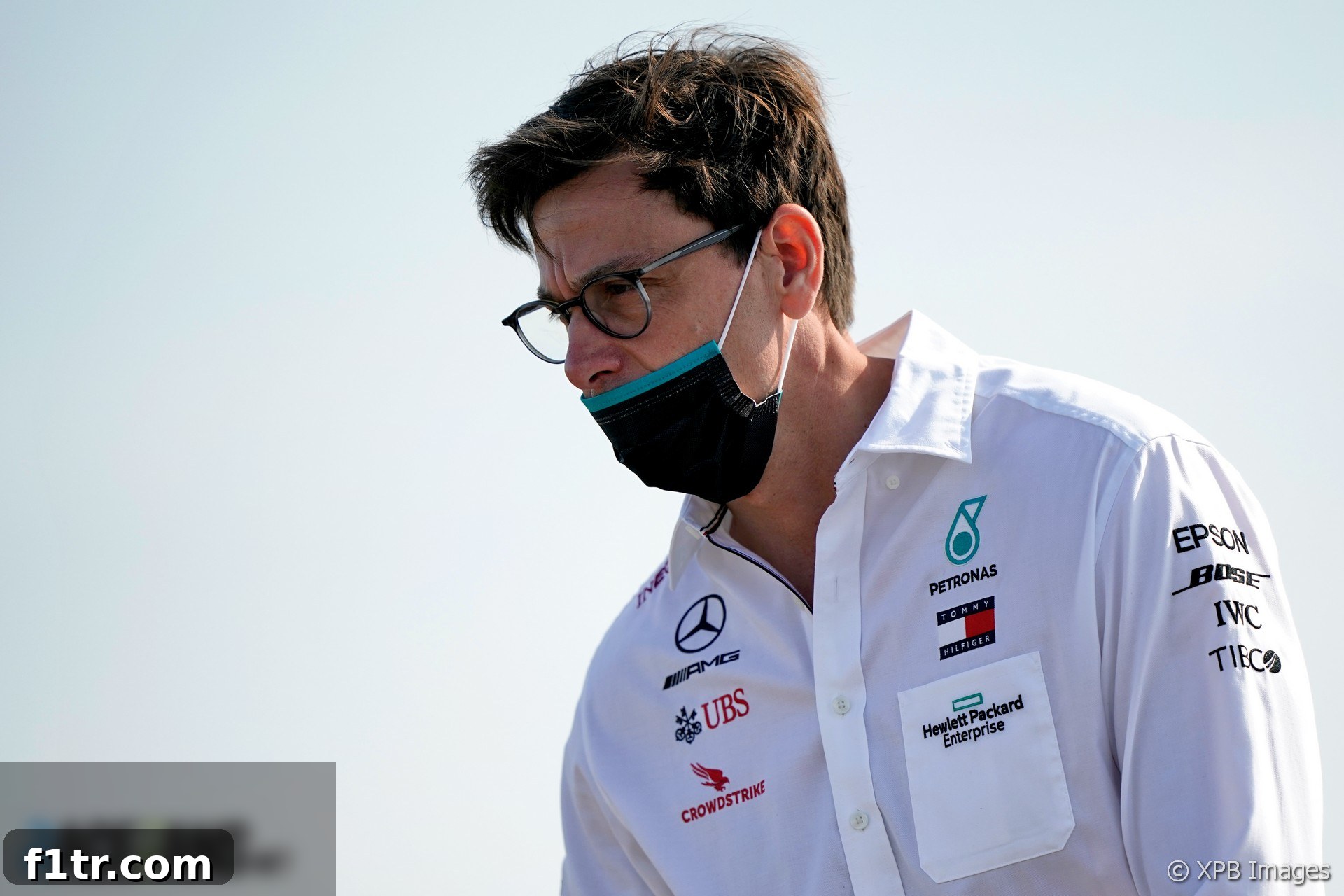
The world of Formula 1, renowned for its relentless pursuit of technological supremacy and fiercely competitive spirit, has been rocked by a significant controversy surrounding Racing Point’s 2020 challenger. Dubbed the ‘Pink Mercedes’ for its striking resemblance to the championship-winning W10 of the previous season, the car’s legality, particularly concerning its brake ducts, ignited a fierce debate and led to a substantial penalty for the Silverstone-based team. At the heart of this storm, Mercedes-AMG Petronas F1 team principal Toto Wolff maintains an unwavering stance, expressing no concern whatsoever over any potential examination of Mercedes’ role in the ongoing legality row. However, rival team principals have vocalized their strong desire for the FIA to meticulously investigate whether Mercedes inadvertently, or otherwise, breached regulations by supplying parts or intellectual property to Racing Point.
Advert | Become a Supporter & go ad-free
On a pivotal Friday, the FIA stewards handed down a severe judgment against Racing Point, imposing a hefty €400,000 fine and deducting a significant 15 points from their constructors’ championship total. The crux of the transgression lay in their use of rear brake ducts that were deemed illegally designed, having been fundamentally based on parts and data obtained from Mercedes. This ruling has not merely addressed a specific technical infringement; it has fundamentally reopened a broader discussion about the permissible limits of technical co-operation and resource sharing between competing teams within Formula 1. The implications of this decision resonate far beyond the immediate penalty, prompting a demand for absolute clarity regarding the sport’s intricate technical regulations.
Christian Horner, the outspoken team principal of Red Bull Racing, was among the most prominent voices calling for a comprehensive review. He emphasized his team’s urgent need for “absolute clarity as to what is and what isn’t permissible moving forward.” Horner highlighted Red Bull’s unique position as the sole owner of two Formula 1 outfits – Red Bull Racing and Scuderia AlphaTauri – noting their diligent adherence to the stringent constructor rules. These regulations, which were made exceptionally clear within the framework of the most recent Concorde Agreement, dictate that each team must design and manufacture its own “listed parts” to be considered a legitimate constructor. For Horner, the controversy extends far beyond the technical specifications of brake ducts. “For us, there is a bigger picture,” he asserted. “This is not just about brake ducts, it’s about what is philosophically allowed and what isn’t. Regarding Mercedes, I’m sure questions will get asked, because if the team in question are guilty of receiving, surely the team that has provided has been also in breach of those regulations? And that’s something for the FIA to look into.”
The “Pink Mercedes” saga dates back to the early testing sessions of the 2020 season, where the Racing Point RP20’s uncanny resemblance to the 2019 championship-winning Mercedes W10 quickly became a talking point. Critics suggested that Racing Point had effectively cloned the previous year’s dominant car, raising eyebrows across the paddock. While copying rivals’ aerodynamic concepts has long been a common practice in F1, the critical distinction lay in the origin of specific components, particularly “listed parts.” Prior to the 2020 season, brake ducts were not considered “listed parts,” meaning teams could legally purchase them from another constructor. However, for the 2020 season, brake ducts were reclassified as “listed parts,” requiring each team to design and produce them independently. The FIA’s investigation concluded that while Racing Point had legally obtained the designs for their 2019 brake ducts from Mercedes, their subsequent use and development of these designs for the 2020 season, after the rule change, constituted a breach of the updated regulations. This distinction, while seemingly minor, lies at the heart of the current dispute and the ensuing appeals.
The FIA’s ruling effectively judged Racing Point guilty of using parts that, while originating from a legitimate source (Mercedes), became illegal once the regulations governing listed parts changed. This nuanced interpretation has sparked widespread debate. Toto Wolff, however, remains steadfast in his conviction that Mercedes has acted entirely within the bounds of the law. “We have not been protested, we have done nothing wrong, I strongly believe that Racing Point has done nothing wrong,” he stated emphatically in response to queries from RaceFans. Wolff’s confidence stems from a belief in the legal solidity of Mercedes’ position and, by extension, Racing Point’s. He elaborated, “I believe that if this goes to the International Court of Appeal, the lawyers and the barristers have a strong opinion that this is a case that has very, very solid pillars and therefore everybody’s in a good place about that.” This unwavering stance underscores Mercedes’ commitment to defending their operational methods and the integrity of their technical collaboration with Racing Point, which they argue was entirely above board given the rules in place at the time of the initial transfer of information.
The controversy is far from settled, as evidenced by the fact that five teams have officially given notice of their intention to appeal Friday’s decision. This group includes Racing Point themselves, who naturally seek to overturn or mitigate their penalties, alongside other teams who believe the penalties were either too lenient or that the ruling did not go far enough in addressing the wider implications of technical sharing. This diverse set of appeals ensures that the row is expected to drag on for several more weeks, possibly months, as the matter moves through the various legal channels within the FIA’s judicial system. The outcome of these appeals will not only determine Racing Point’s final points tally and financial burden but also potentially establish crucial precedents for future technical partnerships and component sharing in Formula 1.
The implications of this saga extend beyond individual team penalties; they touch upon the very ethos of Formula 1 as a constructor’s championship. If the line between legal collaboration and illegal copying becomes blurred, it could fundamentally alter how teams approach car design and development. The sport prides itself on innovation and engineering excellence, with each constructor striving to produce unique solutions. However, the increasing cost and complexity of F1 have pushed smaller teams to seek efficiencies, often through partnerships with larger outfits. The FIA’s challenge is to balance the need for genuine constructor independence with the practical realities of team economics and the potential for a two-tier championship based on the depth of technical alliances. This balance is critical for maintaining competitive parity and preventing the sport from becoming a series of ‘B-teams’ running thinly disguised versions of their senior partners’ cars.
Wolff also addressed the inevitable scrutiny surrounding Mercedes’ reputation, a brand synonymous with engineering excellence and fair play. “Obviously our reputation is very important,” he acknowledged, adding, “But it is intact. And if someone thinks that we have done something wrong they should protest and we’re happy to go to court.” This statement highlights Mercedes’ readiness to robustly defend their actions against any formal accusations of wrongdoing. The absence of a direct protest against Mercedes by any rival team further strengthens Wolff’s argument that Mercedes has not committed any direct breach. The current legal challenge is specifically directed at Racing Point’s interpretation and application of the updated “listed parts” regulations for 2020, rather than Mercedes’ conduct in 2019 when the data transfer occurred. This legal nuance will undoubtedly be a central point of contention as the appeals progress.
Advert | Become a RaceFans supporter andgo ad-free
Ultimately, the resolution of this brake duct controversy will have lasting ramifications for Formula 1. It will define the boundaries of technical assistance, clarify the interpretation of “listed parts” regulations, and potentially influence the structure of team ownership and collaboration for seasons to come. The FIA’s final decision, following the appeal process, must provide unequivocal guidance to all teams, ensuring a level playing field and preserving the core principle of a constructors’ championship where each team genuinely designs and builds its own competitive machinery. Until then, the shadow of the ‘Pink Mercedes’ and the questions surrounding legitimate technical co-operation will continue to loom large over the pinnacle of motorsport.
2020 F1 season
- Grosjean to make F1 test return tomorrow for first time since Bahrain horror crash
- Pictures: Wrecked chassis from Grosjean’s Bahrain fireball crash to go on display
- Bottas vs Rosberg: Hamilton’s Mercedes team mates compared after 78 races each
- F1 revenues fell by $877 million in Covid-struck 2020 season
- Hamilton and Mercedes finally announce new deal for 2021 season
Browse all 2020 F1 season articles