FIA Race Director Issues Strict Warning for Jeddah Qualifying: Navigating the Perilous Turns 23-25
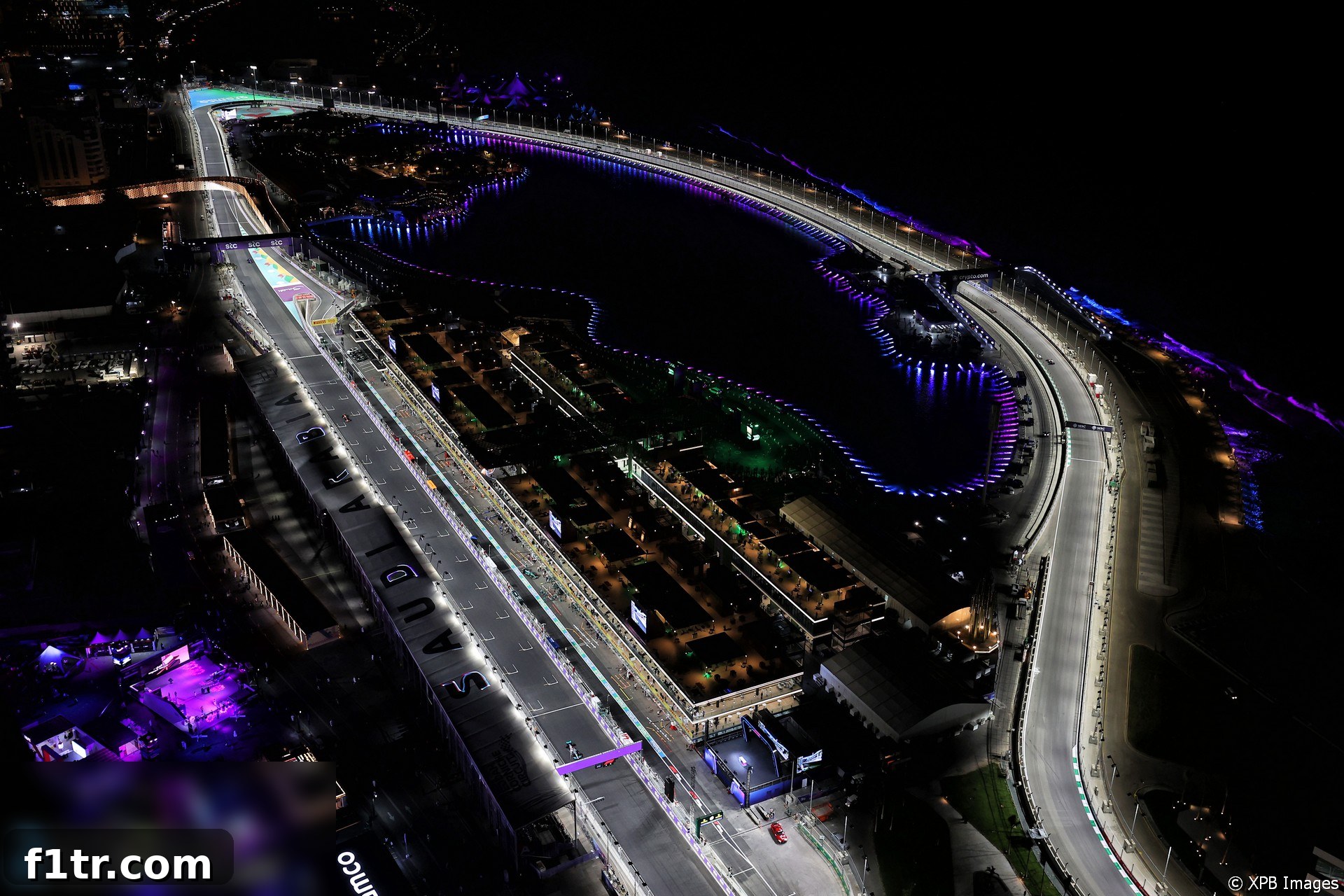
Ahead of what promises to be an exhilarating qualifying session for the Saudi Arabian Grand Prix, FIA Formula 1 Race Director Niels Wittich has issued a critical instruction to all drivers. The directive, circulated in a newly-updated version of the race event notes on Saturday morning, explicitly warns against the practice of deliberately slowing down through the notoriously fast and blind sequence of corners from Turns 23 to 25. This move is a direct response to strategic maneuvers by drivers attempting to create clear air for their flying laps, a practice deemed potentially dangerous on the high-speed Jeddah Corniche Circuit.
Advert | Become a Supporter & go ad-free
The Critical Directive: Safety First in Jeddah’s Final Sector
The core of the race director’s warning focuses on the final sector of the challenging Jeddah Corniche Circuit. Turns 23 through 25 form a rapid, flowing section of the track where visibility is significantly limited due to the circuit’s design. Drivers often seek to gain a strategic advantage in qualifying by backing off on their out-laps or cool-down laps to ensure they have an unobstructed run for their hot lap attempt. However, performing such a maneuver in this particular sequence of corners poses an elevated risk.
“Any driver intending to create a gap in front of him in order to get a clear lap should not attempt to do this around turn 23 through to turn 25,” the updated directive clearly states. This unambiguous language underscores the FIA’s commitment to mitigating risks in one of F1’s most demanding circuits. The consequences for non-compliance are equally clear: “Any driver seen to have done this will be reported to the stewards as being in breach of article 33.4 of the Sporting Regulations.” This firm stance highlights the gravity with which the FIA views potential safety infringements, especially during the intense pressure of a qualifying session.
Understanding Article 33.4: The Foundation of Driver Conduct
Article 33.4 of the FIA Formula 1 Sporting Regulations is a cornerstone of maintaining safe and fair racing standards. It broadly governs driver conduct on track, stating unequivocally that “at no time may a car be driven unnecessarily slowly, erratically or in a manner which could be deemed potentially dangerous to other drivers or any other person.” This regulation is designed to prevent situations where a driver’s actions, even if unintentional, could compromise the safety of competitors, track marshals, or other personnel.
In the context of Jeddah’s Turns 23-25, driving unnecessarily slowly transforms from a strategic inconvenience into a severe safety hazard. The combination of high speed, blind entries, and concrete walls leaves little margin for error. A fast-approaching car encountering a significantly slower vehicle in such a section could lead to a catastrophic high-speed collision, endangering both drivers and potentially bringing out red flags that disrupt the session for everyone. The race director’s instruction serves as a proactive measure to prevent such scenarios, ensuring that sporting ambition does not overshadow safety protocols.
A Recurring Challenge: Precedent from the Inaugural Grand Prix
Interestingly, this directive is not unprecedented for the Jeddah Corniche Circuit. The instruction issued by Niels Wittich is identical to the one given by former Race Director Michael Masi prior to qualifying for the inaugural Saudi Arabian Grand Prix in December. This historical precedent underscores the circuit’s inherent characteristics that necessitate such strict warnings. The fact that the same concern has arisen across different race directorships highlights that the challenge of traffic management in the specific turns of Jeddah is a persistent feature of the circuit.
The FIA’s consistent approach demonstrates an ongoing awareness of the unique dangers posed by this high-speed street circuit. It reflects a proactive effort to learn from past events and reinforce safety guidelines. Drivers are thus well-informed about the expectations and the potential repercussions of non-compliance, ensuring there are no ambiguities regarding the rules of engagement in such a critical part of the track.
Recent Incidents Reinforce the Need for Vigilance
The importance of traffic management and adherence to driving standards has been starkly demonstrated by recent incidents across the Grand Prix weekend. In the Formula 2 qualifying session held yesterday, four drivers received grid penalties for impeding rivals on their hot laps. These penalties serve as a clear reminder of the stewards’ zero-tolerance policy towards actions that disrupt other drivers’ sessions and create potentially dangerous situations.
Furthermore, Williams driver Alexander Albon received his first driving reprimand of the season following yesterday’s first practice session. He was judged guilty of impeding Mick Schumacher’s Haas through a different, yet equally fast, sequence of corners between Turns 4 and 12 in the opening sector. While a reprimand is a lesser penalty than a grid drop, it signifies that even during practice, the standards of safe and respectful driving are being rigorously enforced. These incidents, occurring in different categories and different sections of the track, collectively underscore the paramount importance of the race director’s latest warning regarding Turns 23-25. They highlight the tight margins and the continuous vigilance required from all competitors on a circuit that demands absolute precision and awareness.
Advert | Become a RaceFans supporter andgo ad-free
The Unique Challenges of the Jeddah Corniche Circuit
The Jeddah Corniche Circuit is renowned for being one of the fastest and most challenging street circuits on the Formula 1 calendar. Its unique layout, characterized by extremely high speeds, sweeping bends, and unforgiving concrete walls, leaves very little room for error. The circuit boasts an impressive 27 corners, many of which are taken at high speed, creating a relentless test for both drivers and machinery. The blind nature of many of these corners, including the critical Turns 23-25, adds another layer of complexity, making spatial awareness and predictive driving skills absolutely essential.
Unlike traditional race tracks with ample run-off areas, a street circuit like Jeddah offers no such luxury. Any contact with the barriers can instantly end a session or, worse, result in a significant accident. This inherent risk factor amplifies the danger of a car slowing down unexpectedly in a high-speed, blind section. Drivers rely heavily on clear lines of sight and predictable movements from other cars, especially during qualifying where every millisecond counts and traffic management becomes a strategic nightmare. The race director’s strict instruction is a direct response to these specific circuit characteristics, aiming to preemptively mitigate potential hazards that are unique to Jeddah.
Looking Ahead: The Impact on Qualifying Strategy
The directive from Niels Wittich will undoubtedly influence how teams and drivers approach qualifying at the Saudi Arabian Grand Prix. While finding clear air remains a crucial element of a perfect qualifying lap, the specific prohibition on slowing down in Turns 23-25 will force teams to rethink their out-lap strategies. Drivers will need to be even more judicious in managing their track position, potentially requiring earlier creation of gaps or more aggressive positioning elsewhere on the circuit to ensure an unobstructed run. This adds another layer of mental and strategic challenge to an already demanding session.
Ultimately, the FIA’s unwavering focus on safety, particularly at a circuit as inherently dangerous as Jeddah, is paramount. By issuing clear and stern warnings, the race director ensures that all participants are fully aware of their responsibilities. As the cars hit the track for qualifying, the spotlight will not only be on pure speed but also on the drivers’ discipline and adherence to these vital safety regulations, ensuring a thrilling yet secure spectacle for fans worldwide.
2022 Saudi Arabian Grand Prix
- Vettel will return to race for Aston Martin at Australian Grand Prix
- Mercedes “a second per lap” off Red Bull’s pace – Russell
- Transcript: How Verstappen fought Leclerc on his radio and on the track in Jeddah
- F1 intends to keep racing in Saudi Arabia despite missile attack
- Paddock Diary: 2022 Saudi Arabian Grand Prix
Browse all 2022 Saudi Arabian Grand Prix articles