Almost a year after the pivotal acquisition by Dorilton Capital, the atmosphere at Williams Racing is charged with a renewed sense of purpose and optimism. With their home race weekend on the horizon, the storied Formula 1 team is showing tangible signs of a genuine resurgence, signaling brighter days ahead for the Grove-based outfit.
Recent races at the iconic Red Bull Ring showcased Williams’ remarkable progress, positioning them as legitimate contenders for championship points. The team’s star driver, George Russell, delivered a standout performance, securing their first appearance in Q3 since 2018. This impressive qualifying feat was followed by a solid race where he crossed the finish line within a mere six seconds of the top ten, a testament to the team’s improved pace and strategic execution. These results, achieved on merit, underscore a significant shift in Williams’ competitive standing, offering a glimpse into a promising future.
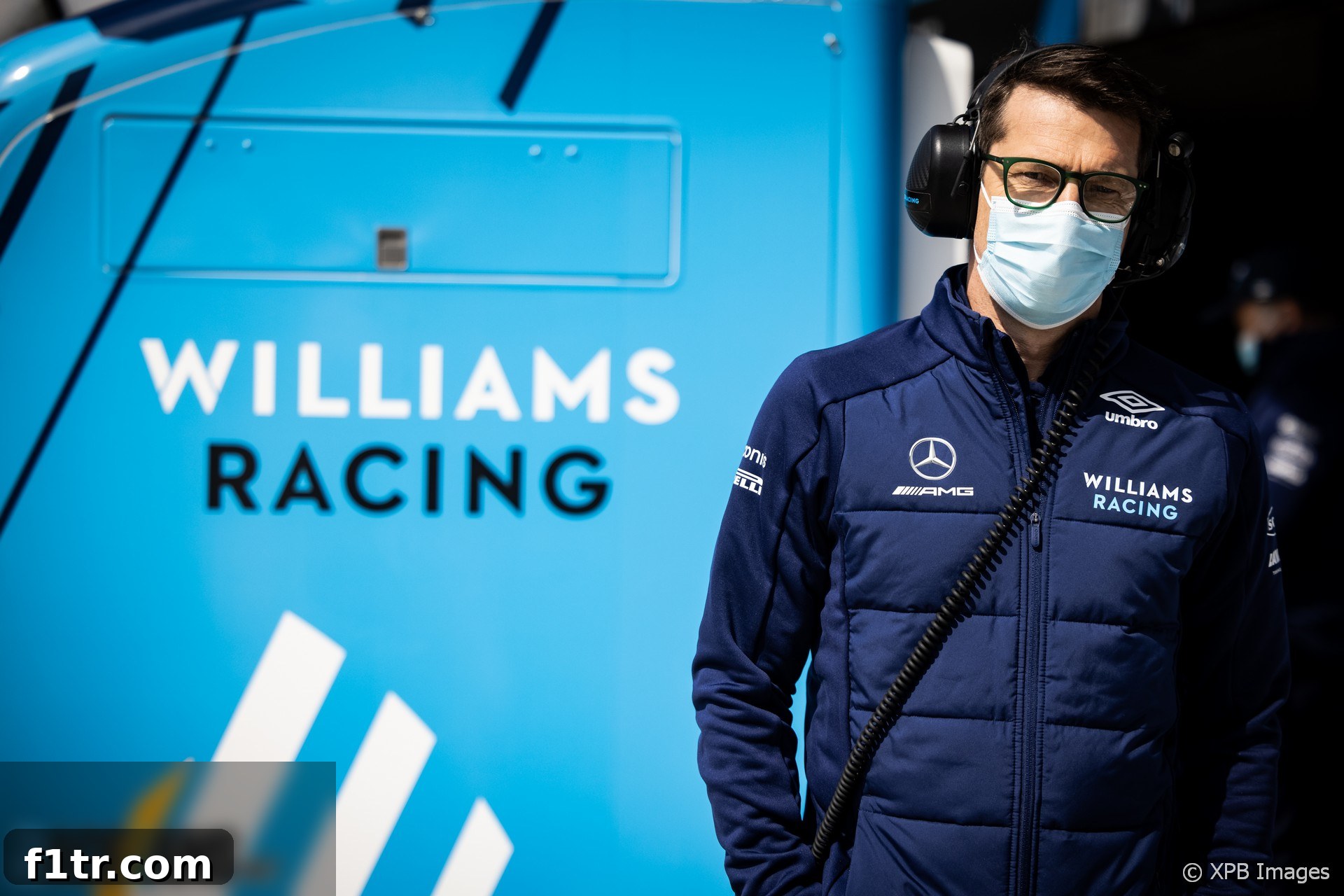
This upward trajectory has been meticulously guided by the new technical director, Francois-Xavier ‘FX’ Demaison, who assumed his role in March. Demaison’s vision, as he revealed in an exclusive interview, is both pragmatic and forward-thinking. He explained that the recent gains have materialized despite the team making a strategic decision to halt further development on its current car, the FW43B. Instead, Williams has channeled its entire focus and resources towards the revolutionary overhaul of technical regulations slated for the 2022 F1 season, a bold move signifying a long-term commitment to regaining competitiveness.
“This is the car we have, and we will not develop it any more,” Demaison stated during the Styrian Grand Prix weekend. “We stopped development two weeks ago, choosing to concentrate fully on next year’s car.” This candid admission highlights a decisive strategic pivot, prioritizing future success over marginal gains in the current season. It’s a calculated risk, but one that the leadership believes is essential for a sustainable return to the front of the grid.
The immediate positive results, therefore, speak volumes about the dedication and efficiency of the existing race team. “It purely shows the strength of the race team which at the moment deliver a very good job,” Demaison added, expressing his profound satisfaction. “So I’m very happy with this.” This sentiment reflects a deeper appreciation for the human capital within Williams, whose relentless efforts are extracting maximum performance from a car no longer receiving development updates.
George Russell’s consistent and electrifying performances have repeatedly brought Williams tantalizingly close to breaking the longest points drought in the team’s illustrious history. While the ultimate breakthrough remains elusive for now, the mere proximity to points-scoring positions represents a monumental leap forward from recent seasons. This progress is intrinsically linked to the crucial injection of capital from Dorilton Capital, which has not only stabilized the team’s finances but also spearheaded a comprehensive overhaul of its management structure. This includes the arrival of CEO Jost Capito, a seasoned motorsport executive who subsequently brought his former Volkswagen colleague, Demaison, on board as technical director, forging a formidable leadership duo.
Demaison’s remit extends beyond immediate car performance; he is also overseeing critical updates to the team’s core infrastructure, including significant improvements to their wind tunnel and various other technical facilities. However, it’s abundantly clear that Demaison is equally, if not more, impressed by the intrinsic strength and dedication of Williams’ workforce. He recognizes that state-of-the-art facilities are only as effective as the talent operating them.
“In terms of manpower, we have a good team,” Demaison affirmed. “We did some changes recently, but now we will concentrate on working on the car.” His current focus is sharply defined: “That’s the main thing today, to develop the technical capability, mostly software and the wind tunnel. And the rest is to get everybody on the same boat and design this next car.” This holistic approach, combining technological upgrades with cohesive team effort, is fundamental to Williams’ long-term recovery strategy.
The contrast with just two years prior is stark and serves to underline the magnitude of the turnaround. In 2019, Williams famously failed to complete its first chassis in time for the crucial pre-season testing, an embarrassing and highly detrimental setback. That incident proved to be a grim precursor to an excruciatingly uncompetitive season, where the team frequently languished around a second per lap off the pace of even its next-slowest rival, firmly entrenched at the back of the grid.
Underlining the considerable gains Williams has made, the team’s performance in Austria saw them closer to the pole position pace than at any point in the preceding five years. This dramatic improvement is a clear indicator of the foundational work being laid. Further uplift is anticipated next year with the strategic switch to Mercedes-sourced gearboxes, a move expected to enhance both reliability and performance integration. Demaison revealed that the team has already meticulously defined crucial aspects of the FW43B’s successor, signaling an advanced stage in their 2022 car development process.
“We have a production plan with some deadlines for freezing some parts of the car,” he explained, emphasizing the structured approach. “To be sure we will have a car ready for the first test in March next year. That’s a normal project plan that any F1 team has to follow.” He acknowledged that some larger teams might adopt a more aggressive schedule due to greater resources, but expressed satisfaction with Williams’ current progress. “Maybe some teams with more people can be a bit more aggressive in terms of a project plan, but we are happy with the results we have with the people we have and we follow this plan. For sure we will freeze already – we already froze some of the concept.” This methodical process is crucial for ensuring a competitive and reliable challenger for the radical new era of Formula 1.
Intriguingly, this isn’t Demaison’s first stint at Williams. During a period when Jacques Villeneuve was delivering the team’s most recent championship silverware in Formula 1, Demaison contributed to their successful Renault Laguna British Touring Car Championship (BTCC) program in the mid-nineties. However, time has passed, and upon his return, he found no familiar faces from those earlier days still working within the factory doors, highlighting the significant generational and structural changes the team has undergone.
Demaison’s impressive career trajectory includes developing highly successful rally cars for Volkswagen, notably the Polo R WRC, and the groundbreaking, all-electric ID.R prototype. The ID.R, a radical machine in its class, set a series of astonishing speed records, demonstrating Demaison’s prowess in innovative and extreme vehicle design. While he arrived at Williams from outside the immediate sphere of contemporary grand prix racing, he has identified “a lot of similarities” between the diverse range of cars he has worked on and modern Formula 1 machines. “Apart from the aero which is for sure completely different, the chassis design is quite similar,” he noted, indicating that fundamental engineering principles transcend motorsport disciplines.
His role as technical director, he clarifies, is not about single-handedly designing every component. “Today the technical director is not designing the car on his own; his job is to make sure that everybody is trying to achieve the same goal and make the team work together. So that’s my main task at the moment.” This leadership philosophy emphasizes collaboration, clear direction, and fostering a unified engineering effort – precisely what Williams needs to harness its collective talent.
Demaison joined Williams at a critical juncture, as the team aims to navigate what it hopes will prove to be its lowest ebb. The objective is to chart a steady and sustainable course back towards the front of a championship it once dominated, during the very era he first worked for them. Despite the undeniable promise shown in recent races, Demaison remains refreshingly realistic about their immediate short-term goals. Currently positioned ninth in the championship standings, the best they can realistically hope for this year, and potentially next, is to move up to eighth place, a modest yet significant step in their arduous climb.
To achieve this eighth-place target, Williams will likely need to outperform Alfa Romeo, a direct competitor currently headed by team principal Frederic Vasseur. Vasseur and Demaison share a friendly rivalry rooted in their past; they were schoolmates. Demaison candidly expressed his competitive desire: “I want to beat my colleague. We were at school together.” He added with a determined smile, “So I have to beat him for sure. I want to finish in front of him next year.” This personal touch adds an extra layer of motivation to the team’s immediate competitive targets.
Beyond this friendly one-upmanship, Demaison’s long-term objectives for Williams are naturally set much higher, reflecting the team’s ambition to reclaim its former glory. He understands the scale of the undertaking. “We have to be realistic, it’s a long journey,” he acknowledged. “Obviously, for next year, we want to score points a bit easier than it is today. That’s clearly the target.” This realistic yet progressive goal for 2022 aims to solidify their mid-field presence and regularly contend for points.
Looking further into the future, Demaison’s vision for 2023 is even more ambitious: “Then for ’23 to try to knock on the Q3 qualification and be a bit closer to the fifth place.” This aspirational target signifies a desire not just to score points but to consistently challenge the upper echelons of the midfield, regularly featuring in the final qualifying segment and contending for top-five finishes, a clear sign of a revitalized Williams aiming for sustained success.
While such aspirations might have seemed overly optimistic when Demaison first spoke about them during the early stages of the Austrian Grand Prix weekend, George Russell’s subsequent star turn, which sensationally placed Williams eighth on the grid, offered the clearest and most compelling evidence yet that the good times are indeed returning to Grove. This pivotal performance, born from strategic foresight, dedicated teamwork, and individual brilliance, serves as a powerful beacon of hope, confirming that Williams Racing is firmly on the path to reclaiming its competitive spirit in Formula 1.
2021 F1 Season Insights
- Masi ‘basically gifted the championship’ to Verstappen says 2021 FIA steward Sullivan
- Las Vegas race backers looking to extend F1 deal beyond 2025
- Why Mercedes put ‘a reminder of joy and pain’ on display in their factory lobby
- Verdict on error in GT race suggests Mercedes would have lost 2021 Abu Dhabi GP appeal
- Title ‘stolen’ from Mercedes made us ‘underdogs people cheer for’ – Wolff
Explore More 2021 F1 Season Articles