Formula 1 was once straightforward: the FIA’s sporting body wrote and enforced the rules, race promoters—who held television rights for events on their property—applied to the FIA to host world championship rounds and offered start and prize money based on the teams’ ability to attract crowds, and teams chose whether to enter after building or buying compliant cars. The driver who scored the most points became world champion.
Advert | Become a Supporter & go ad-free
The constructors’ championship was only slightly more complex but still easy to understand: first awarded in 1958 as the “International Cup for F1 Manufacturers”, teams scored points by building and entering their own cars. That principle was stretched in 1969 when Tyrrell cooperated with Matra to win the title, but the arrangement was clearly a de facto Matra works effort. Back then, the combined rule books ran to around 20 pages.
Compare that simplicity to the present day. A commercial rights holder—initially created by the teams before becoming independent—now negotiates with promoters and broadcasters, takes a roughly 30% fee and then distributes income to teams. Today’s regulations are shaped by hundreds of sporting, technical and financial advisory committee meetings, producing rules that sometimes override the FIA’s international sporting code and sometimes do not.
Teams collectively hold a one-third voting share in governance, but because motions can be blocked if half the teams oppose them, the teams effectively can veto most rule changes unless they are framed as safety measures. The result is that many of the current, hugely expensive and technically complex hybrid power units were driven by team demands. The rule books have swelled to more than 400 pages.
Team power has influenced race management too: pressure from teams to “let them race” and avoid finishing grands prix behind safety cars or under full course yellows contributed to the controversial ending in Abu Dhabi. All teams, including Red Bull and Mercedes, have been involved in regulatory changes over the past decade, amplifying collective influence.
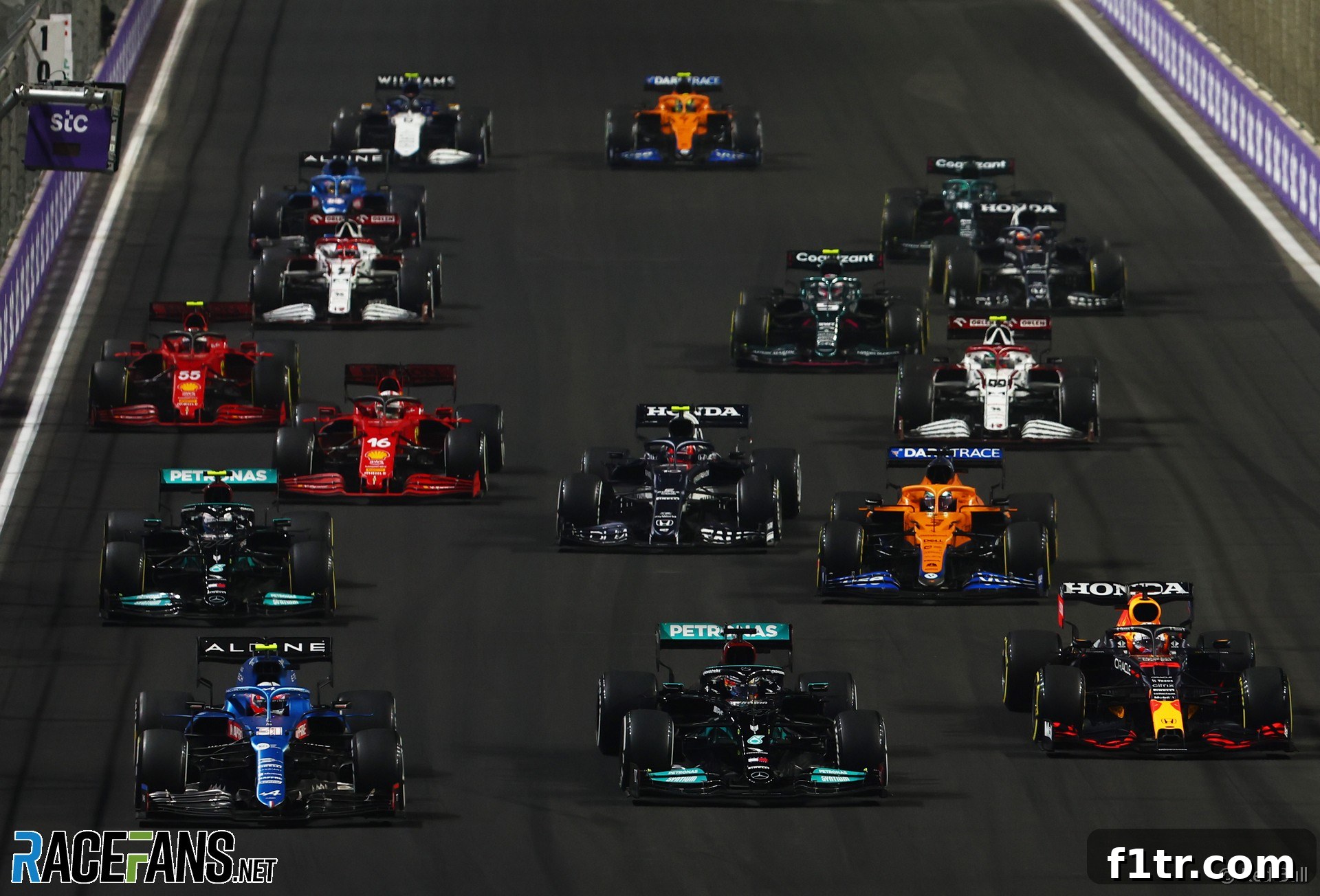
That influence has been intensified by a steady withdrawal of manufacturers, most recently Honda, which has pushed independent teams toward relying on just three engine suppliers: Mercedes, Ferrari and Alpine (Renault), with Alpine currently only supplying its own works team. Mercedes supplies four teams—its own, Aston Martin, McLaren and Williams—while Ferrari supplies its factory team, Alfa Romeo (run by Sauber) and Haas.
Red Bull, having acquired the intellectual property rights to Honda power units, will run those units under Red Bull Powertrains and share them between Red Bull and sister team AlphaTauri from 2022. Where the 2000s featured seven distinct supplier groups, each typically serving up to two teams, the grid now consolidates into four supplier camps averaging 2.5 teams per supplier. In order of scale: Mercedes (four teams), Ferrari (three), Red Bull (two) and Alpine (one).
Advert | Become a RaceFans supporter andgo ad-free
Mercedes supplies Aston Martin and Williams with full powertrains and rear assemblies, including suspension mounting points that determine geometry, and provides a range of other parts to Aston Martin. The close technical relationship has led some within F1 to nickname the AMR21 a “green Mercedes.”
Ferrari also supplies complete powertrains and rear ends to its clients. With Haas, the link goes further: a Ferrari-affiliated engineering outfit based in Maranello and staffed in part by personnel affected by Ferrari’s budget changes provides contract engineering and design services. Haas driver Mick Schumacher is listed as a Ferrari reserve, and there are reports of personnel sharing simulation duties between Ferrari and Sauber.
George Russell once described himself as a “Mercedes-backed driver” while at Williams and was called upon as a Mercedes reserve in 2020 when Lewis Hamilton contracted Covid-19—an opportunity that led to Russell securing a Mercedes race seat for 2022.
Today the grid effectively clusters into two main camps, with Red Bull and AlphaTauri aligned through common ownership regardless of engine supplier, while Alpine operates independently. That concentration of influence creates obvious political potential, particularly when a small number of teams control a large portion of the collective team vote.
Customer teams often stress their independence, yet voting patterns have sometimes raised questions—on occasion a team has voted against or publicly criticised the very supplier that provides its engines. The regulatory landscape for parts has also shifted. Previously there were two groups: listed parts—where teams had to hold the intellectual property—and non-listed parts that could be sourced freely. For the 2022 regulations the categories doubled to four. Only one category requires teams to own the design rights, another covers tender-supplied parts, and two categories remain open. This expansion increases the potential for major suppliers to exert control over customer teams.
The imbalance is expected to persist during the 2022–25 regulatory cycle unless new engine suppliers join the sport and alter the balance of power. Ideally both Porsche and Audi would enter: if one partners with Red Bull and the other acquires an independent team, they would likely also be asked to supply customer teams, which would help dilute the influence of the current major suppliers.
The established manufacturers argue they have invested heavily in Formula 1 and therefore deserve a meaningful say in how the sport is run, sometimes suggesting they might withdraw if regulations move against them. The counterargument is that those same investments make an exit less likely, and if they did choose to leave they would probably sell their teams rather than simply walk away.
In the interim, the FIA—now led by president Mohammed Ben Sulayem—and Formula 1, under former Ferrari boss Stefano Domenicali, will need to resist pressure from the major suppliers while aggressively pursuing at least one additional engine supplier or a new team to restore a healthier competitive balance.
Advert | Become a RaceFans supporter andgo ad-free
News Focus
- No happy ending for Ricciardo’s made-for-Netflix redemption arc
- No ‘two alphas’ for Red Bull as team forms its longest-running driver line-up
- Will Mercedes come to the rescue of Ocon’s career a third time?
- How the midfield’s hottest team mate rivalry boiled over
- Petty officialdom or deserved decisions? Five drivers stripped of wins in 2024
Browse all News Focus articles