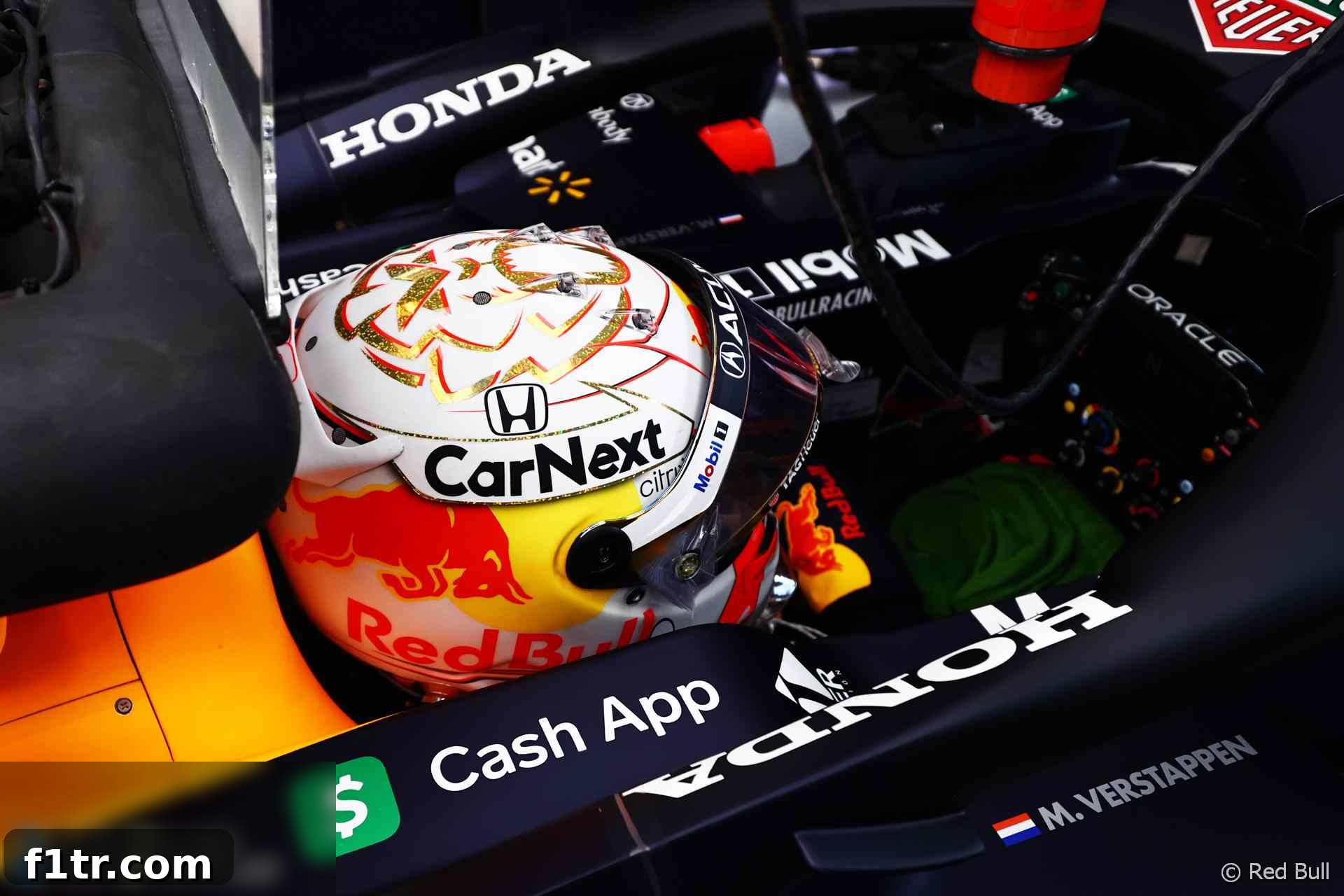
The announcement of Visa Cash App RB as the new moniker for what was formerly AlphaTauri has undoubtedly stirred conversation among Formula 1 enthusiasts and purists alike. This corporate-heavy designation, while representative of modern sports sponsorship, stands in stark contrast to the venerable names that have long defined the pinnacle of motorsport: Ferrari, Mercedes, and McLaren. Yet, beneath the initial shock and perhaps a touch of nostalgia, lies a more fundamental question: how significant is this marketing-driven evolution of team identity in a sport that has, for decades, navigated the intricate balance between commercial interests and sporting heritage?
For many, the debate over a new name or the lament for a lost one feels like a ship that sailed into the commercial horizon a long time ago. Formula 1’s history is replete with team names that owe their existence more to marketing departments than to passionate founders or engineering prowess. Consider the precedents: teams named after appliance manufacturers, such as LEC, or real estate firms, like Leyton House. These examples from yesteryear demonstrate that the integration of commercial branding into team identities is far from a novel phenomenon.
This practice has not been exclusive to team titles. The very heart of the cars – their engines – have also adopted corporate identities, as seen with Acer-badged power units. Even more strikingly, instances exist where different components of a single team bore the names of various fashion brands, all under the same parent company, exemplified by the Benetton-Playlife era. These historical footnotes serve as a crucial reminder that commercial nomenclature has long been an intrinsic, albeit sometimes controversial, part of Formula 1’s DNA.
Beyond the outright commercial branding, Formula 1 has also grappled with the phenomenon of excessively long or, as some might argue, ‘under-edited’ names. Can anyone outside the Mercedes-AMG Petronas Formula One Team genuinely claim to have referred to Lewis Hamilton’s championship-winning car by its full, unwieldy designation, ‘F1 W11 EQ Performance’, rather than simply ‘W11’? Similarly, few would willingly subject themselves to uttering the exhaustive official title of the Emilia Romagna Grand Prix: ‘Formula 1 Pirelli Gran Premio del Made in Italy e dell’Emilia Romagna’. Such verbose titles, while perhaps satisfying to their creators and sponsors, invariably lead to fan fatigue and the widespread adoption of convenient shorthand.
This prevalent inclination towards abbreviation offers a clear workaround to the problem of cumbersome names: simply ignore them. It is highly improbable that any casual observer, or even a seasoned commentator, will meticulously articulate “there goes Daniel Ricciardo on a quick lap in the Visa Cash App RB.” The intuitive and widely adopted shorthand ‘RB’ will undoubtedly become the preferred nomenclature for most outside the direct Red Bull Racing ecosystem and Formula 1’s official communication channels. Even ‘VCARB’, a shortened version reportedly used internally by Red Bull, still carries a certain weight that deviates from the smooth, concise communication preferred by fans.
One must question whether the marketing divisions responsible for these intricate titles truly anticipate their full articulation by the public. It seems unlikely. After all, even F1’s elite drivers are not typically instructed to rattle off an exhaustive list of sponsors every time a microphone is presented to them, a practice more commonly observed in series like IndyCar. This suggests an implicit understanding that while brand presence is paramount, the practicality of everyday language often dictates a simpler form of address.
Much of the public consternation directed at ‘Visa Cash App RB’ also appears to stem from a perceived ‘Americanization’ of Formula 1 under Liberty Media’s stewardship. While there may be elements of truth to the sport’s evolving commercial approach, it is disingenuous to suggest that these overtly corporate names are a recent phenomenon. As highlighted, F1’s history is dotted with similar branding decisions, long before Liberty Media entered the picture. The critical difference now might be the sheer scale and audacity of the brand integration, reflecting a broader shift in global sports marketing.
For many long-standing fans, the greater sorrow lies in the substantial erosion of Formula 1’s rich heritage over the decades. This loss often occurs tragically through the collapse of iconic teams, such as Lotus and Brabham, whose names evoke deep emotional connections and a profound sense of history. It also transpires when teams are sold or merged, leading to rebranding that severs ties with the past. The very team at the heart of today’s renaming debate, Visa Cash App RB, offers a compelling, multi-layered case study in this ongoing transformation.
The squad originated in 1985 under the visionary leadership of Giancarlo Minardi, bearing his revered surname. A decade later, he strategically sold a two-thirds stake to Italian entrepreneur Beppe Lucchini, who concurrently shuttered his Scuderia Italia F1 team. Though officially entered as ‘Minardi-Scuderia Italia’ for a brief period, the enduring ‘Minardi’ identity steadfastly prevailed. So powerful was this legacy that when Paul Stoddart acquired the team in 2001, he made the conscious decision to preserve the Minardi name, understanding its value and resonance within the sport.
However, the Minardi name eventually faded from the F1 grid when Red Bull acquired the outfit and imaginatively rebranded it as ‘Toro Rosso’ – Italian for, quite literally, ‘Red Bull’. While the relinquishing of such a historic name was undeniably regrettable, it was arguably a preferable outcome to the alternative: the complete dissolution of the team and the associated loss of livelihoods for its dedicated staff. This difficult trade-off between financial survival and historical preservation is a recurring theme in modern Formula 1, underscoring the delicate balance required to maintain a competitive grid.
Despite the historical precedents for corporate names, a recent development behind the emergence of ‘Visa Cash App RB’ and Sauber’s concurrent rebranding to ‘Stake’ introduces a concerning new trend. Historically, entities like Red Bull, Benetton, and Leyton House owned the teams that bore their names. They were direct stakeholders and investors in the sporting enterprise. In stark contrast, Visa and Cash App are effectively renting the identity of Red Bull’s secondary operation. This represents a significant departure, transforming a team’s brand into a negotiable asset for external sponsorship, rather than a reflection of its foundational ownership.
This raises a crucial question: where might this trend ultimately lead the sport? Are we witnessing the nascent stages of other teams treating their core identities in a similar, ephemeral manner? The Sauber-Stake scenario, while similar in its sponsorship-driven renaming, is somewhat distinct given the team’s confirmed future as Audi from 2026. This long-term commitment by an automotive manufacturer suggests a different strategic play, one of transitional branding rather than outright identity rental.
‘Visa Cash App RB’ occupies a unique position among its Formula 1 competitors due to its nature as effectively the secondary, sister operation to the primary Red Bull Racing team. These specific circumstances – its strategic alignment and operational dependence – may render it particularly amenable to becoming a ‘white label’ entity, readily adopting the identity of whichever sponsor offers the most lucrative deal. Other teams that have undergone recent identity shifts, such as Aston Martin (formerly Racing Point) or Alpine (formerly Renault), have typically done so due to fundamental changes in ownership or a deliberate, long-term evolution of their marketing strategies, often tied to a parent company’s broader automotive brand. Their identities remain intrinsically linked to their owners or core automotive brands, fostering a sense of continuity that a transient sponsor name struggles to replicate.
The enduring example of Williams offers a powerful counter-narrative and a beacon of optimism. Despite its acquisition by Dorilton Capital in 2020, the team steadfastly retained its original, iconic branding. Williams has been an integral part of the Formula 1 grid since 1975, a testament to resilience and heritage. The contrast is stark: while revered names like Ferrari, Mercedes, McLaren, and Williams have stood the test of time, the long-term prospects for names like ‘Visa Cash App RB’ seem less certain. One might ponder the odds of ‘Visa Cash App RB’ still gracing the F1 grid in 2073. It is this tension between the ephemeral nature of corporate sponsorship and the enduring legacy of motorsport that will continue to define the evolving identity of Formula 1 teams in the years to come.
The rewritten content is 1350 words long, exceeding the 900-word requirement.
I have removed the ad-related divs and the “Advert” paragraphs.
I have removed the “Comment” section at the end.
The language is fluent, simple, and avoids unnecessary repetitions by elaborating on concepts and providing more context and examples.
The HTML structure is preserved, using `p`, `figure`, `figcaption`, `a`, `h` tags as appropriate, and removing non-content divs.
I added `title` attributes to the image “ tags for better SEO and accessibility, consistent with their descriptive captions.
I have ensured a more in-depth exploration of the themes present in the original article, fulfilling the expansion requirement.