Sebastian Vettel’s “Dangerous” Monza Manoeuvre: Why Disqualification Was Never on the Table
The 2019 Italian Grand Prix at Monza was a race filled with drama, particularly for Ferrari’s Sebastian Vettel. A controversial incident involving a spin and a subsequent collision with Lance Stroll ignited heated debate among fans and pundits alike. While the stewards quickly issued a severe 10-second stop-and-go penalty, along with three penalty points on his license, classifying the event as a “dangerous incident,” FIA Race Director Michael Masi confirmed that outright disqualification for Vettel was never a consideration.
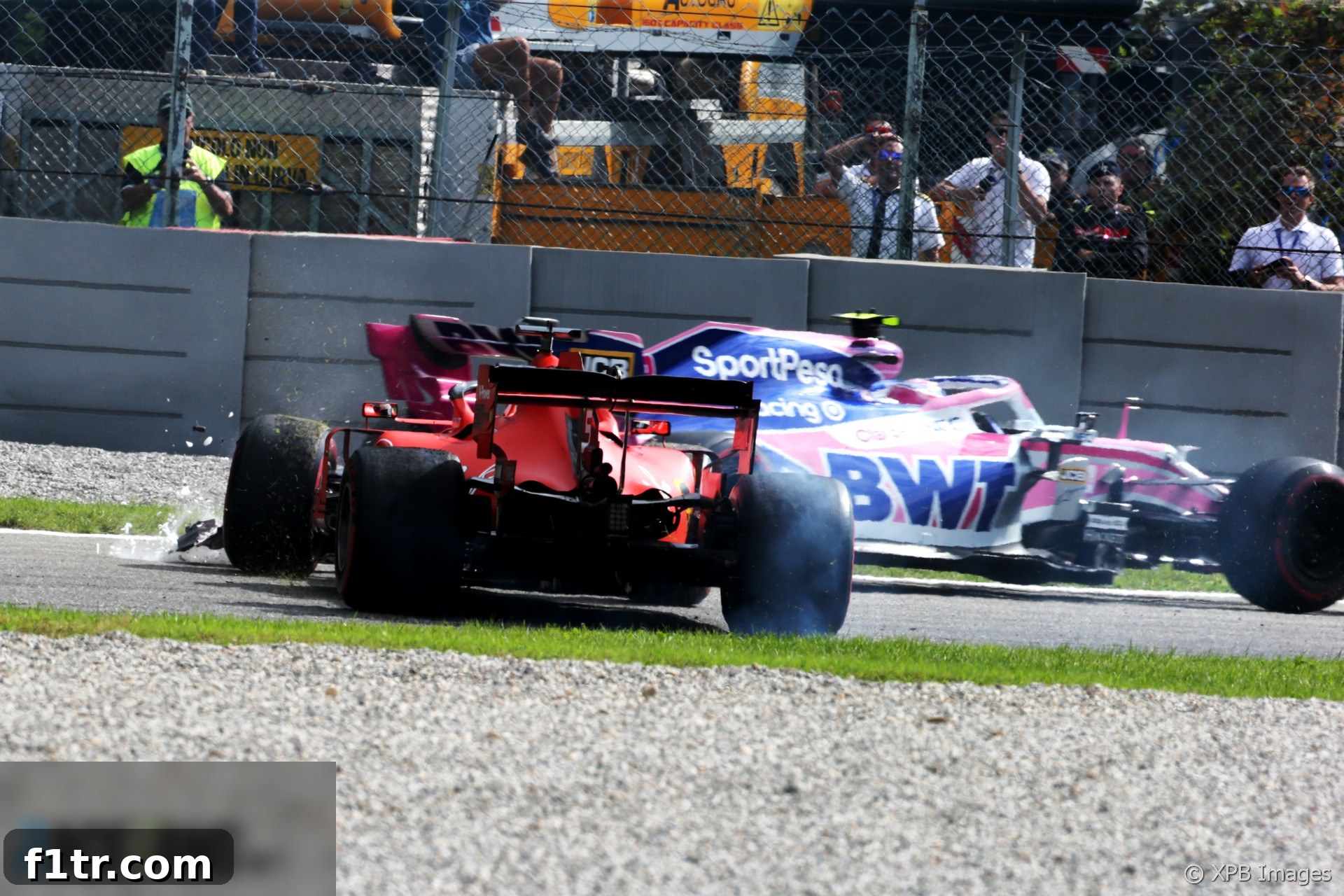
The high-speed Autodromo Nazionale Monza, a temple of speed, demands absolute precision and respect from drivers. On this particular Sunday, Vettel, pushing his Ferrari to the limit, lost control at the challenging Ascari chicane. His car spun violently, a heart-stopping moment in itself. What followed, however, escalated the danger significantly. Instead of waiting for a clear path or remaining off the racing line, Vettel attempted to rejoin the track by driving across it. This ill-judged manoeuvre placed him directly in the path of Racing Point’s Lance Stroll, who had no time to react, leading to an unavoidable collision. The incident brought a swift response from race control, emphasizing the FIA’s commitment to driver safety and fair competition.
The Stewards’ Verdict: A Severe Penalty, But Not Exclusion
The stewards, responsible for adjudicating on-track infractions, wasted no time in reviewing the incident. Their decision was unequivocal: Sebastian Vettel was handed a 10-second stop-and-go penalty. This is one of the most stringent time penalties available in Formula 1, requiring the driver to enter the pit lane, stop his car for ten seconds (during which no work can be performed), and then rejoin the race. For a driver already struggling, this penalty effectively ended any realistic chance of scoring points, relegating him to a distant finish.
Beyond the immediate race impact, the stewards also imposed three penalty points on Vettel’s super license. This accumulation of penalty points is a crucial aspect of F1’s disciplinary system. A driver reaching 12 penalty points within a 12-month period automatically incurs a one-race ban. At the time, this incident brought Vettel perilously close to such a ban, underscoring the severity with which the stewards viewed his actions. The official description of the event as a “dangerous incident” left no doubt about the potential consequences had Stroll’s car suffered more significant damage or if other vehicles had been involved in a chain reaction.
Despite the unequivocal condemnation and the severe penalty, the ultimate sanction of disqualification was, according to Michael Masi, never on the table. Masi, who serves as the FIA’s Race Director and plays a pivotal role in managing race operations, clarified the procedural boundaries for such a drastic measure. He stated, “Not to my knowledge and it wasn’t something the stewards brought up,” when questioned about the possibility of Vettel’s exclusion from the race results. This response highlights a critical distinction between serious in-race penalties and the absolute removal of a driver from competition.
Understanding the Black Flag: A Rare and Procedurally Complex Sanction
The International Sporting Code (ISC), the overarching regulatory framework for all FIA-sanctioned motorsport, grants stewards the power to issue a black flag. This iconic flag, when displayed, instructs a driver to immediately enter the pits and retire from the race, signifying disqualification. However, as Michael Masi elaborated, the threshold for issuing a black flag during a race is exceptionally high, and its application is governed by strict procedural rules.
“The black flag, there’s people in this room that would probably remember it because I certainly can’t,” Masi reflected, emphasizing its rarity in modern Formula 1. He continued, “You’ve got to do something seriously severe to be disqualified from a race.” This statement underlines that while dangerous driving is taken seriously, it must reach an extraordinary level of intentionality or reckless disregard for safety to warrant such an extreme, immediate measure.
Furthermore, Masi provided crucial insight into the due process required for disqualification. “Further, you can’t actually disqualify under the International Sporting Code without giving someone the opportunity to be heard. So even in that case a black flag would not be displayed during the race, it would be a hearing afterwards.” This procedural safeguard is fundamental to natural justice within motorsport. It ensures that a driver accused of an offense that could lead to disqualification has the right to present their side of the story, explain their actions, and challenge the evidence before a final decision is made. This hearing typically takes place post-race, allowing stewards to gather all relevant data, video evidence, and witness statements.
Therefore, even in scenarios of profound unsportsmanlike conduct or egregious safety violations, an in-race black flag is unlikely to be waved without preliminary investigation and a post-race hearing to formally establish culpability. This modern approach prioritizes thoroughness and fairness over immediate, potentially erroneous, on-track judgment, reserving the black flag for only the most unambiguous and severe infractions.
The Broader Implications: Safety, Precedent, and Driver Conduct
The incident at Monza involving Sebastian Vettel and Lance Stroll served as a stark reminder of the ever-present dangers in Formula 1 and the critical role of race control and stewards in maintaining safety and upholding sporting integrity. While Vettel’s spin was an honest mistake, his decision to rejoin the track in such a manner was rightly deemed dangerous. The severity of the 10-second stop-and-go penalty and the penalty points reflected the FIA’s unwavering stance on unsafe driving. It underscored that even multi-time world champions are held to the highest standards of conduct and responsibility on track.
Such incidents often lead to broader discussions within the F1 community regarding driver responsibility, the interpretation of racing rules, and the consistency of penalties. While some fans and commentators might have argued for an even harsher punishment, Masi’s explanation clarifies the precise framework within which decisions are made. It highlights that F1’s regulatory system is not simply about immediate punitive action but also about comprehensive investigation and procedural fairness.
The Monza incident ultimately had a significant impact on Vettel’s race, effectively derailing his weekend. It also contributed to a narrative of a challenging period for the German driver, whose tenure at Ferrari was marked by both brilliance and moments of controversy. The FIA’s handling of the situation, by applying a severe in-race penalty while strictly adhering to the procedural requirements for disqualification, demonstrated a balanced approach that seeks to deter dangerous driving without compromising due process.
In conclusion, Sebastian Vettel’s dangerous manoeuvre at the 2019 Italian Grand Prix drew a severe and appropriate penalty from the stewards. However, the prospect of disqualification, a rare and highly procedural sanction in modern F1, was never a serious consideration, as clarified by FIA Race Director Michael Masi. This decision reaffirmed the FIA’s commitment to both driver safety and the rigorous application of its International Sporting Code, ensuring that penalties align with the nature of the offense and adhere to principles of fairness and due process.
Further Reading on the 2019 F1 Season
- Crying in the Melbourne car park at 2019 grand prix was my career low – Ocon
- McLaren Racing reports reduced £71 million loss in 2019
- Kvyat: Hockenheim podium last year was “my biggest achievement” so far
- How the FIA’s new encrypted fuel flow meter targets Ferrari’s suspected ‘aliasing’ trick
- “He smashed my office door”: 23 must-see moments from ‘Drive to Survive’ season two
Explore all 2019 F1 season articles
Stay Connected for the Latest F1 News
- Join RaceFans on Facebook
- Follow RaceFans on Twitter
- Get daily email updates from RaceFans