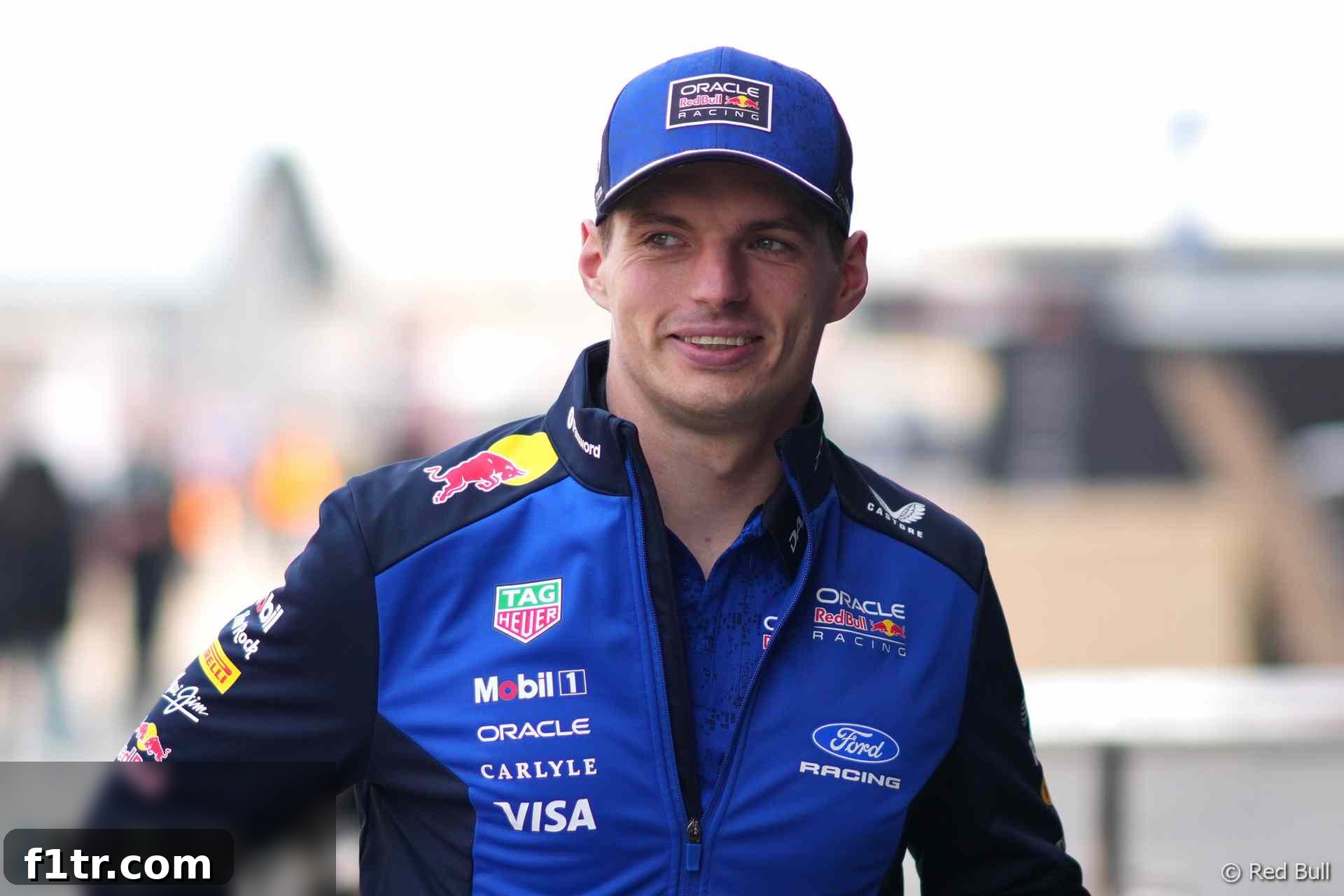
In a candid assessment that sets a challenging tone for Red Bull Racing’s aspirations, star driver Max Verstappen has firmly tempered expectations, ruling out the team’s ability to genuinely compete with front-runners Mercedes and Ferrari at the upcoming Shanghai Grand Prix. Verstappen’s comments reflect a sobering reality following a difficult start to the new Formula 1 season, highlighting a significant performance gap that Red Bull must urgently address if they hope to contend for top honors.
Advert | Become a Supporter & go ad-free
The season opener in Melbourne proved to be a stark indicator of Red Bull’s current standing. Verstappen, a driver renowned for his aggressive pursuit of victory, could only manage a sixth-place finish, crossing the line a substantial 54 seconds behind the triumphant George Russell of Mercedes. This significant time deficit was compounded by the fact that Verstappen had to make one more pit stop than Russell, further underscoring the Red Bull RB22’s struggles with tire management and overall race pace. The weekend’s challenges began even earlier, with Verstappen qualifying a disappointing 20th after an unforeseen problem in Q1 led to a spin, severely compromising his starting position and forcing him into a recovery drive.
Reflecting on the Melbourne outcome, where he finished behind both Mercedes cars, the Ferrari duo, and even Lando Norris’s McLaren, Verstappen conveyed a sense of uncertainty regarding Red Bull’s immediate prospects. When asked about the team’s competitiveness for the race in Shanghai this weekend, he admitted it was “impossible to know.” He elaborated on the intensely competitive landscape of modern Formula 1, describing it as “such a jungle out there at the moment,” making it exceedingly difficult to predict performance fluctuations between races.
Navigating the F1 “Jungle”: Red Bull’s Uphill Battle
Verstappen’s choice of words, “such a jungle out there,” vividly illustrates the cutthroat nature of contemporary Formula 1. Every team is pushing the boundaries of engineering and strategy, and even marginal gains can dramatically alter the pecking order. For Red Bull, this means that even minor improvements might not be enough to bridge the significant gap to their main rivals. “I would hope that it gets a bit closer, not even bigger than the gap that it was in Melbourne,” Verstappen expressed, articulating the immediate goal of reducing the deficit rather than expecting a sudden leapfrog over competitors. His frank admission, “it’s clear that at the moment we cannot fight those cars,” serves as a stark reminder of the challenge facing the Milton Keynes-based squad.
The Dutchman’s assessment points to a fundamental lack of pace compared to the leading teams. While Melbourne was an anomaly in terms of his qualifying position, the underlying performance in the race, even after a strong recovery drive, revealed the RB22’s current limitations. The team’s engineers and strategists will be working tirelessly to understand these issues and implement solutions, but as Verstappen suggests, turning the tide rapidly in such a competitive environment is a formidable task.
The RB22: Potential Amidst Performance Challenges
Despite the current difficulties, Verstappen remains pragmatic about the inherent capabilities of the RB22. He acknowledges that the car possesses “a lot of potential,” but quickly adds a crucial caveat: “it’s just going to depend on if we can extract that I guess throughout the year.” This statement highlights the ongoing development race in Formula 1, where teams constantly strive to unlock more performance from their machinery through upgrades, setup changes, and a deeper understanding of the car’s characteristics.
The first race also exposed some critical performance deficiencies beyond raw pace. Verstappen specifically pointed to “a lot of degradation and graining,” issues that severely impact tire life and consistent performance over a race stint. Tire degradation refers to the natural wear of the rubber, leading to a loss of grip, while graining occurs when bits of rubber tear off the tire surface due to excessive sliding, further reducing grip and necessitating earlier pit stops. Addressing these tire-related problems will be paramount for Red Bull to improve their strategic flexibility and race pace in the coming events.
Verstappen’s belief that, even with a better starting position, the best he could have achieved in Melbourne was fifth place, underscores the inherent performance deficit of the RB22 against the top four cars. This suggests that the issues run deeper than just a poor qualifying session; they point to a fundamental need for more outright pace and better tire management from the car itself.
Teammate’s Mixed Fortunes: Isack Hadjar’s Debut
The Melbourne Grand Prix also saw the debut of Verstappen’s new teammate, Isack Hadjar. The young driver showcased glimpses of the RB22’s potential, impressively qualifying third on the grid – a stark contrast to Verstappen’s struggles. Hadjar also made a strong start to the race, demonstrating the car’s initial speed. However, his promising debut was cut short by an early retirement due due to a problem with his power unit. While unfortunate for Hadjar, his qualifying performance indicated that, under ideal circumstances, the RB22 is capable of challenging higher up the grid.
Hadjar’s early exit means a full picture of the RB22’s race pace with a clean run is still emerging. However, his raw speed in qualifying offers a glimmer of hope for Red Bull’s development trajectory. It also puts pressure on the team to ensure reliability, as a fast car is only effective if it can finish races consistently.
Looking Ahead: The Road to Shanghai and Beyond
As the Formula 1 circus heads to Shanghai, Red Bull faces immense pressure to close the gap. The Chinese Grand Prix circuit presents a different set of challenges with its unique blend of long straights and demanding corners. The team will be analyzing every data point from Melbourne, from aerodynamic performance to engine mapping and tire wear, to optimize the RB22 for the Shanghai track.
Verstappen’s outlook, while realistic, carries an underlying tone of determination. “But we’ll see what happens in the coming races, if we can close that gap a little bit,” he concluded, signaling that the fight for improvement is continuous. The season is long, and Formula 1 is a sport of relentless development. Red Bull, with its proven track record of innovation, will undoubtedly be pushing hard to rectify the current shortcomings. The battle to “extract that potential” from the RB22 will be a defining narrative for their season, and fans will be eagerly watching to see if the team can transform their car into a true contender capable of challenging Mercedes and Ferrari for victories.
Advert | Become a RaceFans supporter andgo ad-free
Miss nothing from RaceFans
Get a daily email with all our latest stories – and nothing else. No marketing, no ads. Sign up here:
2026 Chinese Grand Prix
- What led Stroll to call his Aston Martin “the worst piece of s*** I’ve ever driven”
- Stats: Antonelli is 12th Formula 1 driver to score a ‘hat trick’ with his first win
- “Leclerc just backed Lewis up”: How Russell saw the fight between the Ferraris
- Verstappen reduced his pace unnecessarily due to communications error
- ‘Just an easy pass with Overtake’: Every radio message from Antonelli’s first F1 win
Browse all 2026 Chinese Grand Prix articles