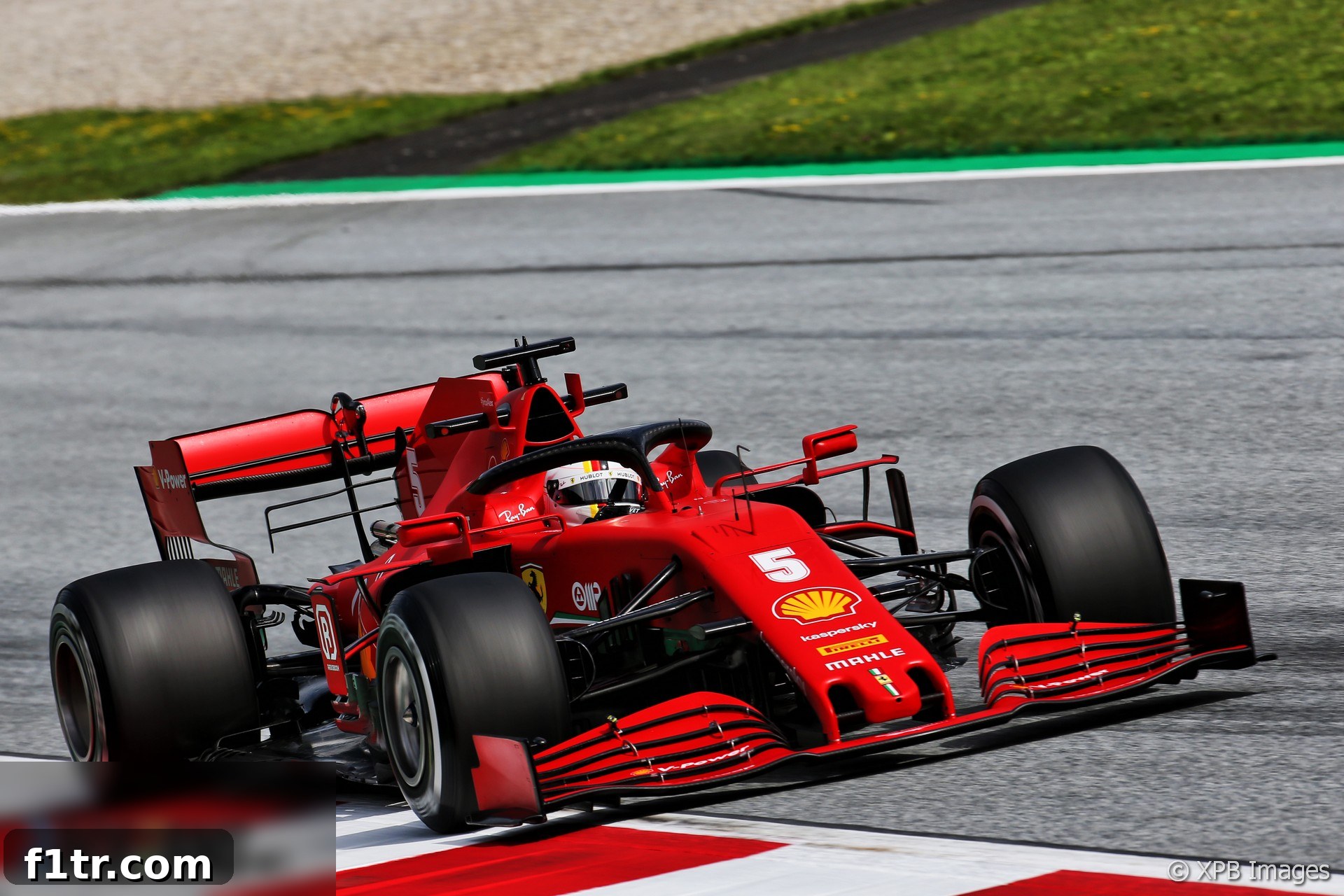
Sebastian Vettel expressed significant surprise and disappointment after failing to advance beyond Q2 in qualifying for the Austrian Grand Prix. The four-time world champion’s early exit underscored the performance concerns Ferrari has openly acknowledged regarding their SF1000 challenger, with the team already preparing a critical upgrade package slated for the Hungarian Grand Prix in two weeks’ time.
Despite the Scuderia’s candid assessment of their car’s shortcomings, Vettel admitted that he had not anticipated such an early elimination from the qualifying session, a stark contrast to his usual competitive presence at the sharp end of the grid.
Sebastian Vettel Stunned by Early Qualifying Exit in Austria Amid Ferrari Struggles
A Shocking Q2 Exit for the Four-Time World Champion
Speaking to the media after the session, a visibly surprised Sebastian Vettel articulated his feelings: “It’s a surprise. We thought that we had a little bit more in hand but it looks like the others were probably running a bit more fuel and more conservative in practice.” His comments shed light on the competitive nature of Formula 1 qualifying, where teams often hold back their true pace during practice sessions, only to unleash it when it truly counts.
Vettel also pointed to specific issues with the SF1000’s handling during the critical laps. “I wasn’t quite happy with the car, I was not so happy with the car. Quite more oversteer on entry than I would like,” he explained. Oversteer on entry can severely compromise a driver’s confidence and ability to carry speed through corners, making it challenging to extract maximum performance from the car. This particular balance issue is not new to Ferrari’s recent struggles and hints at underlying aerodynamic or mechanical deficiencies that are proving difficult to resolve quickly.
The German driver’s early exit means he will start the opening race of the 2020 season from a challenging grid position, putting immense pressure on him and the team to execute a flawless race strategy. For a driver of Vettel’s caliber, used to fighting for pole positions and podiums, failing to make it into the top 10 is a bitter pill to swallow and certainly not the start to the season he or Ferrari had envisioned.
Ferrari’s Persistent Performance Deficit with the SF1000
Ferrari’s performance concerns with the SF1000 have been a consistent theme since pre-season testing. The team has openly admitted to a lack of straight-line speed and overall aerodynamic efficiency compared to their main rivals, particularly Mercedes and Red Bull. This deficit is believed to stem from a combination of factors, including potential power unit issues following technical directives issued by the FIA at the end of last season, and aerodynamic concepts that have not delivered the expected performance gains.
The compressed 2020 calendar, heavily impacted by the global pandemic, has also added to Ferrari’s woes. With limited testing opportunities and a frantic schedule of back-to-back races, finding immediate solutions to fundamental car problems becomes an even more formidable task. The pressure on Team Principal Mattia Binotto and his technical team to deliver a competitive package is immense, especially given Ferrari’s storied history and the high expectations from their passionate Tifosi.
Hopes for Race Day: Warmer Conditions and Race Trim Potential
Despite the disappointing qualifying result, Sebastian Vettel expressed a degree of optimism for the race itself. Warmer conditions are forecasted for the Red Bull Ring on Sunday, which Vettel hopes will play into Ferrari’s hands. “We’ll see, it’s a long race [and] I think in race trim we are always better,” he commented. This sentiment reflects a common characteristic of some F1 cars that perform better over a longer run on higher fuel loads compared to their single-lap qualifying pace.
The Red Bull Ring circuit, known for its short lap and elevation changes, can be demanding on tires, and managing degradation will be crucial. Warmer temperatures could exacerbate tire wear, potentially creating more strategic opportunities for teams starting further down the grid. Vettel believes Ferrari’s inherent strength in race conditions might allow them to mitigate their qualifying deficit. “I think we will be there to make up some ground and score some good points,” he added, signaling his determination to fight through the field.
Charles Leclerc’s Stronger Showing
In contrast to Vettel’s early exit, his team mate Charles Leclerc managed to navigate his way through to Q3. The young Monegasque driver was the last to make the cut for the final qualifying segment and subsequently put his Ferrari SF1000 in a respectable seventh place on the grid. Leclerc’s performance highlights his exceptional talent and ability to extract every ounce of potential from a challenging car, often masking its deficiencies.
While P7 is not where Ferrari ultimately aims to be, it provides Leclerc with a significantly better platform to launch his race compared to Vettel’s starting position. His ability to qualify ahead of many midfield rivals demonstrates that the SF1000, in the right hands and with a finely tuned setup, can still be competitive enough to break into the top half of the grid. The contrasting qualifying results between the two Ferrari drivers will undoubtedly lead to further analysis within the team, looking for answers to the performance discrepancies.
The Road Ahead: Crucial Upgrades for the Hungarian Grand Prix
Ferrari’s focus now shifts significantly to the upcoming Hungarian Grand Prix, where a substantial upgrade package is expected to be introduced. This upgrade is seen as a pivotal moment for the team’s 2020 campaign. Reports suggest these developments will target both aerodynamic efficiency and potentially even aspects of the power unit, aiming to address the fundamental issues that are currently holding the SF1000 back.
The success of these upgrades will dictate Ferrari’s trajectory for the rest of the season. If they deliver the expected performance gains, it could allow the team to consistently challenge for podiums and reduce the gap to Mercedes and Red Bull. However, if the upgrades fall short, it could condemn Ferrari to a challenging season, struggling in the midfield rather than fighting at the front. The pressure on the Maranello outfit to deliver is immense, with the hopes of their global fan base resting on these crucial developments.
Sebastian Vettel’s Final Season with Ferrari: A Challenging Farewell Tour
This challenging start to the season comes at a particularly poignant time for Sebastian Vettel, as 2020 marks his final year with Scuderia Ferrari. The announcement of his departure at the end of the year has added another layer of complexity to his campaign. For a driver who joined Ferrari with the ambition of emulating his hero Michael Schumacher and bringing a championship back to Maranello, a season plagued by performance issues is a far cry from the fairy tale ending he would have hoped for.
Despite the difficulties, Vettel remains a fierce competitor. His determination to score points and contribute to the team’s efforts, even in a challenging car, is unwavering. The mental fortitude required to perform at the highest level in such circumstances is immense. As he navigates his final races in the iconic red car, every opportunity to demonstrate his skill and leadership will be seized, irrespective of the car’s ultimate pace.
The Broader F1 Landscape: A Tighter, More Competitive Grid
The 2020 Formula 1 season opener has already highlighted the intensity of the competition. While Mercedes continues to set the benchmark, teams like Red Bull Racing are consistently challenging, and the midfield has become incredibly tight. Teams such as Racing Point, McLaren, and Renault have shown significant improvements, making it increasingly difficult for any team, even Ferrari, to automatically secure a spot in Q3.
This heightened competition means that even minor deficiencies in car performance or setup can have a profound impact on qualifying results. For Ferrari, their current performance deficit means they are not only battling the front-runners but also having to fend off a very strong and improving midfield pack. This makes the upcoming upgrade package even more critical for maintaining their position as a top-tier constructor.
Looking Ahead to Race Day
As the grid prepares for the Austrian Grand Prix race, Sebastian Vettel and Ferrari will be strategizing intensely to maximize their chances from a compromised starting position. The long race ahead, potentially influenced by warmer weather and inevitable safety car periods, could still offer opportunities for Vettel to make up ground. His objective remains clear: to fight hard, manage the car’s balance issues, and emerge with valuable championship points, setting the stage for a stronger performance in Hungary.
For Ferrari as a whole, the race will be another crucial data-gathering exercise, providing further insights into the SF1000’s behavior in race conditions. These learnings will be vital for guiding the development of the eagerly anticipated upgrades, as the Scuderia endeavors to reclaim its competitive edge in the demanding world of Formula 1.
Don’t miss anything new from RaceFans
Follow RaceFans on social media for the latest updates, exclusive content, and in-depth analysis from the world of Formula 1:
- Join RaceFans on Facebook
- Follow RaceFans on Twitter
- Get daily email updates from RaceFans
More from the 2020 F1 Season
Explore more articles related to the exciting 2020 Formula 1 season and beyond:
- Grosjean to make F1 test return tomorrow for first time since Bahrain horror crash
- Pictures: Wrecked chassis from Grosjean’s Bahrain fireball crash to go on display
- Bottas vs Rosberg: Hamilton’s Mercedes team mates compared after 78 races each
- F1 revenues fell by $877 million in Covid-struck 2020 season
- Hamilton and Mercedes finally announce new deal for 2021 season
Browse all 2020 F1 season articles