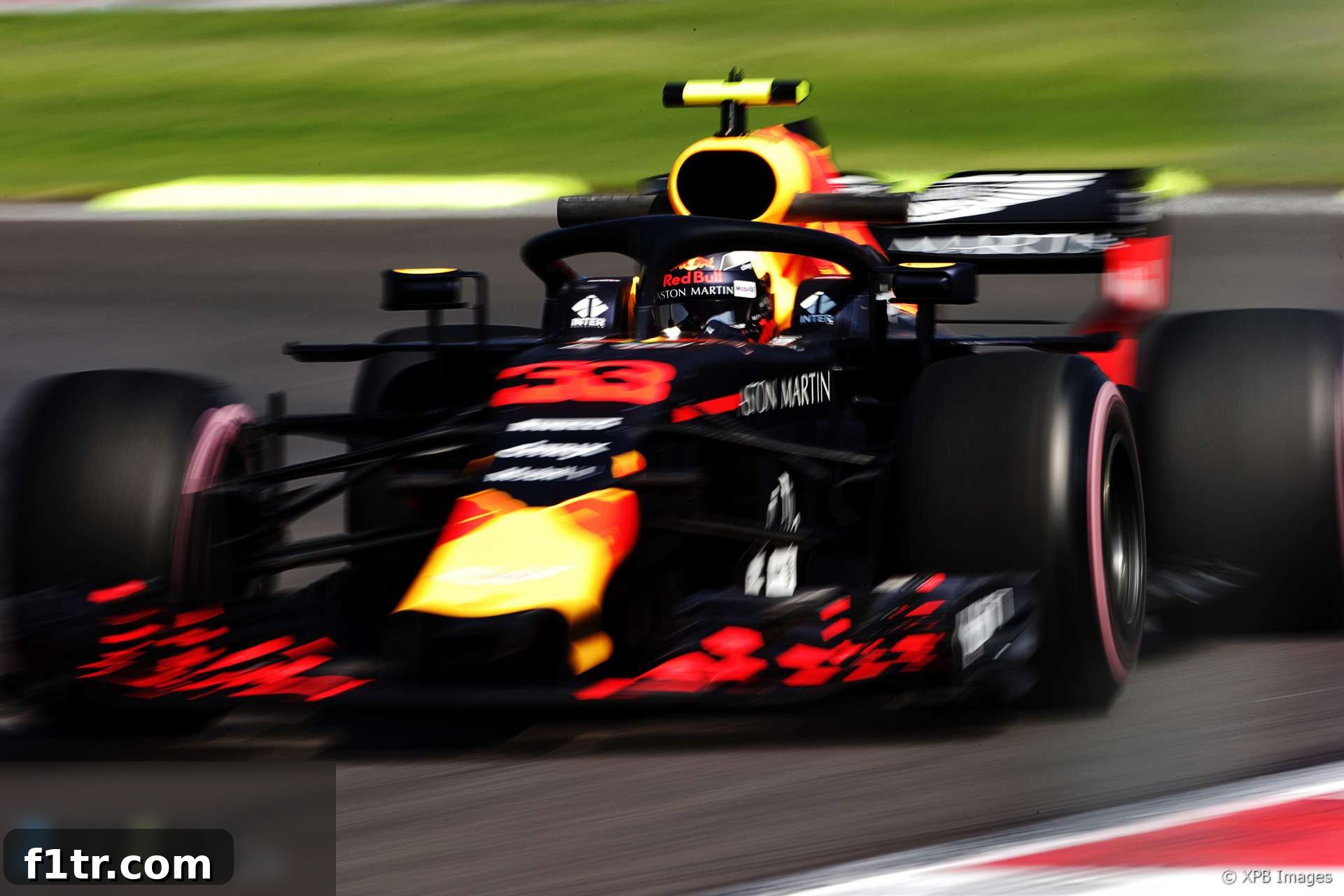
Verstappen Dominates Mexico GP Friday Despite Persistent Renault Power Unit Woes
Max Verstappen showcased formidable pace during the opening day of the Mexican Grand Prix, topping both free practice sessions at the Autódromo Hermanos Rodríguez. Despite his outright speed, the Red Bull Racing driver expressed dissatisfaction with the performance of his Renault power unit, citing “weird noises” and inconsistent behavior that prevented him from extracting its full potential during his short runs.
“It’s been good overall,” Verstappen commented following the sessions. “However, in my short runs, the engine was still not perfect; it wasn’t behaving exactly as I wanted. There were some unusual noises, and it wasn’t responding predictably, which meant I couldn’t quite nail the lap I envisioned. Yet, it was still quick enough to be at the top, so in the end, it was a very satisfying day in terms of results.”
Underlying Issues: Engine Behavior and Hydraulic Scare
Verstappen’s complaints about the Renault power unit are not new, reflecting a season-long narrative of frustration for Red Bull. While his raw speed on Friday suggested a strong package capable of challenging for pole position, the recurring “weird noises” point to underlying issues that could become critical as the weekend progresses. The high altitude of Mexico City, where the thin air places immense stress on turbo engines and cooling systems, often exacerbates such problems, making reliability a paramount concern.
Towards the close of the second practice session, Verstappen’s car came to an unexpected halt on track, raising immediate alarms about a potential power unit failure. However, Red Bull Racing quickly moved to reassure fans and media, with team principal Christian Horner confirming that the problem was a hydraulic failure, rather than a catastrophic engine issue. This distinction is crucial; while a hydraulic problem can be complex, it typically doesn’t carry the same immediate penalty threat as a power unit component failure, which can trigger grid drops if limits are exceeded.
Horner further clarified the situation, stating that Verstappen has a spare engine at his disposal. This provides a significant safety net, as the team could opt to switch to the reserve unit if needed without incurring a penalty. This reassurance offers a degree of comfort, allowing Red Bull to focus on optimizing the car’s setup for qualifying and the race, rather than being solely preoccupied with engine integrity.
Red Bull’s Mexican Momentum: “More Competitive Than Last Year”
The Autódromo Hermanos Rodríguez has historically been a strong hunting ground for Red Bull. Its unique characteristics, particularly the high altitude which reduces engine power for all competitors, tend to equalize the playing field and emphasize chassis performance and aerodynamic efficiency – areas where Red Bull traditionally excels. Verstappen himself is a two-time winner at this circuit, having claimed victories in 2017 and 2018.
Reflecting on Friday’s strong showing, the 2017 winner noted a significant improvement in the team’s standing compared to the previous year. “After the first day of running, it certainly appears that Red Bull is more competitive than last year,” Verstappen observed. This increased competitiveness could position the team as a serious contender for victory, provided they can manage the engine and reliability concerns.
Despite the encouraging start, Verstappen remains pragmatic about the challenge ahead. He fully anticipates that rivals Mercedes and Ferrari, who appeared to underperform during Friday’s sessions, will return stronger and more competitive on Saturday. “At the moment, things are looking really good for us, but I’m sure both Mercedes and Ferrari will be working extensively overnight to analyze their data and implement improvements,” he cautioned. This prediction underscores the intense development race that continues throughout a Grand Prix weekend, with engineers relentlessly striving to extract every fraction of a second from their machines.
The Unique Demands of the Autódromo Hermanos Rodríguez
The Mexican Grand Prix presents a distinct set of challenges that significantly influence car performance and strategy. Situated over 2,200 meters (7,200 feet) above sea level, the thin air at the Autódromo Hermanos Rodríguez drastically reduces downforce and places extraordinary demands on power units and cooling systems. Engines struggle to breathe, turbos work harder, and brake systems require more robust cooling solutions.
For drivers, the reduced downforce translates into a more slippery car, making it harder to find grip and requiring precise control. While teams typically run maximum downforce configurations, the actual aerodynamic grip generated is comparable to low-downforce tracks. This unique environment often reshuffles the pecking order, sometimes favoring cars with excellent mechanical grip and chassis balance over those solely reliant on raw engine power.
Red Bull’s strong showing on Friday can be partly attributed to their car’s inherent design strengths in high-downforce, cornering scenarios, which become more prominent when engine power differences are somewhat mitigated by altitude. This track has historically played into their hands, allowing their agile chassis to shine.
Looking Ahead: Qualifying Battle and Race Strategy
As the weekend progresses, all eyes will be on Saturday’s qualifying session. While Verstappen clearly demonstrated the raw pace, the consistency of his Renault power unit will be a critical factor. The long run pace observed on Friday also provides clues about potential race strategies, including tire degradation and fuel consumption, both of which are magnified by the thin air and abrasive track surface.
Mercedes and Ferrari, having endured a challenging Friday, will undoubtedly unleash their full potential in qualifying. Both teams possess championship-winning pedigree and are known for their ability to rebound from difficult practice sessions. The battle for pole position promises to be intense, with Red Bull aiming to convert their practice advantage into a front-row start, crucial for controlling the race from the outset.
Sunday’s race will likely be a strategic affair, with tire management, pit stop timing, and managing the car’s cooling systems under the intense Mexican sun playing pivotal roles. The unique characteristics of the Autódromo Hermanos Rodríguez virtually guarantee an unpredictable and thrilling race, where reliability and shrewd strategy can often trump outright pace.
Become a RaceFans Supporter and Go Ad-Free
Enjoy an uninterrupted reading experience and support independent F1 journalism by becoming a RaceFans supporter. Click here to learn more about becoming a RaceFans supporter and enjoy an ad-free experience.
Stay Connected with RaceFans
Don’t miss anything new from RaceFans! Follow us on social media for the latest updates, analysis, and breaking news from the world of Formula 1:
- Join RaceFans on Facebook
- Follow RaceFans on Twitter
- Get daily email updates directly from RaceFans
Explore More from the 2018 F1 Season
Delve deeper into the events and storylines of the 2018 Formula 1 season with these related articles:
- F1 feared “death knell” for Drive to Survive after Ferrari and Mercedes snub
- McLaren staff told us we were “totally crazy” to take Honda engines in 2018 – Tost
- ‘It doesn’t matter if we start last’: How Red Bull’s junior team aided Honda’s leap forward
- Honda’s jet division helped F1 engineers solve power unit problem
- McLaren Racing losses rise after Honda split
Browse all 2018 F1 season articles