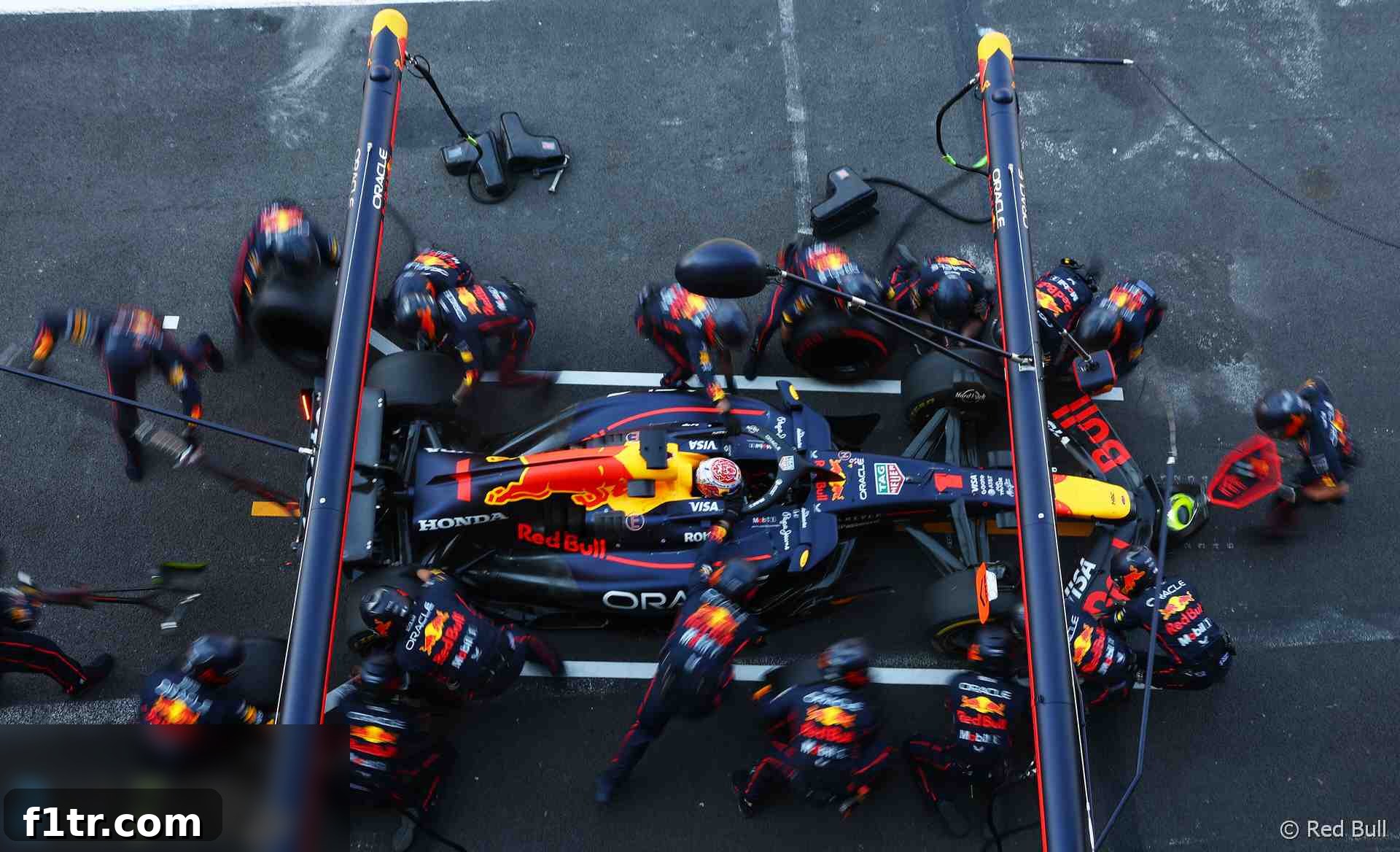
Max Verstappen, the reigning Formula 1 world champion, expressed genuine surprise at the tactical decisions made by his rivals during the Mexican Grand Prix. The Red Bull driver candidly admitted that he had anticipated more teams would mimic his squad’s highly effective medium-to-soft tyre strategy, which ultimately played a pivotal role in securing his podium finish on a challenging weekend. This strategic divergence underscored the unique demands of the Autódromo Hermanos Rodríguez and the ever-present gamble teams face when choosing their race day approach.
Advert | Become a Supporter & go ad-free
Red Bull Racing’s tactical foresight saw both of their drivers starting the Mexican Grand Prix on the medium compound tyres – a stark contrast to many of their top-ten competitors who opted for the softer, faster, but less durable alternative. This bold choice allowed Verstappen to extend his initial stint significantly, delaying his first and only pit stop until a later stage in the race. The benefit was clear: he could then switch to the softest available tyres for a powerful final push, enabling him to maximize performance when track conditions and fuel loads were optimal. In stark contrast, many of the drivers who began the race on soft tyres found themselves in a predicament, needing to make a second pit stop, which inevitably cost them valuable track position and precious seconds, ultimately dropping them behind Verstappen in the final standings.
Following the race, a somewhat incredulous Verstappen recounted his thought process, stating that starting on the soft tyres was never truly a consideration for his team. “I was very surprised,” he confessed, reflecting on the grid’s tyre choices. “I didn’t expect to be on the podium. And I think even in the first stint, it was not really looking like it. At the time, I thought we were just slow and struggling on tyres.” This initial struggle highlighted the inherent trade-offs of the medium compound, which offers greater longevity but can lack outright pace and grip in the early stages, particularly when other cars are on faster rubber.
The Autódromo Hermanos Rodríguez circuit presents a distinctive challenge for Formula 1 teams, primarily due to its extreme altitude. Situated over 2,200 meters above sea level, the thin air significantly impacts aerodynamic downforce, engine performance, and crucially, tyre degradation and cooling. Cars generate less downforce, requiring teams to run maximum wing angles to compensate, while engines lose power, and brakes and tyres face increased thermal stress due to less efficient cooling. These unique environmental factors make tyre strategy a high-stakes gamble, as traditional performance metrics can often be skewed. Red Bull’s decision to start on mediums was a calculated risk, banking on their durability to pay dividends as the race unfolded and others suffered from premature tyre wear.
Verstappen further elaborated on the turning point of his race: “When we swapped to the softs and the others were on mediums, it all looked a bit more competitive. Still not to the level of Lando [Norris], if you take the average of the race, but the soft definitely was a better compound to race on, and it all felt a bit better.” This observation underscores the effectiveness of the strategy; by patiently enduring the harder compound, Verstappen was perfectly positioned to unleash his car’s full potential on the softer tyres during the crucial closing laps. The contrast in pace was evident, allowing him to carve his way through the field as his competitors wrestled with degrading or less optimal medium tyres.
Despite the eventual podium finish, Verstappen acknowledged the inherent difficulties of the weekend. “So I think overall to be [third] has been really good for us [on] a difficult weekend,” he concluded. This sentiment highlights the constant battle in Formula 1, where even the most dominant teams can face weekends where their car isn’t perfectly suited to the circuit or conditions. The ability to adapt, make brave strategic calls, and execute them flawlessly becomes paramount, often salvaging strong results from what could otherwise be a disappointing outcome.
Advert | Become a RaceFans supporter andgo ad-free
The early stages of the Mexican Grand Prix were particularly challenging for Verstappen, as he grappled with a noticeable lack of grip while on the medium compound tyres, which were harder than those fitted to many of the cars around him. “Very quickly I could see that the grip was just not there, and I was really struggling actually to just follow the cars ahead of me,” he explained. This struggle to maintain close proximity to competitors on faster tyres is a common predicament in Formula 1, often leading to a loss of aerodynamic performance and making overtakes incredibly difficult. Verstappen’s experience illustrates the patience required to execute an alternative strategy, trusting that the long-term benefits will outweigh the short-term struggles.
Adding to the early race drama was a chaotic incident at the very start. Verstappen had a strong launch off the line, finding himself in a high-speed slipstream battle with Lando Norris and both Ferrari drivers as they hurtled towards the notoriously tight Turn 1. The inherent risks of such multi-car fights became immediately apparent. “I had a very good start. Then you just follow the slipstream – three-wide, four-wide – just following what the car next to you is doing,” Verstappen recounted. In the heat of the moment, with cars converging, he was forced to take evasive action, moving further and further left. This aggressive maneuver led him onto the kerb, where his car began to bottom out – a terrifying moment where the underside of the car repeatedly strikes the track surface, unsettling the chassis and risking damage.
The consequences were immediate and dramatic. “So that was quite hectic and then a bit of rallying in between turns one and two. That was quite fun,” he quipped, downplaying what must have been a heart-stopping moment for any racing driver. This “rallying” referred to the car momentarily losing traction and sliding, requiring expert car control to bring it back under command and avoid a collision or a significant time loss. Despite the chaotic off-track excursion, Verstappen demonstrated his renowned composure and skill, quickly regaining control and rejoining the circuit. “Then I got back onto the track, found my position again. The first few laps were a bit hectic,” he concluded, providing a glimpse into the intense concentration and split-second decisions required at the pinnacle of motorsport.
The strategic miscalculation by many of Red Bull’s rivals served as a stark reminder of the complexities of Formula 1 tyre management, especially at a circuit as unique as Mexico City. Teams often face a dilemma: prioritize qualifying pace and initial race aggression with soft tyres, or opt for a more conservative, durable medium compound for a longer first stint. While soft tyres offer immediate speed and the potential to gain track position early on, their rapid degradation can necessitate an extra pit stop, effectively conceding any early advantages. The Mexican Grand Prix became a masterclass in strategic execution for Red Bull and Max Verstappen, highlighting their ability to analyze conditions, anticipate rivals’ moves, and commit to a plan that ultimately delivered a valuable podium finish on what was, by their own admission, a challenging weekend.
Miss nothing from RaceFans
Get a daily email with all our latest stories – and nothing else. No marketing, no ads. Sign up here:
2025 Mexican Grand Prix
- F1 fans shocked as ferry company screens “adult film” by mistake
- Russell: Lack of penalties over corner-cutting was ‘especially unfair for Lewis’
- Williams aim to give Albon more “consistent” car after consecutive Q1 exits
- Lawson “not at fault” for marshal incident says FIA following criticism from Mexico’s OMDAI
- Stats: Norris takes F1’s biggest win for two years as Ferrari go win-less for 12 months
Browse all 2025 Mexican Grand Prix articles