Stoffel Vandoorne’s Belgian GP Struggles: Unraveling McLaren’s 2018 Woes
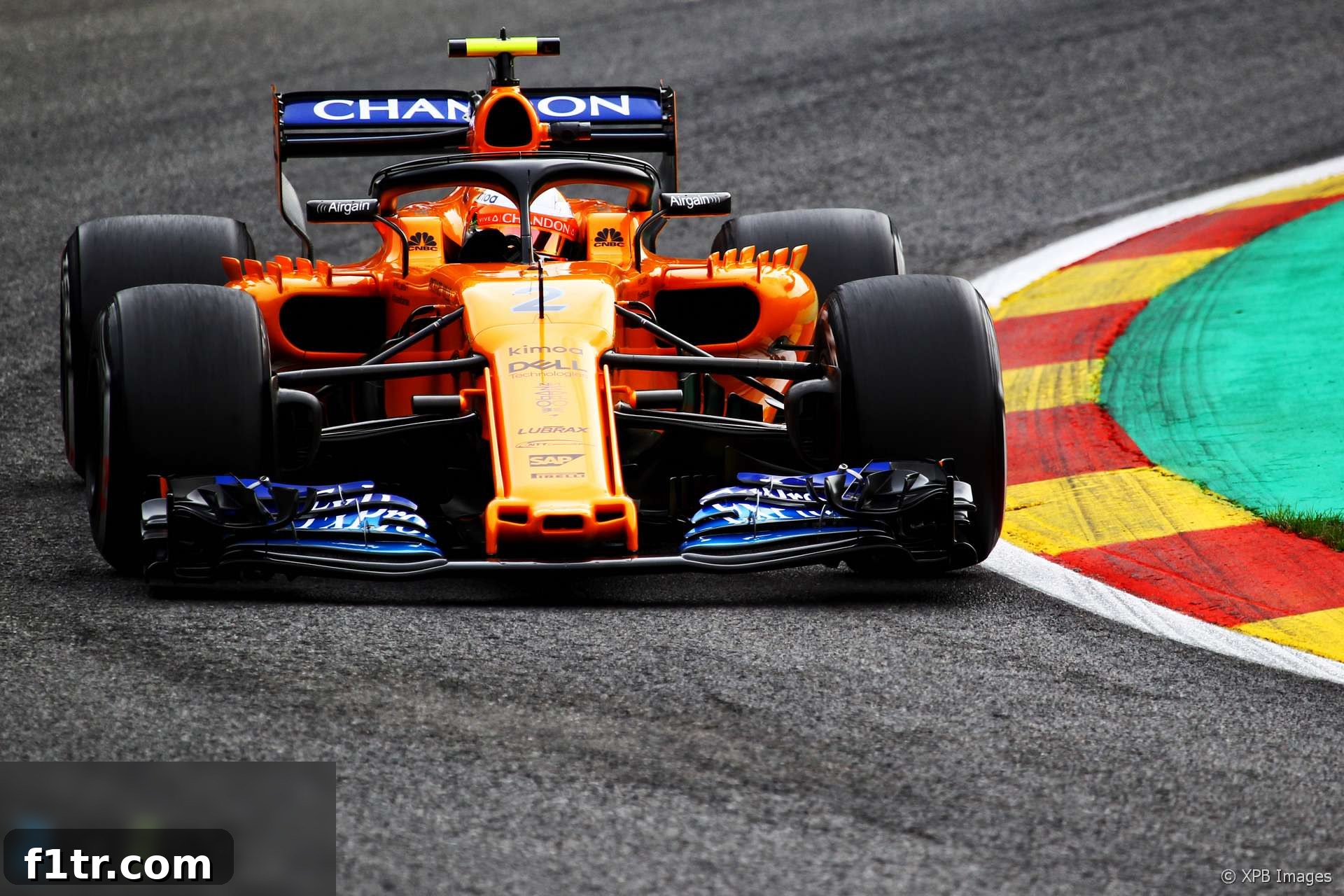
The 2018 Formula 1 season was a particularly challenging one for McLaren, and the Belgian Grand Prix at Spa-Francorchamps proved to be another stark reminder of their struggles. For home hero Stoffel Vandoorne, the weekend was especially brutal, culminating in a last-place qualifying performance that left him unsurprised but undoubtedly disappointed. His grim assessment of the team’s machinery and his own situation painted a clear picture of the adversity faced by both driver and team during this difficult period.
Vandoorne’s P20 finish in qualifying was not an isolated incident but rather the culmination of a weekend-long battle with an uncompetitive car. He had consistently found himself at the bottom of the time sheets in all three free practice sessions leading up to qualifying. This consistent lack of pace underscored the deep-seated issues plaguing the McLaren MCL33, preventing the team from making any significant inroads against their rivals.
A Weekend of Consistent Struggles and Unmet Expectations
Reflecting on his qualifying session, Vandoorne’s words were tinged with a weary realism. “I think no real surprises from the qualifying,” he stated, a sentiment that speaks volumes about the team’s prevailing mindset. “We knew it was going to be difficult. We never really had one clean session this weekend without problems. I don’t think it’s a huge surprise to be out in Q1.” This candid admission highlighted the persistent technical glitches and the overall lack of performance that had become a hallmark of McLaren’s 2018 campaign.
Indeed, the entire race weekend at Spa had been plagued by various issues for Vandoorne. A high-speed spin during the crucial final practice session further compounded his woes, denying him the opportunity to complete a vital qualifying simulation run. This setback meant that he entered qualifying with less data and confidence than his competitors. However, the Belgian driver was quick to downplay the potential impact of this missed opportunity. He openly doubted that a clean run would have yielded significantly better results, indicating a deeper problem with the car’s fundamental performance rather than mere operational missteps.
The Elusive Miracle and Strategic Limitations
“I don’t think there would have been a huge miracle,” Vandoorne remarked, dismissing any notion that a perfect qualifying lap could have dramatically altered his fortunes. “We tried to play every card today with a bit of slipstreaming as well. We didn’t really progress any more. I don’t think it would have made a huge difference.” His comments shed light on the team’s attempts to employ tactical advantages, such as slipstreaming on the long straights of Spa, but even these efforts proved insufficient to overcome the car’s inherent deficiencies. The inability to “progress any more” suggested that the MCL33 had hit its performance ceiling, leaving little room for driver skill or strategic finesse to make a meaningful difference.
Vandoorne’s summary of the situation was blunt and to the point: “I think just the general performance explains pretty much everything. We’ve been last in almost every session. We’ve had so many problems this weekend.” This reiterated the critical point that the car itself was simply not competitive. The recurring “problems” could encompass a range of issues, from aerodynamic instability and mechanical grip deficits to challenges in power unit deployment and reliability. Regardless of the specific technical causes, the outcome was consistent: McLaren was struggling to compete at the highest level of motorsport, leaving their drivers stranded at the back of the grid.
Stoffel Vandoorne’s Defense and the Weight of Expectations
Amidst the team’s struggles, the pressure on Stoffel Vandoorne was immense. As a highly-rated junior driver with a stellar track record in feeder series, his F1 career had not unfolded as many had predicted. With his future in Formula 1 constantly under scrutiny, Vandoorne felt compelled to articulate his worth, emphasizing that his performance was constrained by the equipment at his disposal. He firmly believed he had done everything within his power to demonstrate his capabilities, even in the face of overwhelming adversity.
“I think I’ve proven in the past that I can win championships,” he asserted, referencing his dominant title victories in GP2 (now Formula 2). “I’ve been closer than ever to Fernando Alonso. There’s nothing much more I can do.” This declaration was a clear defense of his talent, highlighting his past achievements and his ability to match a two-time world champion in the same machinery – a significant feat often overlooked amidst the team’s overall poor performance. His proximity to Fernando Alonso, a driver widely regarded as one of the greatest of his generation, served as a crucial benchmark for Vandoorne’s own skill set, suggesting that the car, rather than the driver, was the primary limiting factor.
The Belgian Grand Prix held additional significance for Vandoorne as his home race. The opportunity to perform in front of his compatriots at the iconic Spa-Francorchamps circuit made the team’s poor showing even more disheartening. “It’s [my] home grand prix and it’s a real shame that we don’t have better machinery to really put on a good show and give [the fans] a good result,” he lamented. This sentiment perfectly captured the personal disappointment of failing to deliver for his home crowd, underscoring the emotional toll that such persistent underperformance can take on a driver.
McLaren’s Broader Crisis: The 2018 Season Context
The struggles at Spa were not an isolated incident but symptomatic of McLaren’s broader difficulties in the 2018 Formula 1 season. Following a tumultuous three-year partnership with Honda that yielded dismal results, McLaren had switched to Renault power units with renewed optimism. There was a genuine belief within the team that with a competitive engine, their chassis designers could finally demonstrate their prowess. However, this hope quickly turned to disillusionment as the MCL33 proved to be a complex and aerodynamically unpredictable machine, often described as having significant drag and a narrow operating window.
Despite the change in engine supplier, McLaren’s performance failed to improve significantly, often leaving them battling in the lower midfield or at the back of the grid. This presented a stark contrast to their illustrious history as one of Formula 1’s most successful teams. The constant battle with car performance not only demoralized the drivers but also placed immense pressure on the entire team, from the engineering department to the strategists. The 2018 season became a painful year of introspection and restructuring for McLaren, as they grappled with the reality of their decline and sought a path back to competitiveness.
For a team with McLaren’s heritage, consistently finishing at the bottom of the standings was an unacceptable position. The issues extended beyond merely the engine, indicating fundamental problems with the car’s aerodynamic philosophy and overall design. The drivers, Stoffel Vandoorne and Fernando Alonso, often had to push the car beyond its limits, leading to frequent incidents and a constant battle for grip and balance. This environment made it incredibly difficult for any driver, regardless of their talent, to extract meaningful performance or showcase their true abilities.
The Path Forward: For Vandoorne and McLaren
Stoffel Vandoorne’s candid remarks at the Belgian Grand Prix encapsulated the frustration and helplessness felt by a talented driver trapped in an underperforming car. His insistence on his own capabilities, backed by championship wins and a strong comparison to a formidable teammate like Fernando Alonso, highlighted the unfortunate reality that Formula 1 is as much about the machinery as it is about the man behind the wheel.
Ultimately, the 2018 season marked the end of Vandoorne’s Formula 1 career with McLaren, as the team opted for a fresh lineup for 2019. While he moved on to other successful ventures in motorsport, his time at McLaren during this challenging era remains a poignant chapter, showcasing the immense pressure and limited opportunities faced by drivers when their equipment fails to deliver. McLaren, too, embarked on a long and arduous journey of rebuilding, learning valuable lessons from their struggles in 2018 and laying the groundwork for a more competitive future. The Belgian Grand Prix, though a low point for Vandoorne, became another significant marker in McLaren’s ongoing quest to reclaim their place at the pinnacle of motorsport.
The story of Stoffel Vandoorne at Spa is a microcosm of the challenges faced by many drivers and teams in Formula 1 – a relentless pursuit of performance where even the most talented individuals can be overshadowed by the limitations of their machinery. It serves as a powerful reminder of the complex interplay between driver skill, technical prowess, and strategic execution that defines success in the elite world of Formula 1.
2018 F1 season
- F1 feared “death knell” for Drive to Survive after Ferrari and Mercedes snub
- McLaren staff told us we were “totally crazy” to take Honda engines in 2018 – Tost
- ‘It doesn’t matter if we start last’: How Red Bull’s junior team aided Honda’s leap forward
- Honda’s jet division helped F1 engineers solve power unit problem
- McLaren Racing losses rise after Honda split
Browse all 2018 F1 season articles