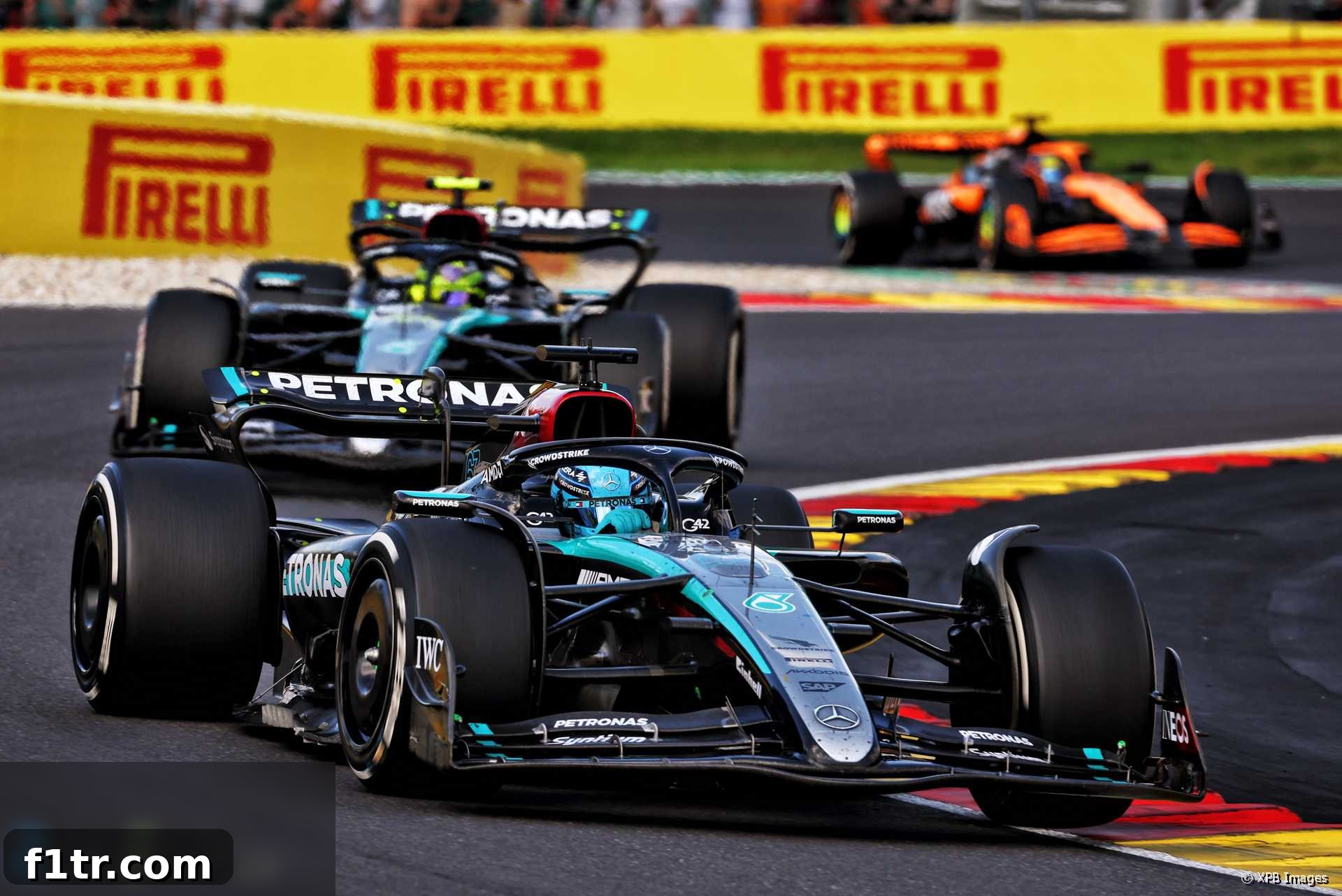
The 2024 Belgian Grand Prix delivered a rollercoaster of emotions, particularly for the Mercedes-AMG Petronas F1 Team. In a fleeting two-and-a-half-hour window, George Russell stood as the celebrated victor, only for his triumph to be cruelly snatched away by a post-race disqualification. This dramatic turn of events left teammate Lewis Hamilton in a state of dismay, grappling with how Russell, seemingly from behind, had managed to outmaneuver him on track. This article delves into the intricate radio communications that shaped Mercedes’ race, Hamilton’s evolving understanding of the strategy, and the critical factors that led to one of the most talked-about disqualifications in recent Formula 1 history.
Hamilton had initially seized control of the race, leading the pack with a strong pace. However, his second pit stop allowed Russell to ascend to the provisional lead. What followed was a daring strategic gamble: Russell successfully convinced his Mercedes engineers to forgo a second pit stop, a decision that, on the face of it, secured him the race victory. Yet, the additional wear and tear inflicted upon his tires by this aggressive one-stop strategy is now widely suspected to be the root cause of his subsequent disqualification as the car was found to be underweight. This crucial detail, however, remained unknown during the race, leaving Hamilton to express his deep disappointment, wishing he had pursued the same unconventional strategy as his teammate.
“If you listen [to the radio chatter] you could have heard what I said to the team most of the time,” Hamilton recounted post-race, clearly believing he had more to give on his tires. “I think the tyres were pretty good. I still had plenty of tyres and I was going quicker. I didn’t want to stop.” Mercedes’ internal radio transmissions from the race, meticulously analyzed, reveal that while Hamilton indeed began to ponder the possibility of extending his second stint as he approached the pits on lap 26, he wasn’t quite ready to fully commit to such an audacious call. This nuanced difference in driver conviction and team communication would ultimately define their respective races.
Unveiling the Strategy: Hamilton and Russell’s Belgian GP Radio Dialogue
To fully grasp the unfolding drama and the divergent strategies, we dissect the key radio exchanges between the Mercedes drivers and their respective race engineers:
- “Target plus eight”: Early Signals of Extended Tire Life
- “The tyres are still good though”: Hamilton’s Hesitation, Russell’s Conviction
- “I’m still going green”: Russell Pushes for the One-Stop
- “So that is George ahead”: The Data Confirms Mercedes’ Gamble
- “Am I on target to beat him or not?”: Hamilton’s Pursuit
- “Are you saying Piastri’s behind me?”: Race to the Finish
- “Give each other plenty of space”: A Tense Climax at Spa
- “Tyre whisperer!”: Triumph, Irony, and Disqualification
“Target plus eight”: Early Signals of Extended Tire Life
By lap 20 of the challenging Spa-Francorchamps circuit, the initial flurry of pit stops from the front runners had concluded. Lewis Hamilton held a commanding lead over Charles Leclerc and Oscar Piastri. Meanwhile, George Russell, demonstrating impressive racecraft, had just secured fourth place by executing a decisive overtake on Sergio Perez, a move that garnered praise from his race engineer, Marcus Dudley. At this juncture, the standard race strategy for Mercedes, mirroring most teams, was a two-stop affair for both drivers. However, early indicators suggested that tire degradation was proving to be less severe than initially forecasted. This vital observation led to an immediate revision in strategy: Hamilton was informed his second pit stop would be delayed by four laps, while Russell’s was pushed back by a significant eight laps, hinting at the potential for a radically different race.
| Lap: 21/44 HAM: 1’48.396, RUS: 1’47.763 | |||||||||||||||||||||||||||||||||||||||||||||||||||
| Dudley | Really nice job. Really good job. Well done, mate. That was really good use of the energy there. So Piastri next car, four seconds ahead. | ||||||||||||||||||||||||||||||||||||||||||||||||||
| Dudley | So Perez has pitted, got Verstappen 2.1. | ||||||||||||||||||||||||||||||||||||||||||||||||||
| Lap: 22/44 HAM: 1’48.368, RUS: 1’48.588 | |||||||||||||||||||||||||||||||||||||||||||||||||||
| Bonnington | Similar pace to Leclerc and Perez. George 47.7. | Dudley | George strat six. | ||||||||||||||||||||||||||||||||||||||||||||||||
| Dudley | So Piastri ahead of doing 48.4 on that hard tyre. | ||||||||||||||||||||||||||||||||||||||||||||||||||
| Lap: 23/44 HAM: 1’48.338, RUS: 1’48.412 | |||||||||||||||||||||||||||||||||||||||||||||||||||
| Bonnington | Currently target plus four. | Dudley | And George recommend using de-rate button here. | ||||||||||||||||||||||||||||||||||||||||||||||||
| Dudley | Lewis at the front doing 48.4 currently. | ||||||||||||||||||||||||||||||||||||||||||||||||||
| Russell | What kind of de-rate? | ||||||||||||||||||||||||||||||||||||||||||||||||||
| Dudley | This is for pack management. So we want de-rate for pack management. | ||||||||||||||||||||||||||||||||||||||||||||||||||
| Lap: 24/44 HAM: 1’48.028, RUS: 1’48.325 | |||||||||||||||||||||||||||||||||||||||||||||||||||
| Hamilton | Tyres feel good. | Dudley | Battery is looking better now mate. | ||||||||||||||||||||||||||||||||||||||||||||||||
| Bonnington | Good improvement turn 14, gap 2.5. Leclerc 48.4, just keep ekeing that gap out slowly. | Dudley | So we are currently target plus eight. | ||||||||||||||||||||||||||||||||||||||||||||||||
| Hamilton | How many laps have I done so far? | Russell | Tyres feel like they’re starting to stabilise. | ||||||||||||||||||||||||||||||||||||||||||||||||
| Bonnington | [Unclear] four laps. And it’s been 14 on this tyre. | Dudley | Copy. So we just keep closing this gap to Piastri. | ||||||||||||||||||||||||||||||||||||||||||||||||
“The tyres are still good though”: Hamilton’s Hesitation, Russell’s Conviction
The strategic landscape of the race dramatically shifted on lap 25 when Charles Leclerc, a direct rival, made his second pit stop. This move immediately triggered a response from Mercedes, prompting them to call Lewis Hamilton into the pits on the very next lap. Hamilton’s radio communications reveal clear hesitation regarding this second stop. Multiple times, he emphasized to his race engineer, Peter Bonnington, that his tires were still performing well and in excellent condition. However, Bonnington underscored the team’s primary concern: ensuring they did not concede track position to Leclerc, who, on fresh tires, could pose a significant threat. This highlights the delicate balance between driver feel and strategic imperative.
Meanwhile, George Russell, ever vigilant, was actively monitoring his rivals’ movements via the circuit’s video screens. He undoubtedly understood the strategic implications of Leclerc’s pit stop for Mercedes’ overall race plan. As he approached the final chicane and the pit lane entrance, Russell, mirroring Hamilton’s sentiment but perhaps with greater conviction, also communicated to his team that his tires felt robust and capable of enduring the race distance. This contrasting yet similar feedback from both drivers set the stage for Mercedes’ eventual split strategy.
| Lap: 25/44 HAM: 1’47.845, RUS: 1’47.992 | |||||||||||||||||||||||||||||||||||||||||||||||||||
| Bonnington | Leclerc pit lane now. | Dudley | So main lap time loss turn 10, 12, 13. | ||||||||||||||||||||||||||||||||||||||||||||||||
| Bonnington | So it’ll be strat mode four, strat four. | Russell | Front feels like it’s sliding too much in 10. | ||||||||||||||||||||||||||||||||||||||||||||||||
| Lap: 26/44 HAM: 1’52.047, RUS: 1’47.759 | |||||||||||||||||||||||||||||||||||||||||||||||||||
| Hamilton | Kemmel Tyres are good. The same distance? |
Dudley | Understood. | ||||||||||||||||||||||||||||||||||||||||||||||||
| Bonnington | Approaching Pouhon Lewis we’ll box, box. |
Dudley | So Leclerc has boxed. | ||||||||||||||||||||||||||||||||||||||||||||||||
| Russell | Think about the one-stop. | ||||||||||||||||||||||||||||||||||||||||||||||||||
| Dudley | So it’ll be 18 laps remaining end of this lap. | ||||||||||||||||||||||||||||||||||||||||||||||||||
| Hamilton | Is it the same distance I’m going? | Russell | Approaching chicane Tyres feel good. |
||||||||||||||||||||||||||||||||||||||||||||||||
| Bonnington | Plus three laps. | Dudley | Copy that. We’ve got Lewis in pits now. So Perez right on your window at the moment doing 48.0. | ||||||||||||||||||||||||||||||||||||||||||||||||
| Hamilton | Exiting Pouhon The balance is good now. I’d say plus one. |
Russell | Yeah, tyres are good. | ||||||||||||||||||||||||||||||||||||||||||||||||
| Hamilton | Exiting Paul Frere The tyres are still good though. |
||||||||||||||||||||||||||||||||||||||||||||||||||
| Bonnington | Copy. We’ll still cover so box, box. Currently three-and-a-half seconds safe to Leclerc. Hamilton pits |
||||||||||||||||||||||||||||||||||||||||||||||||||
“I’m still going green”: Russell Pushes for the One-Stop
As Lewis Hamilton completed his second pit stop, Mercedes’ attention sharply turned to George Russell. The team began to calculate the potential ramifications of Russell’s second stop, contemplating where he would emerge on track if they stuck to the original two-stop plan. However, Russell, sensing a unique opportunity, intensified his plea to the team, urging them to take a bold gamble: to extend his current tire stint and attempt to complete the race on a single pit stop. His confidence was palpable, bolstered by continually improving lap times, which he relayed to his engineers. Remarkably, within a mere two laps of intense internal deliberation, the Mercedes pit wall was swayed by Russell’s conviction and the promising data, agreeing to commit to the audacious one-stop strategy. This decision marked a pivotal moment in the race, placing Russell firmly in contention for an unexpected victory.
| Lap: 27/44 HAM: 2’01.300, RUS: 1’47.707 | |||||||||||||||||||||||||||||||||||||||||||||||||||
| Dudley | So George, we need to give it everything we’ve got ekeing out this gap to Perez. We’re going to have Norris an undercut threat soon. | ||||||||||||||||||||||||||||||||||||||||||||||||||
| Russell | Are you sure these tyres won’t go ’til the end? | ||||||||||||||||||||||||||||||||||||||||||||||||||
| Dudley | They will. But we think it’s quicker to stop. | ||||||||||||||||||||||||||||||||||||||||||||||||||
| Lap: 28/44 HAM: 1’47.396, RUS: 1’47.665 | |||||||||||||||||||||||||||||||||||||||||||||||||||
| Russell | At the moment they’re just getting quicker and quicker, the tyres. | ||||||||||||||||||||||||||||||||||||||||||||||||||
| Dudley | We’re discussing. | ||||||||||||||||||||||||||||||||||||||||||||||||||
| Dudley | We’ve got Verstappen in the pits now. | ||||||||||||||||||||||||||||||||||||||||||||||||||
| Russell | Yeah affirm. I’m still going green, mate. | ||||||||||||||||||||||||||||||||||||||||||||||||||
| Dudley | Affirm. So 16 laps remaining, Verstappen going onto the medium tyre. | ||||||||||||||||||||||||||||||||||||||||||||||||||
“So that is George ahead”: The Data Confirms Mercedes’ Gamble
As Lewis Hamilton exited the pits after his second stop, he found himself trailing Oscar Piastri and George Russell, both of whom were yet to make their final tire change. This sequence of events, while initially frustrating for Hamilton, provided Mercedes with a critical piece of information that would ultimately embolden their decision to stick with Russell’s one-stop strategy. Neither driver had extensively tested the hard compound tires during practice sessions, making their real-time performance somewhat of an unknown. However, when Hamilton’s first set of hard tires was removed from his car, the team discovered that the wear was significantly lower than anticipated. This crucial finding was immediately relayed to Hamilton, simultaneously reinforcing the viability of Russell’s bold gamble. Concurrently, Russell’s engineers double-checked his confidence in remaining on track without another stop, a confirmation he readily provided, sealing Mercedes’ commitment to his unconventional path. This moment highlights how real-time data analysis and driver feedback intertwine to shape high-stakes Formula 1 strategies.
| Lap: 29/44 HAM: 1’47.429, RUS: 1’47.760 | |||||||||||||||||||||||||||||||||||||||||||||||||||
| Hamilton | How far ahead is he? | Dudley | So Norris in the pits now. | ||||||||||||||||||||||||||||||||||||||||||||||||
| Bonnington | It’s 13 seconds. | ||||||||||||||||||||||||||||||||||||||||||||||||||
| Hamilton | Is that him up ahead, I can see? | ||||||||||||||||||||||||||||||||||||||||||||||||||
| Bonnington | So that is George ahead, eight seconds. Tyre wear previous set very, very low. | ||||||||||||||||||||||||||||||||||||||||||||||||||
| Bonnington | So Piastri 47.6. | ||||||||||||||||||||||||||||||||||||||||||||||||||
| Hamilton | What time do I need to be doing? | ||||||||||||||||||||||||||||||||||||||||||||||||||
| Lap: 30/44 HAM: 1’47.031, RUS: 1’47.628 | |||||||||||||||||||||||||||||||||||||||||||||||||||
| Bonnington | Lewis we think something in the mid-46, mid-46. | Dudley | You’ve got Lewis car behind, eight seconds, currently 47.4. Piastri boxing this lap. | ||||||||||||||||||||||||||||||||||||||||||||||||
| Bonnington | So Piastri is pitting. Piastri pits now. George 7.2 ahead, 47.6. | Dudley | And George, just confirming you’re happy to stay out. We’ve got three cars now… | ||||||||||||||||||||||||||||||||||||||||||||||||
| Lap: 31/44 HAM: 1’47.182, RUS: 1’47.480 | |||||||||||||||||||||||||||||||||||||||||||||||||||
| Hamilton | Are we safe with the situation with the McLaren behind pit stop? | Russell | Yes. Copy. | ||||||||||||||||||||||||||||||||||||||||||||||||
| Bonnington | Affirm, safe behind. | Dudley | …in our pit window. | ||||||||||||||||||||||||||||||||||||||||||||||||
| Bonnington | So George 47.5. | Dudley | Lewis 47.2. | ||||||||||||||||||||||||||||||||||||||||||||||||
| Hamilton | How far is he ahead? | ||||||||||||||||||||||||||||||||||||||||||||||||||
| Bonnington | 6.8. You’ve got 12 laps remaining when you cross the line. | ||||||||||||||||||||||||||||||||||||||||||||||||||
“Am I on target to beat him or not?”: Hamilton’s Pursuit
With McLaren opting against the risky one-stop strategy for Oscar Piastri, George Russell found himself in the lead of the Belgian Grand Prix. His teammate, Lewis Hamilton, now on fresher tires, was rapidly closing the gap, consistently shaving off approximately half a second per lap. This began a tense pursuit across the iconic Spa circuit. Hamilton, ever the competitor, pressed his team for a clear assessment: was he on course to catch Russell and contend for the win? His race engineer, Peter Bonnington, responded with a cautious but telling evaluation, indicating that while the gap was shrinking, the outcome would be “close.” This ambiguity underscored the difficulty in predicting the performance of Russell’s highly-worn hard tires over the remaining laps, adding another layer of suspense to the intra-team battle.
Stay Connected with Formula 1 Insights
Don’t miss a beat from the world of F1. Receive our latest analyses, exclusive insights, and race reports directly to your inbox.
(This section is for illustrative purposes, actual subscription functionality requires backend integration.)
- Email address (required)
- First name (optional)
- Last name (optional)
- I accept the privacy rules of this site
- Subscribe
| Lap: 32/44 HAM: 1’47.003, RUS: 1’47.596 | |||||||||||||||||||||||||||||||||||||||||||||||||||
| Hamilton | There is a weakness anywhere? | Dudley | Think about one gear higher turns 12,13. | ||||||||||||||||||||||||||||||||||||||||||||||||
| Bonnington | So only losses to George mid-speed turn seven but they are small. | ||||||||||||||||||||||||||||||||||||||||||||||||||
| Lap: 33/44 HAM: 1’46.653, RUS: 1’47.315 | |||||||||||||||||||||||||||||||||||||||||||||||||||
| Bonnington | So George a 47.3. | ||||||||||||||||||||||||||||||||||||||||||||||||||
| Hamilton | Gap? | ||||||||||||||||||||||||||||||||||||||||||||||||||
| Bonnington | Gap is at 5.8. | ||||||||||||||||||||||||||||||||||||||||||||||||||
| Hamilton | How much quicker than him? Am I on target to beat him or not? | ||||||||||||||||||||||||||||||||||||||||||||||||||
| Bonnington | It’s close. It is close. George, 24-lap hard tyres. | ||||||||||||||||||||||||||||||||||||||||||||||||||
“Are you saying Piastri’s behind me?”: Race to the Finish
In a fleeting moment of confusion on the radio, it became apparent that Lewis Hamilton hadn’t immediately registered Oscar Piastri’s pit stop and subsequent drop behind him. This small detail underscored Hamilton’s intense focus on his primary target: George Russell. As the race entered its final stages, the radio communications between the two Mercedes drivers and their engineers grew increasingly sparse, punctuated only by essential updates on the shrinking gap between the two Silver Arrows. This quiet intensity was a testament to the high stakes of the remaining laps.
For George Russell, this period marked the critical turning point where he genuinely began to believe in the possibility of an improbable victory. He later described his mindset: “I was watching the TV screens every lap, down after Eau Rouge, and looking at the gap. They just weren’t catching me as quick as I expected and my lap times were just improving every single lap. That was far from what we all anticipated. But it just goes to show how difficult it is to predict. I think every lap we were driving, 20 drivers, full gas around this circuit and it was just getting faster and faster. The grip was improving and the tyres just felt really in a great state.” Russell’s ability to manage his tires and maintain competitive lap times, defying all pre-race expectations, was nothing short of remarkable, transforming a strategic gamble into a potential masterstroke.
| Lap: 35/44 HAM: 1’46.729, RUS: 1’47.562 | |||||||||||||||||||||||||||||||||||||||||||||||||||
| Bonnington | Gap to Piastri at 3.6. Gap to Piastri at 3.6. | Dudley | Ten laps remaining. | ||||||||||||||||||||||||||||||||||||||||||||||||
| Hamilton | Half a lap later Wait, are you saying Piastri’s behind me? |
||||||||||||||||||||||||||||||||||||||||||||||||||
| Bonnington | Piastri, Leclerc are racing. Still Leclerc behind. 4.5 seconds. | ||||||||||||||||||||||||||||||||||||||||||||||||||
| Hamilton | Okay. Gap ahead? | ||||||||||||||||||||||||||||||||||||||||||||||||||
| Bonnington | 4.4. | ||||||||||||||||||||||||||||||||||||||||||||||||||
| Hamilton | Any areas I can improve? | ||||||||||||||||||||||||||||||||||||||||||||||||||
| Bonnington | Exit turn 19 only area to improve. George was 47.5. | ||||||||||||||||||||||||||||||||||||||||||||||||||
| Lap: 36/44 HAM: 1’46.931, RUS: 1’47.620 | |||||||||||||||||||||||||||||||||||||||||||||||||||
| Bonnington | So Piastri now through, gap 5.6. | Dudley | Eight laps remaining. | ||||||||||||||||||||||||||||||||||||||||||||||||
| Bonnington | So pace still strong for George, 27-lap hard tyre. | ||||||||||||||||||||||||||||||||||||||||||||||||||
| Lap: 37/44 HAM: 1’47.042, RUS: 1’47.919 | |||||||||||||||||||||||||||||||||||||||||||||||||||
| Dudley | George gap behind Lewis is six seconds to Piastri. And that’s a group of four cars. | ||||||||||||||||||||||||||||||||||||||||||||||||||
| Lap: 38/44 HAM: 1’46.747, RUS: 1’47.600 | |||||||||||||||||||||||||||||||||||||||||||||||||||
| Dudley | Six laps remaining. | ||||||||||||||||||||||||||||||||||||||||||||||||||
| Dudley | Green three, position one. Green three, position one. | ||||||||||||||||||||||||||||||||||||||||||||||||||
| Lap: 39/44 HAM: 1’47.054, RUS: 1’47.796 | |||||||||||||||||||||||||||||||||||||||||||||||||||
| Bonnington | Gap 1.3. | Dudley | Five laps remaining. | ||||||||||||||||||||||||||||||||||||||||||||||||
| Dudley | George just keep this clean. Still got that gap to Piastri, five seconds behind Lewis. | ||||||||||||||||||||||||||||||||||||||||||||||||||
| Dudley | Three laps remaining. | ||||||||||||||||||||||||||||||||||||||||||||||||||
“Give each other plenty of space”: A Tense Climax at Spa
As the final laps approached, Lewis Hamilton’s relentless pace finally brought him within striking distance of his teammate, George Russell. The Mercedes pit wall, acutely aware of the narrowing gap and the potential for a disastrous late-race collision, grew visibly anxious. Their primary directive became clear: “Make sure you give each other plenty of space.” The prospect of a one-two finish, a highly coveted achievement for any team, hung precariously in the balance, threatened by the intense intra-team battle. However, the notoriously difficult overtaking conditions at Spa-Francorchamps, combined with the turbulent air created by Russell’s car, meant that despite Hamilton’s superior pace on fresher tires, a clean overtake never truly looked like a realistic outcome. The focus shifted from outright attack to managing the gap, ensuring both cars reached the finish line intact and in strong positions, preserving a significant points haul for the team. This final phase of the race was a masterclass in strategic tension, driver management, and the inherent challenges of F1 racing at its limits.
| Lap: 40/44 HAM: 1’47.125, RUS: 1’47.631 | |||||||||||||||||||||||||||||||||||||||||||||||||||
| Bonnington | Gap at 0.9. So think about strat 13. Make sure you give each other plenty of space. | ||||||||||||||||||||||||||||||||||||||||||||||||||
| Bonnington | Gap at 0.7. | ||||||||||||||||||||||||||||||||||||||||||||||||||
| Bonnington | Gap at 0.8. | ||||||||||||||||||||||||||||||||||||||||||||||||||
| Lap: 41/44 HAM: 1’47.622, RUS: 1’47.754 | |||||||||||||||||||||||||||||||||||||||||||||||||||
| Bonnington | Gap to Piastri at 2.8. | ||||||||||||||||||||||||||||||||||||||||||||||||||
| Lap: 42/44 HAM: 1’47.387, RUS: 1’47.465 | |||||||||||||||||||||||||||||||||||||||||||||||||||
| Bonnington | Two more laps when we cross the line. | ||||||||||||||||||||||||||||||||||||||||||||||||||
“Tyre whisperer!”: Triumph, Irony, and Disqualification
Despite Lewis Hamilton’s determined efforts, chipping away at the lead in George Russell’s turbulent air, Russell successfully held him off until the penultimate lap. With Hamilton unable to make a decisive move, Russell had, it seemed, executed his audacious one-stop strategy to perfection and secured a sensational victory. The radio channels erupted with jubilation as Russell crossed the finish line. His celebratory screams, “Ha ha ha! Come on! Woo. Oh boys and girls what a performance. Oh yes! Amazing strategy guys. Amazing strategy. You guys are the best! Come on!” perfectly captured the elation of a hard-fought win. Team Principal Toto Wolff’s enthusiastic commendation, “Tyre whisperer, tyre whisperer!” echoed the sentiment of a strategic masterclass, a testament to Russell’s exceptional tire management.
Russell was not alone in adopting a one-stop strategy at Spa; Aston Martin’s drivers, Kevin Magnussen, and Yuki Tsunoda also completed the race on a single set of tires. However, Russell’s achievement stood out as he was the only driver from the four leading teams to successfully pull off such a daring feat. “I was still questioning why nobody else did it,” Russell admitted in the immediate aftermath. “I thought ‘I must be missing something here’ because everybody’s peeling into the pits.” His doubts, tragically, proved to be prescient. Within hours, the devastating news arrived: Russell’s car was found to be one-and-a-half kilograms underweight after the checkered flag, leading to his disqualification. The primary suspicion for this infringement fell on the unanticipated additional tire wear, which likely caused excessive plank wear, contributing to the car being below the minimum weight limit. While other factors might have been at play, the irony of the “Tyre whisperer” being undone by tire-related issues was stark.
| Lap: 43/44 HAM: 1’47.388, RUS: 1’47.301 | |||||||||||||||||||||||||||||||||||||||||||||||||||
| Bonnington | One more lap when we cross the line. Piastri 1.2 behind. | Dudley | So it’ll be one more lap when we cross the line. It’ll be strat five for the final lap. | ||||||||||||||||||||||||||||||||||||||||||||||||
| Bonnington | Strat mode five. | ||||||||||||||||||||||||||||||||||||||||||||||||||
| Lap: 44/44 HAM: 1’47.034, RUS: 1’47.113 | |||||||||||||||||||||||||||||||||||||||||||||||||||
| Bonnington | Well done, Lewis. Top effort there, mate. So down the pit lane please mate. | Dudley | Late overtake press available. | ||||||||||||||||||||||||||||||||||||||||||||||||
| Russell | Ha ha ha! Come on! Woo. | ||||||||||||||||||||||||||||||||||||||||||||||||||
| Dudley | Go down the pit lane the wrong way. | ||||||||||||||||||||||||||||||||||||||||||||||||||
| Russell | Oh boys and girls what a performance. | ||||||||||||||||||||||||||||||||||||||||||||||||||
| Dudley | Wow! Well done. Awesome work. | ||||||||||||||||||||||||||||||||||||||||||||||||||
| Russell | Oh yes! Amazing strategy guys. Amazing strategy. You guys are the best! Come on! | ||||||||||||||||||||||||||||||||||||||||||||||||||
| Dudley | Some pretty good driving as well. | ||||||||||||||||||||||||||||||||||||||||||||||||||
| Russell | Yeah that was alright. | ||||||||||||||||||||||||||||||||||||||||||||||||||
| Dudley | So just look out for people in the fast lane. | ||||||||||||||||||||||||||||||||||||||||||||||||||
| Russell | Yes! Woo-hoo! | ||||||||||||||||||||||||||||||||||||||||||||||||||
| Wolff | Tyre whisperer, tyre whisperer! | ||||||||||||||||||||||||||||||||||||||||||||||||||
| Russell | Tyre whisperer… | ||||||||||||||||||||||||||||||||||||||||||||||||||
As for Lewis Hamilton, his initial feelings of foolishness for not advocating more strongly for a one-stop strategy undoubtedly gave way to a profound sense of relief once the news of Russell’s disqualification became public. The Belgian Grand Prix stands as a vivid reminder of Formula 1’s razor-thin margins, where strategic brilliance can be undone by unforeseen technicalities, and the fine line between victory and disappointment is measured in mere grams.
Further Analysis and Race Insights
The 2024 Belgian Grand Prix was more than just a race; it was a strategic chess match played out at blistering speeds, with real-time data and driver intuition constantly clashing. Russell’s audacious call to extend his tires showcased a daring spirit, pushing the boundaries of what was thought possible at Spa. While the disqualification cast a shadow, it also highlighted the meticulous scrutiny under which Formula 1 teams operate. Every component, every gram, is accounted for, and any deviation, however slight, carries severe consequences.
This event serves as a crucial case study for future race strategies, particularly concerning tire management on high-energy circuits like Spa. Teams will undoubtedly re-evaluate their approaches to monitoring plank wear and predicting tire degradation under various scenarios. Moreover, the radio exchanges offer a fascinating glimpse into the internal dynamics of a top-tier F1 team, revealing the constant negotiation between driver instinct, engineering data, and strategic mandates.
Ultimately, the Belgian Grand Prix of 2024 will be remembered not just for its dramatic finish but for the profound lessons it imparted on strategy, regulations, and the unpredictable nature of elite motorsport. It’s a testament to the fact that in Formula 1, the race isn’t truly over until the final technical checks are complete.
Related Team Radio Transcripts
- “Two balls of steel!” How Leclerc won his battery battle with Hamilton and Russell
- ‘Easy to say when you’re on the pit wall’: How Gasly fight left Verstappen frustrated
- “Leclerc just backed Lewis up”: How Russell saw the fight between the Ferraris
- ‘Just an easy pass with Overtake’: Every radio message from Antonelli’s first F1 win
- Hadjar told Red Bull his car’s performance was “embarrassing” and “just c***”
Browse all team radio transcript articles
More from the 2024 Belgian Grand Prix
- Lost Spa win last year was ‘the best race I’ve ever done in Formula 1’ – Russell
- Belgian GP was “still a win” for Russell despite disqualification
- High plank wear also a factor in Russell’s disqualification, say Mercedes
- Russell is sixth F1 driver to be disqualified after winning a grand prix
- Unheard radio shows why Hamilton missed Russell’s (almost) race-winning strategy
Browse all 2024 Belgian Grand Prix articles