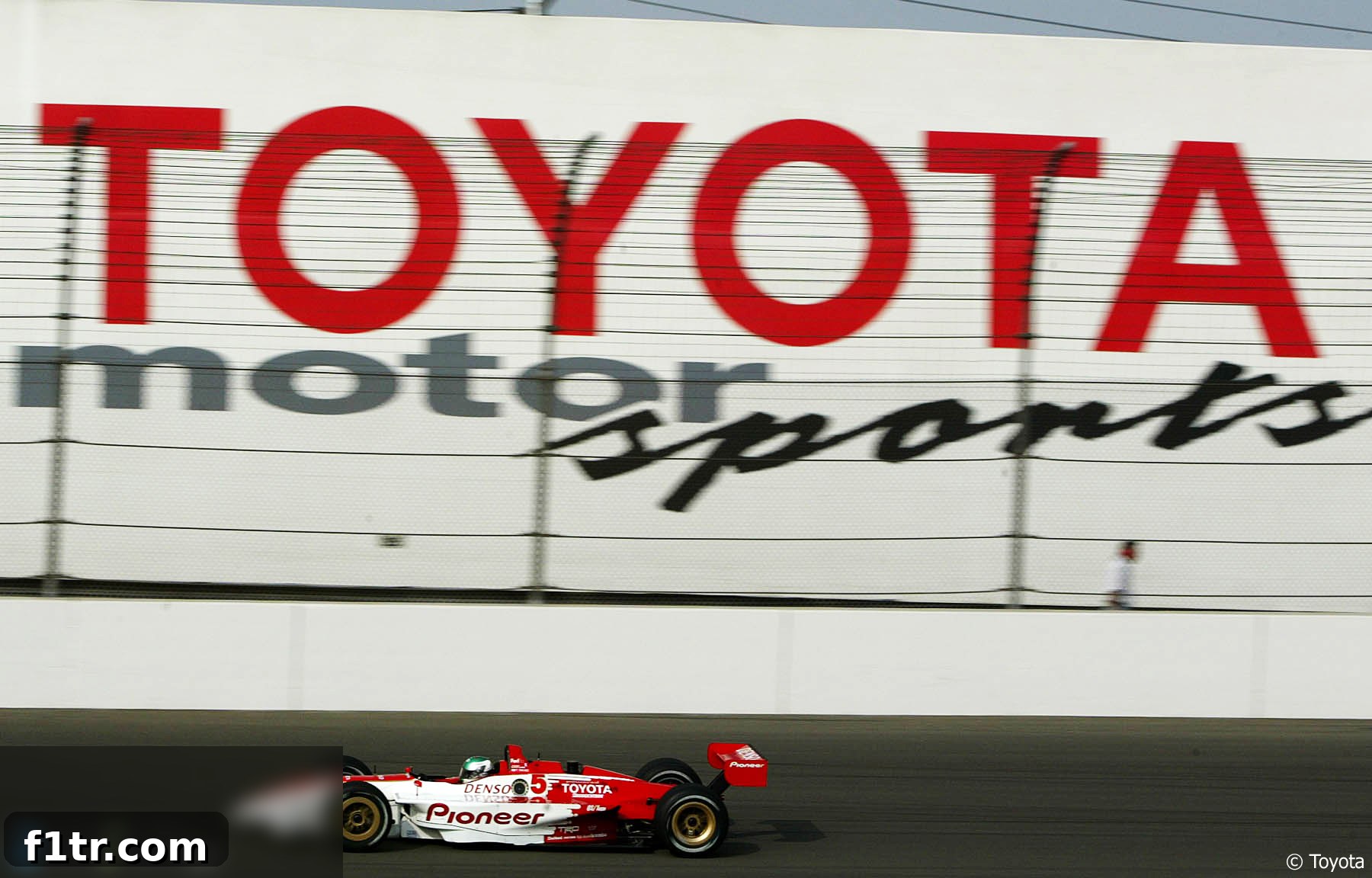
Once a fierce rival to Formula 1, the CART IndyCar championship captivated audiences with spectacular racing and featured legendary drivers like Nigel Mansell, Mario Andretti, and Emerson Fittipaldi. Its races were iconic, its stars global, and its appeal undeniable, fostering a golden era of open-wheel racing in North America and beyond.
However, approximately 15 years ago, this illustrious championship declared bankruptcy. Its decline had been a gradual process, exacerbated by the emergence of the rival Indy Racing League (IRL) in the 1990s, which fractured the sport’s fanbase and diluted its talent pool. The final, critical blow came when CART failed to retain engine manufacturer Toyota, a departure that rapidly accelerated the series’ spiral into insolvency, marking a somber chapter in motorsport history.
In light of these historical events, motorsport expert Dieter Rencken recently engaged with a seasoned professional, deeply knowledgeable in both business and motor racing. This expert offered profound insights into why the collapse of CART, particularly the circumstances surrounding Toyota’s exit, holds significant and potentially alarming resonance for Formula 1 and its current owners, Liberty Media, in today’s dynamic landscape. Their discussion underscored the critical lessons that F1 must internalize to avoid a similar fate.
Advert | Become a Supporter & go ad-free
The American Business Model: A Mirror for F1’s Future
One of the enduring delights of visiting the United States lies in encountering individuals who possess a profound grasp of the intricate business aspects of motor racing. The USA, affectionately known as the ‘Land of the Automobile’ – despite the car’s invention in Germany and its first horseless buggy appearing almost a decade after Gottlieb Daimler’s groundbreaking efforts – boasts the world’s largest economy, with a colossal gross domestic product exceeding $20 trillion. This economic might has historically fostered a unique commercial acumen within its sporting industries, particularly motor racing.
Formula 1 first embraced commercial sponsorship in 1968, a significant step towards modernizing its financial model. Yet, nearly three decades prior, the Indianapolis 500 had already seen a triumph from the ‘Boyle Special,’ a Maserati conspicuously adorned with sponsor decals and named after a proprietary valve-conditioning product. This historical precedence serves as compelling evidence of how far ahead of the economic curve US racing has consistently been. To witness this firsthand, one merely needs to observe the sheer density of logos plastered across NASCAR stock cars. While the branding might occasionally appear somewhat haphazard, American racing teams have long mastered the art of attracting and retaining major commercial partners, translating brand visibility directly into financial sustainability.
Further solidifying F1’s evolving ‘Americanization,’ its commercial rights are now publicly traded on NASDAQ under the ticker ‘FWONK.’ Adding to this transformation, the company’s group headquarters are strategically located in Englewood, Colorado. Two of its three principal executives are quintessentially American, reflecting a clear shift in leadership and strategic focus. Indeed, F1 has explicitly identified the United States as a primary growth area, with specific attention directed towards cultivating new fan bases and commercial opportunities along both the East and West coasts. This strategic pivot signals a deep commitment to expanding F1’s footprint in a market rich with potential, from fan engagement to corporate investment.
Beyond Lap Times: F1 as a Financial Asset
Within this new Americanized context, it is hardly surprising that many US-based professionals approach F1 from a distinct commercial perspective. For them, the sport’s pulse is gauged less by lap times and more by fluctuating share prices. While engineers converse in technical acronyms like DRS and MGU-H, these financial wizards interpret ‘BS’ not as a driver’s convenient excuse for a collision, but as a critical balance sheet. Similarly, ‘EPS’ refers to earnings per share, not Electronically Programmed Stability. This stark contrast highlights a burgeoning cultural divide within F1, where the traditional passion for racing is increasingly intertwined with the cold, hard realities of quarterly reports and investor expectations.
RaceFans conducted an extensive interview with one such financial specialist, who, for professional reasons, opted to remain anonymous. This individual, a lifelong motorsport enthusiast, originally covered races as a sideline while diligently studying stocks and shares. His profound passion for racing and his professional expertise in finance converged dramatically in the late nineties when the CART IndyCar series made its debut on the stock exchange. This unique vantage point allowed him to observe the series’ commercial evolution and eventual downfall with an unparalleled understanding of its underlying financial dynamics.
He meticulously studied CART’s meteoric rise throughout the late 1990s and early 2000s, witnessing its rapid expansion and commercial success. However, he also vividly recalls, with precise detail, the almost immediate onset of CART’s demise, which culminated in the series filing for bankruptcy in 2003. The once-thriving CART.com now starkly displays a “may be for sale” notice, a poignant reminder of a championship that succumbed to complex commercial pressures and internal strife. This personal experience of observing a major motorsport entity’s financial journey has shaped his perspective on the vulnerabilities inherent in the sport’s business model.
F1’s Leadership and Corporate Governance Under Scrutiny
Currently serving as a highly respected business and investment advisor, with a specialized focus on motorsport-aligned enterprises, our source now perceives unsettling parallels and potential warning signs for Formula 1 under Liberty Media’s stewardship. A primary concern stems from the composition of F1’s current leadership, which largely comprises seasoned corporate executives, some of whom are nearing or have already reached conventional corporate retirement age. While it is undeniable that many executives, including F1 CEO and chairman Chase Carey (who turned 66 shortly after this interview), continue to operate successfully beyond 65, the inherent reality is that, sooner or later, a natural inclination towards winding down operations will emerge. This is not, after all, a family-owned enterprise passed down through generations, but a publicly traded company requiring sustained, long-term strategic vision.
Our anonymous source expressed considerable admiration for Chase Carey’s professional background. “[He] led a very large company, while also leading initiatives to maximize individual business units and creating brand-new companies out of thin air. His skill set is very unique,” the expert remarked. This praise extended equally to John Malone, the group chairman and majority owner of Liberty Media and its sister company, Liberty Global. Malone was commended not only for his exceptional intellect but also for his strong moral fiber, highlighting the high regard in which these leaders are held for their past achievements.
Advert | Become a RaceFans supporter andgo ad-free
Despite this admiration, a critical question lingers in our source’s mind: “Is a succession plan in place?” And if such a plan exists, have the key stakeholders, including investors and teams, been publicly informed of its details? The same query applies to the highly capable Ross Brawn, F1’s managing director of motorsport. With a personal fortune estimated at a substantial £100 million, Brawn has no financial imperative to remain in corporate roles. His continued involvement is clearly driven by an intrinsic love for F1 and the formidable personal challenge it presents. Yet, as the 63-year-old (who celebrates his birthday just one day after Carey) approaches an age where ‘grandfatherly’ instincts might take precedence, the question of his long-term commitment and eventual replacement becomes increasingly pertinent.
The third member of F1’s executive triumvirate, commercial head Sean Bratches, is also approaching 60. This further underscores the urgent need for a clearly articulated roadmap detailing leadership succession for a post-Sean era, whenever that may ultimately transpire. This is not merely a suggestion but a fundamental tenet of robust corporate governance. While internal plans may indeed be in development, the expert argues that these strategies should ideally be communicated transparently to key stakeholders, fostering confidence and stability within the organization. A lack of such clarity can breed uncertainty, which is detrimental to a publicly traded entity.
Or perhaps, F1 has yet to truly learn from the half-century reign of Bernie Ecclestone, who notoriously dismissed any suggestions of succession planning with glib remarks like, “I’ve got no plans of dying soon”? The crucial distinction here is that Bernie single-handedly built and virtually owned the company, operating it as his personal fiefdom. In stark contrast, F1’s current triumvirate consists of highly paid executives, essentially ‘hired hands,’ only one of whom has been involved in the business for more than two years. The others possess migratory career paths, and could, if circumstances dictated, be swiftly reassigned to any number of Liberty Media’s diverse portfolio companies. Liberty’s primary fiduciary responsibility, after all, is towards its shareholders and its broader corporate interests, not solely to the sport of Formula 1, which fundamentally alters the dynamics of long-term strategic commitment.
The Complexities of FWONK and F1’s Transparency
When questioned about his willingness to purchase F1 stock, our anonymous investment expert delivered an emphatic “no.” His rationale centers on the excessive complexity of the listing, which involves various classes of stock and debentures. Furthermore, he posed a fundamental question: “What is the overall size of the ‘balloon’ of Formula One, and what percentage does FOM (or whatever it is called) represent?” This query highlights a significant transparency issue that challenges investors.
This is a particularly pertinent question, given that FWONK, the publicly traded entity, encompasses a diverse array of interests bundled with Formula 1. These include significant stakes in Live Nation, a prominent ticketing and concert promotion company, and the investment firm Associated Partners LP, alongside holdings in the Drone Racing League and other lesser-known entities. The expert questioned whether Chase Carey’s executive responsibilities extend to managing these varied assets, or if his focus is exclusively dedicated to F1. Liberty Media, he noted, typically does not draw such fine distinctions in its public reporting, blurring the lines of managerial focus and potentially obscuring F1’s true financial performance.
These intermingled aspects inevitably lead to a cascade of follow-up questions for potential investors. If Chase Carey is indeed responsible for the entire portfolio, how is his time allocated, especially considering the extensive restructuring and strategic demands currently facing F1? Conversely, if his focus is solely on F1, how much do these associated companies contribute to, or detract from, F1’s overall profitability and bottom line? In essence, the core question emerges: is F1’s current share price a true and accurate reflection of the sport’s commercial performance, or is it distorted by the performance of unrelated business units?
In Bernie Ecclestone’s era, paddock insiders frequently lamented F1’s glaring lack of transparency, with information (or often misinformation) strategically disseminated only when it suited his personal agendas. There was a prevailing hope that, under a publicly traded company, the flow of data and financial clarity would significantly improve. Instead, the current situation has evolved into a different kind of opacity. Liberty Media often invokes its status as a public company, stating that it “can’t disclose the requested information for fear of breaching insider trading rules, except via notes to investors.” This approach, while legally defensible, often feels like a convenient veil, limiting the insights available to fans, media, and even some stakeholders.
The crucial distinction lies in discerning the degree to which non-disclosures are genuinely mandated by Securities Exchange Commission (SEC) regulations versus when they become a convenient means to avoid revealing potentially sensitive or embarrassing information. SEC rules typically require full disclosure only when public comments or information could have a significant impact – specifically, five percent or more – on gross revenues. Therefore, if F1, for instance, refuses to divulge the exact subscriber numbers for its F1 TV Pro service, the implication is twofold: either the impact of these numbers is so dramatically negative that they could significantly alter F1’s financial outlook, or, more simply, the figures are highly embarrassing and fall far short of expectations, making public disclosure strategically undesirable.
Building Bridges: Liberty Media’s Relationship Challenges
One of the most formidable challenges confronting Liberty Media, our analyst contends, lies in the arduous task of cultivating and cementing robust relationships with a diverse ecosystem of stakeholders: the racing teams, broadcasters, global sponsors, race promoters, and crucial trade partners such as Pirelli. These relationships are the lifeblood of Formula 1, essential for its operational continuity and long-term prosperity.
Advert | Become a RaceFans supporter andgo ad-free
For Bernie Ecclestone, managing these relationships was an almost instinctive process. He had once been one of them – a ‘blood brother’ to early team owners – and then evolved into an ‘uncle figure’ for subsequent generations of team principals. This deep, personal rapport allowed him to cut deals, resolve disputes, and maintain loyalty through decades of F1’s growth. In stark contrast, Chase Carey and his team possess no such pre-existing, familial-like connections with current team bosses or owners. From an external perspective, it appears highly doubtful that they will ever achieve the same level of personal intimacy with figures like Christian Horner or Toto Wolff, who operate within a more formalized, corporate environment.
When I suggested that Liberty’s executives might be perceived more as ‘foster parents’ rather than uncles or grandfathers to the team bosses, another US-based F1 observer offered an even more stark analogy. He posited that the relationship is akin to that between a grandmother and her latest boyfriend: there are no inherent blood ties, and the connection remains loose, with the ever-present possibility of an abrupt termination. While perhaps a harsh assessment, it is not entirely off the mark, underscoring the fragile, transactional nature of current F1 relationships compared to the loyalty fostered under Ecclestone.
This palpable lack of inherent rapport has tangible consequences, primarily manifesting in protracted and often difficult negotiations. In any discussion—be it governance, technical regulations, commercial agreements, sporting directives, or engagements with promoters, broadcasters, and sponsors—both parties find themselves in an extended ‘feeling out’ process as they cautiously attempt to discover common ground. The evidence of this strained dynamic is clear: in over two years since acquiring F1, Liberty Media has failed to add a single new race to the calendar, a stark contrast to previous eras of expansion. Furthermore, there are no new engine suppliers or teams currently queuing up to enter the sport. On the sponsorship front, the balance sheet shows more losses than gains, indicating a struggle to attract and secure the high-value commercial partnerships that are vital for F1’s continued growth and financial health.
The Enduring Lesson of CART: Manufacturer Loyalty is Paramount
This leads directly to a crucial aspect, as highlighted by our source, who emphatically points to Toyota’s withdrawal from CART as the undeniable catalyst for its eventual implosion. The departure of such a significant manufacturer was not merely a loss of a single team; it triggered a cascade of negative effects that the series ultimately could not withstand, providing a stark historical precedent for F1 today.
By the early 2000s, it was estimated that Toyota, along with its formidable rival Honda, collectively provided approximately 60% of the vital financial support to the entire CART grid. Their presence wasn’t just about engines; it was about vast marketing budgets, engineering talent, and attracting top-tier sponsors. However, with each manufacturer primarily motivated by the desire to outcompete the other, the dynamics were inherently fragile. Once Toyota succumbed to the persistent overtures of the rival Indy Racing League (IRL) and made the strategic decision to switch allegiances, CART’s fate was effectively sealed. The series gravely underestimated the profound and far-reaching impact of losing even a single, albeit major, manufacturer.
Toyota’s exit was not an isolated event; it took with it an entire portfolio of crucial sponsors. Many of these corporate partners had meticulously structured their entire marketing programs around their engagement with CART and their association with Toyota-powered teams. When Toyota left, these sponsors had little incentive to remain, leading to a significant outflow of capital and a dramatic reduction in the series’ commercial viability. This mass exodus of financial backing left CART severely weakened, proving that the health of a racing series is inextricably linked to the commitment of its major manufacturers and their associated commercial ecosystems.
Consider the present-day situation in F1: Dieter Zetsche, the venerable chairman of the board of management of Daimler AG and head of Mercedes-Benz cars, is a familiar, often impassioned sight in the Mercedes team garage, meticulously studying monitors while impeccably dressed in team gear. His personal commitment to F1 is undeniable. But will his anointed successor, Ola Källenius, display the same unwavering dedication and passion towards Formula 1? Naturally, the Mercedes team confidently asserts that he does and will, citing his previous roles heading both AMG and the F1 engine company. However, Källenius, despite his background, could theoretically be out-voted by the Daimler board, as dramatically occurred with BMW. That decision saw the German giant abruptly pivot its motorsport focus towards road car-based endeavors, including the nascent world of electrified motor racing, effectively withdrawing from F1 overnight.
To fully grasp the potential ramifications, one only needs to consider the seismic impact of Porsche’s and Audi’s exits on the World Endurance Championship (WEC), or the precarious state of the World Rallycross Championship (WRX) following the recent withdrawals of Audi and Peugeot—a decision largely spurred by disagreements over the delay of e-RX regulations. Reflecting on these recent precedents makes palpably clear the crucial imperative for Chase Carey and Liberty Media to lock in key manufacturers like Mercedes, Renault, and Honda for the long-term future of Formula 1. The lesson from CART is unequivocal: never underestimate the fundamental importance of keeping major manufacturers on board and fully engaged.
The potential ramifications of Mercedes’ hypothetical departure from F1 make this lesson critically urgent. What would be the devastating effect on the FWONK share price if Mercedes were to pull out, taking its advanced engines with it, and—perhaps most catastrophically for F1’s global appeal—its star driver, Lewis Hamilton? If a reminder of the soon-to-be five-time champion’s immense value to F1 is needed, one only has to glance at his millions-strong following across Instagram and Twitter, representing an unparalleled marketing reach and fan engagement that is irreplaceable.
Ferrari, too, demands constant wooing and strategic engagement, particularly in the wake of its recent tragedy-induced leadership restructure. Just as Carey had managed to establish a promising dialogue with the late Sergio Marchionne to discuss the sport’s future, the visionary Italo-Canadian’s life was tragically cut short. Now, Carey must painstakingly restart this crucial relationship-building process, especially with Ferrari’s disproportionately beneficial commercial agreements—a historical privilege—set to expire in just over two years. The stakes for these negotiations are exceptionally high, as Ferrari’s unique status and passionate fanbase make it an indispensable cornerstone of Formula 1’s identity and commercial appeal.
Should any of the current, established teams decide to leave Formula 1, what would be the subsequent impact on F1’s share price? In Bernie Ecclestone’s era, he possessed the unique ability to simply cut bespoke deals, here or there, to pad the grid numbers with bargain-budget outfits, often to the chagrin of more established teams. However, investors today operate with a far greater degree of sophistication. They would not be easily fooled by substituting a hypothetical ‘Jim’s F1 Team’ for a global powerhouse like Mercedes, much like how, almost a decade ago, three struggling outfits fronted for the departures of BMW, Renault, and Toyota, creating a perception of stability that masked significant underlying losses. This highlights a critical vulnerability in the current F1 commercial model.
This complex scenario raises several highly important questions for our anonymous investment expert. “How much are Mercedes, Renault, Honda, and Ferrari truly spending on Formula 1, over and above their annual subsidy payments to their respective teams and their separate engine building enterprises?” This probes into the hidden, below-the-line expenditures: the vast sums spent by their subsidiaries, global dealer networks, associated sponsors, and various trade partners. In essence, the question seeks to quantify the full, holistic financial footprint of these manufacturers within the F1 ecosystem, far beyond what is publicly declared.
Similarly, the expert asks, “how much is Pirelli spending overall; how much is being spent geographically, and where?” These questions aim to uncover the full economic contribution of a key partner like Pirelli, which goes beyond simply supplying tires. Understanding these hidden financial layers is crucial for accurately assessing the true, comprehensive cost of a mass walk-out by multiple manufacturers and key suppliers. Such an event would not only strip F1 of its competitive heart but also sever profound commercial ties, leading to economic devastation for the sport.
Rethinking F1’s Future: Dependence on Manufacturers
If the hard-learned lesson from CART is to be truly heeded by Formula 1, then the most urgent and fundamental question that demands a clear answer is this: Is there a viable strategy to significantly increase investment from other stakeholders, thereby reducing F1’s overwhelming dependence upon a select group of manufacturers? Or, counter-intuitively, does there need to be an even greater emphasis and reliance upon these powerful manufacturers, precisely because their brand appeal and technological prowess are deemed essential for attracting a younger demographic of viewers and spectators, ensuring the sport’s long-term relevance and growth?
If astute investors and financial analysts are posing such critical questions, then surely Liberty Media, as the commercial rights holder, should not only be asking them internally but also be prepared to provide comprehensive and transparent answers on demand. The alternative—simple non-disclosure—risks eroding confidence and replicating the very opacity that plagued F1 in the past, potentially jeopardizing its future commercial stability and public image.
For all the commendable achievements Liberty Media has managed to secure in its relatively brief two-plus years overseeing F1’s commercial rights, a long and undeniably rocky road stretches ahead. The challenges are multifaceted, encompassing the profound need for a deeper, more nuanced understanding of the intricate business of the sport itself. Crucially, this involves the imperative to cultivate and extend robust, meaningful relationships with all stakeholders, moving beyond transactional engagements to genuine partnerships. Above all, the ultimate challenge lies in retaining its current foundational bases—its core teams, manufacturers, and key partners—whose loyalty and continued participation are not merely beneficial, but absolutely indispensable for F1’s enduring success.
Two pivotal dates loom large on Liberty Media’s calendar: on November 8th, Liberty will host its 2018 Q3 earnings conference call – and preliminary indications already suggest a decline in revenues. The second, and arguably far more significant event, is the Liberty Media Corporation Investor Meeting, scheduled for November 14th. This crucial gathering, positioned midway between the final two Grands Prix of the year, will see the entire group dissected and scrutinized by investors and analysts alike. We, and our discerning source, await with considerable interest to see whether any of these pressing questions will finally be addressed and answered with the transparency that a public company, and its passionate global fanbase, truly deserve.
Follow Dieter on Twitter: @RacingLines
Go ad-free for just £1 per month>> Find out more and sign up
More From RacingLines
- The year of sprints, ‘the show’ – and rising stock: A political review of the 2021 F1 season
- The problems of perception the FIA must address after the Abu Dhabi row
- Why the budget cap could be F1’s next battleground between Mercedes and Red Bull
- Todt defied expectations as president – now he plans to “disappear” from FIA
- Sir Frank Williams: A personal appreciation of a true racer
Browse all RacingLines columns