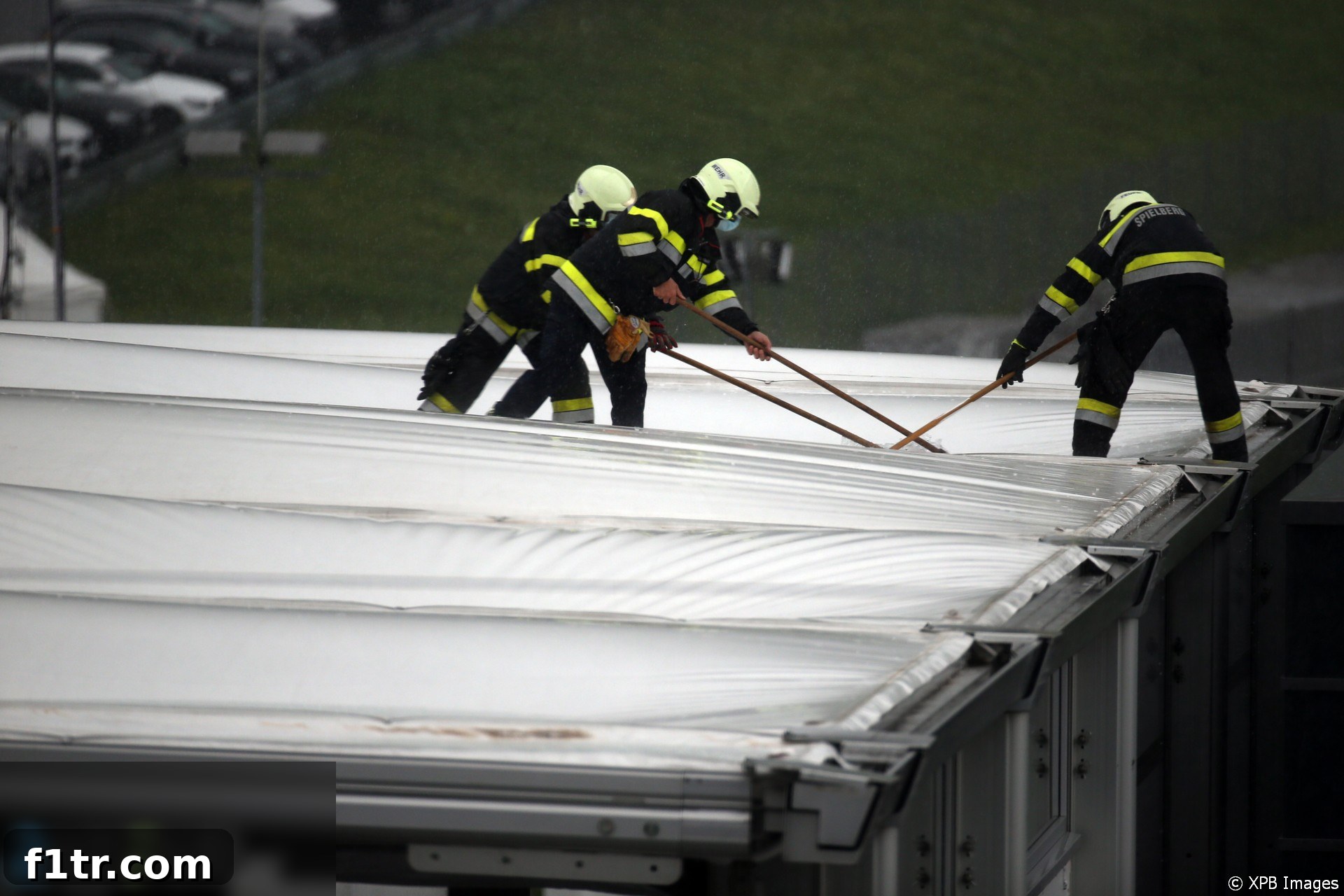
The highly anticipated final practice session (FP3) for the Austrian Grand Prix has been officially called off, leaving Formula 1 teams and fans in suspense. Heavy rainfall at the iconic Red Bull Ring in Spielberg, Austria, throughout Saturday morning led to the unavoidable cancellation, disrupting the meticulously planned schedule for the Styrian weekend. This decision, driven by paramount safety concerns, casts a shadow of uncertainty over the crucial qualifying session slated for later in the day, as the challenging alpine weather continues to dominate the event.
Austrian Grand Prix FP3 Cancelled Amidst Deluge at Red Bull Ring
The skies over the Red Bull Ring opened up hours before the scheduled start of Formula 1’s final practice, transforming the picturesque circuit into a treacherous, rain-soaked arena. For teams, FP3 is not merely a formality; it’s a critical hour for fine-tuning car setups, conducting long-run simulations, and evaluating tire performance under race conditions. The loss of this session means teams will head into qualifying with limited data on wet weather performance at this specific track, and crucially, without a final opportunity to optimize their cars for either dry or potentially wet conditions. This could lead to a more unpredictable qualifying session, where driver skill in adverse conditions and adept decision-making from the pit wall will be more crucial than ever.
The Stewards’ Official Decision: Prioritizing Safety
The official statement from the stewards left no room for ambiguity regarding the reasons behind the cancellation. “After consultation and recommendation of the FIA Formula One Safety Delegate the stewards decide that the Formula One free practice three will be cancelled due to the inclement weather and safety reasons in accordance with Art. 2.1.6.a and 11.9.3.m of the FIA International Sporting Code,” the statement read. This declaration underscores Formula 1’s unwavering commitment to driver safety, which always takes precedence over sporting schedules. The torrential rain not only severely reduced visibility for drivers, making high-speed running exceptionally dangerous, but also significantly increased the risk of aquaplaning, especially in the undulating sections of the Red Bull Ring. The combination of these factors, coupled with the FIA’s stringent safety protocols, made the decision to cancel unavoidable.
F3 Race Abandonment: A Precursor to F1’s Fate
The perilous conditions were first evidenced during the preceding Formula 3 race. Despite commencing as scheduled, the F3 cars quickly encountered a dramatic escalation in the weather’s severity. Rain intensified rapidly, turning the circuit into a torrent. The race was eventually red-flagged after only 14 of the scheduled 24 laps, and subsequently abandoned entirely. This incident served as a stark and immediate demonstration of the track’s unsuitability for racing under such extreme conditions, directly influencing the decision to call off the Formula 1 practice. The experience of the junior category drivers provided invaluable real-time data on the track’s grip levels, standing water, and overall safety, making the choice to cancel FP3 for the premier series an obvious and necessary one to prevent potential high-speed incidents.
Uncertainty Looms Over Qualifying Session
With FP3 now a write-off and the weather forecast indicating continued heavy rain throughout the day, the focus immediately shifts to the qualifying session, which was scheduled to commence three hours after the aborted practice. The persistent rainfall and predictions of further deluges have cast serious doubt over whether qualifying will be able to proceed as planned. Teams are now grappling with the logistical nightmare of preparing for a qualifying session without the critical data gathering that FP3 provides. This could mean a completely wet qualifying session, which would be challenging in itself, or further delays and potentially a revised schedule that could extend into Sunday morning, significantly impacting the race day preparations and adding an extra layer of complexity to an already unique 2020 season.
Michael Masi on Contingency Plans: Navigating the Unpredictable Alpine Weather
Anticipating the potential for adverse weather, F1 Race Director Michael Masi had already outlined contingency plans the previous day. “We are surrounded by the mountains so it makes it quite unpredictable from our end,” Masi commented, highlighting the specific challenges posed by the Red Bull Ring’s geographical location. The unique microclimate of the Styrian mountains is notorious for sudden and dramatic shifts in weather, making accurate long-range forecasts particularly difficult. Masi emphasized the reliance on expert meteorological advice: “We’ve got Meteo France, who’s the official weather provider for all of the teams and the FIA, and their meteorologists on-site who are continually advising us and keeping us apprised of what’s happening and what it’s looking like.” This constant communication and real-time assessment are vital for making timely and safety-conscious decisions.
Potential Scenarios for Qualifying: FP2 Times or Sunday Morning Showdown
The contingency plans articulated by Masi offer two primary alternatives should qualifying be unable to take place on Saturday. The first option involves utilizing the lap times set during Friday’s second practice session (FP2) to determine the starting grid for Sunday’s race. While this offers a definitive solution to establish a grid, it is generally considered a less ideal outcome, as FP2 is not designed to be a competitive session for grid placement. Teams often use FP2 for various testing objectives, including race pace simulations and experimental setups, rather than outright qualifying laps. Therefore, using these times could result in a grid that doesn’t accurately reflect a team’s or driver’s true one-lap qualifying potential, potentially leading to a more mixed-up and less “fair” starting order for the Grand Prix.
The second, and often preferred, alternative is to postpone qualifying until Sunday morning, just hours before the race. This scenario, while logistically challenging for teams due to compressed schedules and reduced preparation time, would allow for a proper qualifying session to take place under potentially improved weather conditions. A Sunday morning qualifying would ensure that the grid is set based on genuine qualifying performance, which is a cornerstone of Formula 1’s sporting integrity. However, it introduces significant logistical hurdles, including early starts for personnel, immediate car turnaround post-qualifying, and careful management of parc fermé regulations. Such a decision would require meticulous coordination between the FIA, Formula 1 management, and all participating teams to ensure a smooth transition into the race. The final decision on either of these contingencies will depend entirely on the evolving weather situation and the safety delegate’s recommendations.
The Broader Impact: Teams, Drivers, and the 2020 Season Context
The cancellation of FP3 and the uncertainty surrounding qualifying have significant implications beyond the immediate schedule. For drivers, the lack of track time means less opportunity to get comfortable with the circuit in challenging conditions, potentially increasing the risk of errors. For teams, the strategic implications are enormous. Without FP3 data, decisions on tire choices, aerodynamic settings, and race strategy become more speculative. This is particularly poignant in the unique context of the 2020 F1 season, which was severely impacted by the global pandemic. The Austrian Grand Prix represented the long-awaited restart of the championship, and any disruption is keenly felt, highlighting the fragility of even the most well-laid plans in the face of natural elements. Teams have had limited testing and preparation heading into this condensed season, making every session invaluable. The current situation forces them to rely heavily on simulations, past data, and the adaptability of their engineering teams and drivers.
Fan and Media Reaction: Awaiting the Next Announcement
For fans watching globally, the cancellation of FP3 adds to the drama and anticipation. While disappointing for those eager to see more track action, the understanding of safety priorities generally prevails. The media landscape quickly shifts focus from performance analysis to weather updates, contingency plans, and expert opinions on how the grid might be determined. The constant stream of information and speculation fuels the excitement, ensuring that even in periods of inactivity, the narrative around the Austrian Grand Prix remains dynamic and engaging, keeping everyone on edge for the next official announcement from the FIA regarding the fate of qualifying.
As the Red Bull Ring remains under the grip of inclement weather, the Formula 1 paddock holds its breath. The coming hours will be crucial in determining whether the qualifying session can proceed, or if the sport will have to invoke its contingency plans to set the grid for Sunday’s Austrian Grand Prix. Whatever the outcome, safety will remain the ultimate deciding factor in this weather-affected race weekend.
Stay Connected with RaceFans for the Latest F1 Updates
- Join RaceFans on Facebook for breaking news and discussions
- Follow RaceFans on Twitter for real-time updates and commentary
- Subscribe to daily email updates from RaceFans for comprehensive coverage
Explore More from the 2020 F1 Season
- Grosjean’s F1 Test Return: A Look Back at His Journey Since the Bahrain Incident
- Behind the Scenes: Wrecked Chassis from Grosjean’s Bahrain Fireball Crash Displayed
- Driver Analysis: Bottas vs. Rosberg – A Comparison of Hamilton’s Mercedes Teammates
- Financial Impact: How F1 Revenues Were Affected in the COVID-Struck 2020 Season
- Team News: Hamilton and Mercedes Confirm New Deal for the 2021 Season
Browse all articles related to the extraordinary 2020 F1 season