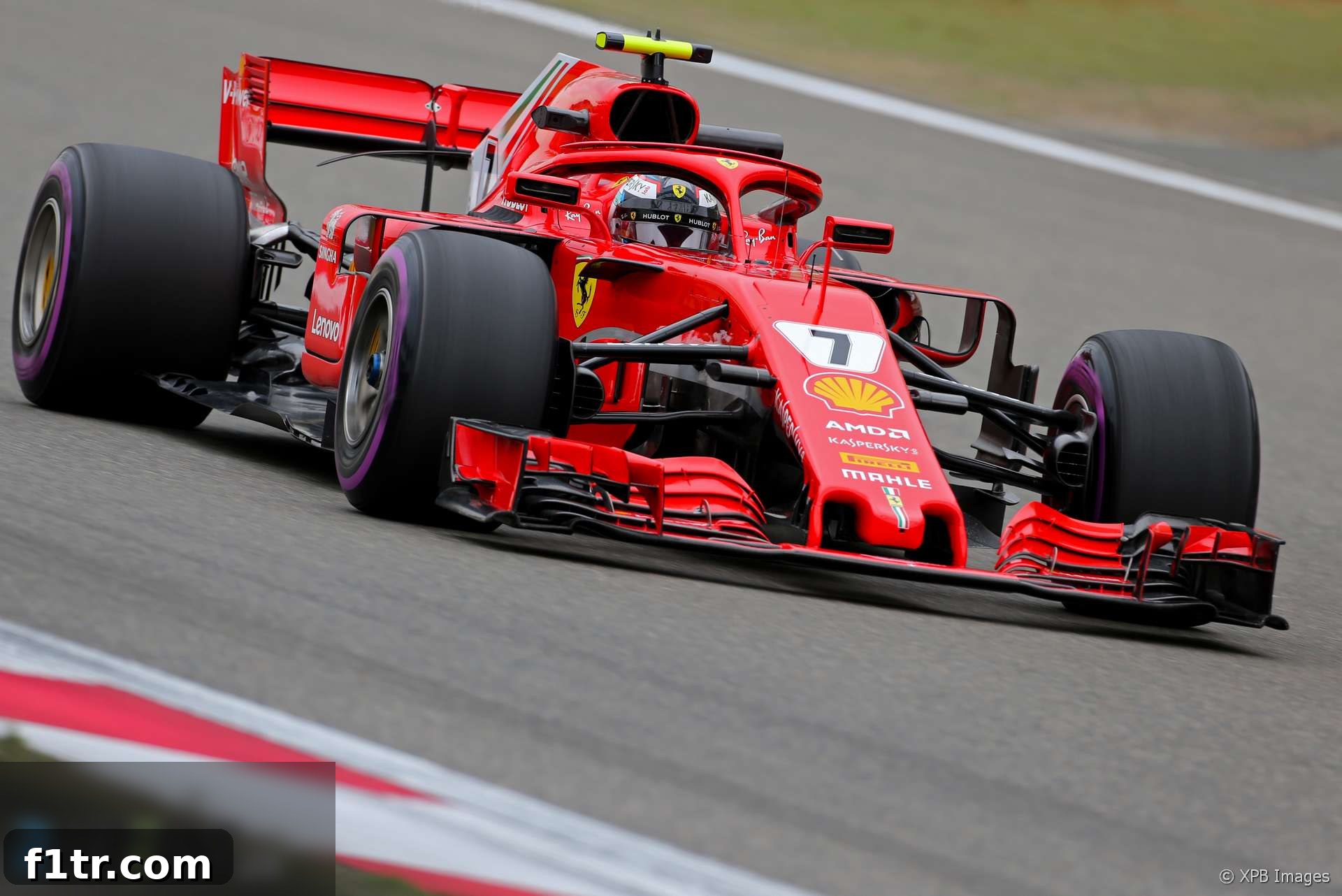
In the thrilling world of Formula 1, even the smallest margins can dictate the narrative of a Grand Prix weekend. At the highly anticipated Chinese Grand Prix, Kimi Raikkonen, the enigmatic “Iceman” of Ferrari, found himself at the sharp end of the practice sessions, coming tantalizingly close to the fastest time. Despite finishing a mere seven thousandths of a second behind the pace-setter, Raikkonen expressed confidence in his car’s performance and hinted at untapped potential, setting the stage for an intriguing battle in Shanghai.
Raikkonen’s Practice Prowess and the Quest for Uninterrupted Laps
Friday’s practice sessions at the Shanghai International Circuit saw the Finnish driver demonstrating strong pace in his Ferrari challenger. Securing the second-fastest time, just fractions of a second shy of Lewis Hamilton, Raikkonen’s performance underscored Ferrari’s competitive edge heading into the weekend. However, the pursuit of perfection in Formula 1 is relentless, and Raikkonen was quick to point out that even more speed was within reach.
“I could have gone faster but I had traffic,” Raikkonen explained, shedding light on the minor frustrations that often plague practice sessions. Navigating through slower cars is a common challenge, capable of disrupting flying laps and preventing drivers from extracting the absolute maximum from their machinery. Despite this, his ability to be so close to the top time, even with a compromised lap, speaks volumes about the intrinsic speed of the Ferrari SF71H and Raikkonen’s skill.
“We could push in all the places, so over one lap it seems to be okay,” he added, indicating satisfaction with the car’s overall balance and responsiveness across the varied sectors of the Shanghai circuit. This initial positive feedback from the driver is crucial for the team, providing a solid foundation upon which to build for qualifying and the race.
Ferrari’s Tyre Gamble: Navigating the Ultra-Soft Challenge
A significant strategic talking point for Ferrari at this race revolved around their aggressive tyre selection. The Scuderia opted to bring a higher allocation of the ultra-soft compound tyres compared to their rivals. While these tyres offer superior grip and outright speed over a single lap, they are also known for their propensity to degrade quickly, presenting a considerable challenge for race management.
Indeed, early indications from practice suggested that the ultra-softs were degrading rather rapidly. This raised questions about their viability for sustained race stints, especially on a demanding track like Shanghai which features long straights and fast corners that stress the tyres. However, Raikkonen remained unfazed, acknowledging the preemptive nature of such decisions in Formula 1.
Advert | Become a Supporter & go ad-free
“Obviously we had to make that decision quite early, not really knowing what would be ideal but I think we should be fine and don’t feel we are in any way limited,” Raikkonen stated. This highlights a fundamental aspect of F1 strategy: tyre choices are often made weeks in advance, long before teams have had the opportunity to gather real-world data from the specific circuit with their current car setup. This foresight requires a delicate balance of simulation, historical data, and educated guesswork. Despite the early degradation witnessed, Raikkonen’s confidence suggests that Ferrari has a clear plan for managing these compounds, perhaps through clever setup adjustments or a refined pit stop strategy.
“We know what we have and we’ll make the best out of it,” he affirmed, projecting a pragmatic approach to maximizing their chosen allocation. The art of tyre management will undoubtedly be a critical factor determining Ferrari’s success over the Chinese Grand Prix weekend.
The Rain Factor: Long Run Data and Unpredictability
Further complicating the data collection for long-run performance was the intervention of rain during Friday’s sessions. The inclement weather meant that teams had limited opportunities to conduct meaningful long-run simulations, which are vital for understanding tyre wear over a race distance and for calibrating fuel loads and race strategies.
“On the long run it’s tricky to say where we are because it started to rain,” Raikkonen noted. This lack of comprehensive long-run data injects an element of unpredictability into the weekend. Teams will have to rely more on shorter runs, simulations, and driver feedback to piece together their race strategies. The potential for mixed conditions throughout the weekend also means that adaptability and quick thinking from the pit wall will be paramount.
Beyond Practice: The Imperative of Race-Day Results for the Iceman
While a strong showing in practice is always a morale booster and an indicator of potential, Kimi Raikkonen, ever the pragmatist, was quick to emphasize that ultimately, only race results truly matter. His recent performances, while often featuring flashes of speed, hadn’t consistently translated into the points finishes he and the team desired.
“I’m really quite happy with the feeling of the car but if the race results would have been better then I would be happier,” he articulated, perfectly encapsulating the mindset of a seasoned competitor. For Raikkonen, the comfort and responsiveness of the car are crucial for performance, but these must culminate in tangible rewards – points in the Constructors’ and Drivers’ championships.
“It doesn’t matter who’s fault it was, if you don’t get points, you don’t get points, and the only reason we’re here is to get points,” he asserted with his characteristic bluntness. This statement underscores the high-stakes environment of Formula 1, where every race is a battle for championship points, irrespective of external factors or internal errors. Raikkonen’s drive to convert potential into performance is clear: “Being quick in practice is nice but we want to finish the races in the positions we think we deserve.”
This sentiment resonates deeply within the Ferrari camp. As one of the sport’s most decorated teams, consistent point-scoring and podium finishes are not just aspirations but expectations. The Chinese Grand Prix offers an opportunity for Raikkonen and Ferrari to demonstrate their capability to not only challenge at the front during practice but to deliver a robust performance when it counts most – on Sunday.
The Shanghai International Circuit: A Unique Challenge
The Shanghai International Circuit itself is a formidable test for cars and drivers. Renowned for its unique layout, including the snail-like Turn 1 and Turn 2, followed by the incredibly long back straight, it demands a versatile car setup. Teams must balance aerodynamic efficiency for the straights with downforce for the technical corners. The track’s wide nature often allows for multiple racing lines, contributing to exciting wheel-to-wheel action.
Historically, the Chinese Grand Prix has often been a race of strategic intrigue, with fluctuating weather conditions adding another layer of complexity. Ferrari’s chosen tyre strategy, coupled with the unpredictable forecast, suggests that this year’s event will be no different. The data gathered, however limited by the rain, will be meticulously analyzed overnight as engineers fine-tune setups and formulate qualifying and race plans.
Looking Ahead: Qualifying and Race-Day Prospects
As the weekend progresses, all eyes will be on how Ferrari translates their promising practice pace into a strong qualifying performance. Securing a prominent grid position is vital at a circuit like Shanghai, where track position can be advantageous. The battle for pole position promises to be intense, particularly given the narrow margins observed in practice. Raikkonen’s ability to extract an optimal lap in qualifying will be crucial for setting up his race on Sunday.
Ultimately, Kimi Raikkonen’s comments paint a picture of quiet determination. While acknowledging the speed of his Ferrari, his focus remains firmly on delivering results when it matters most. The Chinese Grand Prix, with its unique challenges and strategic complexities, presents a significant opportunity for the Iceman to transform potential into points and reaffirm Ferrari’s championship ambitions.
Go ad-free for just £1 per month>> Find out more and sign up
2018 F1 season
- F1 feared “death knell” for Drive to Survive after Ferrari and Mercedes snub
- McLaren staff told us we were “totally crazy” to take Honda engines in 2018 – Tost
- ‘It doesn’t matter if we start last’: How Red Bull’s junior team aided Honda’s leap forward
- Honda’s jet division helped F1 engineers solve power unit problem
- McLaren Racing losses rise after Honda split
Browse all 2018 F1 season articles