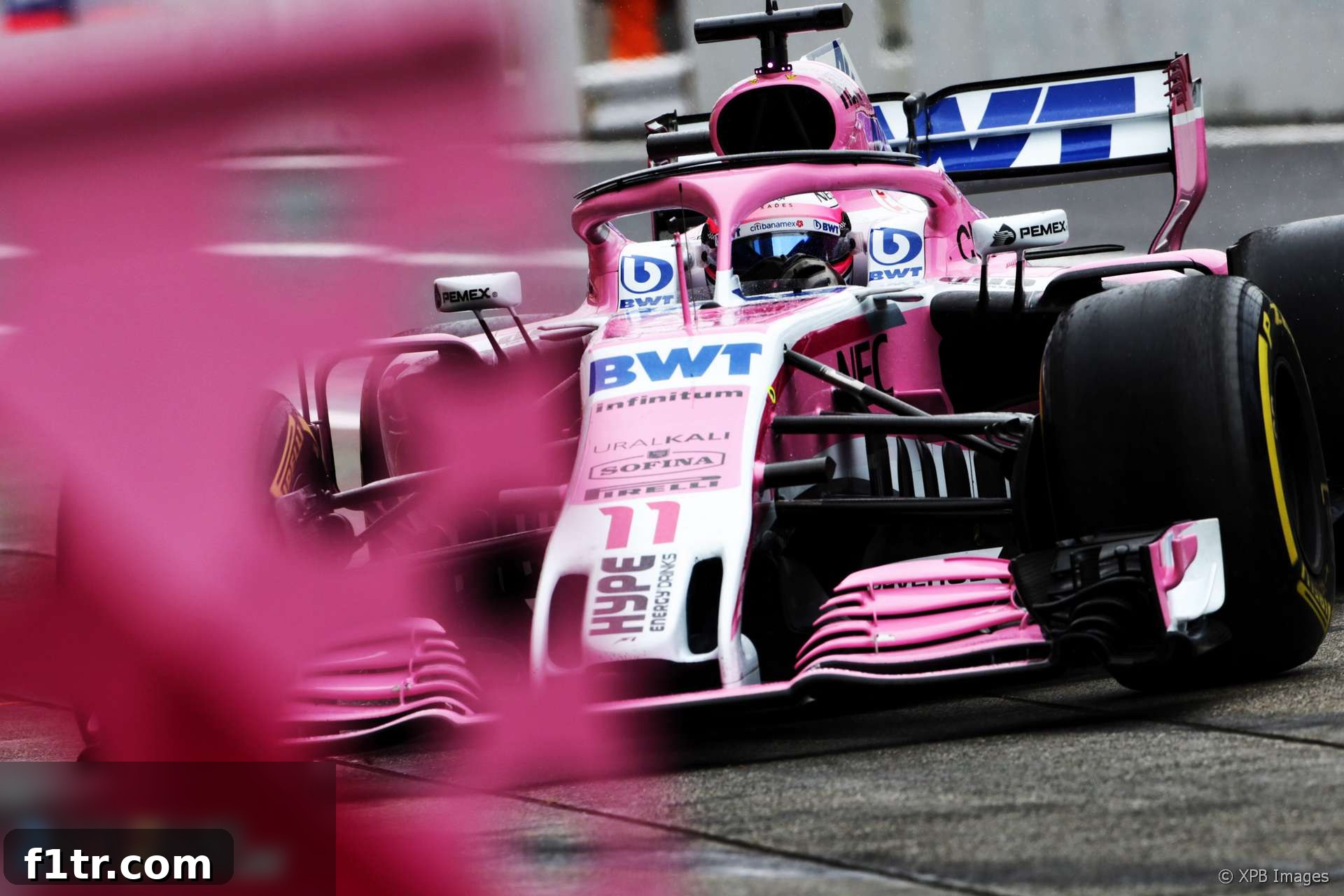
In the high-stakes world of Formula 1, where millions are won and lost on and off the track, the 2018 off-season cast a shadow of uncertainty over one of its most enduring teams. The fate of Force India, a racing outfit with a storied 27-year history in F1 and the livelihoods of over 400 dedicated employees, hung precariously in the balance. Two crucial spots on the coveted 20-car grid teetered on the brink of disappearing, prompting urgent questions about the team’s dramatic downfall and the potential ramifications for the sport itself.
How did a team that consistently punched above its weight find itself facing oblivion? What catastrophic events led it to the precipice of collapse, only to be dramatically pulled back? And did the swift, complex maneuvers to keep Force India racing inadvertently sow seeds of future conflict, potentially costing Formula 1 millions in legal battles and commercial disputes?
Fresh insights from the administrators’ reports, combined with previously unseen developments within the secretive F1 paddock, now offer a comprehensive and often startling account of these events.
The detailed report released by FRP Advisory, the administrators tasked with restructuring Force India and preparing it for sale, provides compelling reading for anyone interested in the inner workings of Formula 1. Beyond offering a meticulous chronology of the administration process – from the pivotal intervention of driver Sergio Perez, through the granting of a mid-season FIA license, to the ongoing legal challenges posed by Uralkali – the report offers rare and revealing glimpses behind the scenes of a major F1 operation in crisis.
In essence, this report serves as a stark case study in the perils of financial mismanagement within Formula 1. For any entity, solvent or otherwise, the primary objective must always be survival. An insolvent team, regardless of its racing heritage or on-track ambition, is destined to vanish from F1’s entry lists. While winning races and championships is undoubtedly the ultimate goal and a powerful driver of commercial success, it remains secondary to the fundamental need for financial viability. Bankrupt teams do not race, underscoring the absolute necessity of stringent management controls and robust financial governance.
Significantly, FRP’s documentation highlights a concerning pattern in Force India’s history. Incorporated in 1989 as Totas Euroservices Limited by the legendary Eddie Jordan, the team underwent no fewer than five name changes throughout its existence. Each rebranding, the report reveals, followed a significant financial crisis. This cyclical nature of financial instability appears to be a recurrent theme in Formula 1; among the ten teams currently on the grid, only Williams and Haas remain majority-owned by their original founders. Even Williams, an iconic privateer, is now a publicly listed entity, while Haas is still a relatively young team in only its third season.
Despite previous public statements by then-team principal and 42.5 percent shareholder Vijay Mallya, which painted an optimistic picture of the team’s health, the FRP report paints a far grimmer reality. It confirms that Force India was fully aware of its profound financial difficulties long before it officially entered administration on July 27th. As early as May 30th, the company had approached FRP Advisory, seeking urgent advice on securing short-term funding, navigating its critical relationship with primary sponsor BWT, and understanding the practicalities of operating the team while under administrative oversight.
During these early discussions, the potential sale of the underlying business and its assets as a “going concern” was a key topic – a critical point given the eventual outcome. Three potential purchasers were identified and thoroughly vetted, deemed sufficiently credible and capable of providing the necessary financial backbone to ensure the team’s continuity. The immediate catalyst for these frantic meetings was a looming winding-up order issued by Her Majesty’s Revenue Collection (HMRC) for the non-payment of Pay As You Earn (PAYE) taxes and employee deductions – a clear sign of deep-seated financial distress.
While the FRP report refrains from naming the specific buyers, it is widely believed that the three principal contenders comprised the consortium led by Lawrence Stroll (which ultimately succeeded), the powerful Uralkali/Mazepin syndicate, and a group of investors assembled by Michael Andretti, the esteemed son of 1978 F1 world champion Mario Andretti, and a highly successful IndyCar racer and team owner in his own right. The presence of such diverse and high-profile bidders underscored the underlying value of an F1 grid slot, even for a financially struggling team.
Upon the eventual completion of the administration process, the company officially known as Force India Formula One Team Limited is slated for liquidation. Reassuringly, FRP reported, “It is currently estimated there will be sufficient funds available to pay all creditors in full.” While this news brought a measure of relief to many within the tightly-knit F1 community, a closer examination of the detailed creditor list revealed a clear and intentional prioritization strategy by the company’s former management, favoring certain suppliers over others.
For instance, the formidable Toyota Motorsport was owed a relatively modest £2,200, suggesting a relationship that was carefully maintained. In stark contrast, two photographers were individually owed around £20,000 each, with some debts outstanding for over 90 days. The implications of such prioritization become apparent when considering crucial suppliers like the wind tunnel service provider, whose services, vital for the team’s performance, cost an astronomical £100,000 per hour. Clearly, the team’s management understood the hierarchy of operational necessity, keeping key partners satisfied while others further down the “food chain” had to wait. This strategic distinction also explains why a critical supplier like Pirelli, the sole tire manufacturer, did not even appear on the creditors list – indicating they were consistently paid on time, a non-negotiable requirement for continued participation.
Further down the list, debts to Liberty Media subsidiary Formula One World Travel, amounting to £22,000 for travel and accommodation, were listed as current. However, the Montreal Intercontinental hotel was owed £5,000, with this debt outstanding for over 90 days – likely a calculated risk given F1’s return to Canada wasn’t until the following June. Similarly, the Granollers Hotel was owed a comparatively paltry £2,000 dating back to March testing, illustrating the array of smaller, yet accumulated, operational debts.
By a significant margin, the largest creditor was Daimler AG and its various Mercedes subsidiaries, to whom Force India owed a staggering £13.5 million for engine supplies and ancillary components. Crucially, ‘just’ £2.5 million of this colossal sum stretched beyond 30 days, with the bulk being current at the time of administration. This aligns perfectly with comments made by Mercedes Motorsport CEO Toto Wolff in Hungary, who had stated that the principal debt was semi-current and the outstanding amounts were manageable for the engine supplier.
Despite the “manageable” nature of their debt, alarm bells had undoubtedly begun to clang loudly in Stuttgart. Daimler robustly supported the administration application initiated by Brockstone Limited, the management company representing driver Sergio Perez. However, the path to administration had been paved earlier. In mid-June, well before Brockstone’s intervention, HMRC had already applied for a winding-up order, a move strongly supported by German composites contractor Formtech, which was owed over £2 million.
Although HMRC’s claim was eventually settled, Formtech’s debt remained unpaid, meaning their winding-up petition was not withdrawn. From that point, it was only a matter of time before the financial house of cards began to collapse. On July 1st, primary sponsor BWT abruptly terminated its contract, signaling a loss of crucial funding. Then, on July 20th, Brockstone Limited, owed £4 million for over a year, formally lodged its administration application.
At this critical juncture, the team’s cash reserves had dwindled to a paltry £240,000. Once Santander caught wind of the impending court action, the bank promptly froze all of the team’s accounts – a devastating blow just days before the Hungarian Grand Prix, an event that would incur significant operational costs, and barely a week before the crucial pre-summer break payroll run at the end of July. Immediate and decisive action was imperative, leading to Brockstone’s successful application for administration on July 27th.
However, a closer inspection of the extensive creditors list raises intriguing questions about the broader awareness within the F1 paddock. Given the sheer number of paddock personnel and companies owed sums ranging from a few thousand to over half a million pounds, why were the team’s severe financial issues not flagged earlier? This question becomes particularly pertinent given Mallya’s continued assurances that all was well. Major entities such as Red Bull Technology, Travel Places, and Riedel Communications were all owed substantial amounts dating back to April, yet they seemingly remained silent. This suggests either a widespread belief in Mallya’s claims, a hope that the situation would resolve itself, or perhaps a reluctance to destabilize a fellow competitor prematurely.
The period immediately following the granting of administration proved highly illuminating. It quickly became clear that the team faced imminent closure unless a substantial injection of funds could be secured to meet its July and August payrolls, cover the ongoing car preparation costs for the upcoming races in Spa and Monza, finance operating costs at both events, and ensure that vital factory shut-down maintenance could be completed.
The immediate amount required was a not-inconsiderable £9.6 million. Considering the team’s annual budget was approximately £100 million, this figure represented roughly a tenth of its yearly expenses, or roughly equivalent to a month’s racing in a 20-race season – a seemingly reasonable calculation for emergency funding. But the crucial question remained: where could such a substantial sum be urgently sourced, especially given the team’s precarious history and the fact that no meaningful revenues were due during the August summer break, particularly after BWT had triggered its exit clause just a month prior?
In what many observers deemed an inexplicable turn of events, BWT, the very same company that had cancelled its sponsorship deal in July, subsequently advised the administrators of a material financial claim, and had actively supported Brockstone’s administration application, paradoxically provided an unsecured £5 million loan. This was also the same BWT that had previously lent the team £1.25 million to assist with cash flow, and whose distinctive pink livery still adorned the two Force India cars. The sheer irony of the situation – a primary sponsor pulling its support only to then loan the team a massive sum – was a testament to the convoluted and often contradictory financial realities of Formula 1.
With an unexpected £5 million now secured in the bank, the administrators could finally commence the critical restructuring and sales process. In total, 20 expressions of interest were received from various parties, eventually whittled down to five credible contenders. Of these, one group – by implication, the Stroll consortium – made an offer for the team as a “going concern,” meaning they sought to acquire the entire operational entity. In contrast, Uralkali later confirmed to RaceFans that it had deemed such an acquisition unfeasible and therefore bid on an “asset sale” basis, aiming to acquire only the tangible assets of the team.
It was at this crucial juncture that Lawrence Stroll, a Canadian billionaire who had amassed his fortune by building and successfully listing global fashion brands such as Tommy Hilfiger and Michael Kors, played his trump card. His consortium provided a crucial loan of £15 million, enabling FRP to settle the outstanding debt with BWT and address other urgent financial obligations. This was particularly critical as the August payroll, amounting to roughly £2.2 million gross (£1.3 million net), was due in just three weeks, and there were understandable fears that key personnel, facing financial uncertainty, would seek alternative employment elsewhere, thus crippling the team’s operational capabilities.
By strategically injecting this substantial capital, the Canadian fashion billionaire, who had meticulously assembled an impressive team of co-investors, effectively maneuvered his way into pole position. He was granted an effective first refusal on the team, an option he promptly exercised on a “going concern” basis – initially intending to acquire the entire operating business, including its historical entry.
As previously detailed, this initial “going concern” acquisition could not be fully completed due to the intransigence of various creditors, notably 13 Indian banks. Consequently, the sale was hastily converted into an asset-based purchase, a process that is currently being vigorously disputed by the Uralkali syndicate, which is reportedly challenging FRP’s decision in the courts, alleging unfair treatment and a lack of transparency in the sales process.
Delving into Force India’s payroll provides a fascinating, if sobering, insight into the sheer scale of costs involved in running a Formula 1 operation. We know, for instance, that the company employed approximately 400 full-time staff at the time of administration. This translates to an average monthly salary of around £5,500, or £66,000 per annum, excluding any bonuses. While Force India was unlikely to afford top-tier wages, a comparison with a powerhouse like Mercedes F1, located just ten miles down the road, highlights the stark differences. Mercedes F1 benefits from a financially robust parent company, receives significant F1 bonus payments, and is rich in sponsorship. As a result, its average wage is likely to be at least 10 percent higher, roughly £72,000 per annum (£6,000 per month), even before considering performance bonuses.
From company filings, we also know that Mercedes F1 employs approximately 800 individuals. Simple mathematics therefore points to a monthly payroll of around £4.8 million, or £57.6 million annually, before bonuses. This colossal figure equates to nearly £60 million solely in wages for the privilege of racing two cars for two hours on 20 Sundays throughout the season – roughly £1.2 million per hour of actual racing. Expressed differently, this represents a staggering wage bill of £3 million per Grand Prix, or approximately £50,000 for every lap completed by both cars, assuming they both finish the race. These figures underscore the immense human capital investment required to compete at the pinnacle of motorsport.
The underlying reasons for Force India’s dire predicament are not difficult to explain. When billionaire industrialist Vijay Mallya acquired an 85 percent controlling stake in the former Spyker team, his primary intention was to leverage the Formula 1 platform to promote his diverse portfolio of brands, including the now-defunct Kingfisher Airline, a lager bearing the same name, and various spirit labels. Funding shortfalls, a recurrent problem, were frequently papered over by internal transactions – essentially, loans disguised as sponsorship deals between his various entities and the racing team.
The situation began its irreversible descent when Mallya sold half of his holding (42.5 percent) in the team to his compatriot Subrata Roy. Almost immediately after this transaction, Roy was arrested to face allegations of suspicious money transactions. Concurrently, Mallya’s flagship Kingfisher Airline went under, severing a vital, albeit illicit, funding artery for the team.
With numerous banks and other creditors aggressively circling Mallya to recover their substantial loans, his primary brands in tatters, his business partner in jail, and the remaining Mol family shareholders either unwilling or unable to contribute further capital, the team progressively slipped deeper into the red. This occurred despite its remarkable on-track performance, finishing an impressive fourth in the constructors’ championship for two consecutive years. In a desperate attempt to maintain competitiveness, Mallya consistently prioritized expenditure over securing adequate funding. The shortfall for 2017 alone reached £31 million, pushing accumulated losses to an astronomical £270 million by the end of that year. Mallya, in his pursuit of glory, fundamentally failed to grasp F1’s golden rule: remain strictly within budget, and always prioritize pounds over points.
Thus, Lawrence Sheldon Strulovitch (Stroll) and his partners, operating under the trading names Racing Point Limited and Racing Point Holdings Limited (both registered on August 2nd), ultimately acquired the team for £90 million through an asset sale. In addition to this purchase price, the syndicate was required to deposit an extra £20 million into an escrow account, specifically earmarked to meet future claims. A number of these claims are currently pending, including commission related to the BWT deal and another believed to be linked to a previous NEC sponsorship agreement.
So, what does the future hold? The team, now competing under the banner of Racing Point Force India, continues its tradition of punching above its weight, impressively tracking to claim sixth place in the championship. This is a particularly noteworthy achievement, given that its points tally was officially reset when Force India Formula One Team Limited formally withdrew from the championship, with RPFI taking its place as a “new” entrant.
This reclassification, however, ignited considerable dissent and debate among other team owners, particularly regarding RPFI’s eligibility for Formula 1’s highly lucrative “Column One money.” This revenue stream, distributed to established teams, is a vital component of any F1 operation’s budget, and the implications of RPFI’s status were far-reaching.
However, RaceFans understands that during the Japanese Grand Prix weekend at Suzuka, all teams were advised by Liberty Media that Force India would indeed begin receiving its due payments from the end of September onwards, having only forfeited its August monies on account of being in administration during that specific month. This contentious decision was allegedly made after all teams reportedly signed a “going concern” waiver, despite the team officially being sold on an “asset sale” basis, as clearly outlined in FRP’s report. This discrepancy further highlights the complex, often opaque, and commercially driven nature of F1 governance.
This raises a fundamental question within Formula 1: When is a new team truly not a new team? Is it when it conveniently inherits the former operation’s engine count, allowing continuity without penalty? Or when a previously suspended penalty does not get handed down for a repeat offense, simply because the entity is now considered “new?” Or is it merely when it suits F1’s commercial managers to maintain a full grid, regardless of regulatory consistency?
Guenther Steiner, the outspoken team principal of Haas, a team that genuinely qualified as a new entity and consequently did not receive Column One monies for its first two years of competition, has publicly refused to comment on this particular issue. However, the prevailing sentiment in the paddock suggests that Steiner will undoubtedly push for at least £45 million in back payments, representing two years of denied Column One monies. The successful acquisition of such a sum would dramatically transform the competitiveness of the US-entered outfit.
Ultimately, the FRP report, illuminating as it is in parts, raises more questions than it provides definitive answers – a characteristic trait that is, regrettably, par for the course in the often-enigmatic world of Formula 1. The saga of Force India serves as a potent reminder of the precarious financial tightrope teams walk, and the intricate web of commercial interests and regulatory loopholes that define the sport.
RacingLines
- The year of sprints, ‘the show’ – and rising stock: A political review of the 2021 F1 season
- The problems of perception the FIA must address after the Abu Dhabi row
- Why the budget cap could be F1’s next battleground between Mercedes and Red Bull
- Todt defied expectations as president – now he plans to “disappear” from FIA
- Sir Frank Williams: A personal appreciation of a true racer
Browse all RacingLines columns