FIA Calls for Enhanced Driver Guidance After Australian GP Safety Car Scare
Formula 1’s governing body, the FIA, has issued a significant recommendation for enhanced driver guidance concerning Safety Car procedures. This follows a high-stakes near-collision during the recent Australian Grand Prix, which highlighted critical tensions between existing regulations and the practical demands on drivers and their high-performance machinery. The incident, involving Mick Schumacher, Yuki Tsunoda, and Pierre Gasly, prompted a thorough investigation by the stewards, leading to a proactive call for new protocols to avert future dangers.
The Melbourne Incident: A Narrow Escape Under Safety Car
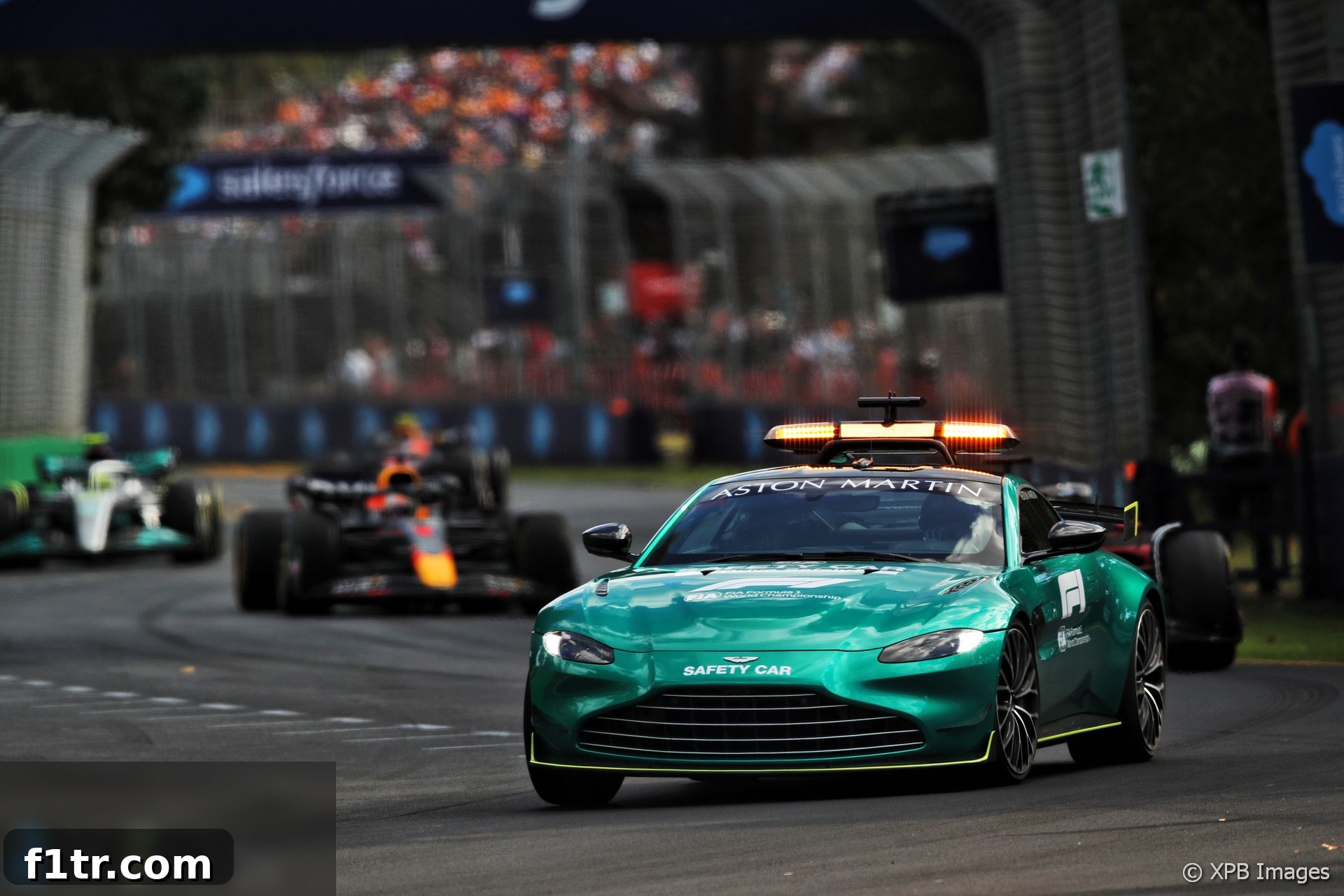
The incident unfolded during a Safety Car period at the Albert Park Circuit. As the field bunched up behind the Safety Car with its lights illuminated, drivers were engaged in the crucial act of cycling their accelerator and brake pedals. This practice is fundamental to maintaining optimal tyre and brake temperatures – a necessity for competitive performance and safety upon a race restart. It was during this complex dance of acceleration and deceleration that a potentially serious collision was narrowly avoided.
Pierre Gasly, driving for AlphaTauri, slowed in response to the car ahead of him. His teammate, Yuki Tsunoda, reacted similarly, reducing speed to maintain separation. However, Mick Schumacher, behind Tsunoda in his Haas, found himself in a precarious position. Schumacher was attempting to adhere to the regulation requiring a maximum ten-car length separation from the car ahead, a rule designed to prevent aggressive acceleration and braking. As Tsunoda unexpectedly slowed, Schumacher had to react instantly, veering left and applying heavy braking to avoid making contact with the AlphaTauri. While a collision was averted, the severity of the situation underscored a potential systemic vulnerability within current Safety Car operations.
Stewards’ Verdict and the Underlying Dilemma
The FIA stewards meticulously investigated all three drivers involved in the incident. Their conclusion was clear: no driver was found to be in breach of the regulations. This finding highlights the inherent complexity and challenges drivers face during Safety Car periods. The stewards’ report elaborated on the core issue, stating, “Drivers were in line on the main straight behind the Safety Car with lights on. Cars were accelerating and decelerating to keep tyre and brake temperatures up in anticipation of the restart.” They further noted that Gasly slowed in reaction to the car in front, Tsunoda reacted similarly, and Schumacher, while trying to maintain the prescribed ten-car length maximum separation, had to take evasive action.
Balancing Performance Needs with Safety Regulations
Crucially, the stewards identified a fundamental tension: “The speed and braking capabilities of F1 cars, especially while trying to maintain required temperatures in tyres and brakes, are in tension with the 10 car length separation behind the Safety Car traditionally specified in the regulations.” This statement pinpoints the heart of the problem. Modern Formula 1 cars operate within incredibly narrow performance windows. Tyres and brakes must be kept within specific temperature ranges to ensure they deliver optimal grip and stopping power, particularly for a potential race restart. Drivers are actively working to achieve this, leading to unpredictable acceleration and deceleration patterns within the pack.
The ten-car length separation rule, while intended to create a safety buffer, can inadvertently contribute to uncertainty. Drivers are constantly managing this gap, which can vary significantly depending on their position in the pack, the speed of the Safety Car, and the actions of the cars around them. The stewards’ recommendation explicitly states that this challenge “needs to be a point of emphasis in future driver briefings, to ensure the drivers collectively agree on how best to address this challenge before an unfortunate incident occurs.” This call for collective agreement underscores the need for a unified approach from drivers, understanding that individual actions have significant ripple effects throughout the field.
The Perils of Safety Car Procedures in Formula 1
Safety Car periods, while designed to neutralize the race and improve safety during track incidents, introduce their own unique set of dangers. The sudden change in pace from flat-out racing to a controlled procession, combined with the need to maintain component temperatures, creates a highly dynamic and potentially hazardous environment. Drivers, accustomed to precise and predictable racing lines and braking points, must adapt to varied speeds and the unpredictable braking patterns of others trying to manage their cars.
Driver Perspectives: The Art of Temperature Management
For a Formula 1 driver, maintaining tyre and brake temperatures under Safety Car conditions is an art form. Cold tyres offer significantly reduced grip, impacting handling and braking performance, which is catastrophic at a restart. Similarly, cold brakes are less effective, increasing stopping distances and the risk of lock-ups. To counteract this, drivers weave, accelerate hard, and then brake sharply – a dance that is visually captivating but inherently risky when performed in close proximity to other high-speed machines. The challenge is amplified by the fact that different cars and tyre compounds may require different temperature management strategies, adding another layer of variability within the tightly packed field.
Historical Precedents: Lessons from Previous Incidents
The Australian Grand Prix near-miss is not an isolated incident. Collisions during Safety Car periods, particularly leading up to restarts, have plagued Formula 1 in the past, serving as stark reminders of the inherent risks. One notable example occurred at the 2020 Tuscan Grand Prix. In that race, a dramatic pile-up on the main straight during a Safety Car restart saw multiple cars involved, ultimately eliminating four from the competition. Following that calamitous event, twelve drivers received formal warnings, and the Grand Prix Drivers’ Association (GPDA) took the unprecedented step of writing to the then-FIA Formula 1 Race Director, Michael Masi, specifically requesting changes to the restart procedure to enhance safety.
These past incidents highlight a recurring pattern: the transition phases of a race, such as Safety Car deployments and subsequent restarts, are often the most vulnerable. The combination of high-speed vehicles, close quarters, varying driver strategies for temperature management, and the sudden resumption of racing creates a volatile cocktail. The FIA’s current recommendation underscores a proactive effort to address these vulnerabilities before another unfortunate and potentially more serious incident occurs, moving beyond reactive warnings to preventative guidance.
The Path Forward: Enhancing Safety Protocols and Guidance
The stewards’ recommendation for future driver briefings to address Safety Car challenges is a crucial step towards bolstering safety in Formula 1. Such guidance could take several forms, including clearer instructions on acceptable acceleration and deceleration patterns, specific zones where tyre warming maneuvers are encouraged or restricted, or perhaps a re-evaluation of the ten-car length separation rule itself. The emphasis on drivers collectively agreeing on best practices suggests a collaborative approach, empowering those directly affected by the rules to contribute to their refinement.
The Evolution of F1 Safety and Regulations
Formula 1 has a long-standing commitment to safety, with regulations and procedures continually evolving in response to incidents and technological advancements. This latest recommendation fits within that ongoing narrative. It acknowledges that while rules provide a framework, the dynamic nature of F1 racing, combined with the extreme performance characteristics of the cars, often necessitates a more nuanced approach. Future driver briefings will likely serve as vital forums for discussion, education, and the fostering of a shared understanding among competitors regarding safe practices during these critical race periods. This collaborative spirit is essential for moving forward and ensuring the highest possible standards of driver safety without compromising the spectacle of racing.
Conclusion: Prioritizing Driver Well-being on Track
The near-miss at the Australian Grand Prix served as a timely reminder that even under controlled Safety Car conditions, Formula 1 drivers operate on the razor’s edge. The FIA stewards’ recommendation for enhanced driver guidance is a proactive and welcome measure, acknowledging the complex interplay between performance demands, existing regulations, and driver safety. By fostering clearer communication and a collective understanding of best practices, Formula 1 can continue its unwavering commitment to minimizing risks and ensuring the well-being of its athletes, allowing them to push the boundaries of performance while upholding the highest standards of safety.
Related Articles: 2022 Australian Grand Prix Insights
- Aston Martin’s porpoising “does not allow us to exploit the progress the guys have made”
- Wolff puts Mercedes’ odds of championship victory at “two to eight”
- FIA responds to Verstappen’s criticism of Safety Car performance
- “So this is the end of our race, I guess?” How Alonso’s luckless Australian GP unfolded
- Two-degree temperature rise led to Hamilton’s “difficult position” radio message
Browse all 2022 Australian Grand Prix articles