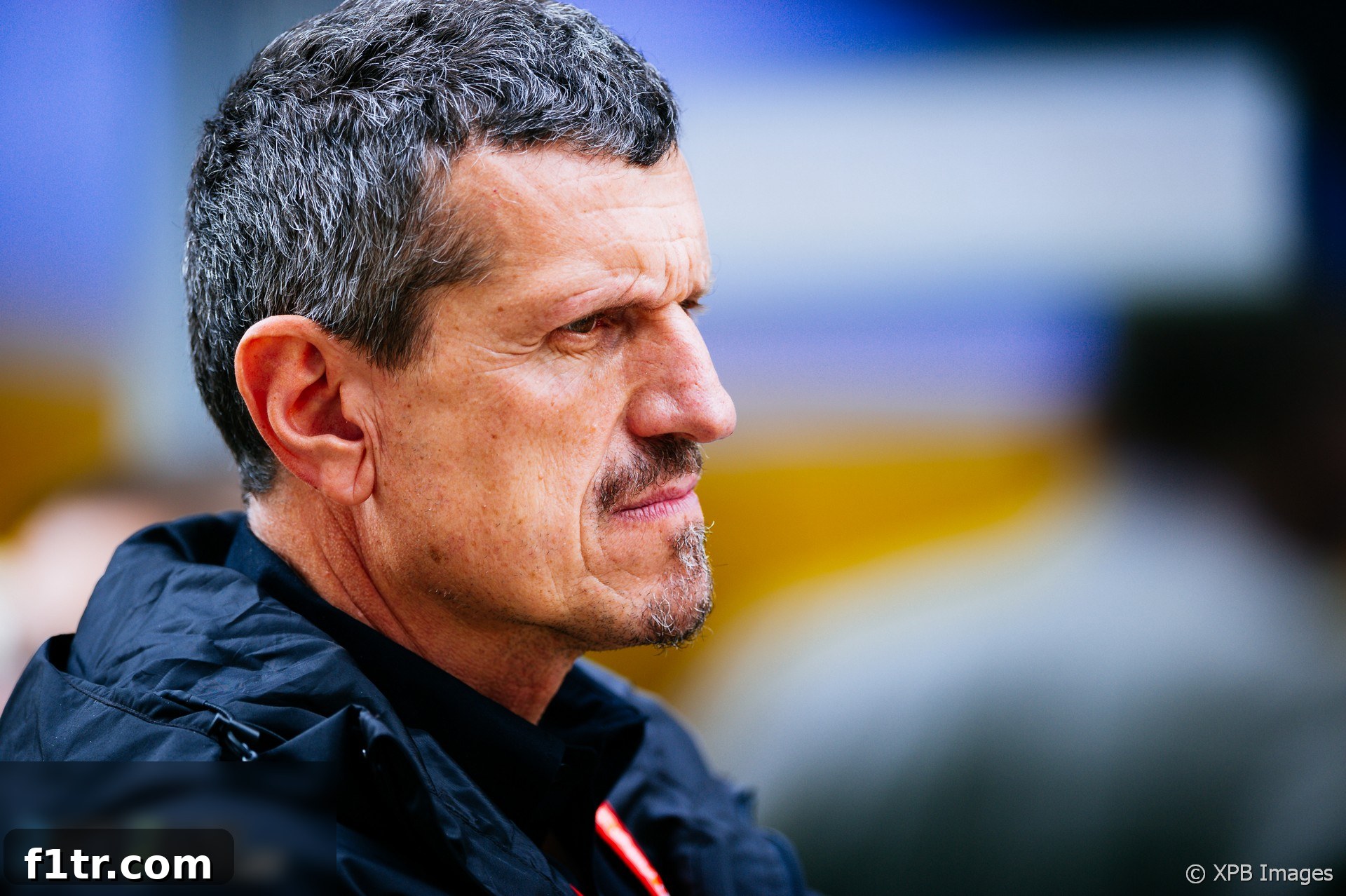
Guenther Steiner Under FIA Investigation: Unpacking the Controversial Radio Messages at the 2019 Russian Grand Prix
The exhilarating world of Formula 1 is often as much about the drama off the track as it is about the racing on it. In a notable incident that stirred significant controversy during the 2019 season, Haas F1 Team Principal Guenther Steiner found himself at the center of an FIA investigation. His fiery radio messages, broadcast immediately following the chequered flag at the Russian Grand Prix, drew the ire of the sport’s governing body, leading to scrutiny under the stringent rules of the FIA International Sporting Code. This detailed examination delves into the specifics of the incident, the nature of the alleged breaches, and the wider implications for team principals and the integrity of Formula 1 stewarding.
Advert | Become a Supporter & go ad-free
The Controversial Incident: Magnussen’s Penalty at Sochi’s Turn 2
The catalyst for Steiner’s outburst was a five-second time penalty handed to Haas driver Kevin Magnussen during the 2019 Russian Grand Prix. The incident occurred at Turn 2, a notoriously tricky corner at the Sochi Autodrom, known for its extensive run-off area and specific rejoining procedures designed to prevent drivers from gaining an unfair advantage. Magnussen, while battling for a crucial points position, ran wide at this corner.
Upon rejoining the track, Magnussen followed what he believed to be the correct protocol. However, the race stewards deemed his rejoin incorrect, alleging he did not navigate the prescribed bollards and elements of the run-off area in the manner stipulated by the race director’s notes. The penalty, applied retrospectively, demoted Magnussen from an eighth-place finish, a result that would have been vital for the struggling Haas team. The frustration within the team was palpable, stemming from the belief that the decision was based on a misinterpretation of the rules or an inconsistent application of track limits regulations, a recurring point of contention among drivers and teams throughout various F1 seasons.
Steiner’s Fiery Radio Message and FIA’s Swift Action
In the immediate aftermath of the race, with emotions running high, Guenther Steiner conveyed his extreme displeasure directly to Kevin Magnussen over the team radio. His choice of words left no room for ambiguity regarding his opinion of the stewards’ decision. Steiner famously told Magnussen: “If we wouldn’t have a stupid, idiotic steward we would be eighth.” Magnussen, equally frustrated and sharing his team principal’s sentiment, echoed the sentiment with a concise reply: “What a load of bullshit.”
These unfiltered radio exchanges, which are part of the public broadcast during Formula 1 races, quickly became a focal point of discussion. The FIA, the governing body of motorsport, wasted no time in initiating an investigation into Steiner’s comments. A statement from the stewards on Friday before the subsequent Japanese Grand Prix confirmed the inquiry, citing an “alleged breach of Articles 12.1.1 c) and f) FIA International Sporting Code by the Haas F1 Team at 15:49, through the means of radio communications immediately following the display of the chequered flag for the 2019 Russian Grand Prix.” This swift action underscored the FIA’s commitment to upholding the integrity of the sport and its officials.
Understanding the FIA International Sporting Code
The articles cited in the FIA’s statement, 12.1.1 c) and f), are foundational to maintaining decorum and respect within the motorsport community. Article 12.1.1 c) broadly forbids “any fraudulent conduct or any act prejudicial to the interests of any competition or to the interests of motor sport generally.” This article is designed to cover a wide range of actions or behaviors that could undermine the fairness, reputation, or overall health of the sport. Steiner’s public criticism of a steward, implying incompetence or bias, could be interpreted as prejudicial to the interests of the competition by questioning the authority and judgment of officials.
Furthermore, Article 12.1.1 f) specifically targets “any words, deeds or writings that have caused moral injury or loss to the FIA, its bodies, its members or its executive officers.” This particular clause directly addresses defamation or statements that could damage the reputation and credibility of the FIA and its appointed officials, such as race stewards. By labeling a steward as “stupid” and “idiotic,” Steiner’s remarks could very well be seen as causing moral injury to an FIA member, directly falling under the scope of this article. These codes are in place to ensure that while passionate debate is part of the sport, there are limits to how criticism can be expressed, especially when it targets individuals performing official duties.
Kevin Magnussen’s Defense: A Driver’s Perspective
Adding another layer to the controversy, Kevin Magnussen remained steadfast in his belief that the penalty was unjust. Speaking at Suzuka ahead of the Japanese Grand Prix, he articulated his perspective, highlighting what he perceived as inconsistencies or unclear guidelines regarding the rejoining procedure at Turn 2. “We were told one thing and I didn’t do what was said to be classified for a penalty,” Magnussen stated.
He elaborated on the specific instructions provided to drivers: “They said if you go completely to the left of the first element then you have to take both [bollards] and if you don’t get a penalty answer. But I went across them. So it’s not written anywhere what to do then. And then try to go there and take it, lost a lot of time. I think it was wrong and I think they know it was wrong.” Magnussen’s detailed explanation underscored the frustration often felt by drivers when track limits and rejoining rules are complex or perceived as inconsistently enforced. His argument suggested a lack of clear guidance for the specific scenario he encountered, leading him to believe he was unfairly penalized despite making an effort to follow the spirit of the rules and losing time in the process.
Advert | Become a RaceFans supporter andgo ad-free
The Broader Implications for Formula 1 Stewarding and Team Conduct
This incident transcends a single penalty or a team principal’s momentary lapse of judgment; it touches upon the perennial debate surrounding Formula 1 stewarding and the conduct expected of public figures within the sport. Stewarding in F1 is an incredibly challenging task, requiring real-time decisions under immense pressure, often with complex regulations and varying interpretations. The consistency of stewarding decisions is a frequent topic of discussion among drivers, teams, and fans alike. While passion is an inherent part of motorsport, the FIA maintains that criticisms should be voiced through official channels, rather than through public condemnation that could undermine the authority and reputation of the officials.
Team principals, as the public face of their organizations, hold a significant responsibility. Their words carry weight and can influence public perception of the sport, its rules, and its officials. Steiner’s comments, while understandable in their emotional context given the competitive stakes for a smaller team like Haas, crossed a line for the FIA, triggering a formal investigation into what constitutes acceptable public discourse for key figures in Formula 1.
Precedents and Potential Consequences for Steiner
The FIA’s investigation into Guenther Steiner’s conduct could have several outcomes, ranging from a formal reprimand to a significant fine, or even a ban from future race events, though the latter is typically reserved for more severe or repeated offenses. The message the FIA aims to send is clear: there are boundaries to public criticism, and undermining the integrity of the judicial process will not be tolerated. This serves as a precedent-setting reminder for all team principals and prominent figures in the sport about the standards of professionalism and respect expected when addressing stewards and the FIA. Such investigations are crucial for maintaining the sport’s credibility and ensuring that decisions, even if unpopular, are respected within the framework of governance.
Haas F1 Team’s Challenging 2019 Season
To fully appreciate the context of Steiner’s frustration, it’s important to recall the Haas F1 Team’s challenging 2019 season. The team struggled significantly with tire performance and overall car competitiveness, often finding themselves battling at the back of the midfield despite flashes of potential. Points finishes were hard-earned and incredibly valuable. Losing an eighth-place finish due to a penalty, especially one that was contested by the driver, would have been a bitter pill to swallow. This underperforming season likely amplified the emotional intensity surrounding any perceived injustice, contributing to Steiner’s uncharacteristic public outburst. His strong reaction can be seen as a reflection of the immense pressure and passion inherent in leading a Formula 1 team, particularly when results are elusive.
Conclusion: Balancing Passion and Professionalism
The investigation into Guenther Steiner’s radio messages at the 2019 Russian Grand Prix serves as a poignant reminder of the delicate balance between unbridled passion and the necessity for professional conduct in Formula 1. While the sport thrives on strong personalities and fierce competition, the integrity of its governing bodies and officials is paramount. The incident highlighted the ongoing complexities of stewarding, the frustrations that can arise from perceived inconsistencies, and the responsibility that comes with leadership roles in a globally scrutinized sport. As the FIA concluded its investigation, the motorsport world awaited the outcome, understanding that the ruling would not only address Steiner’s actions but also set a benchmark for future interactions between teams, drivers, and the esteemed officials who ensure the fairness and order of Formula 1.
2019 F1 Season Related Articles
- Crying in the Melbourne car park at 2019 grand prix was my career low – Ocon
- McLaren Racing reports reduced £71 million loss in 2019
- Kvyat: Hockenheim podium last year was “my biggest achievement” so far
- How the FIA’s new encrypted fuel flow meter targets Ferrari’s suspected ‘aliasing’ trick
- “He smashed my office door”: 23 must-see moments from ‘Drive to Survive’ season two
Browse all 2019 F1 season articles