The Shifting Tides: Germany’s Diminished Role in Formula 1 and the Quest for a Comeback
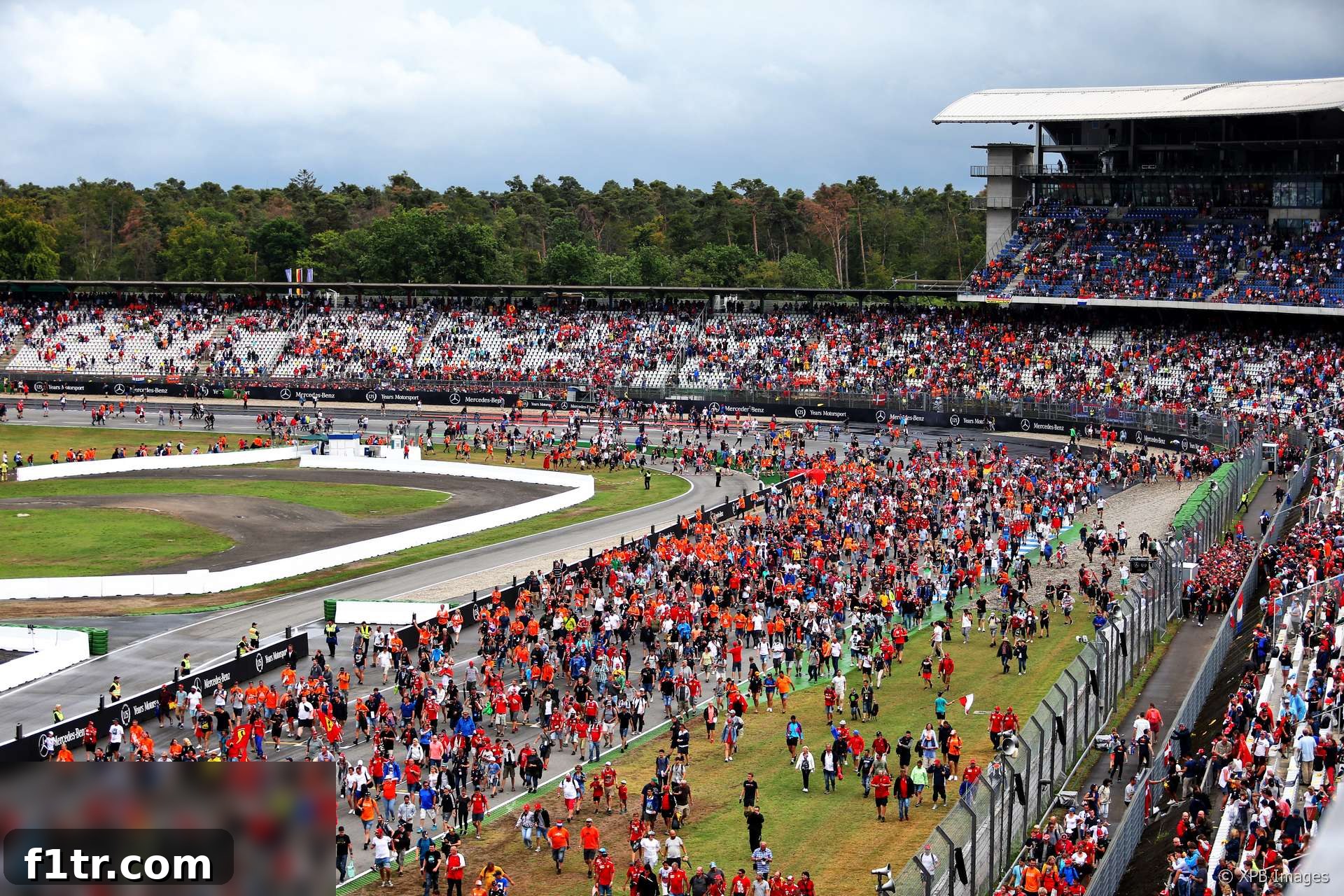
Formula 1’s journey through its storied history has been inextricably linked with Germany, a nation that has shaped and been shaped by the pinnacle of motorsport. However, the grandeur of this era seems to have faded into memory, as Germany has not hosted a Grand Prix since 2020. This absence coincides with a significant shift in the sport’s landscape: the nation’s remarkable streak of world championship titles, whether for drivers or constructors, also concluded in 2021. For more than a decade, from 2010 to 2021, either a German driver or a German-based constructor claimed the coveted championship crown, a period of dominance almost unparalleled. Before this, Mercedes-Benz engines were the formidable power units behind two prior drivers’ champions. And stretching further back into the annals of F1, the legendary Michael Schumacher secured an astonishing five successive titles from 2000 to 2004, cementing Germany’s reputation as a powerhouse in the sport.
Today, the grid tells a different story. Haas driver Nico Hulkenberg stands as the sole German representative, a seasoned veteran of the sport with an impressive 24th rank in the all-time list of most Grand Prix starts. Yet, despite his enduring presence and experience since debuting in 2010, Hulkenberg has never stood on an F1 podium, a stark contrast to the championship pedigree of his compatriots. His singular position on the grid is not just a present reality but likely to persist for years, even if he retains his seat, as the pipeline for promising young German talent in junior single-seater categories appears regrettably thin. This lack of a clear successor to the likes of Schumacher and Vettel undoubtedly contributes to the perceived waning of F1’s popularity within Germany.
During the most recent F1 race in neighboring Belgium, Hulkenberg was quizzed about this perceived decline in F1’s national appeal. His response was candid but measured, stating he was “not concerned” by it, yet acknowledging the undeniable truth. “It’s a fact that F1 is not so popular, so booming right now,” Hulkenberg admitted. “Definitely, it had times where it was much more present in Germany, much more well perceived. It’s a true observation, and I share it.” This sentiment reflects a broader understanding within Germany that F1’s golden age there has passed, at least for now. The last year marked a historical low, being the first time since the world championship’s inception that F1 had gone more than a full season without a race in Germany, a stark indicator of the changing dynamics.
The Environmental Discourse: A Barrier to F1’s Appeal in Germany
Hulkenberg also astutely pointed to a significant factor impacting F1’s popularity in his homeland: the prevailing environmental concerns. “I think in Germany the perception of, in general, the automotive industry – it’s like responsible for climate change, it’s not sustainable,” he explained. “And I think that rubs off onto motorsport, and that’s why I think there’s a perception and what politics tell the people is that this is bad and somehow has a negative impact on racing and F1 too.” Germany, a nation at the forefront of the green movement, has a public increasingly aware and critical of industries perceived as environmentally detrimental. While Formula 1 has made significant strides towards sustainability, introducing hybrid engines, developing biofuels, and committing to a Net Zero Carbon footprint by 2030, these efforts may not yet fully resonate with a German public whose political and social discourse heavily emphasizes ecological responsibility. The high-octane, fuel-guzzling image of traditional motorsport remains a challenge to overcome in a society increasingly prioritizing eco-friendly alternatives.
Guenther Steiner’s Optimism: The Global Boom and Missed Opportunities
In stark contrast to Hulkenberg’s pragmatic assessment stands his American-Italian team boss, Guenther Steiner. Steiner, ever the commercially minded leader, exudes a fervent belief in Formula 1’s burgeoning global appeal. He not only champions the idea of a German home race for Hulkenberg but also expresses enthusiasm for a Danish Grand Prix, acknowledging the deep roots and history that nations like Germany and Denmark hold within the sport. “With the popularity of F1 right now, I think we could race everywhere and sell out the venue,” Steiner declared, highlighting the unprecedented global demand for F1 events under Liberty Media’s stewardship. This commercial resurgence, marked by new races in vibrant cities and expanding fan bases, positions F1 in a powerful negotiating stance, often leading to bidding wars among potential host nations and circuits.
Steiner firmly believes that a race in Germany would be “appropriate,” underscoring the nation’s immense significance as a “big ‘car’ country” with a rich automotive heritage, the presence of a German driver, and an extensive history within F1. He views Germany as an anomaly in the current F1 landscape, noting that while interest is growing everywhere else, it appears to be in decline there. A home race, in his view, would not only inject vitality back into the German fan base but also offer millions of fans the opportunity to witness the spectacle in their own country. The absence of a German Grand Prix is often attributed to the financial demands of hosting an F1 race, which have escalated significantly amidst the sport’s global boom. Historic circuits like Hockenheimring and Nürburgring, once staples of the F1 calendar, have struggled to meet these fees without substantial government or corporate backing, which has been less forthcoming in recent years.
The Unfulfilled Promise of a Danish Grand Prix
Steiner also cast his gaze towards Denmark, the home nation of Hulkenberg’s teammate, Kevin Magnussen. “Denmark’s also got a lot of history in F1, now having Kevin here is what they want and there was a plan to have a race in Copenhagen which would’ve been fantastic,” he recounted. “It’s a fantastic city and I think they would’ve been ready, but I think the politicians couldn’t agree, so therefore it was decided not to have it for now but hopefully, that idea comes back.”
Indeed, ambitious plans for a Copenhagen-based F1 Grand Prix emerged in 2018, envisioning a spectacular street race through the Danish capital. The concept generated considerable excitement, promising a unique urban circuit that would blend high-speed racing with iconic cityscapes. However, these plans ultimately collapsed when the city council and various political factions were unwilling to commit the substantial public funding required to host such a high-profile international event. The political landscape, characterized by concerns over cost, environmental impact, and potential disruption to city life, proved to be an insurmountable hurdle. Despite the setback for F1, the streets of Copenhagen are still alive with motorsport spirit, annually hosting the Copenhagen Historic Grand Prix, an event that draws modern touring cars and historic single-seaters, keeping the flame of racing alive in the city.
The Road Ahead: Reclaiming Germany’s F1 Glory?
The narratives from Nico Hulkenberg and Guenther Steiner paint a comprehensive picture of Formula 1’s standing in two key European nations. Germany, once a cornerstone of F1, now grapples with a perceived decline in interest, fueled by a combination of factors: the absence of consistent local heroes, shifting public perceptions influenced by environmental concerns, and the escalating financial demands of hosting a Grand Prix. The loss of iconic tracks like Hockenheim and Nürburgring from the calendar is not merely a logistical matter but a symbolic void for German fans who grew up with these venues. The challenge for F1, and for Germany, is to bridge this gap, to reignite the passion that once made the nation a focal point of the sport.
Conversely, the enthusiastic, if ultimately stalled, pursuit of a Danish Grand Prix underscores F1’s broader commercial strategy: identifying new, vibrant markets eager to embrace the spectacle and financial commitment required. The sport’s current global popularity means it has the luxury of choice, often prioritizing new, lucrative opportunities over traditional, but perhaps financially less viable, circuits. For Germany to reclaim its rightful place on the F1 calendar, it may require a renewed commitment from all stakeholders – government, private investors, and the F1 ecosystem itself – to overcome the present challenges. Whether through cultivating new German racing talent, fostering greater alignment with F1’s sustainability initiatives, or securing the necessary funding, the path to a German Grand Prix is complex but not impossible. The rich history and passionate fan base still exist, waiting for the opportunity to once again witness the pinnacle of motorsport on home soil, ensuring that the legacy of German excellence in Formula 1 is not just a chapter of the past, but a promise for the future.