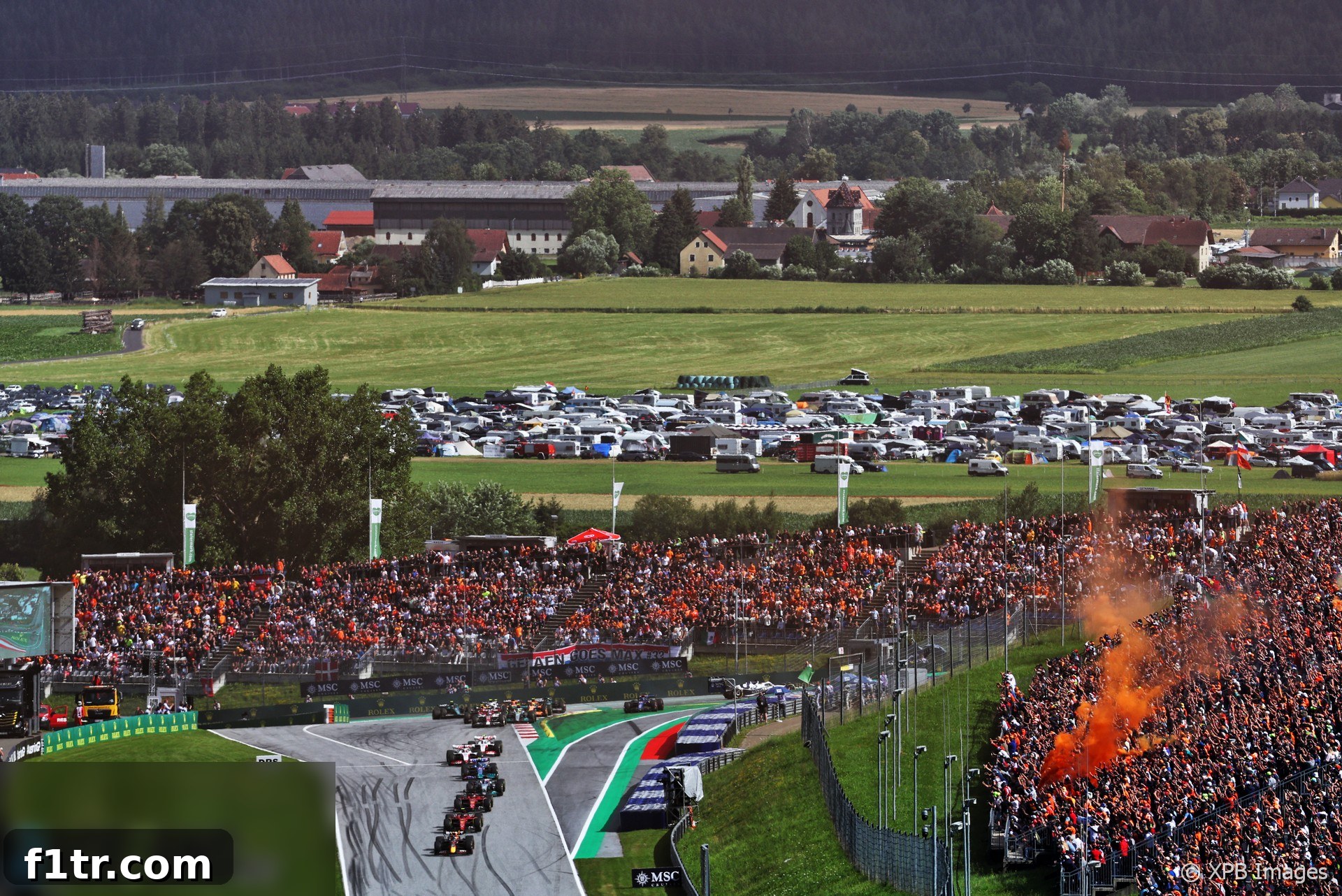
The Formula 1 sprint race format is a topic that consistently divides opinion among fans, teams, and drivers alike. Whether you embrace it as an exciting innovation or dismiss it as an unnecessary complication, one thing is certain: the sprint format is firmly entrenched in the F1 calendar. Since its trial introduction in 2021, the number of sprint rounds has grown, with the 2023 F1 calendar featuring six such events. This expansion underscores F1’s commitment to the format, despite ongoing debates about its effectiveness and its place within the sport’s rich traditions.
The concept of sprint races emerged from Formula 1’s ongoing quest to enhance the entertainment value of Grand Prix weekends. Initially trialed in 2021, the format fundamentally reshapes the weekend schedule. Under the sprint structure, the traditional qualifying session is moved to Friday, determining the grid for a shorter, points-paying 100-kilometer sprint race held on Saturday. The results of this sprint race then dictate the starting order for Sunday’s main Grand Prix. This radical departure from the long-standing three-practice-session, single-qualifying-session, main-race format was designed to inject more competitive action into Friday and Saturday, providing fans with more ‘meaningful’ sessions beyond just practice laps.
F1 leadership enthusiastically championed the initial trials as a resounding success, presenting it as a vital step forward for the sport. However, this narrative often contrasted sharply with the findings of their own research. A comprehensive official survey involving 167,000 fans revealed a more nuanced picture, indicating that only a marginal majority perceived the sprint format as an improvement over the conventional weekend structure. Furthermore, the survey highlighted that other proposed innovations, such as the reintroduction of multiple tyre suppliers, garnered significantly greater popular support. This disparity between official pronouncements and fan sentiment has fueled much of the ongoing discussion surrounding the sprint format.
For Formula 1’s commercial stakeholders, the appeal of the sprint format is clear and compelling: increased viewer engagement and, consequently, greater revenue. By replacing a traditional practice session with a competitive race, the format inherently generates more interest and drama across all three days of a Grand Prix weekend. This intensified schedule aims to capture and sustain audience attention from Friday onward, translating into higher television ratings, greater sponsorship opportunities, and ultimately, a more lucrative product for the sport. From a purely business perspective, the logic is undeniable: a larger, more consistently engaged audience directly correlates with enhanced income potential.
Despite its commercial advantages, the sprint format has failed to resolve several significant issues that have consistently frustrated a substantial portion of the F1 fanbase. One of the most prominent criticisms revolves around the dilution of the traditional pole position. Historically, pole position – the fastest time in Saturday qualifying – was a coveted achievement, marking the fastest driver over a single lap and providing a distinct advantage for Sunday’s main event. The sprint format, however, uses the sprint race result to set the Grand Prix grid, effectively devaluing the Friday qualifying session and severing a tradition that dates back to the inaugural World Championship race in 1950. This disruption to a fundamental aspect of F1’s heritage has been a constant point of contention.
In an attempt to mitigate this, Formula 1 introduced a nuanced distinction this year, declaring that the official pole position at sprint events is now awarded to the driver who achieves the fastest time in the Friday qualifying session. Yet, this solution introduces its own layer of absurdity. It remains entirely possible for a driver to secure “official pole” on Friday, only to start the main Grand Prix from a different position due to their performance in the Saturday sprint race. For instance, a driver could crash out of the sprint, forcing them to start the Grand Prix from the back despite having the fastest qualifying lap. While this specific scenario has not yet played out in the 2023 season, with both sprint races to date having been won from pole, it is surely only a matter of time before the inherent contradiction of this arrangement is starkly highlighted, further confusing fans and undermining the integrity of both qualifying and the sprint race.
Another profound concern is the lingering possibility that the points distributed in Saturday’s sprint race could ultimately determine the outcome of a World Championship. Should a championship be clinched during a Saturday sprint, it would inevitably diminish the perceived importance and prestige of the Grand Prix itself. F1’s persistent insistence that these shorter races do not detract from the main event’s significance would be shattered, potentially altering the very fabric of how championships are celebrated and remembered. The pinnacle of motorsport is the Grand Prix, and any format that risks overshadowing its decisive role faces significant scrutiny from purists and long-time fans.
Furthermore, the suitability of the sprint format across various tracks has also been called into question. Critics argue that the format is particularly ill-suited for circuits where overtaking is notoriously difficult, such as the iconic Monaco street circuit. On such tracks, a sprint race can quickly devolve into a procession, failing to deliver the promised excitement and competitive action. This inherent limitation has led some team principals, recognizing the flaws, to publicly suggest ways to modify and improve the format, acknowledging that the current iteration is not universally optimal for all venues on the calendar.
Given these challenges, a critical question arises: Can Formula 1 achieve the best of all worlds? Is it possible to retain the enhanced interest generated by more competitive sessions throughout the weekend, while simultaneously eliminating the contradictions, inconsistencies, and perceived unfairness of the current sprint race setup? Can this be done while upholding the championship’s revered traditions and devising a format that is universally applicable week-in, week-out, rather than being confined to just six specific events per year? The search for an ideal solution continues, and here are three innovative suggestions that might offer a path forward for F1 to evolve its race weekend structure.
Become a RaceFans supporter and go ad-free
Sprint Championship: A Standalone Spectacle
One of the core flaws with the existing sprint format lies in its interconnectedness with the main Grand Prix: the finishing positions of the Saturday race directly determine the starting order for Sunday. While this was intended to motivate drivers to push relentlessly and gain positions, the reality has frequently been quite different. For those drivers near the front of the grid, the potential risk of a collision or error leading to a significant drop in Sunday’s starting position often outweighs the minor points reward of the sprint. Consequently, drivers frequently adopt a conservative approach, resulting in races that are more about damage limitation than outright competition.
A straightforward yet impactful solution would be to transform the Saturday races into entirely stand-alone events. This could be achieved by introducing a separate ‘Sprint Championship’ – a distinct series running concurrently with the main Formula 1 World Championship, but without any direct impact on the Grand Prix grid. This separation would liberate Saturday’s racing from the strategic compromises currently imposed by the Grand Prix, allowing drivers to compete with far greater abandon and take more risks, knowing their Sunday fate is not on the line.
Crucially, this autonomy would grant F1 unprecedented freedom to experiment with imaginative and radical rule changes and format variations for its Saturday races. Freed from the fear of compromising the integrity of the main championship, the sport could explore ideas such as elimination races where slowest cars are periodically knocked out, rolling starts for immediate action, reverse grids based on championship standings for thrilling recovery drives, or even single-car time trials for pure speed. This separate championship could feature its own points system, trophy, and perhaps even a dedicated financial prize fund, injecting fresh excitement and innovation into the race weekend without diluting the prestige of the Grand Prix.
Would it work? The success of a separate Sprint Championship would hinge entirely on F1’s ability to make the rewards sufficiently appealing for both teams and drivers. The prize money, prestige, and championship recognition for the sprint series would need to be substantial enough to prevent teams from simply ‘parking’ their cars or prioritizing engine mileage for Sunday, ensuring maximum effort and genuine competition on Saturday.
Become a RaceFans supporter and go ad-free
Two-Part Qualifying: Honoring Tradition with Modern Twists
A significant advantage of the current sprint race format is its ability to ensure that each day of the Grand Prix weekend features consequential, competitive action. Specifically, Friday no longer concludes with a mere practice session but with a crucial qualifying session, immediately generating excitement and setting the stage for the rest of the weekend. If Formula 1 aims to maintain this level of engagement without straying too far from its established race weekend formats and traditions, it could revisit and revive the concept of having two distinct qualifying sessions.
This approach is not without precedent; Formula 1 experimented with two-part qualifying until mid-2005, during a period characterized by frequent adjustments to the Saturday format. More recently, the idea has been resurfaced as a potential solution by prominent figures within the sport, such as Haas team principal Guenther Steiner, who acknowledged its potential benefits in enhancing the weekend’s competitive appeal. This format offers a way to inject competitive action into both Friday and Saturday without the complexities and controversies associated with a full sprint race.
Several arrangements could be considered for a two-part qualifying system. One option would be to revert to the older approach of two separate qualifying hours, with the fastest lap time across both sessions determining the Grand Prix grid. However, this historical model had a notable drawback: if Friday’s session was dry and rain subsequently affected Saturday’s session, drivers often chose not to participate in the latter, as improving their times was impossible. This could lead to a lack of action on Saturday, which goes against the goal of enhancing engagement.
An alternative, more robust approach could involve bringing back a dedicated single-lap qualifying session for Saturday, but using the results of Friday’s qualifying to determine the running order for that critical Saturday session. This ensures that drivers have a compelling reason to participate and perform well in both sessions. Friday’s qualifying would then serve to set the stage for a dramatic Saturday shootout, where drivers go for glory on their own with clear track. This format would deliver competitive action on both days, celebrate pure pace, and eliminate the strategic compromises of the sprint race while re-establishing the significance of traditional pole position. It would be a balance between modern demands for excitement and respect for F1’s qualifying heritage.
Would it work? The success of a two-part qualifying system would largely depend on whether viewers tune into both qualifying sessions in sufficient numbers. The format needs to be compelling enough to maintain sustained interest, ensuring that both Friday and Saturday’s competitive elements are perceived as equally vital and exciting.
Become a RaceFans supporter and go ad-free
Rookie Fridays: Nurturing Talent and Expanding F1’s Reach
For those seeking a truly radical departure from the current format, consider this bold proposal: dedicate an entire Friday to emerging talent. Under this concept, regular Grand Prix drivers would be effectively ‘kicked out’ for the day, compressing their usual race weekend activities into Saturday and Sunday. Friday would then be exclusively reserved for new and inexperienced drivers, providing them with an unparalleled opportunity to participate in a full day of motorsport action.
Formula 1 has already taken positive steps in this direction by successfully introducing mandatory practice sessions for rookie drivers, allowing them valuable seat time. This “Rookie Friday” idea takes that concept significantly further, offering each young driver a comprehensive day in the car. This could include extended practice sessions beyond the usual single hour, a dedicated qualifying session for rookies, and even a short sprint race specifically for this new generation of drivers. Such an event would serve as a high-stakes, high-visibility proving ground, directly bridging the gap between feeder series like Formula 2 and the pinnacle of motorsport.
Beyond its benefits for driver development, a Rookie Friday could lay the groundwork for its own compelling series, potentially serving as a direct stepping stone from Formula 2. Crucially, it would also democratize access to the F1 grid, opening opportunities not only for prospective future F1 stars but also for wildcard local talents who might otherwise never get the chance to showcase their skills in an F1 car. This inclusivity could significantly boost F1’s appeal and fan base in regions that currently lack a regular Grand Prix driver, fostering new connections and interest around the globe.
Naturally, this radical shift would substantially reduce the amount of track time available to regular F1 drivers during a Grand Prix weekend. To compensate for this, Saturday’s practice session could be extended, providing more opportunity for established drivers to fine-tune their setups. Additionally, the once-traditional Sunday morning warm-up session could be reinstated, offering a final chance for drivers and teams to verify car performance before the main event. This format promises to inject new blood and excitement into the sport while maintaining the core competitive structure for the main championship.
Would it work? Implementing Rookie Fridays would require considerable convincing – and ample financial compensation – for the F1 teams. Allowing less experienced drivers to participate in an additional race carries inherent risks of damage and wear to valuable equipment, requiring significant incentives to gain their full support and commitment to this innovative concept.
Become a RaceFans supporter and go ad-free
The Future of F1 Weekends: Your Voice Matters
The debate surrounding Formula 1’s sprint format is far from over. As the sport continues to evolve, striking the right balance between preserving its cherished history, maximizing commercial appeal, and delivering compelling racing for fans remains a complex challenge. Does F1’s sprint format need to be retained as is, modified to address its current shortcomings, or perhaps even completely discarded in favor of alternative innovations? Your perspective is invaluable in shaping the future of Grand Prix weekends. Have your say and join the discussion in the comments below.
Further Reading on the 2022 F1 Season
- Mercedes told me “you’re wrong” about 2022 car’s problems – Hamilton
- FIA confirms all 10 F1 teams complied with 2022 cost cap
- Steiner “not ashamed” of panning “slow” Schumacher in Drive to Survive
- Albon believes year out of F1 improved him as a driver
- Hamilton sees diversity gains in F1 years on from his ‘traumatising’ experience of racism
Browse all 2022 F1 season articles