Formula 1 Eyes Unprecedented Double-Header at Austrian Grand Prix to Kickstart 2020 Season
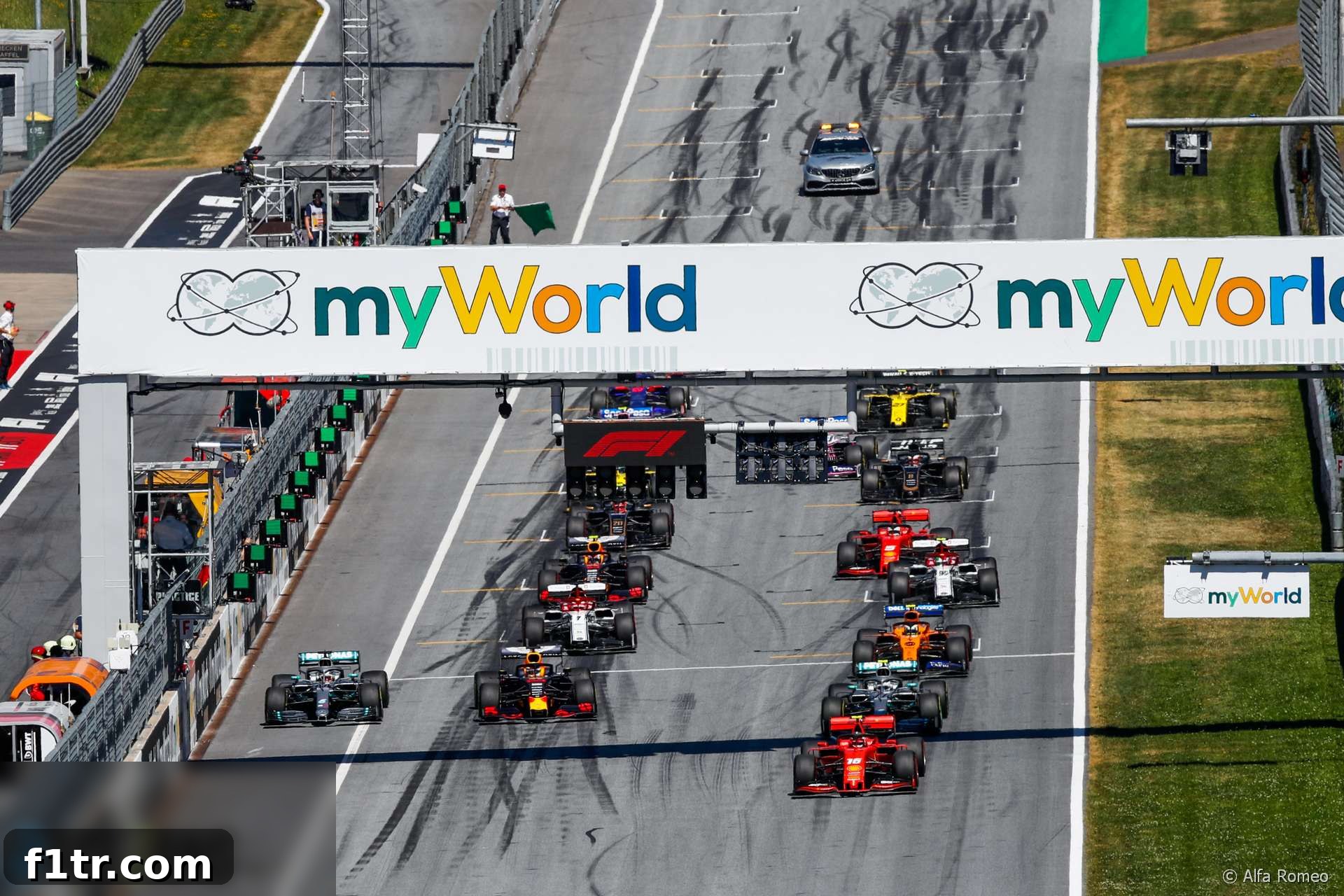
The global motorsport community is holding its breath as Formula 1 explores an innovative and ambitious plan to kickstart its long-delayed 2020 season. At the heart of this strategy is the potential for an unprecedented double-header event at the iconic Red Bull Ring in Spielberg, Austria. Red Bull’s motorsport consultant, Helmut Marko, has revealed advanced discussions surrounding not one, but two ‘ghost races’ held behind closed doors, with a novel mid-week evening race being a central component of this pioneering proposal.
Advert | Become a Supporter & go ad-free
As the world grapples with the ongoing health crisis, Formula 1 is actively seeking viable pathways to commence its championship as swiftly and safely as possible, while also striving to maximise the number of races on a significantly condensed calendar. The proposal for two consecutive events in Austria has emerged as a frontrunner, offering a logistical blueprint that could set a crucial precedent for the remainder of the season and indeed for other major international sporting events.
The Pioneering Proposal: A Mid-Week Spectacle at the Red Bull Ring
Helmut Marko, a key figure in the discussions and representing the promoters of the Austrian Grand Prix, Red Bull, shared insights into the detailed planning. Speaking to ORF radio, Marko confirmed that the possibility of hosting two races at the Red Bull Ring, sans spectators, is actively being investigated. Intriguingly, one of these events could be staged on a Wednesday evening, a radical departure from Formula 1’s traditional weekend format and a testament to the sport’s adaptive spirit.
“The current situation is that we have naturally approached the government in order to establish a work list of requirements to stage a Grand Prix, a ghost race obviously run without public [access],” Marko explained. He emphasised the stringency of the undertaking: “These requirements will need to be met fully, there will be no exceptions.” This statement underscores the meticulous approach being adopted to ensure the highest standards of public health and safety are maintained throughout the event, making it a benchmark for future sporting resumptions.
The concept of a mid-week race introduces several fascinating dimensions. While the initially scheduled July 5th Grand Prix would likely proceed as a standard event, the proposed second race would adopt a unique two-day format, culminating in a race held late Wednesday afternoon. Marko elaborated on the visual appeal: “It would take the form of a sort of night race in our late daylight, which would be an attractive time in many other countries.” With sunset falling around 9 pm in the region during July, this would indeed offer a distinct visual spectacle, potentially appealing to a broader international television audience in different time zones, especially critical European and Asian markets. This innovative scheduling aims to capture peak viewership, enhancing the global impact of F1’s return.
Navigating the Logistics of a ‘Ghost Race’ in Formula 1
Staging a major international sporting event like Formula 1 without public attendance, often termed a ‘ghost race,’ presents an intricate web of logistical challenges. However, it also offers a streamlined approach to resuming competition by significantly reducing the human footprint at the venue. Marko outlined the comprehensive study underway to manage personnel effectively:
“A study is being undertaken as to how to restrict the numbers to ensure that the entire circus is not needed,” he noted. This involves limiting attendance to only absolutely essential personnel: team members, Formula 1 staff, FIA officials, track marshals, medical staff, and critical broadcast technicians. Each of these individuals would be part of a carefully managed ‘bio-secure bubble’ designed to minimise external contact and potential viral transmission. This self-contained environment is paramount to preventing outbreaks and ensuring the continuity of the events.
Rigorous Health and Safety Protocols: The Blueprint for F1’s Return
The cornerstone of this return-to-racing strategy revolves around stringent health and safety protocols, setting a new standard for international sports. Marko detailed the proposed measures: “For example, charter flights from England could land at the adjacent airport. Personnel would need to prove a negative [Covid-19] test not older than four days, or [they go] into quarantine.” This two-pronged approach ensures that everyone entering the F1 ecosystem is verified as negative before integration, or undergoes a supervised quarantine period. Regular, perhaps daily, testing throughout their stay would also be a crucial element, creating a continuously monitored environment to swiftly identify and isolate any potential cases.
Such comprehensive measures extend far beyond simple testing. They encompass dedicated, sanitised transportation from airports to accommodation and track, strict social distancing guidelines within the paddock, garages, and hospitality areas (even if empty), enhanced hygiene practices, and potentially even segregated living arrangements to further reduce interaction between different teams or groups. The Red Bull Ring, nestled in the picturesque Styrian mountains, offers a relatively secluded and contained environment, making it an ideal candidate for implementing such controlled and robust health measures. The infrastructure of the circuit and its surrounding facilities are well-suited to create the necessary isolation zones.
Beyond the Track: Economic and Promotional Significance for Austria and F1
The significance of hosting these pioneering events extends far beyond the immediate sporting spectacle. For Formula 1, it represents a critical step in fulfilling its broadcast contracts, retaining crucial sponsor interest, and re-engaging its massive global fanbase. The economic health of the sport relies heavily on an active season, and Austria could provide the much-needed impetus to restart the financial engines of Formula 1 after a prolonged hiatus. Successfully staging these races would demonstrate F1’s resilience and commitment to its stakeholders.
Furthermore, the double-header at Spielberg holds substantial promotional value for both the venue and the host nation. Marko expressed this sentiment clearly: “It would be, I believe the first major international event, which would result in enormous interest, which is important not only for F1, but equally for Spielberg and Austria as it would create enormous goodwill and prove how efficiently and quickly our government was able to introduce the necessary measures early.”
This initiative positions Austria and the Red Bull Ring as leaders in demonstrating the feasibility of safely resuming major international events in a post-pandemic world. The global spotlight would not only highlight the picturesque Styrian region but also showcase Austria’s proactive and effective governmental response to the health crisis. While fans won’t be trackside, the global television audience of hundreds of millions will still bring immense visibility and positive association for the country, potentially boosting future tourism and investment when travel restrictions ease.
The Sporting Impact of Back-to-Back Races at the Same Venue
From a sporting perspective, two consecutive races at the same venue present intriguing possibilities and challenges for teams and drivers. Teams would have a wealth of data from the first event, allowing for rapid development, setup changes, and fine-tuning of car configurations for the second race. This could lead to closer competition and potentially different strategic approaches between the two Grands Prix, as teams adapt their learnings in real-time. The mid-week timing of the second race might necessitate a compressed schedule, possibly impacting practice sessions or qualifying formats, adding another layer of challenge and excitement for teams and viewers alike, potentially introducing a sprint race format or revised weekend structure.
The unique Red Bull Ring circuit, with its challenging elevation changes, fast corners, and limited number of turns, is known for producing exciting races and opportunities for overtaking. Holding two events here would offer twice the opportunity for thrilling on-track action and could prove a severe test of reliability, driver consistency, and team strategy. Tyre management, engine wear, and brake performance will be under intense scrutiny across two competitive weekends back-to-back.
Unanswered Questions: The Evolving Role of Media and Fan Engagement
While the focus remains on essential personnel for racing and broadcasting, arrangements for broader media coverage remain a key area of discussion. “It remains unclear what arrangements would be made for the media to cover the races, beyond the necessary staff to film and broadcast them,” Marko noted. Traditionally, Grand Prix weekends are a bustling hub for international journalists, photographers, and reporters, generating a significant portion of the sport’s global narrative.
In a ‘ghost race’ scenario, physical presence for non-essential media would likely be severely restricted or even prohibited. This could lead to a reliance on remote reporting, virtual press conferences facilitated by technology, and centralised media feeds, posing new challenges for journalists in conveying the full story and immersive atmosphere of an F1 event. However, it also presents an opportunity for innovative digital content creation and enhanced virtual fan engagement, ensuring fans worldwide remain connected to the action despite the physical distance. Formula 1 is exploring new ways to bring the experience closer to home through advanced broadcasting techniques and interactive online platforms.
Advert | Become a RaceFans supporter andgo ad-free
The Broader Context for the 2020 F1 Season: A Global Effort
The Austrian double-header, if approved, would serve as a critical blueprint for how Formula 1 intends to salvage its 2020 season. Following Austria, discussions are ongoing for similar ‘bio-secure bubble’ events at other European tracks, such as Silverstone in the UK, Hungaroring in Hungary, and potentially others in quick succession. The sport’s leadership, including Chase Carey and Ross Brawn, has been tirelessly working with governments, health authorities, and circuit promoters worldwide to piece together a revised calendar that maximises racing opportunities while prioritising health and safety above all else. The logistical challenges are immense, involving coordinated travel, accommodation, and medical oversight across multiple nations.
The successful execution of the Austrian Grand Prix double-header would send a powerful message of resilience and adaptability, not just within motorsport, but across the entire global sports industry. It would demonstrate that with meticulous planning, rigorous protocols, and innovative thinking, elite international competitions can safely resume, offering a much-needed sense of normalcy, economic activity, and entertainment to millions worldwide. This pioneering spirit could pave the way for other major leagues and events to follow suit, offering a beacon of hope in challenging times.
As Formula 1 eyes its highly anticipated return, the Red Bull Ring stands ready to host an historic and potentially season-defining sequence of events. The detailed preparations and proactive collaboration between Red Bull, the Austrian government, and Formula 1 management underscore a collective determination to bring the roar of the engines back to life, marking a new and resilient chapter in the sport’s rich history.
2020 F1 Season – Related Articles
- Grosjean to make F1 test return tomorrow for first time since Bahrain horror crash
- Pictures: Wrecked chassis from Grosjean’s Bahrain fireball crash to go on display
- Bottas vs Rosberg: Hamilton’s Mercedes team mates compared after 78 races each
- F1 revenues fell by $877 million in Covid-struck 2020 season
- Hamilton and Mercedes finally announce new deal for 2021 season
Browse all 2020 F1 season articles