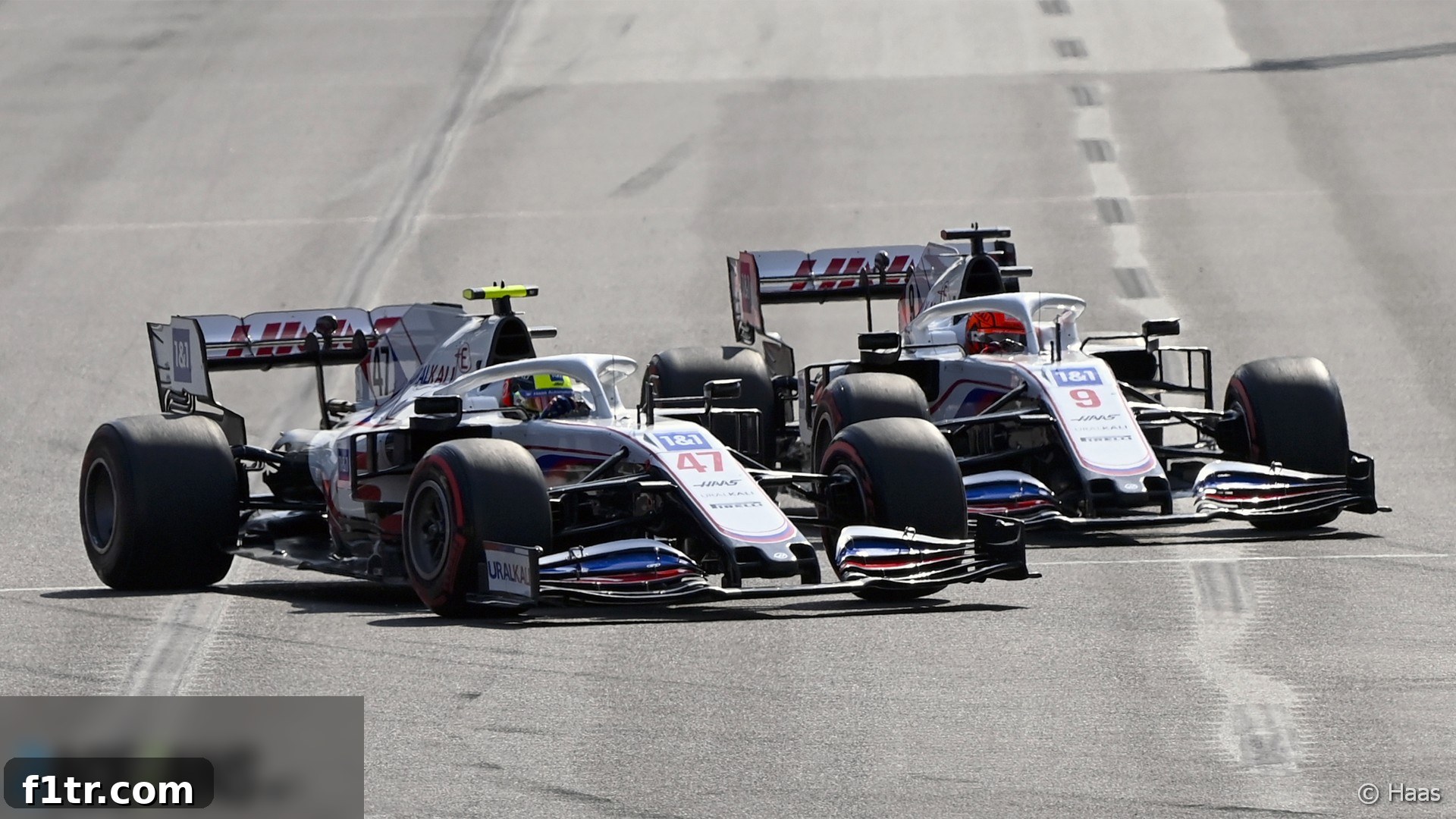
The exhilarating and often unpredictable world of Formula 1 racing witnessed a tense moment at the 2021 Azerbaijan Grand Prix, as Haas F1 Team mates Mick Schumacher and Nikita Mazepin narrowly avoided a high-speed collision on the main straight. The incident, occurring at a staggering 300kph as they sprinted towards the chequered flag, left Schumacher visibly enraged and sparked immediate concern about team dynamics and driver safety.
Advert | Become a Supporter & go ad-free
High-Stakes Finish: A Near Miss at 300kph
The concluding moments of the Azerbaijan Grand Prix were fraught with drama, not least for the rookie drivers of the Haas F1 Team. As the final lap unfolded, Mick Schumacher and Nikita Mazepin found themselves locked in a fierce, albeit low-scoring, battle for position. Approaching the iconic finishing line on Baku’s long main straight, Schumacher, utilizing his car’s full potential, drew alongside his Russian team mate. However, what followed was a dangerous manoeuvre that sent shockwaves through the young German’s cockpit.
Onboard camera footage from Schumacher’s car vividly captured the perilous moment. As he pulled alongside Mazepin, seeking to claim the advantage, Mazepin’s car was seen weaving aggressively towards Schumacher’s, pushing him perilously close to the pit wall. At speeds exceeding 300 kilometres per hour, such an unpredictable movement carries immense risk, not only for the drivers involved but potentially for others on track and even trackside personnel. Schumacher’s immediate reaction was a furious gesticulation towards Mazepin, a clear indication of his disbelief and anger at the perceived disregard for safety.
Immediately after crossing the finish line, Schumacher’s frustration boiled over his team radio. His raw, unfiltered exclamations highlighted the severity of the situation. “What the fuck was that, honestly?” he demanded from his race engineer. “Seriously, does he want to kill us?” The intensity of his words underscored the grave danger he felt he had been put in, emphasizing the fine line between aggressive racing and outright recklessness in Formula 1.
His race engineer, recognizing the highly charged atmosphere and perhaps keen to de-escalate, calmly responded, “Understood Mick, chequered flag,” acknowledging his driver’s complaint while swiftly moving to the end-of-race formalities. This brief exchange captured the immediate aftermath of a moment that could have had catastrophic consequences on one of the fastest sections of any Formula 1 circuit.
Mazepin’s Perspective: Frustration and Technical Challenges
Nikita Mazepin, who ultimately finished 13th, just seven-hundredths of a second behind Schumacher’s 12th place, offered his own explanation for the incident and his evident frustration. While acknowledging the competitive nature of the finish, Mazepin attributed his inability to maintain position to a technical limitation with his car’s energy recovery system. He stated that he had run out of battery power, preventing him from utilizing the full boost required to defend against Schumacher’s attack effectively.
“The main thing was just I’m a little bit upset about losing my position to my team mate on the main straight,” Mazepin admitted. “I ran out of battery there so I was a bit of a sitting passenger. But it is what it is.” His comments suggested a sense of helplessness, implying that his car’s performance limitations at that critical moment put him at a disadvantage. However, this explanation did not directly address the weaving manoeuvre itself, which was the primary source of Schumacher’s fury and the safety concern.
Mazepin’s race had been a challenging one, plagued by issues that impacted his overall performance. He revealed that he had been forced to contend with a significant brake problem throughout the Grand Prix. “The pace was there but we were experimenting with something because I had to manage the brakes from the beginning because they were overheating,” he explained. This ongoing issue required him to constantly adjust his brake bias, making the car difficult to handle and prone to locking up. At one point, these difficulties led him to run wide and nearly collide with a wall, costing him valuable time and compromising his race rhythm.
Despite these setbacks, Mazepin had managed to stage a recovery, passing Schumacher after a late-race restart with only two laps remaining. This context suggests a driver pushing the limits, battling both his car’s technical woes and his team mate for every inch of tarmac. His frustration at losing the position in the final metres, after overcoming significant challenges, is understandable from a competitive standpoint, even if his defensive driving raised serious questions about safety.
Advert | Become a RaceFans supporter andgo ad-free
Haas F1 Team: Rookie Struggles and a Glimmer of Hope
The 2021 Formula 1 season was notoriously difficult for the Haas F1 Team. Operating with a largely undeveloped car and an all-rookie driver lineup in Mick Schumacher and Nikita Mazepin, the team consistently found themselves at the back of the grid. Any opportunity to compete, even for 12th or 13th place, was seen as a significant achievement and a morale booster. The Azerbaijan Grand Prix, therefore, represented a minor victory for the team, with both drivers securing their best results of the season so far. Their 12th and 13th place finishes allowed Haas to temporarily climb to ninth in the Constructors’ Championship, ahead of Williams, a testament to the chaotic nature of the Baku race which saw several front-runners retire.
Despite the contentious finish, Mazepin acknowledged the positive outcome for the team. “I think [it’s] a nice number for the team, but obviously some unexpected situations has happened with the other drivers which enabled us to get that position. But overall, it’s quite positive.” His comment reflected the team’s pragmatic view of their performance, recognizing that favourable circumstances, such as numerous retirements and safety car periods, contributed to their elevated positions.
However, the incident between Schumacher and Mazepin cast a shadow over this otherwise “positive” result. Team mate rivalries are common in Formula 1, especially when both drivers are young and eager to prove themselves. For Haas, nurturing two rookies while managing their competitive instincts is a delicate balancing act. This near-collision highlighted the inherent tension and the critical need for clear team guidelines and mutual respect on track, particularly when battling each other.
The Aftermath: FIA Investigation and Team’s Stance
The severity of Mick Schumacher’s radio message and the visual evidence from his onboard camera quickly prompted action from the sport’s governing body. The FIA, responsible for ensuring driver safety and fair play, announced that it would examine the incident. While the near-miss was initially overlooked by race stewards during the chaotic final moments of the Grand Prix, Schumacher’s public outcry and the clear footage necessitated a retrospective review. Such investigations are crucial for setting precedents and reinforcing acceptable standards of conduct on track, especially in high-speed scenarios.
Haas team principal Guenther Steiner, often known for his direct and sometimes blunt approach, addressed the incident publicly. He downplayed the seriousness, describing it as a “misunderstanding” between the two drivers. Steiner’s assessment, while potentially aimed at diffusing tensions and protecting his young drivers from further scrutiny, also highlighted the challenge of managing aggressive racing instincts within a team. For team principals, the goal is always to maximize collective performance while minimizing internal conflicts and ensuring driver safety. A “misunderstanding” in this context suggests a need for clearer communication and perhaps more explicit instructions on how to handle wheel-to-wheel combat between team mates, particularly at critical points in a race.
Update: FIA to look into the incident; Haas team principal Steiner says it was a “misunderstanding”
Implications for the Haas Driver Lineup and Future Races
The Baku incident served as a stark reminder of the inherent dangers of Formula 1 and the intense pressure under which rookie drivers operate. For Mick Schumacher, a driver carrying the weight of a legendary surname, asserting his position and demanding respect on track is crucial for his development. His fiery reaction underscored his professional commitment to safety and fair racing. For Nikita Mazepin, the incident added another layer to his already controversial rookie season, prompting questions about his race craft and awareness, despite his technical explanation.
This near-collision will undoubtedly be a key talking point in team debriefs and will likely lead to stricter guidelines from the Haas pit wall. Ensuring that both drivers can push the limits competitively without jeopardizing each other’s safety is paramount. The long-term implications for their working relationship will depend on how the team manages the fallout and whether both drivers can learn from the experience to foster a more respectful, albeit still competitive, dynamic on track. As Formula 1 continues its demanding calendar, all eyes will be on the Haas garage to see how this contentious moment shapes the future interactions between its two young talents.
Don’t miss anything new from RaceFans
Follow RaceFans on social media:
- Join RaceFans on Facebook
- Follow RaceFans on Twitter
- Get daily email updates from RaceFans
Advert | Become a RaceFans supporter andgo ad-free
2021 Azerbaijan Grand Prix
- Aston Martin also confirms it followed Pirelli’s tyre restrictions before crash
- Pirelli confirm teams not to blame for Baku tyre failures following investigation
- “Tyres should not explode like that” says Villeneuve as Pirelli prepares to reveal findings
- Why Alonso is able to enjoy F1 more now than when he left
- Penalty for Safety Car error was just one of Latifi’s frustrations in Baku
Browse all 2021 Azerbaijan Grand Prix articles