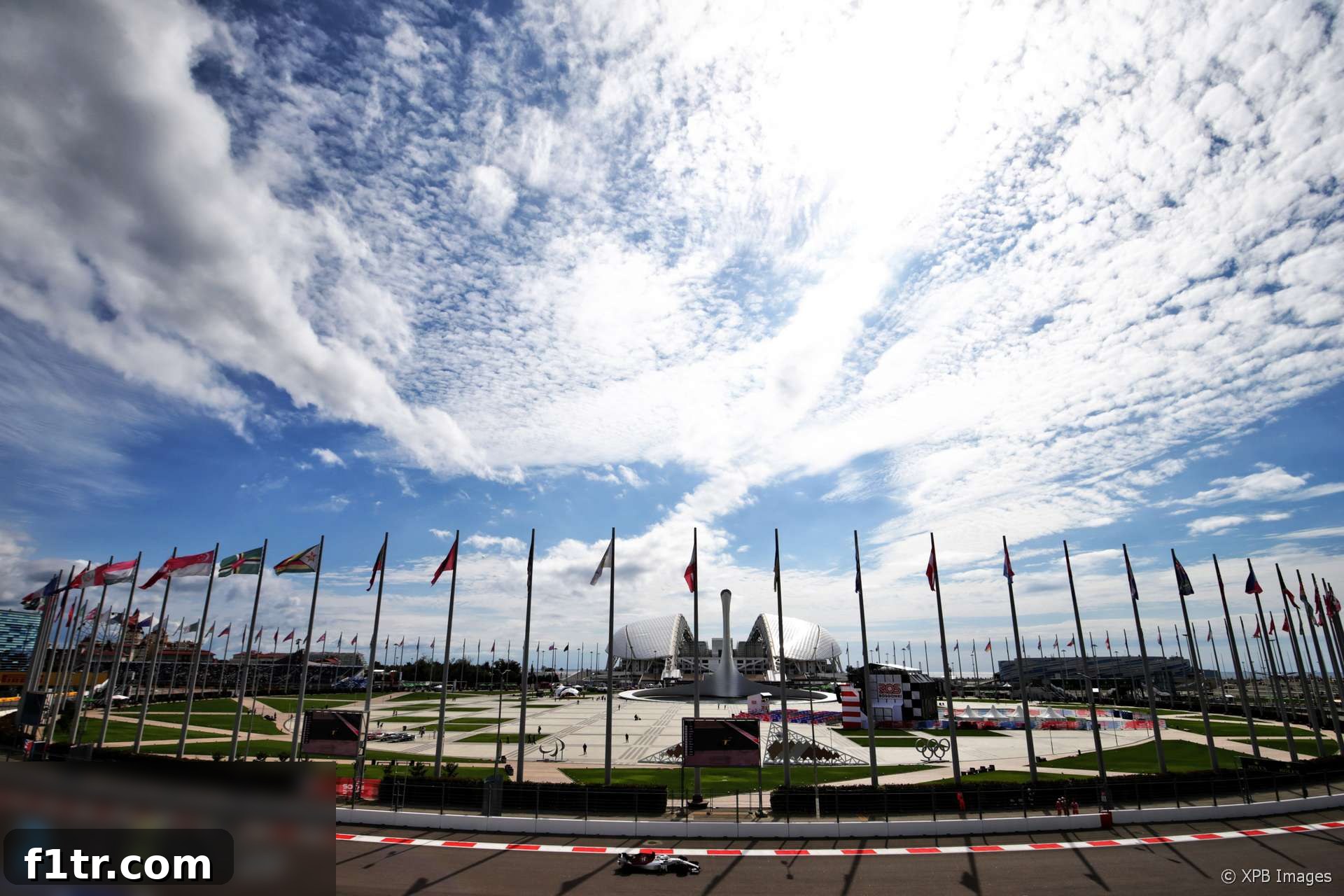
The Formula 1 circus is often a spectacle of speed and precision under clear skies, but a looming weather front in Sochi could introduce an unprecedented challenge: the first truly wet Russian Grand Prix. The prospect of significant rainfall throughout the upcoming race weekend in Sochi promises to transform the familiar street circuit into a demanding theatre for both drivers and strategists, adding layers of unpredictability and excitement that fans crave.
For years, the Russian Grand Prix has been characterized by its generally dry and sunny conditions, making this forecast a stark departure from the norm. Overcast skies, persistent rain, and even the threat of thunderstorms are not merely whispers in the wind but a strong possibility, evolving from mid-week preparations into the crucial race weekend. This drastic shift from the expected sun-drenched tarmac to a potential aquaplane-inducing surface demands meticulous preparation and adaptability from every team on the grid.
Advert | Become a Supporter & go ad-free
Friday Practice: A Cautious Start Amidst Uncertainty
The opening day of practice on Friday is anticipated to be a grey affair, setting a subdued tone for the weekend. While the immediate threat of heavy downpours might be relatively low, occasional light showers are forecast throughout the day. These intermittent sprinkles, though seemingly innocuous, can have a profound impact on the initial setup and data gathering crucial for the race weekend. Drivers will face the challenge of adapting to potentially damp patches on the circuit, making it difficult to find a consistent rhythm and push the limits of their machines. Temperatures are expected to remain comfortably around the 23°C mark, which, while mild, doesn’t alleviate the concerns surrounding grip levels on a wet or drying track.
Teams typically use Friday practice to fine-tune car balance, test various aerodynamic configurations, and gather crucial long-run data on different tire compounds. However, with the threat of rain, their focus will undoubtedly shift. Even light rain can make the track “green” – washing away rubber laid down by support series – and drastically reduce grip. This means valuable dry-weather setup time could be lost, forcing teams to make educated guesses for qualifying and the race, or to prioritize understanding wet-weather performance over optimal dry setup. Drivers might opt for fewer laps to conserve precious wet-weather tires if conditions are marginal, further complicating data acquisition and adding an element of risk to their weekend preparations.
Saturday: Qualifying Chaos and Strategic Tire Management
Saturday is poised to be the most challenging day of the weekend, with further rain and the distinct possibility of thunderstorms, particularly in the morning. This could encompass the final practice session, leaving teams with very limited dry running before the all-important qualifying hour. The shift in conditions will necessitate a complete recalibration of strategy and driver approach.
Qualifying in wet conditions is a masterclass in driver skill and risk assessment. The choice between intermediate and full wet tires becomes paramount, often dictated by the intensity of the rain and the amount of standing water on track. Intermediates are designed for damp tracks with light standing water, offering a balance of grip and speed. Full wet tires, with their deeper grooves, are essential for heavy rain and significant puddles, providing maximum water displacement to prevent aquaplaning. Drivers must navigate the slippery surface, finding the optimal line where grip is highest, often away from the traditional dry racing line. The potential for sudden changes in track conditions, from lap to lap, means that timing the qualifying run perfectly is crucial. A single mistake could lead to a spin, a crashed car, or a poor grid position, making the entire session a high-stakes gamble.
Beyond the immediate challenge of qualifying, teams will be acutely aware of tire conservation. If Friday’s sessions are significantly impacted by rain, drivers may consciously limit their running to save sets of intermediate and full wet tires for Saturday’s qualifying and, more critically, Sunday’s race. This strategic decision underscores the finite nature of these specialized tires and the immense impact they have on a team’s ability to adapt to changing conditions throughout the weekend. A lack of available wet-weather tires can severely compromise a team’s race strategy, potentially forcing them into unfavorable decisions.
Race Day: Hope for Sunshine, but Prepared for Anything
The forecast for race day offers a glimmer of hope, with a lower risk of rain and the promise of spells of sunshine. However, in the unpredictable world of meteorology, especially in coastal regions like Sochi, forecasts can develop rapidly. This means teams cannot afford to let their guard down, as a wet or mixed-condition race remains a distinct possibility. A drying track presents its own set of strategic puzzles, forcing teams to decide when to switch from wet-weather tires to slicks, a call that can make or break a race.
A wet race introduces an unparalleled level of excitement and unpredictability. Overtakes, often a struggle on the Sochi circuit in dry conditions, become more feasible as braking zones become longer and grip levels fluctuate. Safety Car periods are far more likely, bunching up the field and creating opportunities for drivers to gain positions or for teams to execute “free” pit stops. The race engineer’s role becomes even more critical, constantly monitoring radar, track conditions, and tire degradation to make split-second strategy calls. For fans, this translates into a thrilling spectacle where the best drivers can truly shine, and unexpected heroes can emerge.
Team Perspectives: Preparedness is Key
The teams themselves are keenly monitoring the evolving weather patterns. Ferrari team principal Mattia Binotto succinctly summarized the collective sentiment: “The forecast for Sochi is for changeable weather, so it will be important to be prepared for every eventuality.” This statement reflects the meticulous planning that goes into an F1 race weekend, especially when conditions are uncertain. “Prepared for every eventuality” means having contingency plans for every scenario: a fully wet race, a drying track, intermittent showers, and even a completely dry race despite the forecasts.
This preparation involves a myriad of technical and strategic considerations. Engineers will have multiple car setups ready, designed for various levels of grip and aerodynamic requirements in wet conditions. Strategists will run countless simulations, factoring in different pit stop windows, tire choices, and potential Safety Car interventions. Drivers will spend extra time in simulators practicing wet-weather driving on the virtual Sochi circuit, honing their car control and understanding of braking points. Communication between the pit wall and the driver becomes paramount, with constant updates on track conditions, tire performance, and strategic adjustments. The ability to react quickly and intelligently to the ever-changing environment will be the ultimate differentiator.
Sochi Circuit: An Unknown in the Rain
The Sochi Autodrom, built around the Olympic Park, is known for its smooth tarmac and unique layout with long straights and 90-degree corners. However, its characteristics in genuinely wet conditions remain largely untested in a full Formula 1 race. The smooth surface, which provides good grip in the dry, could become particularly treacherous when wet, offering less natural drainage than circuits with more abrasive asphalt. Standing water could accumulate in certain low-lying areas or braking zones, posing a significant aquaplaning risk. Furthermore, the numerous painted lines on the track (for run-off areas, pit lane entry/exit) become incredibly slippery when wet, adding another layer of complexity for drivers.
The long, sweeping Turn 3, a multi-apex left-hander, would be an especially challenging section. Maintaining traction and avoiding understeer or oversteer through this sustained corner would test the limits of both car and driver in the wet. Similarly, heavy braking zones into Turns 2, 4, and 13 would demand precise modulation and an acute understanding of grip limits. The lack of historical wet race data for Sochi means that every team will be venturing into uncharted territory, relying heavily on simulator work and the limited insights gained from any damp practice sessions.
Championship Implications and Safety Concerns
A chaotic wet race in Sochi could have significant implications for the Formula 1 championship. In such conditions, the performance gap between cars often narrows, and driver skill comes to the fore. Favorites can struggle, while underdogs can seize unexpected opportunities for points. A DNF (Did Not Finish) or a low points finish for a championship contender due to a wet-weather incident could drastically swing the momentum in a title battle. This element of unpredictability adds immense drama to an already intense championship chase.
Safety is, of course, a paramount concern in wet-weather racing. Reduced visibility due to spray, especially behind other cars, and the increased risk of aquaplaning at high speeds demand extreme caution. The FIA and race control will be constantly monitoring track conditions, ready to deploy the Safety Car or even red flag the race if conditions become too dangerous. The aim is always to provide a thrilling spectacle while ensuring the utmost safety for the drivers. The prospect of a wet Sochi Grand Prix, while exciting, highlights the ever-present dangers that come with racing the fastest cars in the world under challenging conditions.
For more updates on the track conditions during each session, keep a close eye on RaceFans Live and the RaceFans Twitter account, where real-time information and expert analysis will guide you through the potentially treacherous weekend.
2019 Russian Grand Prix
- Williams clarifies reasons for Kubica and Russell’s retirements in Sochi
- 2019 Russian Grand Prix Star Performers
- Top ten pictures from the 2019 Russian Grand Prix
- Vettel vs Leclerc round two: Complete Ferrari Russian Grand Prix team radio transcript
- Hamilton triumphs as Ferrari’s micro-management backfires
Browse all 2019 Russian Grand Prix articles
Advert | Become a RaceFans supporter andgo ad-free