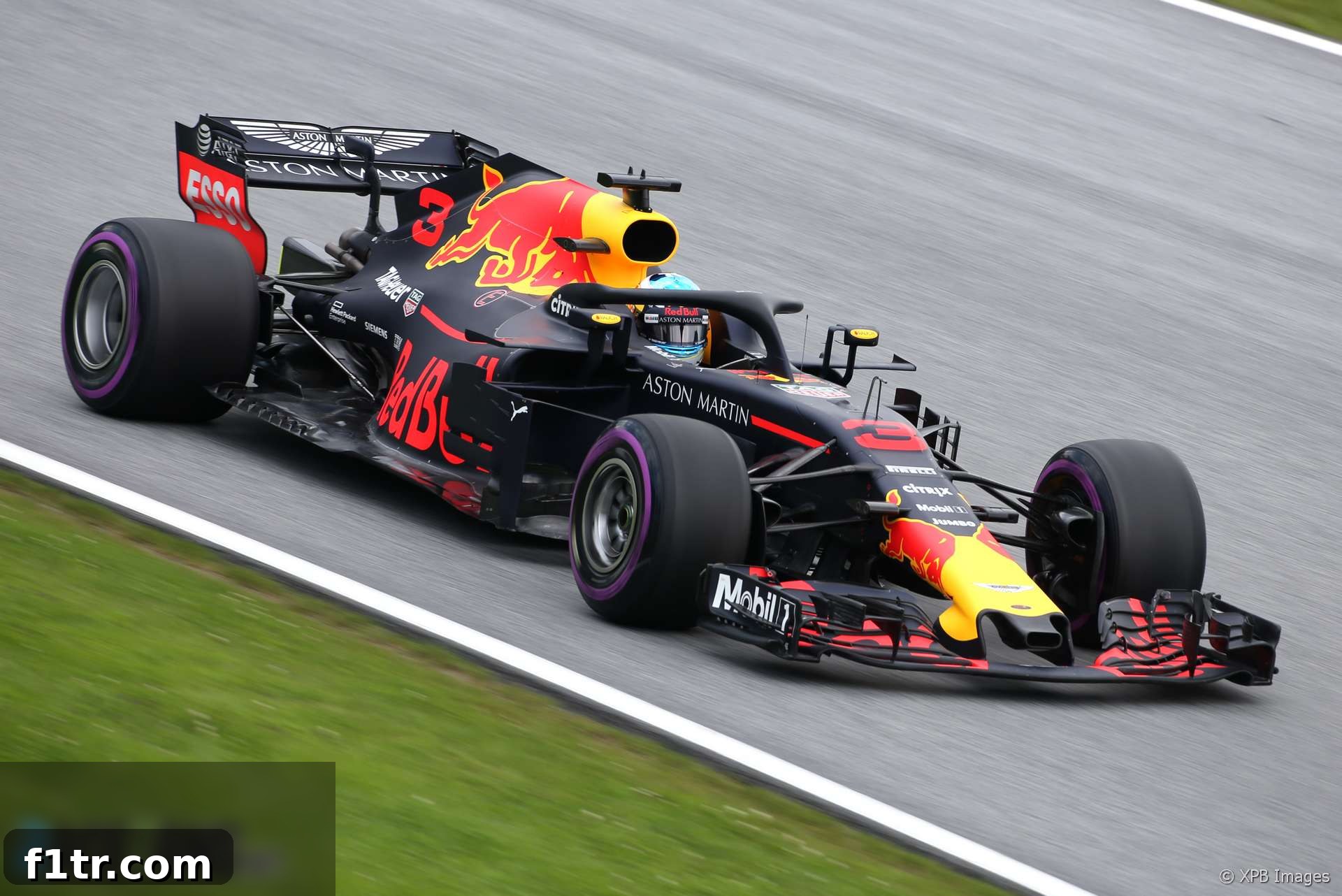
In the high-stakes world of Formula 1 qualifying, where every millisecond counts, strategic advantages can be the difference between pole position and a mid-field start. Daniel Ricciardo, then driving for Red Bull Racing, found himself embroiled in a dispute over a crucial, yet often overlooked, tactical element: the slipstream. During a pivotal qualifying session, Ricciardo vocally expressed his desire for a tow from his teammate, Max Verstappen, a move he believed could have shaved a vital two to three tenths of a second off his lap time.
The Quest for the Elusive Slipstream: Ricciardo’s Frustration at Red Bull
Red Bull Racing, known for its fierce internal competition, traditionally alternated which of its drivers would run first in qualifying each weekend. This policy aimed to ensure fairness, preventing either driver from consistently benefiting from the aerodynamic advantage of a slipstream, also known as a ‘tow.’ However, on this particular weekend, the track characteristics magnified the importance of such an advantage. Ricciardo, acutely aware of the potential gains, pressed his team to reconsider their standing policy, urging them to allow him to run behind Verstappen during Q3.
Advert | Become a Supporter & go ad-free
Despite Ricciardo’s clear communication of his tactical preference, the team ultimately sent their cars out of the garage in the predetermined order, with Ricciardo leading. This decision left the Australian driver visibly frustrated. In a somewhat desperate attempt to engineer the desired scenario, he deliberately slowed down on track, hoping Verstappen would overtake him and inadvertently provide the slipstream. This maneuver, however, did not materialize as intended, leaving Ricciardo without the crucial tow.
The Mechanics of a Tow: A Millisecond Advantage
For those unfamiliar with the intricate aerodynamics of Formula 1, a ‘tow’ or ‘slipstream’ occurs when one car follows closely behind another, benefiting from the reduced air resistance created by the leading car punching a hole through the air. This reduction in drag allows the trailing car to achieve higher top speeds on straights, translating directly into faster lap times. On tracks with long straights, the benefit can be substantial, often measured in tenths of a second – a significant margin in the ultra-competitive world of F1 qualifying.
Ricciardo’s final qualifying effort saw him secure seventh place on the grid, a mere tenth of a second slower than Romain Grosjean and 0.15 seconds adrift of his teammate, Verstappen. These minute differences underscored his argument. According to Ricciardo, a “conservative” estimate for the lap time benefit derived from a slipstream on that particular circuit was at least two-tenths of a second. This figure alone suggests that a tow could have potentially elevated him several positions higher on the grid.
Ricciardo’s Post-Qualifying Reflection: A Missed Opportunity and Mounting Frustration
Speaking to the media after the session, including RaceFans, Ricciardo acknowledged that he should have been more proactive in addressing his concerns before qualifying began. “I was definitely trying to make the team know that I’ve got a short straw on a slipstream-sensitive track for being that car,” he explained, highlighting his awareness of the track’s characteristics and the disadvantage he faced. He continued, “Again, because we knew we were doing three runs, I should have addressed it, maybe, and we should have talked about it. I felt disadvantaged for three runs and that was where I was frustrated. I just thought ‘one run, let me gain two or three tenths on a straight for free’.”
Advert | Become a RaceFans supporter andgo ad-free
The Australian driver further elaborated on why the lack of a tow was particularly detrimental during Q3. With fewer cars on track in the final qualifying segment, the opportunity to passively gain a slipstream from other competitors was significantly reduced. “In the car, even Q2, I didn’t really have a slipstream. But the cars are on track, you get some form of a tow, you’re not pushing it,” he said. His on-board data clearly illustrated his struggles:
“So on the straights I could see my lap time, I’ll do a better turn one and then my lap time I’ll lose time, lose time [on the straight], do a better turn three, then lose time, lose time… So I was frustrated because I was like ‘how am I going to do anything?’ We know we lose most on the straight. But I could see I was losing even to myself on the straight. So I was just like ‘how am I going to be up there in qualifying’?”
This candid recounting paints a vivid picture of Ricciardo’s real-time struggle, watching his carefully constructed gains in corners evaporate on the high-speed sections due to a deficit in straight-line performance exacerbated by the absence of a tow. It wasn’t just about his teammate’s faster pace, but about the fundamental inability to maximize his own potential on the straights.
Red Bull’s Straight-Line Speed Deficit: A Broader Performance Concern
Ricciardo’s frustration over the slipstream was compounded by a more fundamental issue: Red Bull’s perceived lack of straight-line speed that weekend. He noted that the team’s power deficit seemed particularly acute, making the need for any available aerodynamic advantage even more critical. “We haven’t been that quick, I’m not really sure why. We’re losing out more down the straights than we thought and not gaining that much in the corners,” he admitted. “I don’t really know why, we kind of just seem slow.”
Advert | Become a RaceFans supporter andgo ad-free
This underlying performance issue meant that the team needed to exploit every possible marginal gain. A slipstream, while seemingly a small detail, could have helped mitigate the car’s inherent weaknesses on high-speed sections. In an environment where rivals like Mercedes and Ferrari often held a power advantage, Red Bull relied heavily on its superior aerodynamic efficiency in corners. When that balance was disrupted, or when the straight-line deficit became too pronounced, the team and its drivers faced an uphill battle. Ricciardo’s plea for a tow was not just about personal gain but about maximizing the team’s collective performance in the face of competitive challenges.
Team Dynamics and Strategy: The Delicate Balance of Fairness
The incident also highlights the delicate balance teams must strike between fostering internal competition and ensuring fair play. While Red Bull’s alternating driver policy for qualifying runs aimed for impartiality, it sometimes clashed with real-time strategic needs dictated by track conditions or car performance. Ricciardo’s strong belief that a deviation from the standard procedure was warranted for this specific qualifying session underscores the complexities of F1 team management. Deciding when to prioritize individual driver requests over established team policies can have significant implications not only for immediate race results but also for driver morale and long-term team harmony. This episode undoubtedly added another layer of tension to the already intense rivalry between Daniel Ricciardo and Max Verstappen, a dynamic that would eventually play a role in Ricciardo’s decision to leave Red Bull Racing.
2018 F1 season
- F1 feared “death knell” for Drive to Survive after Ferrari and Mercedes snub
- McLaren staff told us we were “totally crazy” to take Honda engines in 2018 – Tost
- ‘It doesn’t matter if we start last’: How Red Bull’s junior team aided Honda’s leap forward
- Honda’s jet division helped F1 engineers solve power unit problem
- McLaren Racing losses rise after Honda split
Browse all 2018 F1 season articles