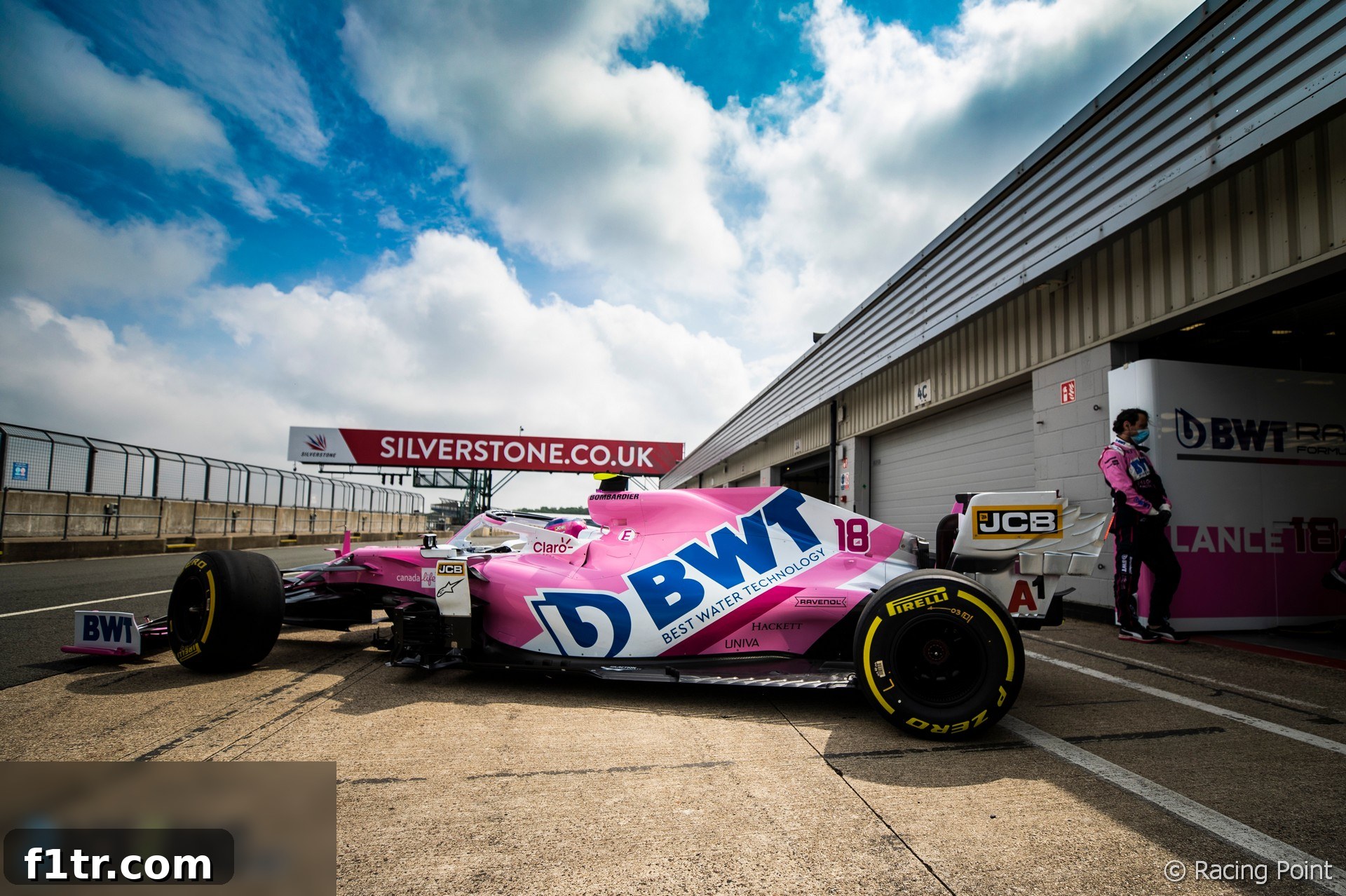
In a motorsport world grappling with unprecedented challenges, Racing Point emerged as a pioneer, becoming the first Formula 1 team to hit the track with their 2020 challenger since pre-season testing. This significant event took place yesterday at Silverstone, a familiar stomping ground for British motorsport, albeit under starkly different circumstances. The session, termed a promotional day, was far more than a mere shakedown; it served as a critical live rehearsal for the myriad of new health and safety protocols necessitated by the global pandemic, which will define the forthcoming, highly anticipated F1 season.
The core objective for Racing Point during this Silverstone outing was not just to stretch the legs of their RP20 but, more importantly, to acclimate to the rigorous new operational procedures. With races scheduled to proceed behind closed doors, every aspect of team logistics and garage work has been scrutinized and redesigned to ensure the safety of personnel. This inaugural run provided invaluable, real-world experience for the team as they navigated the complexities of running a Formula 1 car while adhering to strict social distancing guidelines and enhanced personal protective equipment (PPE) requirements.
Advert | Become a Supporter & go ad-free
Andrew Green, Racing Point’s Technical Director, highlighted the extensive “big learnings” gleaned from the session. He emphasized the profound impact these new regulations have on the most fundamental tasks within the garage. “It’s basically down to respecting the distance between engineers when they’re working on the car, the type of personal protection they have to wear when they’re working on the car, and how that effectively changes the time it takes to do jobs on the car,” Green explained. This isn’t merely about maintaining distance; it’s about fundamentally altering workflows that have been honed over decades for maximum speed and efficiency. The ergonomic challenges of working in full PPE, combined with the necessity of spatial separation, mean that once-routine procedures now demand significantly more time and intricate coordination.
The ramifications of these extended timelines are far-reaching. Green elaborated on how “certain jobs now take a lot longer and we’ve got to try and manage that. We only have a certain amount of time trackside to work on the car when we’re in a race environment.” Formula 1 weekends are meticulously scheduled, with stringent curfews designed to prevent teams from working excessively long hours. These new operational delays introduce a layer of complexity, forcing teams to entirely rethink their schedules and prioritize tasks. “We have curfews in place, so we have to now look at how long it takes to change and modify parts on the car that we would normally do, reschedule them to make sure that we are doing what we need to do during a race weekend and not contravening the curfew regulations. That’s a big part of what we were trying to learn yesterday,” Green affirmed.
Some of the most critical and time-sensitive operations are set to be significantly impacted. Green indicated that tasks involving accessing components deep within the car might now take twice as long as they did previously. A power unit change, an inherently complex and labor-intensive job, exemplifies this challenge. “We basically can only have certain members of the crew working on the car at any one time and that really does limit the speed at which you can do a power unit change. So depending on when the power unit change is required, it’s going to be very challenging,” Green noted. This constraint on simultaneous personnel creates a domino effect, extending completion times for even the most well-practiced procedures. Teams will undoubtedly be hoping to avoid such major operations mid-weekend, as the strategic penalties could be severe, potentially compromising track time or even grid positions.
While Racing Point chose to test their protocols in a live track environment, Green acknowledged that this isn’t the only approach. “You can attempt to do this work at factories if you wanted to,” he said, suggesting that rival teams might opt for in-house simulations. However, he emphasized the unique value of the Silverstone shakedown: “We were just trying to put it in a live environment.” This hands-on experience allows for the identification of unforeseen difficulties and practical solutions that might not emerge in a controlled factory setting. The “very steep learning curve” experienced during the morning test underscored the complexity of these adaptations, with Green stating, “By no means have we got all our protocols in place. It was definitely a big learning morning on a very steep learning curve. We’ll make modifications over the next few events to suit.” This iterative process of learning, adapting, and refining will be crucial for all teams as they approach the season opener.
Advert | Become a RaceFans supporter andgo ad-free
Despite the challenges, Green doesn’t anticipate that Racing Point’s new operational arrangements will put them at a disadvantage relative to their competitors. He explained that different teams will naturally adopt varying strategies based on their internal structures and, crucially, their engine suppliers. “Not everyone works with Mercedes power units, I have no idea what the protocol is for a Renault power unit or a Ferrari power unit. So there are going to be differences and we’re trying to adapt with the team that we’re working with,” he noted. This suggests a bespoke approach to safety and operational protocols, tailored to each team’s unique setup. While some teams might ultimately achieve slightly higher efficiency in their adopted protocols, Green remains confident in Racing Point’s ability to adapt and perform. “We’ve got a set of protocols that we have to work to and we’re going to adapt and do the best we can. We don’t think we’re going to be disadvantaged significantly in any way because of these protocols. It’s much the same for everybody so we’re not worried about it.”
A key takeaway from the Silverstone test, according to Green, is the absolute necessity of strategic focus during race weekends. “What you don’t want to do is try to do too much in a weekend now. That’s the clear message that we got out of it, we’ve got to be really careful that we focus on the important part of the weekend, get that done right and efficiently, and then you look at all the other areas that are almost ‘nice to do’s,” he stressed. This shift demands meticulous planning and a prioritization of core activities—car setup, essential maintenance, and race strategy—over less critical adjustments. The constrained environment means that every decision, every task, must be weighed against its necessity and potential impact on limited time and resources. This heightened focus, while perhaps initially restrictive, could lead to a more streamlined and disciplined approach to race weekend operations across the grid.
Advert | Become a RaceFans supporter andgo ad-free
The importance of pre-event preparation and inherent car reliability has never been higher. Green believes that ensuring the car is “built correctly, and robustly” before arriving at the track will make a significant difference. “Reliability is going to be a key factor in keeping things running smoothly,” he stated. Any major reliability issue during a race weekend will inevitably put immense strain on the team, stretching their now-limited capacity to repair or modify parts within the prescribed timeframes and personnel limits. These scenarios could very quickly become “a real challenge,” potentially jeopardizing a team’s entire weekend. This places an even greater premium on engineering excellence and quality control in the factory, long before the car reaches the circuit.
The drivers, Lance Stroll and Sergio Perez, also have a critical role to play in this new operational landscape. Green indicated that they must be acutely aware of the consequences of on-track incidents. “And we’ve got two drivers who should be aware that if they do go off during a practice session and do a lot of damage, it potentially could take a lot longer to repair. I think they’ll be well aware of that,” he cautioned. This adds another layer of pressure to practice sessions, where drivers typically push the limits. Now, avoiding costly repairs due to mistakes or accidents becomes an even higher priority, as the time lost in the garage could be irreplaceable and severely impact their competitive standing for the rest of the weekend.
Despite the added layers of complexity and the rigorous demands of the new protocols, Green conveyed a pervasive sense of eagerness within the team to finally commence the season. Almost four months after its original scheduled start, the desire to go racing remains undimmed. “I think there is some trepidation about going into it and trying to work out what that actually means. But we’re a race team, we go racing and it’s what people want to do,” he articulated. The passion for motorsport, it seems, transcends the logistical hurdles. The prospect of being “locked up in a hotel for days on end” is seen not as a deterrent but as a necessary, temporary measure to fulfill their shared goal. “They see this is what we have to do this season but it’s not permanent. This is not going to be a permanent solution. They see it as a short term: ‘we can do this’ – we work together as a team and if we support each other we can do this,” Green concluded, reflecting the resilient and unified spirit that characterizes Formula 1 teams.
Go ad-free for just £1 per month>> Find out more and sign up
2020 F1 season
- Grosjean to make F1 test return tomorrow for first time since Bahrain horror crash
- Pictures: Wrecked chassis from Grosjean’s Bahrain fireball crash to go on display
- Bottas vs Rosberg: Hamilton’s Mercedes team mates compared after 78 races each
- F1 revenues fell by $877 million in Covid-struck 2020 season
- Hamilton and Mercedes finally announce new deal for 2021 season
Browse all 2020 F1 season articles