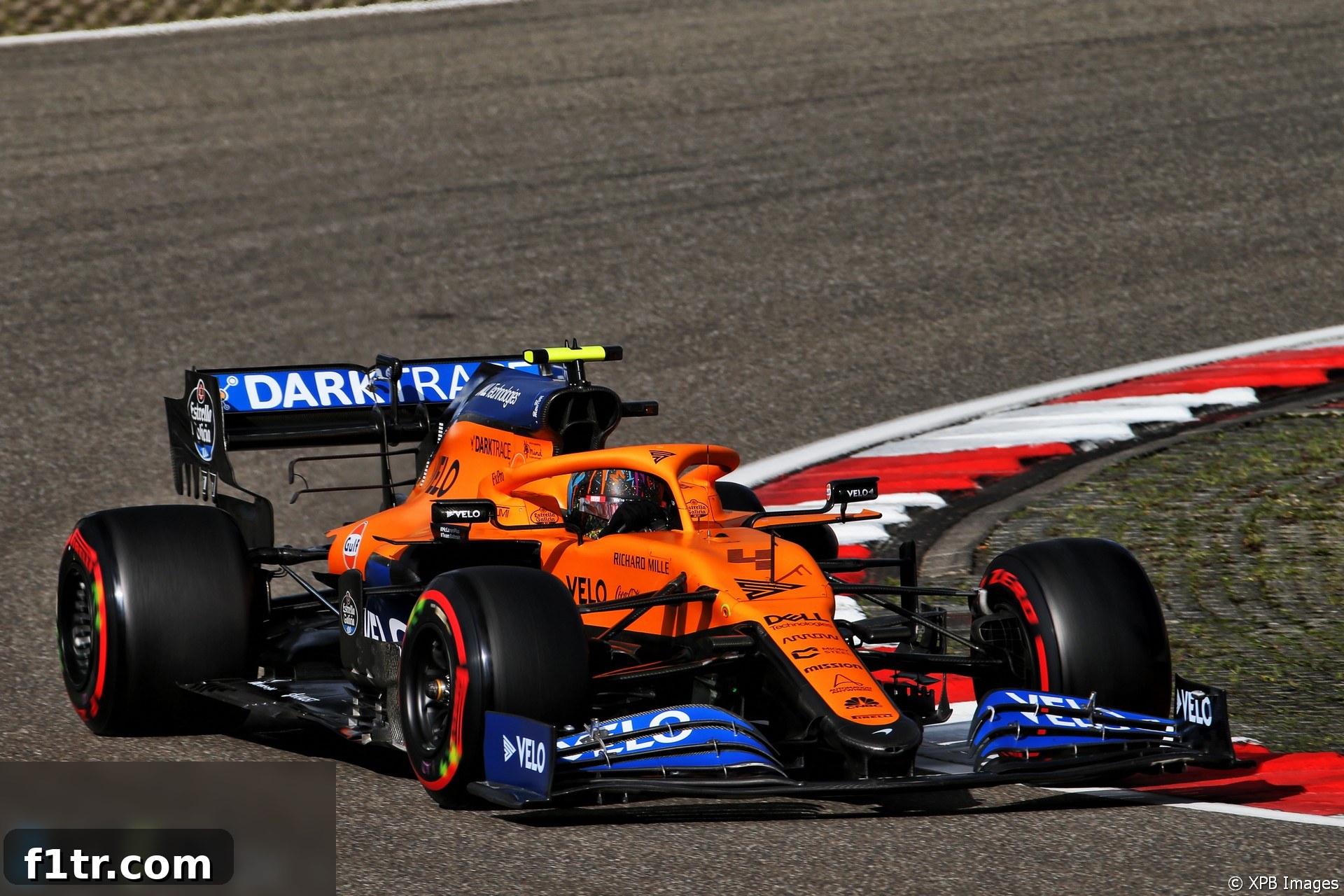
In the high-stakes world of Formula 1, driver confidence is a fragile yet indispensable asset, profoundly impacting performance on track. Following a challenging outing at the Russian Grand Prix, McLaren’s young star, Lando Norris, found a renewed sense of belief in his car for the 2020 Eifel Grand Prix at the iconic Nürburgring. This newfound assurance stemmed from a strategic decision by his team to revert to a pre-Sochi car specification, a move that proved pivotal for Norris’s qualifying session.
The intricate dance between developing new parts and ensuring they seamlessly integrate with a driver’s style is a perennial challenge for Formula 1 teams. Often, a new aerodynamic package or mechanical component, while theoretically offering performance gains, can disrupt the delicate balance and feel that a driver relies upon. At the Russian Grand Prix, McLaren had equipped Norris’s MCL35 with a suite of new hardware. However, the anticipated boost in performance was overshadowed by a palpable dip in Norris’s comfort and confidence behind the wheel.
For the Eifel Grand Prix, a circuit making its welcome return to the F1 calendar after a seven-year hiatus, McLaren opted for a differentiated strategy for its two drivers. While Carlos Sainz Jnr was entrusted with the latest iteration of the car’s upgrades, Lando Norris’s machine was configured with the specifications that had been in use prior to the Sochi event. This tactical decision, allowing Norris to work with a known quantity, paid immediate dividends. Despite Sainz having the theoretical advantage of the newer parts, Norris impressively qualified ahead of his teammate, securing a respectable eighth position on the grid.
Norris candidly articulated the reasoning behind this shift, emphasizing the critical role of driver feel. “I have the older parts on the car, or not the new bits,” Norris explained. “We kind of stuck more with what we knew was decent just to give myself some more confidence. After Sochi I wasn’t feeling as happy. I had the new bits there and I just never felt very confident. So now we stuck more with something older, but something we knew worked and it seems good.” This statement underscores a fundamental truth in motorsport: raw data and theoretical gains must always be tempered by the subjective experience of the driver. A car that feels predictable and stable, even if marginally slower on paper, often allows a driver to extract more performance through sheer confidence and commitment.
While qualifying eighth at the Eifel Grand Prix matched his starting position from the previous race in Russia, Norris’s internal assessment of his performance was markedly different. He felt a stronger sense of accomplishment, believing he had genuinely maximized the car’s potential at the Nürburgring, a feeling that eluded him at Sochi. “I’m happy with what we did as a team and my laps,” he affirmed. “Maybe not perfect, but the group ahead are too far ahead of us. So I feel confident. I feel like I’m in a good position with the car. I feel like I’m doing a reasonable job. We’re just not quite as quick as the other guys here.”
This comparison highlights a sophisticated understanding of performance. In Sochi, Norris sensed there was more potential to be unlocked from the car, yet his lack of confidence with the new parts prevented him from reaching it. At the Eifel Grand Prix, despite facing a competitive field and the inherent limitations of the McLaren MCL35’s ultimate pace against the front-runners like Mercedes and Red Bull, Norris felt he had delivered a truly optimized performance. “If you look back on Sochi, I feel like we struggled a lot more – although we were maybe in a higher position and we had more potential. This weekend I feel like we maximised our job a little bit more,” he reflected. This distinction is crucial for any top-tier athlete: the satisfaction doesn’t always come from the absolute result, but from the conviction that one has extracted every ounce of capability from the available resources.
The 2020 Eifel Grand Prix itself provided a fascinating backdrop to this narrative. Held in uncharacteristically cold and damp conditions at the Nürburgring, the race posed unique challenges for tire management and car setup. The cold asphalt meant teams struggled to generate optimal tire temperatures, impacting grip and overall performance. Mercedes, typically dominant, found themselves relying more on innovative systems like DAS (Dual Axis Steering) to keep their tires warm, as noted by observers. Furthermore, the event saw fierce battles throughout the field, with teams like Renault and Ferrari (despite struggles) also making headlines for various reasons, including driver performances and strategic gambles. The fluctuating conditions underscored the importance of a driver feeling connected to their machine, as the margin for error was significantly reduced.
For McLaren, the 2020 season was a pivotal one. The team was engaged in a tight battle for third place in the Constructors’ Championship against formidable rivals such as Racing Point and Renault. Every point, every qualifying position, was critical. The decision to prioritize Norris’s confidence, even if it meant foregoing the latest hardware on one car, demonstrates a mature and driver-centric approach to team management. It recognized that forcing a driver to adapt to an uncomfortable setup, regardless of its theoretical benefits, could be counterproductive. By allowing Norris to race with a specification he trusted, McLaren empowered him to deliver a strong qualifying performance, which is vital for track position in modern Formula 1.
Ultimately, Lando Norris’s experience at the Eifel Grand Prix serves as a powerful reminder of the intricate human element within the highly technological sport of Formula 1. The interplay between cutting-edge engineering, data analysis, and the subjective feedback of a driver is a delicate balance. McLaren’s willingness to listen to Norris and adjust their strategy based on his feeling paid off, not just in a strong qualifying result, but in reinforcing the confidence of one of their brightest talents. As the season progressed, this understanding of driver-car synergy would be crucial for McLaren in their fight for championship positions, highlighting that sometimes, going back to what works is the fastest way forward.
2020 Eifel Grand Prix
- Renault “not scared of anywhere” in remaining races
- Bottas “needs a miracle” to overturn Hamilton’s 69-point lead
- 2020 Eifel Grand Prix Star Performers
- Leclerc sees ‘quite a few positives’ in Ferrari’s Nurburgring weekend
- Mercedes relied on DAS “more than ever” at cold Nurburgring
Browse all 2020 Eifel Grand Prix articles