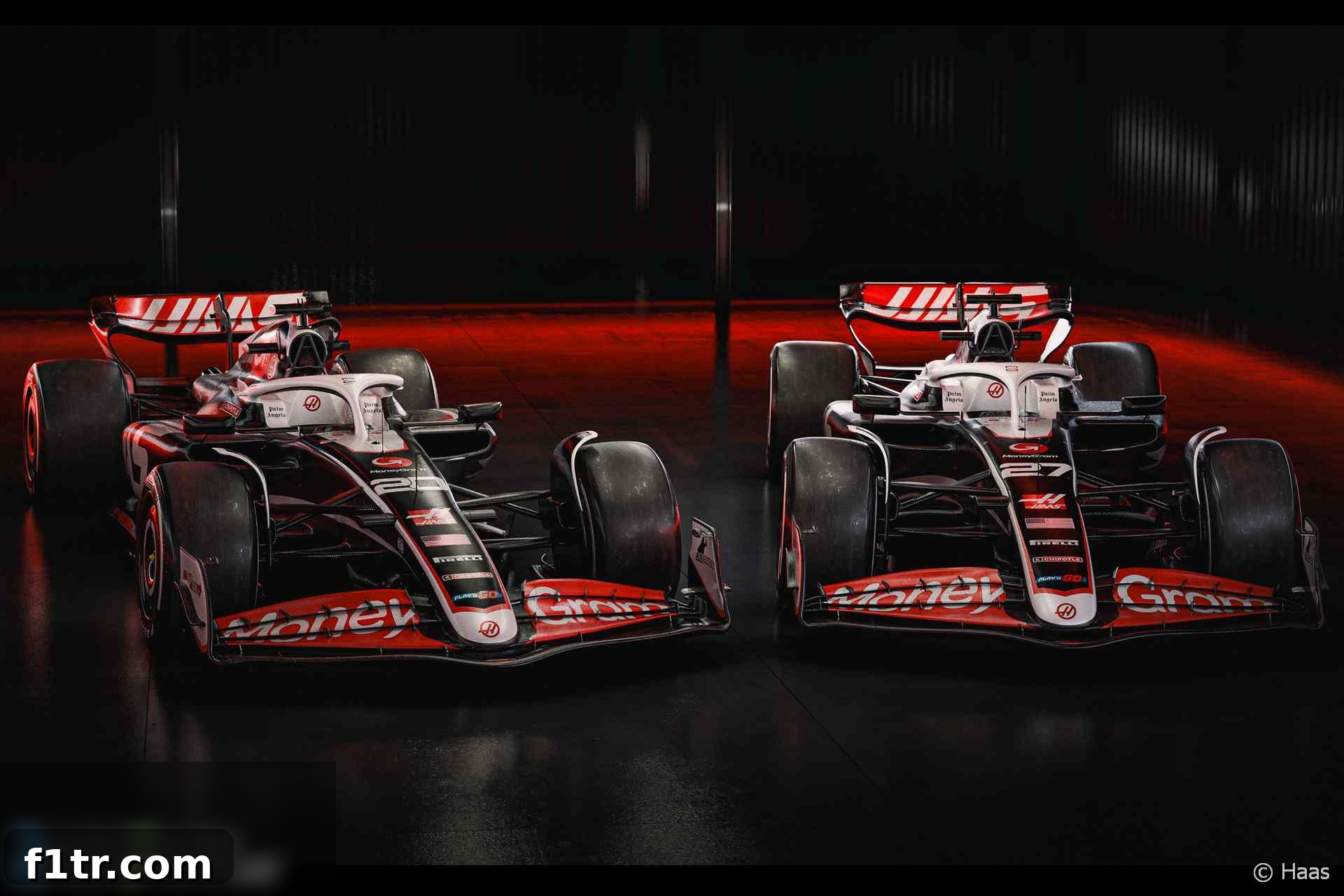
Haas F1’s 2024 Outlook: New Leadership, Cautious Optimism, and a Strategic Shift
The dawn of the 2024 Formula 1 season brings a significant leadership change for the Haas F1 Team. Ayao Komatsu, stepping into the pivotal role of team principal following the departure of long-time figurehead Guenther Steiner, has offered a candid assessment of the team’s immediate prospects. Komatsu admits to holding low expectations for the initial performance of the new VF-24 challenger, setting a realistic tone for the challenging season ahead.
Komatsu’s appointment came at the beginning of last month, marking a pivotal moment for the American-owned outfit. His transition from Director of Engineering to team principal underscores a clear shift in the team’s strategic direction, moving towards a more engineering-focused leadership. This change follows a particularly difficult 2023 season where Haas finished last in the constructors’ championship, plagued by persistent issues, most notably severe tyre degradation that hampered their race pace.
Despite the palpable frustration from team owner Gene Haas regarding the team’s lacklustre performance in recent years, Komatsu cautions against expecting an immediate leap up the competitive grid. His pragmatic outlook is rooted in an honest evaluation of the team’s development timeline and resource allocation.
Komatsu’s Candid Expectations for the VF-24 Debut
“Out of the gates in Bahrain I still think we’re going to be towards the back of the grid, if not last,” Komatsu openly conceded. This frank admission, while perhaps stark, highlights a refreshing transparency in the new leadership. It aims to manage expectations externally while likely motivating the team internally to prove the initial assessment wrong through diligent development.
He elaborated on the reasons behind this anticipated initial performance deficit: “The reason our launch-spec car is not going to be quick enough in Bahrain is not because of the quality of the people we have here, but it’s because we started late and then we stopped for two months to do the Austin upgrade. It really diverted resources, so we lost time there.” This explanation points to a crucial trade-off made during the 2023 season – investing resources into a significant upgrade package for the United States Grand Prix, which inadvertently delayed the full-scale development of the 2024 car, the VF-24.
However, Komatsu was quick to balance this caution with positive news from the factory. “But the team is finding good gains in the wind tunnel so that’s positive and in terms of characteristics, it’s going in the right direction.” This indicates that while the starting point might be challenging, there is underlying progress and a clear development path identified for the VF-24. The team’s engineers are evidently making strides in understanding and optimising the car’s aerodynamic characteristics, which bodes well for future upgrades throughout the season.
The VF-24: Genesis and Design Philosophy
The groundwork for the 2024 car, the VF-24, was largely laid by the substantial upgrade package introduced at the United States Grand Prix at the Circuit of the Americas in late October last year. This pivotal upgrade, while intended for the 2023 car, served a dual purpose, acting as a conceptual blueprint for the subsequent season’s design.
Building on the Austin Upgrade
Komatsu explained the intricate connection: “In terms of physical changes, as everyone knows, when we made the upgrade in Austin that was the concept towards this year’s car – but because we had the physical limitation of the side impact structure, rad[iator]-duct arrangement and cooling arrangement, we couldn’t do the full-blown VF-24-type-concept.” This reveals the inherent challenges of integrating a radically new aerodynamic philosophy onto an existing chassis platform. While the Austin upgrade provided a valuable testbed for new ideas and confirmed the desired aerodynamic direction, the physical constraints of the 2023 car prevented its complete realisation. Essentially, the team showcased a preview of their future design philosophy in Austin, even if the complete vision couldn’t be implemented immediately due to structural and packaging limitations.
“I knew exactly where we were going for this year, but everyone saw a preview in Austin,” he affirmed, highlighting that the Austin package wasn’t just a temporary fix but a foundational step towards the VF-24. This continuity in design philosophy is crucial for a smaller team like Haas, allowing them to iterate and refine concepts rather than starting from scratch each year, which can be resource-intensive.
Navigating a Challenging Transition
Komatsu acknowledged that the timing of his elevation to team principal, just weeks before the car’s first run, was “not ideal” for the team’s preparations. The transition period brought with it its own set of complexities, demanding swift action and adaptability from the entire organisation.
The Impact of Leadership Changes
“It has impacted things,” he stated, outlining the tight schedule: “as it was announced on January 10, and we’re running our car for the first time on February 11 – that’s a pretty short timeframe.” Such a compressed window for a leadership change at the pinnacle of a Formula 1 team can undoubtedly create ripples throughout the organisation, particularly during the critical pre-season build-up. The team principal’s role involves overseeing everything from technical development to operational logistics, and a change at this crucial juncture requires meticulous management.
Compounding this challenge was another significant personnel change. “It wasn’t just my role, we had a technical director leave as well, so there were two significant vacancies to fill,” Komatsu revealed. The departure of a technical director alongside the team principal created a double void at the very top of the engineering and management structures. This situation could have led to considerable disruption, potentially impacting the development and build schedules for the VF-24.
However, Komatsu praised the team’s resilience and professionalism in handling these changes. “We formalised and communicated this structural change as soon as we could. The timing of this transition period was not ideal; however, I’ve been very impressed with the maturity of everyone’s reaction. Thanks to this, we were able to keep the disruption to the minimum. Now we’ve clarified the structure, we should be full steam ahead.” This demonstrates a strong team culture and the ability of the staff to adapt quickly and maintain focus despite significant organizational shifts. The swift clarification of the new structure was key to minimising uncertainty and allowing the team to move forward with renewed clarity and purpose.
A New Era for Upgrades and Development
Under Komatsu’s leadership, Haas F1 is set to embark on a marked departure from its previous philosophy regarding car development. The team aims to adopt a more proactive and continuous approach to upgrades throughout the upcoming season, moving away from the past strategy of fewer but more significant upgrade packages.
Data-Driven Progress: A Proactive Approach
“The focus is to have a good test programme for Bahrain so that we come away from the test having quality data for the team to analyse and understand which direction to develop the car,” Komatsu articulated. The pre-season testing in Bahrain will be absolutely critical, not just for shakedown runs, but for systematically gathering comprehensive data on the VF-24’s behaviour, strengths, and weaknesses. This data will form the bedrock of their development strategy for the entire year.
This commitment to a data-driven, agile development process is a significant strategic shift for Haas. Komatsu emphasized the importance of this new methodology: “This means understanding the strength and weakness of the VF-24 accurately, then put a coherent plan together to produce updates on the car, which hasn’t happened previously.” In the past, Haas sometimes struggled with implementing effective in-season upgrades, often arriving late or failing to deliver the expected performance gains. The new approach promises a more disciplined, evidence-based strategy, allowing the team to respond more effectively to competitive demands and circuit-specific requirements.
This continuous development model is particularly crucial in modern Formula 1, where the competitive landscape is constantly evolving. Teams that can bring effective, regular updates tend to make greater strides over a season. For Haas, a team with more limited resources compared to the established front-runners, optimising every aspect of their development cycle becomes even more vital.
Driver Continuity and Team Ambition
Adding a layer of stability amidst these changes, Haas has wisely retained its experienced driver line-up for the new season. Kevin Magnussen and Nico Hulkenberg will race together for a second consecutive season, providing invaluable continuity and feedback to the engineering team. Both drivers bring a wealth of F1 experience, which will be crucial in navigating the initial challenges of the VF-24 and guiding its development.
Magnussen and Hulkenberg’s combined experience will be indispensable during the pre-season testing and early races, as they work closely with Komatsu and the technical team to pinpoint the car’s characteristics and suggest areas for improvement. Their ability to extract maximum performance from the car, even if it’s not initially at the sharp end of the grid, will be key to laying a solid foundation for the season.
Looking Ahead: The Bahrain Test and Beyond
The road ahead for Haas F1 in 2024 is undoubtedly challenging, yet Komatsu’s pragmatic leadership and the team’s renewed focus on data-driven development offer a glimmer of hope. The pre-season test in Bahrain will provide the first real indication of the VF-24’s potential and the effectiveness of the new operational philosophy.
While the immediate goal might be to avoid the very back of the grid, the long-term ambition under Komatsu appears to be a sustainable, progressive development trajectory. The shift towards consistent, data-informed upgrades, coupled with a stable and experienced driver pairing, suggests Haas is building for the future, aiming to climb the grid steadily rather than chasing fleeting, unsustainable breakthroughs. The F1 community will be watching closely to see if this new strategy can finally propel Haas F1 towards consistent competitiveness in the demanding world of Formula 1.
Formula 1
- Controversies, Norris, Newey and more: Five new motorsport books reviewed
- One of F1’s greatest races happened 15 years ago today. Or did it?
- “Overtaking is overtaking”: Domenicali denies F1’s yo-yo racing is “artificial”
- The crashes F1 is trying to prevent may be rare – but the danger is obvious
- F1 returning to India soon after 2027 sounds like wishful thinking
Browse all Formula 1 articles