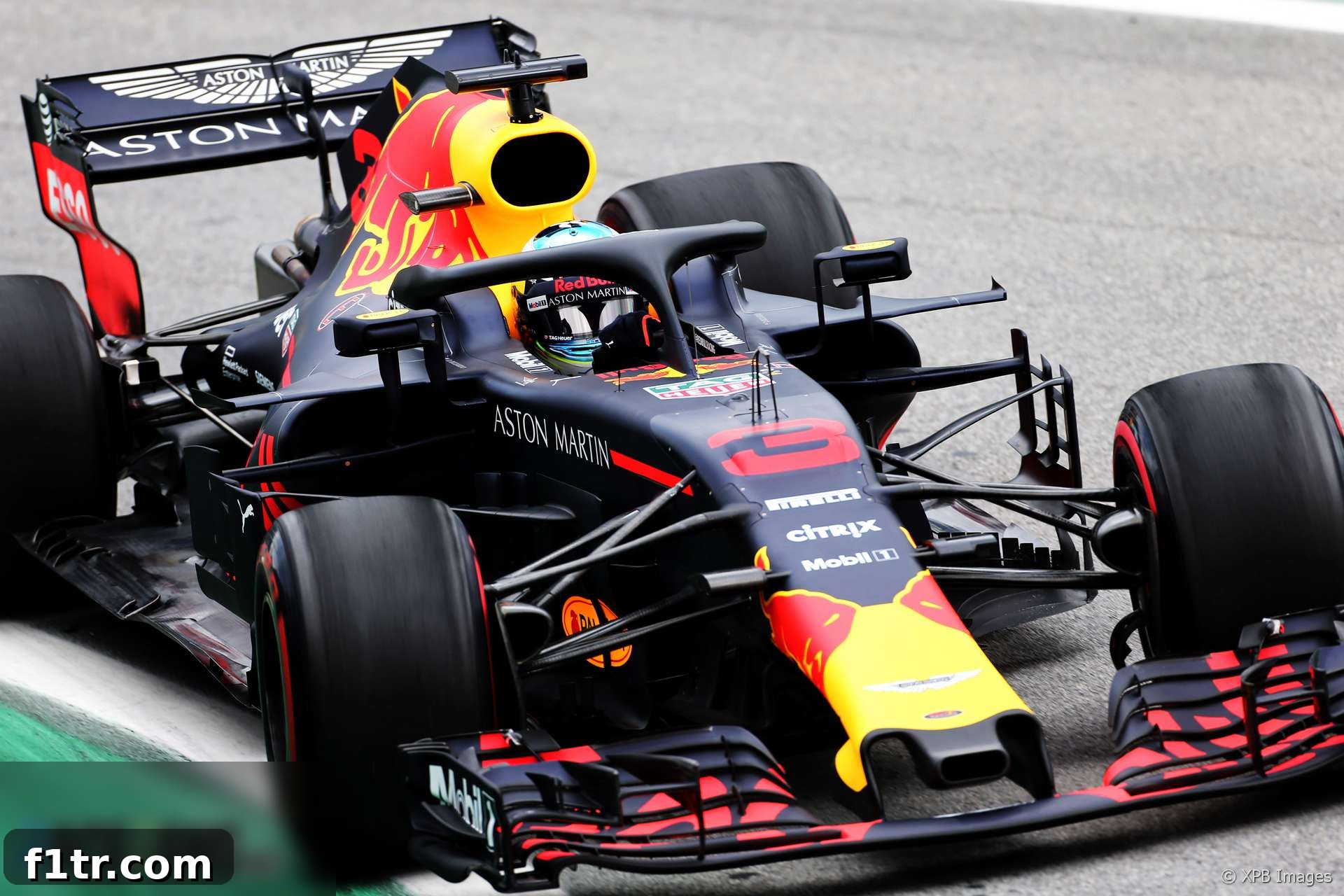
The exhilarating world of Formula 1 is a relentless pursuit of perfection, where the smallest detail can dramatically alter a driver’s fate. The 2018 season, in particular, presented numerous such instances, none more illustrative than the twin misfortunes affecting Red Bull Racing drivers Daniel Ricciardo and Max Verstappen in the immediate aftermath of the Mexican Grand Prix and heading into the pivotal Brazilian Grand Prix. These incidents underscored the razor-thin margins between triumph and tribulation in motorsport’s elite category, highlighting how external factors and hidden mechanical frailties can dictate outcomes, even for top contenders.
Daniel Ricciardo, a driver celebrated for his infectious smile and audacious overtaking maneuvers, found himself grappling with a frustrating five-place grid penalty for the upcoming Brazilian Grand Prix. This was a direct consequence of an unfortunate incident during his retirement from the preceding race in Mexico. His qualifying position for the Brazilian Grand Prix would be marred by this setback, adding another layer of challenge to an already demanding Interlagos circuit.
The root cause of Ricciardo’s penalty stemmed from the standard, yet ultimately damaging, recovery procedures employed by marshals at the Autódromo Hermanos Rodríguez. Red Bull team principal Christian Horner, ever candid, revealed the specific nature of the damage that necessitated a critical component replacement. According to Horner, Ricciardo’s turbocharger had to be replaced because it sustained irreparable damage from fire extinguisher foam. When Ricciardo’s car retired from the Mexican Grand Prix amidst smoke, marshals swiftly responded to a perceived fire risk, deploying foam into the exhaust system as part of their safety protocol. While their intentions were undoubtedly to mitigate potential hazards, the unforeseen consequence was a critical failure for the highly sensitive turbo unit.
“You can’t really blame them, the car was obviously smoking,” Horner explained to Sky Sports, acknowledging the marshals’ understandable reaction in the heat of the moment. However, he elaborated on the destructive chain of events: “They shot foam up the exhaust and as it solidifies in the turbo it’s terminated it.” This vivid description paints a clear picture of how a substance, intended for safety, could turn into a solid, abrasive agent within the intricate mechanics of a Formula 1 turbocharger. Turbochargers, essential for boosting engine power, operate at extreme temperatures and RPMs, making them incredibly delicate and susceptible to foreign substances. Any intrusion, especially a solidifying agent, can irrevocably compromise their finely balanced components.
The implications of this damage were immediate and severe: a mandatory replacement of the turbocharger, which, under F1 regulations, triggered a grid penalty for exceeding the allowed number of power unit components for the season. For Ricciardo, this meant starting five places lower than his qualifying position at the Brazilian Grand Prix, a blow to his prospects for a strong finish. Horner, ever the pragmatist, offered a glimmer of hope regarding the penalty’s impact, stating, “So he’ll take a five-place penalty. Hopefully on a track like this it’s actually not that big a penalty.” While Interlagos is known for its overtaking opportunities, any grid penalty significantly complicates a driver’s race strategy, forcing them to fight through traffic, which increases tire wear and the risk of incidents. This unexpected setback was a harsh reminder of the unpredictable elements that can influence a Formula 1 season, often beyond a driver’s control, and added another layer to the narrative of Ricciardo’s challenging 2018 campaign with Red Bull.
Yet, the tales of mechanical drama for Red Bull did not end with Ricciardo. His teammate, the formidable Max Verstappen, who delivered a dominant performance to win the Mexican Grand Prix, was also unknowingly on the brink of a potentially catastrophic power unit failure. This revelation came to light as teams prepared for the Brazilian Grand Prix, adding a layer of retrospective tension to Verstappen’s brilliant victory. The incident highlighted the incredible fragility and complexity of modern F1 engines, where a race win can literally be a matter of surviving by a whisper.
Verstappen’s power unit issue manifested during the initial practice sessions in Brazil, causing him to miss the beginning of the crucial second practice session. The Red Bull technical team identified a critical fault that required immediate attention. Horner detailed the specific problem: “The oil tower on the front of the engine has developed a crack so it was starting to leak oil in [the first] session. So it’s had to be changed.” This “oil tower,” a component critical for the engine’s lubrication system, had developed a hairline fracture, leading to an oil leak. An oil leak in an F1 engine is not merely a messy inconvenience; it’s a precursor to severe, potentially terminal engine damage if left unaddressed. Insufficient lubrication can lead to catastrophic internal component failures, bringing a car’s race to an abrupt and costly end.
The speed and efficiency with which the Red Bull mechanics responded to this crisis were nothing short of remarkable. “The guys have done a great job in getting the engine off the back and back on, replacing the part. Hopefully no more than a half-hour delay,” Horner praised, underscoring the immense pressure and skill involved in dismantling and reassembling an F1 power unit within such tight timeframes. This rapid intervention averted a potential disaster for Verstappen, allowing him to return to the track and continue his preparations for the Brazilian Grand Prix, albeit with a slight delay.
The most striking aspect of Verstappen’s situation was the element of sheer luck. Horner elaborated on this fortunate turn of events: “The lucky thing is we suspect that crack may have started in Mexico because there was a little bit of oil loss in the race that couldn’t be accounted for.” This insight suggested that Verstappen’s engine had been developing this critical fault during his triumphant run in Mexico, steadily losing oil throughout the race without causing an immediate, race-ending failure. “So actually probably pretty lucky that it got to the end of the race,” Horner concluded, a testament to the fine line between victory and mechanical retirement in the high-stakes world of Formula 1. Verstappen’s dominant win, therefore, carried a hidden layer of peril, turning his Mexican Grand Prix success into a testament to both his driving prowess and a fortunate escape from mechanical catastrophe. It emphasized that even when a car appears to be performing flawlessly, underlying issues can be silently brewing, waiting to surface.
These two incidents, affecting Red Bull’s star drivers in such close succession, highlighted the intrinsic challenges faced by teams during the demanding Formula 1 season. For Red Bull, the 2018 season was a complex dance with their engine supplier, Renault, amidst ongoing discussions about future power unit partnerships. Reliability concerns had been a recurring theme, and these latest events only served to amplify the pressure. Ricciardo’s penalty, stemming from external intervention, and Verstappen’s narrow escape from internal engine failure, collectively painted a picture of a team constantly battling both the fierce competition on track and the ever-present threat of mechanical setbacks. The unforgiving nature of F1 means that even a championship contender’s hopes can be derailed by a sequence of events, some within their control and others entirely unexpected. The intricate relationship between car, driver, and external circumstances ensures that every race weekend, and indeed every lap, is a test of resilience, precision, and a little bit of luck.
The 2018 Formula 1 season was filled with such compelling narratives, demonstrating the fine margins that define success and failure. Red Bull’s experiences with Ricciardo and Verstappen in Mexico and Brazil are perfect encapsulations of this reality. From the meticulous handling of a retired vehicle by marshals to the silent, unseen development of an engine fault, these events reminded everyone that Formula 1 is a sport where every component, every decision, and every ounce of fortune contributes to the final outcome. The pressure on teams and drivers to perform flawlessly under intense scrutiny, coupled with the fragility of cutting-edge technology, ensures that the drama and unpredictability remain core elements of this global spectacle.
Related Articles from the 2018 F1 Season
- F1 feared “death knell” for Drive to Survive after Ferrari and Mercedes snub
- McLaren staff told us we were “totally crazy” to take Honda engines in 2018 – Tost
- ‘It doesn’t matter if we start last’: How Red Bull’s junior team aided Honda’s leap forward
- Honda’s jet division helped F1 engineers solve power unit problem
- McLaren Racing losses rise after Honda split
Browse all 2018 F1 season articles