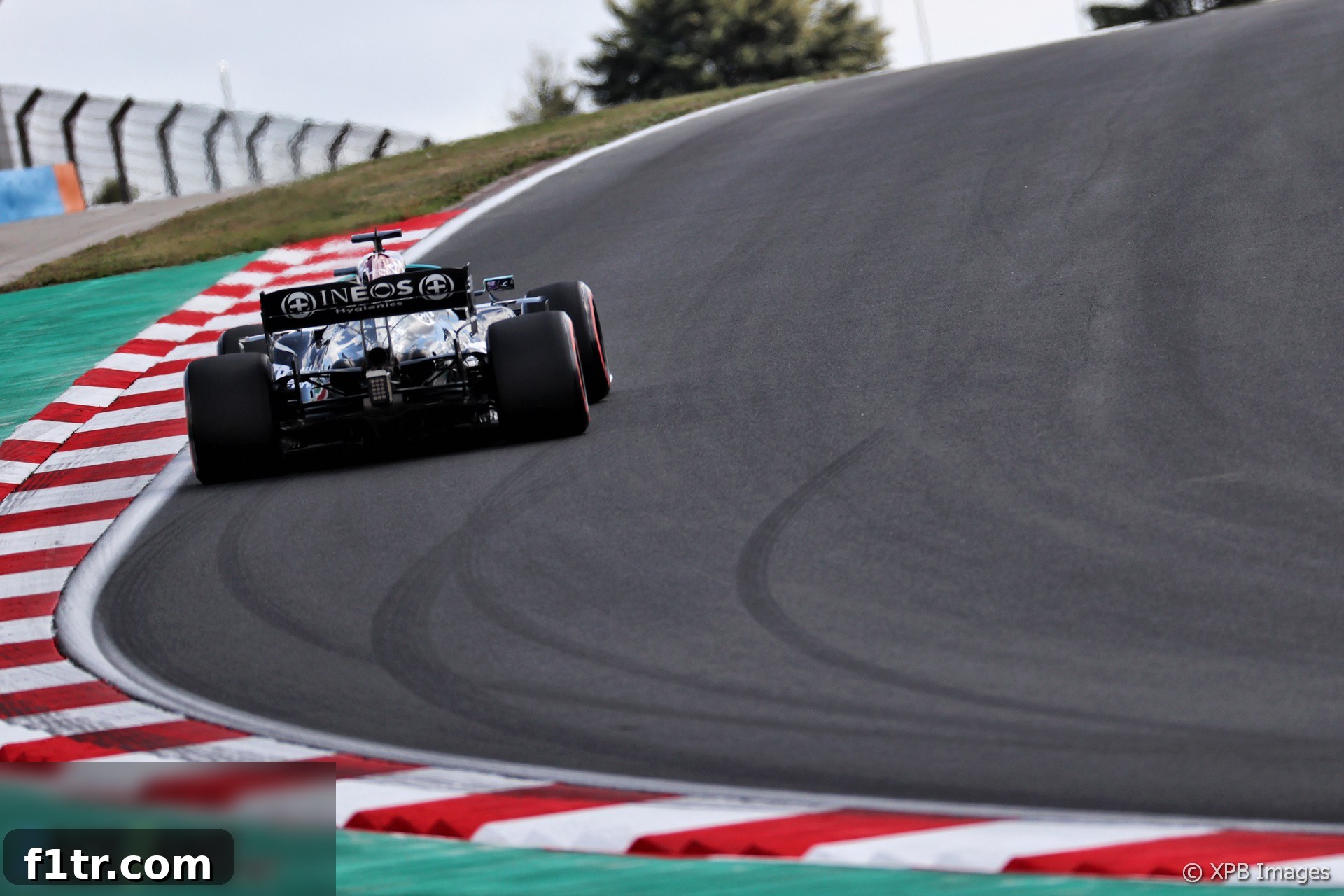
In a bold strategic move ahead of the highly anticipated Turkish Grand Prix, Mercedes-AMG Petronas F1 Team has opted to fit a fresh internal combustion engine (ICE) to Lewis Hamilton’s W12 car. This decision, while necessary for championship ambitions, comes with an immediate consequence: a 10-place grid penalty for the seven-time world champion. The team’s calculated gamble rests on the inherent characteristics of the Istanbul Park circuit, which they believe offers ample opportunities for overtaking, providing Hamilton a strong chance to recover positions.
The strategic timing of such a penalty is critical, especially in a fiercely contested Formula 1 season. Mercedes has recently experienced mixed outcomes with similar grid penalties applied to Valtteri Bottas. At the Italian Grand Prix in Monza, Bottas demonstrated an impressive recovery drive, climbing through the field to secure a valuable third place. However, the Russian Grand Prix in Sochi proved more challenging; Bottas initially struggled to make significant progress and was on course for a finish outside the points before a late downpour of rain dramatically altered the race, allowing him to snatch a fifth-place finish. These contrasting scenarios highlight the complexities and risks associated with taking engine penalties, emphasizing the need for a track where overtakes are genuinely feasible.
Mercedes’ Head of Trackside Operations, Andrew Shovlin, articulated the team’s rationale, expressing optimism about Hamilton’s prospects at Istanbul Park. “Working out how easy it is to overtake is actually quite hard,” Shovlin remarked to Sky Sports, acknowledging the varying nature of circuits. He pointed out the distinct challenges faced at Sochi, despite its long straight, due to persistent understeer issues that hindered progress. Istanbul, however, presents a different picture. Shovlin drew parallels to Hamilton’s memorable pre-F1 performance at the circuit in 2006, where he showcased his exceptional overtaking prowess, climbing from 16th to second in a 23-lap GP2 sprint race without the aid of a Safety Car. This historical precedent fuels Mercedes’ confidence that the Turkish circuit will indeed “make for an exciting Sunday” for their star driver.
The decision to introduce a fourth engine component for Hamilton is primarily driven by reliability concerns. Formula 1 power units are designed for extreme performance, but their components have a finite lifespan. As an engine accumulates mileage, there’s an increased risk of failure during a race, which would not only result in a devastating DNF (Did Not Finish) but also necessitate a penalty for a replacement engine anyway. Mercedes aims to preempt such a catastrophic scenario by proactively fitting a new ICE now, ensuring Hamilton has fresh, reliable power for the crucial remaining races of the championship battle against Max Verstappen.
Beyond reliability, there’s also a crucial performance element to the engine change. Power units, especially their internal combustion engines, naturally experience a slight degradation in horsepower over their operational life. Introducing a new ICE provides a marginal but significant performance boost, ensuring Hamilton has access to maximum power output for the final, decisive stages of the season. As Shovlin explained, “the power units do lose a bit of horsepower over their life. The 10 place penalty is the bit that most contributes to that reliability element and the performance is the ICE itself. And it’s better to take 10 places than start from the back.”
Under current Formula 1 regulations, teams are allowed three power units per season. Exceeding this allocation for any single component triggers a grid penalty. Mercedes’ choice to change only the Internal Combustion Engine (ICE) results in a 10-place grid drop. Had they opted to replace multiple power unit elements simultaneously – such as the turbocharger, MGU-H, energy store, control electronics, or MGU-K – Hamilton would have been forced to start the race from the very back of the grid. This measured approach of changing only the ICE demonstrates a careful balancing act, aiming to mitigate risk while minimizing the severity of the penalty. The team could theoretically introduce further components later in the weekend if Hamilton’s qualifying performance makes additional penalties less impactful, but Shovlin indicated this is “unlikely,” citing the intrusive nature of such work during a race weekend. Mercedes appears content with their initial decision.
Istanbul Park itself is renowned for its flowing layout and excellent overtaking zones. Designed by Hermann Tilke, the 5.338 km circuit features a mix of high-speed corners, tight hairpins, and long straights. Its wide track width, in particular, offers multiple racing lines through many corners, encouraging side-by-side action. Turn 1 (the ‘Turkish Corkscrew’), Turn 8 (a formidable multi-apex left-hander), and the long back straight leading into Turn 12 are all prime locations for drivers to attempt passes. This dynamic layout stands in stark contrast to circuits like Sochi, where the challenge of dirty air and limited lines often makes overtaking a more difficult proposition.
Hamilton’s aforementioned 2006 GP2 sprint race triumph at Istanbul Park serves as a powerful testament to the circuit’s overtaking potential and his own exceptional skill set. After spinning on the second lap and dropping to 16th, Hamilton mounted a sensational charge through the field. He systematically picked off rivals, including his championship competitor Nelson Piquet Jnr., displaying supreme car control and race craft. In a thrilling conclusion, he passed Adam Carroll on the final lap to snatch second place behind Andreas Zuber, a performance that remains etched in the minds of F1 enthusiasts and certainly factored into Mercedes’ strategic calculations for this weekend.
The stakes for the 2021 Formula 1 championship are incredibly high. With Lewis Hamilton and Max Verstappen locked in a fierce, wheel-to-wheel battle for the drivers’ title, every point counts. Mercedes’ decision to incur a grid penalty for Hamilton is a “double-edged sword,” as Shovlin admitted. While it addresses critical reliability and performance needs, it also means giving up a potential pole position and an easier path to victory. “Could it be a race that Lewis would have won from pole? Obviously that balances a lot of things,” Shovlin pondered. However, the team is committed to making the most of the situation. Hamilton’s immediate pace was evident in the opening practice session, where he topped the timesheets by four-tenths of a second over Verstappen, underscoring the potential of the Mercedes W12 and Hamilton’s determination. The focus now shifts to delivering a flawless qualifying session and executing a strong recovery drive on Sunday, with the ultimate goal of not just gaining positions, but potentially even challenging for the win.
This strategic decision underscores the relentless pressure and meticulous planning that defines modern Formula 1. Mercedes has made a calculated gamble, trading immediate grid position for long-term reliability and peak performance in the championship run-in. The stage is set for a thrilling Turkish Grand Prix, where Lewis Hamilton will once again rely on his skill, his team’s strategy, and the unique characteristics of Istanbul Park to overcome adversity and keep his championship hopes firmly on track.
2021 Turkish Grand Prix
- Fifth place was possible from back row without slow pit stop – Sainz
- Giovinazzi ignoring position swap order was “not ideal”, admit team
- Bottas becomes 35th Formula 1 driver to reach 10 race wins
- Medical Car driver van der Merwe likely to miss further races due to Covid-19 rules
- Drivers to ask Masi why Alonso and Norris went unpunished for “very clear” incidents
Browse all 2021 Turkish Grand Prix articles