Mercedes’ Quest for Performance: Toto Wolff Optimistic Ahead of Spanish Grand Prix Return
Mercedes-AMG Petronas F1 Team Principal Toto Wolff expressed a measured but evident sense of optimism regarding the upcoming Spanish Grand Prix. He believes that returning to a circuit where the team has already conducted testing this year will be instrumental in unlocking further performance from their challenging W13 challenger. This critical race at the Circuit de Catalunya offers a unique opportunity for the Silver Arrows to consolidate their learnings and make tangible progress in what has been a tumultuous start to the 2022 Formula 1 season.
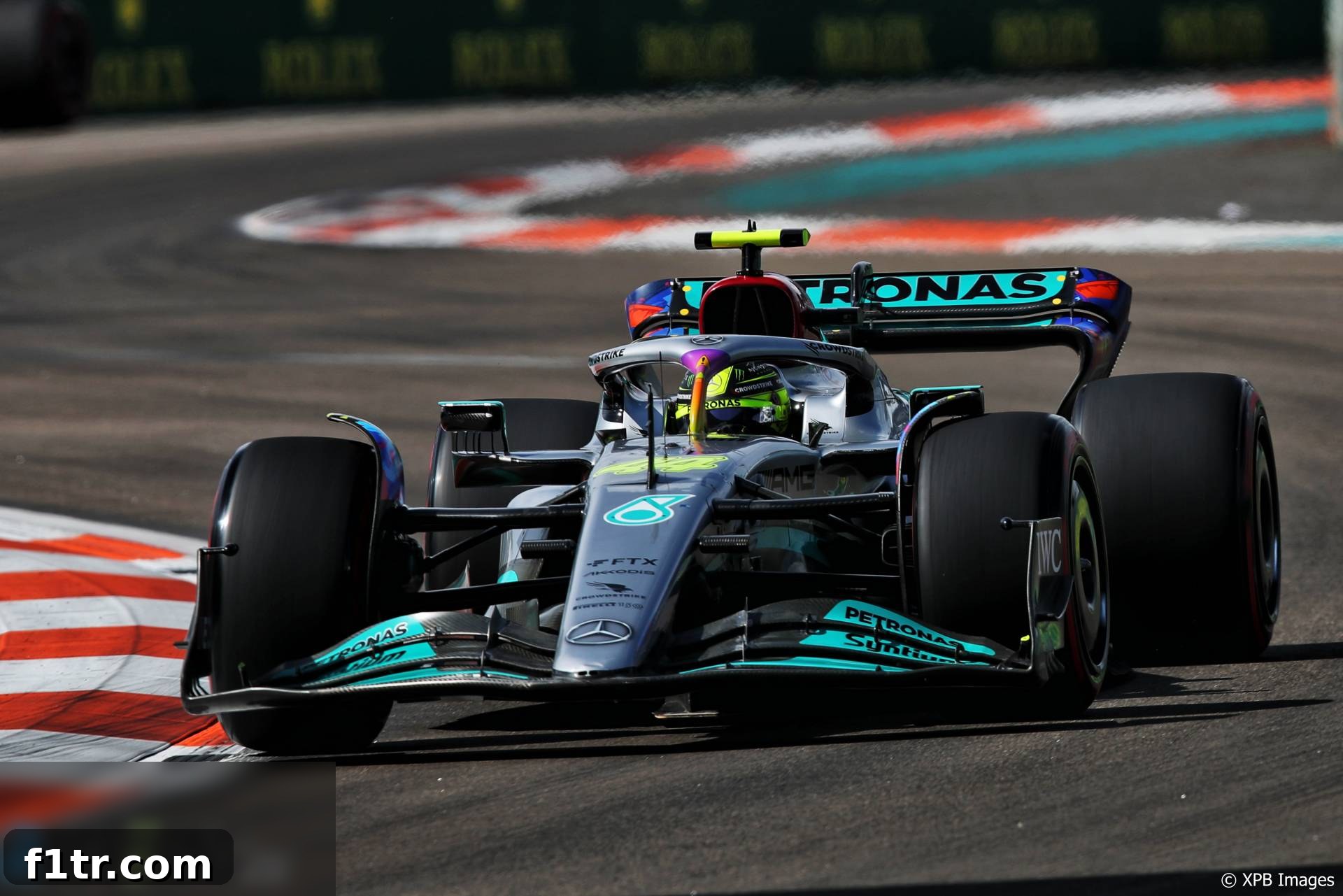
Lewis Hamilton and George Russell have faced significant hurdles, primarily battling the severe porpoising phenomenon that has plagued their W13 car. This aerodynamic instability, characterized by violent bouncing at high speeds, has severely hampered the team’s ability to extract the full potential from their ground-effect design. While the team showcased glimpses of improvement during Friday practice sessions at the Miami Grand Prix, their performance unfortunately regressed to its familiar pattern during qualifying and the subsequent race. Despite these setbacks, Wolff emphasized the team’s resilience and their ongoing analytical efforts.
Understanding the W13’s Porpoising Predicament
The 2022 Formula 1 regulations introduced a radical shift back to ground effect aerodynamics, intended to promote closer racing. However, this change brought with it the unexpected challenge of porpoising – a severe vertical oscillation of the car caused by the rapid cycling of downforce generation and stall under the car. For Mercedes, a team renowned for its engineering prowess and meticulous attention to detail, the W13’s propensity for porpoising has been a particularly frustrating enigma. It not only compromises aerodynamic efficiency and outright speed but also severely impacts driver comfort and confidence, making it difficult for Hamilton and Russell to push the car to its limits. Engineers have been working tirelessly, both at the track and back at the factories in Brackley and Brixworth, to understand the intricate mechanisms behind this issue and develop effective countermeasures. The task is complex, requiring a delicate balance between increasing downforce and mitigating the violent oscillations, often requiring trade-offs in other performance areas.
Miami Grand Prix: Glimmers of Hope and Hard Lessons
The Miami Grand Prix represented a pivotal moment for Mercedes, as the team introduced several experimental setups and components aimed at addressing their core performance issues. During the initial practice sessions, the W13 indeed showed encouraging signs, appearing more stable and competitive. Both Hamilton and Russell reported improved sensations from the cockpit, leading to a temporary surge of optimism within the team and among their fanbase. Toto Wolff himself acknowledged these positive developments, stating that “During Friday practice, the car showed flashes of its true potential.” He further elaborated that the continuous experimentation with set-up configurations and the introduction of new parts provided them with “answers and indications of which direction to go in.”
However, the promise shown on Friday did not translate into sustained performance over the full race weekend. The car’s performance noticeably declined during qualifying and the race, highlighting the transient nature of their progress. Despite this regression, Wolff remained pragmatic, noting that Mercedes had “the third quickest car” in Miami and had “extracted the maximum points possible” given the circumstances. This perspective underscores the team’s commitment to maximizing their current package while simultaneously pushing for long-term solutions. The data gathered from Miami, particularly the stark contrast between Friday’s performance and the subsequent sessions, has provided invaluable insights into the car’s behavior and the specific challenges that need to be overcome.
The Radical ‘Zero Pod’ Concept and Its Evolution
A significant talking point surrounding the W13 has been its distinctive and radical ‘zero pod’ sidepod design. Mercedes debuted this innovative concept during the second pre-season test in Bahrain, having run a more conventional sidepod arrangement during the first three-day test at the Circuit de Catalunya. The ‘zero pod’ design, which features virtually no traditional sidepod bodywork, was an audacious engineering gamble aimed at maximizing airflow over the floor and through the diffuser, thereby generating greater downforce. While conceptually brilliant, its interaction with the new ground effect regulations and the inherent characteristics of the W13 chassis may have inadvertently contributed to the porpoising phenomenon. The team’s decision to pursue such an extreme design highlights their relentless pursuit of performance and their willingness to innovate, even if it entails significant risks.
The return to Barcelona this weekend offers a unique opportunity for Mercedes to directly correlate the data from their current ‘zero pod’ configuration with the information gathered during the initial winter testing when the car featured conventional sidepods. This comparison will be crucial in understanding the aerodynamic consequences of their design philosophy and could inform future development directions. Wolff underscored this importance, stating, “Having run there in winter testing, albeit with a car that has evolved a lot since then, it will be a good place to correlate the information we have on the current car.” This correlation work is fundamental for any Formula 1 team, allowing them to validate simulations with real-world track data and refine their understanding of the car’s behavior.
Barcelona: A Critical Proving Ground
The Circuit de Catalunya in Barcelona is widely regarded as one of the most comprehensive testing grounds on the Formula 1 calendar. Its diverse layout features a demanding mix of high-speed corners, technical medium-speed sections, and a long main straight, putting every aspect of a car’s performance to the test. From aerodynamic efficiency to tire degradation, chassis balance, and engine power, Barcelona provides a thorough examination of a car’s capabilities. For this reason, it has historically been a popular venue for pre-season testing and in-season development. Its familiarity to the teams, coupled with its challenging nature, makes it an ideal location for Mercedes to evaluate the effectiveness of their recent modifications and understand the true potential of the W13.
Data Correlation and Anticipated Progress
The wealth of data collected from the initial winter testing at Barcelona, even with a different car specification, provides Mercedes with a strong baseline for comparison. Wolff emphasized the intensive efforts underway at the factories: “A huge amount of hard work has been going on in the factories to unpick the data from Miami and turn it into improvements for Barcelona.” This rigorous data analysis, coupled with the opportunity to run on a familiar track, creates an environment ripe for progress. The team will be looking to confirm the insights gained from Miami and validate any proposed solutions for the porpoising issue. Success in Barcelona would not only mean a tangible improvement in lap times but also a clearer understanding of the W13’s fundamental characteristics, paving the way for more effective development through the rest of the season. The team is hopeful that these efforts will translate into “another step forward” in their performance journey.
Navigating the Circuit de Catalunya: Challenges and Opportunities
While an excellent testing track, the Circuit de Catalunya has historically been criticized for making overtaking particularly challenging. Mercedes Principal Toto Wolff acknowledged this historical characteristic, stating, “It’s never been a great track for overtaking.” A slight alteration to Turn 10 last year, where the track reverted to a faster, more open configuration, was initially hoped to improve racing dynamics but Mercedes believes it may have inadvertently made overtaking even harder. The new generation of 2022 F1 cars, designed with revised aerodynamic regulations aimed at promoting closer wheel-to-wheel racing, could potentially alter this dynamic. Wolff expressed his curiosity about this, noting, “It’ll be interesting to see how these new-shape 2022 F1 cars impact the on-track spectacle in Spain.” If the new regulations succeed in allowing cars to follow more closely, Barcelona could offer a more exciting race than in previous years, providing an additional layer of intrigue to the weekend.
Toto Wolff’s Perspective: A Long Season Ahead
Despite the considerable challenges faced by Mercedes in the early stages of the 2022 season, Toto Wolff maintains a characteristically calm and strategic outlook. He framed the team’s current position using a compelling analogy, stating, “In basketball terms, we head to Barcelona at the end of the first quarter of the game.” This perspective highlights that while the start has been difficult, the season is long, and there is ample opportunity to recover and contend for championships. It speaks to the resilience and long-term vision ingrained within the Mercedes team culture. Wolff’s confidence stems from the belief that once the team successfully translates its “learnings” into tangible “track performance,” their inherent strengths will shine through. This measured optimism is crucial for maintaining morale and focus within a high-pressure environment, ensuring that every setback is viewed as an opportunity for growth and improvement. The collective effort from every member of the team, from aerodynamicists to engineers and drivers, is paramount in navigating this challenging period.
Beyond Barcelona: The Road Ahead for Mercedes
The Spanish Grand Prix is more than just another race for Mercedes; it’s a crucial checkpoint in their season-long quest to understand and tame the W13. A significant step forward in Barcelona could represent a turning point, providing the team with a clearer development path and renewed confidence. Conversely, a lack of progress might necessitate a more radical reassessment of their approach. However, the consistent messaging from Toto Wolff and the entire Mercedes camp indicates a belief in their technical capabilities and their process-driven approach. The season is still relatively young, and the development race in Formula 1 is relentless. What happens in Barcelona will undoubtedly influence Mercedes’ strategy for the upcoming races and potentially shape the trajectory of their 2022 campaign. The pursuit of perfection, even amidst adversity, remains the driving force behind the Silver Arrows.
2022 Spanish Grand Prix Related Articles
- Q&A: Kubica ‘shocked’ by ‘completely different’ Alfa Romeo in Spain
- How heat and traffic trouble left F1 fans fuming after the Spanish Grand Prix
- Mercedes not yet certain their porpoising problem has “disappeared”
- Sticking to budget cap “pretty much impossible” due to rising costs – McLaren
- Ricciardo hoping to find an explanation for Spanish GP pace deficit to Norris
Browse all 2022 Spanish Grand Prix articles