British Grand Prix: A Thrilling Showdown at Silverstone Amidst Fierce Competition
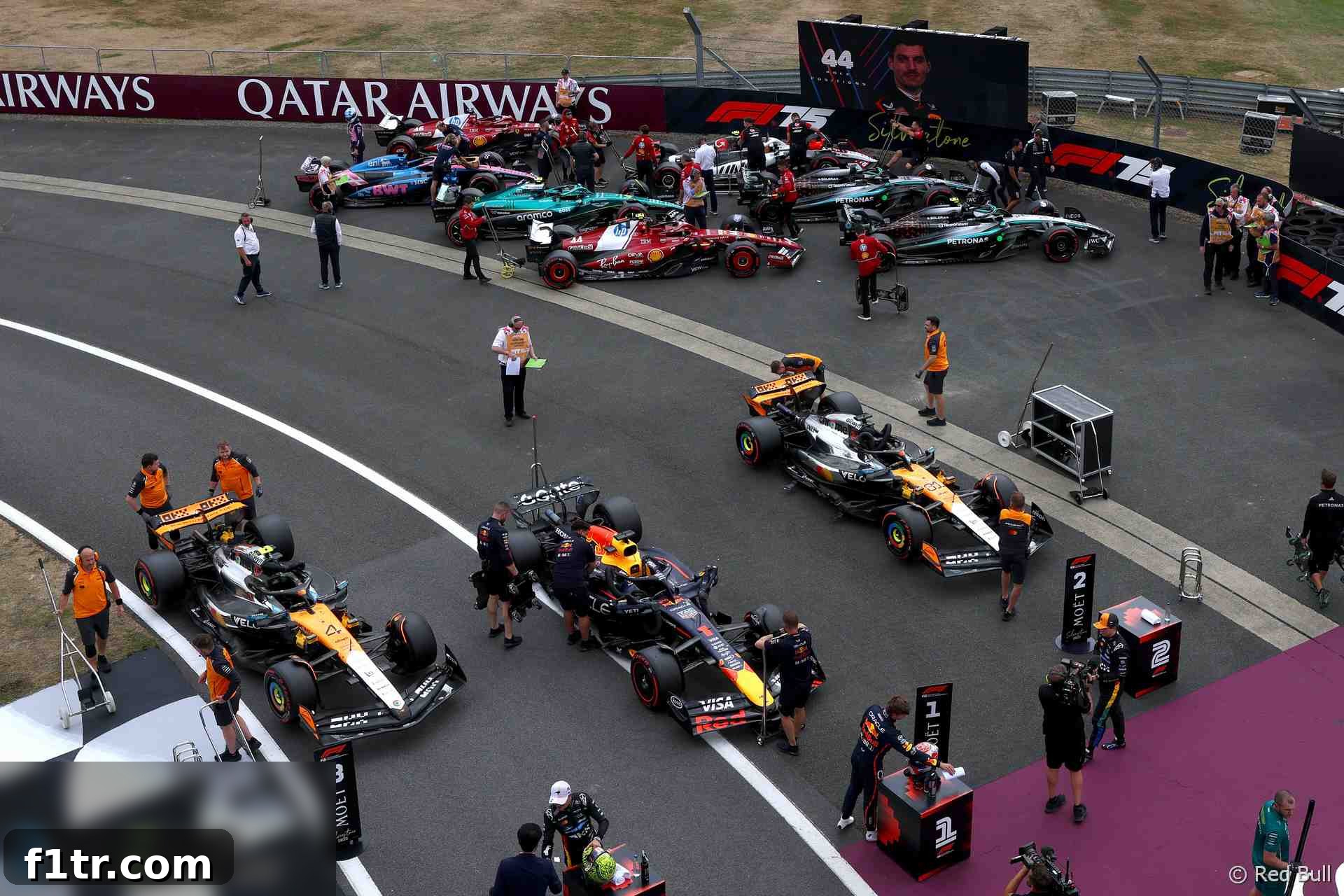
Following a commanding display at the Austrian Grand Prix, where McLaren showcased formidable pace and control, the Formula 1 circus arrived at Silverstone, the spiritual home of British motorsport, to face an entirely different challenge. The iconic circuit, renowned for its high-speed corners and demanding layout, set the stage for what promises to be one of the most unpredictable and tightly contested races of the season. The immediate shift in competitive dynamics was evident during qualifying, where Max Verstappen, the reigning world champion, narrowly secured pole position for the British Grand Prix, pipping the McLaren drivers to the top spot. This result underscored a profound change from the previous weekend, indicating that the battle for victory at Silverstone would be anything but straightforward.
Advert | Become a Supporter & go ad-free
Championship contenders and team strategists alike have voiced their belief that at least three, and possibly more, cars from various teams are in legitimate contention for the race win. This sentiment reflects the incredibly close margins seen across the grid, a stark contrast to the singular dominance McLaren enjoyed just one week prior. Adding another layer of complexity and potential drama to the British Grand Prix weekend is the persistent possibility of rain. While a wet morning was widely anticipated at Silverstone, the actual risk of precipitation during the grand prix itself was predicted to be relatively low. However, in British weather, low risk often translates to high uncertainty, and even a brief shower can dramatically alter race strategies and outcomes, injecting an element of chance into the high-stakes competition.
Qualifying Prowess: A Microcosm of Tight Margins
The intensity of the competition was palpable in the qualifying session, which saw the top six cars on the grid separated by a mere 0.229 seconds over an 85-second lap. Such minuscule differences highlight the absolute peak performance required from both drivers and machinery at Silverstone. McLaren team principal Andrea Stella, reflecting on the practice sessions leading up to qualifying, openly stated that as many as four teams had demonstrated the potential to be fast enough to claim victory. This broadens the scope of potential winners significantly, moving beyond a simple two-team battle.
“In terms of dry conditions, it’s very difficult to say which is the best team,” Stella admitted to media, including RaceFans, following qualifying. He elaborated on the surprising pace observed from one particular rival: “The lap times that Ferrari were able to produce in practice were quite impressive. There are some lap times they did in high fuel which we were not in a condition to repeat. So definitely we thought that they were the favourites for the race and even for the qualifying.” This initial assessment from a highly respected team principal underscores the high regard for Ferrari’s underlying pace, particularly in longer runs, which are crucial for race performance.
However, the actual outcome of qualifying presented a slightly different picture. Despite their strong practice showing, the Ferrari drivers ultimately secured the third row of the grid, placing them behind Verstappen, the two McLarens of Lando Norris and Oscar Piastri, and surprisingly, George Russell’s Mercedes. Russell’s Q3 performance was particularly notable given that his Mercedes had not climbed higher than ninth in the initial two stages of qualifying, suggesting a significant improvement or a perfectly executed lap when it mattered most. This unexpected twist further solidified Stella’s observation about the extreme competitiveness of the field.
Advert | Become a RaceFans supporter andgo ad-free
“We ended up seeing that the situation is very tight,” Stella continued, reinforcing the narrative of a multi-team fight. “So I don’t think we will see a big difference between Max, the two McLarens, the two Ferraris and potentially even George. We’ll have to see if their lap in qualifying was a one-off because up until that point in Q3 it seemed like they were not as competitive as the others for the top positions of the grid.” This perspective from Stella illustrates the fluid nature of the competitive pecking order, where even a slight advantage or perfectly timed lap can elevate a team into contention.
The Weather Variable: A Recipe for Excitement
The weather forecast for the British Grand Prix carried echoes of previous years, specifically hinting at a potential repeat of conditions seen last year, where a brief, intermittent rain shower impacted the race. “If there’s [rainy] weather around, we have seen last year, then here it can be quite entertaining because I don’t expect that it will be strong, persistent rain,” said Stella. This prediction suggests that rather than a fully wet race, Silverstone might experience variable conditions, forcing teams to make critical strategy calls on tyre compounds and pit stops. Such scenarios often lead to highly tactical races, offering opportunities for those who can adapt quickest.
Stella added, “If there is [rain], it will possibly be more like last year with various conditions throughout the race and definitely one more reason for an eventful and entertaining British Grand Prix.” These intermittent showers, often referred to as “sprinkles” or “light rain,” can be the most challenging for teams, as they may not be severe enough to warrant full wet tyres but can make slick tyres incredibly precarious, leading to spectacular overtakes and costly mistakes. The British weather, in its unpredictable glory, is thus poised to be a significant protagonist in the unfolding Silverstone drama.
Ferrari’s Unseen Pace and Red Bull’s Aero Innovation
Despite their qualifying position, Stella maintained his belief in Ferrari’s underlying dry pace. “Looking at the lap times that Ferrari have been able to pull off in every single session, Ferrari seem to be the strongest team. Probably they still are the strongest team. I think the gaps are very small,” he asserted. Stella even offered a potential explanation for the qualifying discrepancy, suggesting that external factors like wind variations could have played a role: “Max also got out for the final lap in Q3 a few minutes later or a minute later and here I think a slight variation in wind that can affect one tenth here and there.” This highlights how sensitive modern F1 cars are to environmental factors and how a tiny shift can impact a crucial qualifying lap. He concluded, “So everything is very tight. It’s difficult to say which one was the strongest team, but Ferrari definitely appeared like the most competitive. If you look at Q2, they were [first and second] quite convincingly at the time.”
Advert | Become a RaceFans supporter andgo ad-free
Beyond the raw speed, strategic choices in aerodynamics also came under scrutiny, particularly Red Bull’s approach. Max Verstappen achieved his pole position running a noticeably slimmer rear wing on his Red Bull than many of his rivals. This choice typically signals a preference for lower downforce levels, which reduces drag and improves straight-line speed but can sometimes lead to higher tyre wear or reduced grip through high-speed corners. However, Stella expressed confidence that this aerodynamic choice would not necessarily translate into a significant tyre wear problem for Verstappen during the race.
“When you have the tyre wear that we expect to have at this circuit and in these conditions our belief is that there is not a great relationship between the downforce level or the way you produce lap time and the tyre wear,” he explained. This counter-intuitive insight suggests that at Silverstone, due to its specific characteristics and the expected race conditions, the impact of a lower downforce wing on tyre degradation might be mitigated. Stella elaborated on this nuance: “Because you will be fast in the straights which means actually you have to push if anything a little bit less in the corners. If you rely on lap time generated in the corners then you do have to push the corners, you may stress your tyres even more. So it’s not clear that the rear wing solution that Red Bull adopted will necessarily cause a worse situation from a tyre point of view.” This suggests Red Bull’s strategy might be to gain time on the straights, allowing for more relaxed cornering, thereby paradoxically preserving tyres.
The Bigger Picture: Red Bull’s Overall Efficiency
Red Bull’s commitment to innovation was further evidenced by the introduction of a new floor for the Silverstone weekend. Stella pointed out that the ability of the team to run such a low rear wing level, combined with strong performance, indicates their car is generating sufficient downforce from other areas, primarily the underbody and floor. This is a testament to the overall aerodynamic efficiency of the Red Bull package.
“They might have chosen that wing because of front-end limitations and to make the life a little bit easier for the front wing, but you still have to have a car that remains very efficient at this low level of rear wing,” he noted. A car that can generate significant downforce through its floor allows designers to run smaller rear wings, reducing drag without compromising cornering speed excessively. Stella concluded by commending Red Bull’s engineering prowess: “Red Bull seem to have done a good job of retaining overall efficiency, which is the ratio between downforce and drag despite running such a small rear wing. So well done to Red Bull, we will see whether this was a good choice for the race-ability and tyre wear or it wasn’t.” The ultimate test of this innovative approach will, of course, be the race itself, where tyre degradation and overall performance across a full race distance will be the deciding factors.
Advert | Become a RaceFans supporter andgo ad-free
The British Grand Prix is set to be a captivating spectacle. With McLaren eager to prove their consistent pace, Red Bull showcasing their aerodynamic genius, Ferrari determined to convert practice form into race results, and Mercedes hoping for a home-race uplift, combined with the ever-present threat of Silverstone’s capricious weather, the stage is perfectly set for an enthralling contest. Every pit stop, every overtake, and every strategic decision will be magnified, promising a race where the smallest detail could determine who stands on the top step of the podium.
Miss nothing from RaceFans
Get a daily email with all our latest stories – and nothing else. No marketing, no ads. Sign up here:
2025 British Grand Prix
- Tsunoda says the stewards have “not been nice to me” as penalty points mount up
- ‘I’ve considered Hulkenberg an exceptional talent for a very long time’ – Wheatley
- Alpine is now F1’s highest scoring last-placed team of all time: British GP stats
- Ferrari had no GPS data from Hamilton’s car throughout British Grand Prix
- “The risk for us is a Safety Car”: Why Norris’s win was in danger for six laps
Browse all 2025 British Grand Prix articles