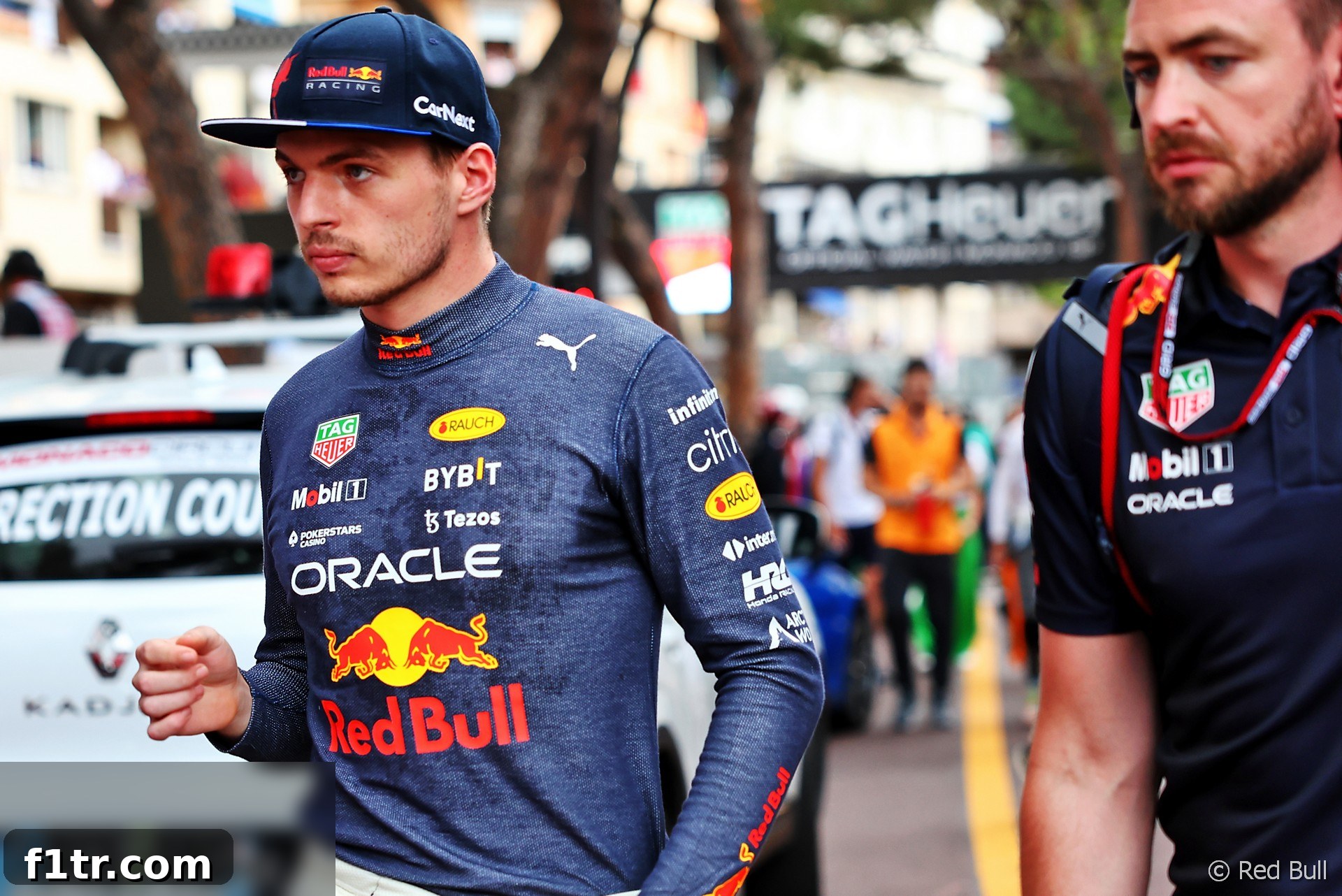
The 2022 Formula 1 season was a spectacle of engineering prowess, strategic brilliance, and intense driver rivalry, culminating in Max Verstappen securing his second consecutive World Championship title. However, as both the champion driver and his former F1 racer father, Jos Verstappen, have highlighted, a critical turning point on this triumphant journey was undoubtedly the Monaco Grand Prix. This iconic race, renowned for its challenging street circuit and often unpredictable outcomes, proved to be far more than just another stop on the calendar for the Red Bull Racing team.
Advert | Become a Supporter & go ad-free
While Sergio Perez, Verstappen’s teammate, ultimately clinched victory in the principality, Verstappen himself finished a respectable third. Yet, this podium finish belied underlying frustrations and set in motion a series of crucial developments within the Red Bull camp. A new documentary, “Viaplay’s Lion Unleashed 2,” offers an insightful look into this pivotal period, where both father and son reveal how this particular race marked the genesis of significant car improvements, enabling Max to truly unlock the full potential of the RB18 chassis and tailor it to his distinct driving style.
“Where I see a turning point, also in the way Max was going, it was after Monaco,” recounted Jos Verstappen in the documentary. His perspective underscores the profound impact this period had on Max’s confidence and subsequent performance. Indeed, heading into Monaco, Max Verstappen was already at the summit of the championship standings, holding a slender six-point lead over Ferrari’s Charles Leclerc, with Perez trailing a further 19 points behind. Despite leading the charge, the car’s characteristics were not fully aligned with Verstappen’s preferences, leading to a degree of unease and a feeling that he wasn’t extracting maximum performance.
Jos elaborated on his son’s struggles: “He had difficulties with the car, and the car wasn’t going well for his liking.” This candid admission highlights the nuanced relationship between a top-tier driver and their machinery. Even a world champion needs a car that responds intuitively to their input, a vehicle that feels like an extension of their will. It was after this demanding Monaco weekend that the collective efforts within Red Bull intensified. “After Monaco we really pushed hard, together with the team,” Jos explained, emphasizing the collaborative drive for improvement. “And I think they went in the right direction to solve that problem for him.” This period marked a critical juncture where driver feedback transformed into engineering action, setting the stage for a dramatic turnaround in performance.
The subsequent car development focused meticulously on refining the RB18, progressively shaping it “more in his way,” as Jos described. Much of this transformative work revolved around crucial adjustments to the car’s setup and, significantly, its weight distribution. The Red Bull car had commenced the season marginally over the minimum weight limit, a common challenge under new regulations. Systematically shedding kilograms from various components became a key objective. This wasn’t merely about reducing overall mass; it was about strategically redistributing weight to achieve a more favorable balance, directly impacting the car’s handling characteristics and responsiveness. These intricate adjustments allowed for a finer tuning of the car’s dynamics, enabling it to better suit Verstappen’s aggressive yet precise driving style.
Max Verstappen himself expressed satisfaction with the profound changes implemented in the car after the Monaco race. “We had a good discussion after Monaco about what I needed from the car and what I wanted from the car,” the world champion revealed. This “good discussion” was more than just a casual chat; it was a deep dive into telemetry, driver sensations, and engineering possibilities. Verstappen articulated specific requirements, knowing that even marginal gains in car feel could translate into significant performance advantages on track. He candidly admitted, “The beginning of the season, the car was not really of my liking, but that was also because of the weight of the car was in the wrong place as well.” This points to a deeper issue than just overall weight; the balance and how the weight affected the car’s behavior through corners were equally critical.
Advert | Become a RaceFans supporter andgo ad-free
“So the more we were getting rid of the weight, the more the car was anyway becoming more competitive,” he continued, elaborating on the direct impact of the modifications. “And this is also the way I like the car to be. It was just slowly coming into my kind of driving style to go quick. So that definitely helped me a lot afterwards.” This statement encapsulates the synergy between driver preference and engineering execution. As the car shed weight and its balance shifted, it naturally began to align with Verstappen’s preferred setup – often characterized by a sharp, responsive front end and stable rear. This adaptation allowed him to attack corners with greater confidence, push harder, and ultimately extract more consistent pace.
Verstappen praised Red Bull’s adept response to his requests. “It was just saying like ‘guys, we have to be a little bit more focused on what we actually need from the car now, we need to really get rid of the weight, we know it’s really painful’ and I just said ‘I need a strong front end, and we have to work on that’.” His directive for a “strong front end” is key; it implies a desire for a car that turns in sharply and precisely, allowing him to carry more speed through the apex and control the car with greater accuracy. This driver-centric development philosophy, where the team prioritizes tuning the car to the specific needs of their lead driver, proved instrumental in their championship dominance.
Beyond the technical adjustments, the Monaco Grand Prix weekend also appears to have served as a flashpoint in the intricate relationship between Verstappen and Perez. Later in the season, during the São Paulo Grand Prix, Verstappen controversially declined a request to aid his teammate, a decision that sent ripples through the paddock. This move was widely interpreted by some as a direct retaliation for Perez’s actions in the dying moments of Q3 in Monaco. During that qualifying session, Perez crashed, bringing out yellow flags and effectively preventing other drivers, including Verstappen, from improving their lap times. This incident ensured that Perez started ahead of Verstappen on a circuit notoriously difficult for overtaking, fueling speculation about its long-term consequences for team harmony.
The race itself saw Perez masterfully navigate the chaotic conditions, capitalizing on a series of strategic missteps by Ferrari. The race began on a wet track, demanding crucial decisions regarding tire compounds. Red Bull’s strategy, particularly for Perez, paid dividends, leading to his eventual victory. The very next day, Jos Verstappen, never one to shy away from expressing his opinions, publicly criticized Red Bull’s handling of the race strategy in an article published on the family’s website, underscoring the deep-seated frustration from the Verstappen camp regarding the outcome.
“Red Bull achieved a good result, but at the same time exerted little influence to help Max to the front,” Jos wrote in May, articulating his disappointment. “That he finished third, he owes to Ferrari’s mistake at that second stop of Charles Leclerc. The championship leader, Max, was not helped in that sense by the chosen strategy. It turned completely to Checo’s favour. That was disappointing to me, and I would have liked it to be different for the championship leader.” His words reflect a father’s protective instinct and a fierce competitive spirit, lamenting what he perceived as a missed opportunity to maximize Max’s championship points haul.
Jos further elaborated on his strategic critique: “Perez actually won the race because of the earlier pit stop. The team can perhaps explain that as a gamble, but they had already seen, with for example Gasly, that the intermediates were the best option at that time. I would have liked them to go for Max, but of course I am not entirely objective. I think 10 points from Max have been thrown away here.” This bold assessment highlights the fine margins of F1 strategy and the emotional investment involved. While team principles often advocate for maximizing constructor points, a championship contender’s team also faces immense pressure to prioritize their lead driver’s title aspirations. Jos’s strong belief that Max lost valuable points due to strategic choices underscores the internal tensions that can arise within a highly competitive team.
Despite these past tensions and the dramatic events of the 2022 season, Max Verstappen and Sergio Perez are confirmed to continue as Red Bull’s formidable driver pairing for the 2023 F1 season. This continuity speaks to Red Bull’s faith in their combined talent and their ability to work together towards the common goal of Constructor’s Championship success, even if individual ambitions occasionally lead to friction.
Advert | Become a RaceFans supporter andgo ad-free
In retrospect, the Monaco Grand Prix of 2022 was far more than just a race result for Max Verstappen. It was a crucible where frustrations solidified into actionable engineering demands, leading to a profound transformation of the RB18. This pivotal moment allowed Verstappen to meld even more seamlessly with his machine, unleashing a dominant performance that saw him sweep to his second consecutive world title. It also served as a stark reminder of the intense internal dynamics and strategic pressures that define top-tier Formula 1, shaping not only championship trajectories but also the complex relationships between teammates and the broader team hierarchy. The lessons learned and the changes implemented after Monaco undoubtedly paved the way for Max Verstappen’s resounding success in the remainder of the 2022 season, cementing its place as a crucial chapter in his burgeoning legacy.
2022 F1 season Highlights & Related Articles
- Mercedes told me “you’re wrong” about 2022 car’s problems – Hamilton
- FIA confirms all 10 F1 teams complied with 2022 cost cap
- Steiner “not ashamed” of panning “slow” Schumacher in Drive to Survive
- Albon believes year out of F1 improved him as a driver
- Hamilton sees diversity gains in F1 years on from his ‘traumatising’ experience of racism
Browse all 2022 F1 season articles