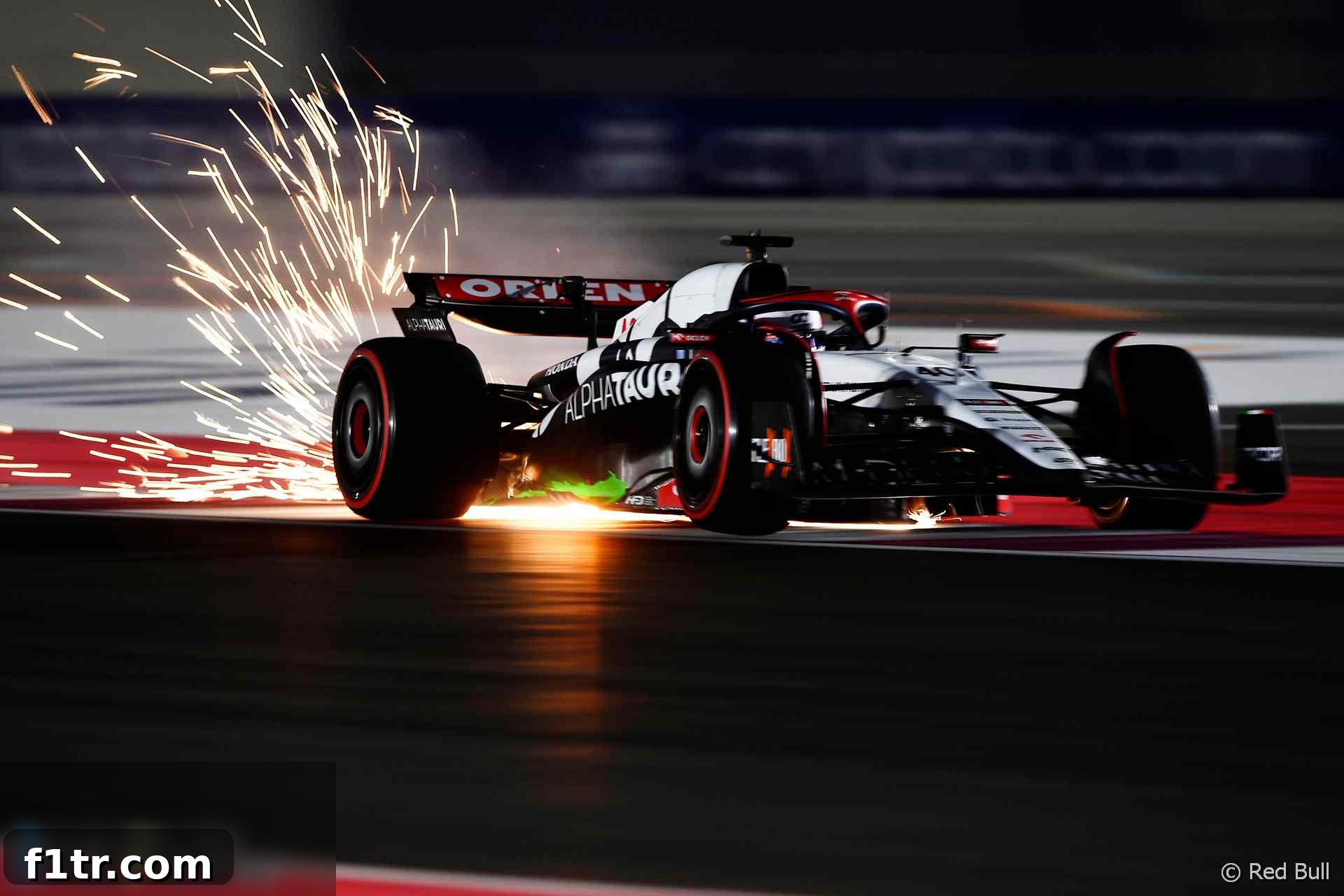
Losail International Circuit Undergoes Major Upgrades Following 2023 F1 Tyre Challenges
The adrenaline-fueled world of Formula 1 constantly pushes the boundaries of engineering, driver skill, and track design. However, the delicate balance between exhilarating speed and paramount safety often necessitates circuit modifications. This commitment to refinement is clearly evident at the Losail International Circuit in Qatar, a venue that has recently implemented significant changes to its infrastructure. These upgrades, specifically targeting kerbs and incorporating new gravel traps, are a direct response to the critical tyre problems encountered during last year’s Qatar Grand Prix, an event that prompted unprecedented intervention from the sport’s governing body. The proactive measures taken at Losail are poised to enhance both driver safety and the integrity of competition for the upcoming F1 calendar.
The Unprecedented Tyre Crisis of the 2023 Qatar Grand Prix
The 2023 Qatar Grand Prix marked only the second occasion that Formula 1 cars graced the challenging tarmac of the Losail International Circuit. While the circuit’s fast, flowing layout initially promised thrilling racing, the event quickly became overshadowed by severe tyre problems. F1’s official tyre supplier, Pirelli, made a concerning discovery: the aggressive design of the track’s existing kerbs was causing significant and premature damage to the tyres, particularly their sidewalls. This abrasive interaction posed a considerable safety risk, threatening tyre structural integrity and potentially leading to dangerous failures at high speeds.
In an extraordinary and unprecedented move, the FIA (Fédération Internationale de l’Automobile), in consultation with Pirelli, imposed a mandatory maximum stint length of just 18 laps for all competitors during the race. This radical decision effectively transformed the Qatar Grand Prix into a series of mini-races, forcing teams to adopt highly restrictive pit stop strategies and fundamentally altering the competitive dynamics of the event. Drivers were vocally frustrated by the limitations, which hampered their ability to push to the maximum and compromised strategic flexibility. The underlying cause was clear: the original pyramid-shaped kerbs were simply too harsh for the modern F1 tyres, especially when drivers naturally pushed wide and rode them to gain an edge, exposing the vulnerable sidewall.
Beyond the immediate safety concerns, the tyre issues at Losail highlighted the extreme demands the circuit places on Formula 1 compounds. Known for its sustained high-speed corners and abrasive surface, combined with the often scorching desert temperatures and high humidity, Losail subjects tyres to immense lateral and longitudinal forces. The 2023 incident served as a stark reminder of the critical interplay between track design, tyre durability, and the relentless pursuit of performance in F1. It underscored the necessity for continuous evaluation and adaptation of circuit infrastructure to meet the evolving requirements of the sport.
Engineering for Excellence: Losail’s Comprehensive 2024 Track Enhancements
In response to the lessons learned from the 2023 season, the Losail International Circuit has undertaken a comprehensive program of upgrades designed to mitigate future tyre problems and enhance overall track safety and fairness. These proactive measures represent a significant investment in the circuit’s future as a premier Formula 1 venue.
Reshaping the Kerbs for Enhanced Tyre Integrity
The most prominent change involves the extensive redesign of the track’s kerbs. Specifically, at seven critical corners – Turns 1, 2, 4, 10, 12, 13, and 14 – the top sections of the kerbs have been carefully rounded off. This modification replaces the previously pointed, pyramid-like structures with a much smoother, gentler profile. The primary objective of this alteration is to reduce the aggressive impact and abrasive wear on the sidewalls of the F1 tyres when cars inevitably run wide and utilize these track edges. By softening the kerb’s interaction zone, the risk of structural damage, punctures, and air pressure loss is significantly diminished, thereby ensuring greater tyre integrity and driver safety throughout the race.
This subtle yet crucial change allows drivers to confidently ride the kerbs without fear of compromising their tyres, potentially enabling them to explore slightly wider lines and carry more speed through these corners. However, it also demands precise driving, as the limits are now defined with greater clarity, pushing drivers to master the balance between aggression and control. The revised kerbs are a testament to the circuit’s commitment to providing a challenging yet safe environment for the pinnacle of motorsport.
Introducing New Gravel Traps for Clearer Track Limits and Consequences
Complementing the kerb modifications, the Losail International Circuit has strategically introduced additional gravel strips at the exit of several corners. The purpose of these new gravel traps is multifaceted. Firstly, they serve as a clear and unambiguous visual cue for drivers, helping them to more accurately judge the true edge of the track. Unlike tarmac run-off areas, which can sometimes invite drivers to exceed track limits without immediate penalty, gravel offers a tangible consequence for running wide.
When a car strays into the gravel, it inevitably loses time, momentum, and grip, providing a natural deterrent against gaining an unfair advantage by exceeding the white lines. This physical penalty helps to enforce consistent track limits across the circuit, promoting fair play and reducing the need for post-race penalties. The addition of these gravel traps, alongside the repositioning of white lines at several key corners last year, demonstrates a concerted effort to create a more consistent and self-policing environment for F1 competition at Losail.
Pirelli’s Rigorous Testing and Tyre Selection for Losail
Pirelli, as Formula 1’s exclusive tyre supplier, has played a pivotal role in validating these circuit changes. Their comprehensive testing protocol involved using samples of the newly modified kerbs to simulate real-world conditions and assess the impact on tyre wear and durability. Furthermore, Pirelli received invaluable data from various teams who recently conducted private testing sessions at the Losail International Circuit using older F1 cars.
While these test tyres were not identical to the 2024 range, the acquired data proved instrumental. As Pirelli noted, “Even though the tyres were obviously not identical to those from the 2024 range, the acquired data has still been useful to confirm the results of simulations and the indications from the test bed.” This validation process is crucial for ensuring that the chosen tyre compounds for the upcoming race are perfectly suited to the circuit’s unique characteristics and the modified infrastructure.
Underscoring its reputation as one of the most demanding circuits on the F1 calendar for tyres, Losail International Circuit will once again see Pirelli bring its hardest selection of tyre compounds. This choice reflects the high lateral loads, aggressive cornering sequences, and often high track temperatures that necessitate the most robust and heat-resistant tyres available. The C1, C2, and C3 compounds, typically the hardest in Pirelli’s range, are designed to withstand the immense stresses placed upon them, ensuring both performance and safety over race distances.
A Driver’s Perspective: Maya Weug’s Insights and Race Impact
The tangible nature of these circuit improvements has been independently observed and commented upon by drivers. F1 Academy rising star, Maya Weug, recently visited the Losail International Circuit and shared her positive impressions of the changes. Weug highlighted that “Qatar’s track got some big upgrades! New gravel traps, less aggressive kerbs, and no more track limits” (referencing the clearer delineation rather than a removal of limits). Her excitement for racing on the “amazing track soon” encapsulates the optimism felt by the racing community.
Such driver feedback is crucial, as it directly impacts confidence and race strategy. With less concern about tyre degradation from aggressive kerbs, drivers can potentially push harder and explore the limits of the car and track more consistently. The clearer enforcement offered by the gravel traps will also demand greater precision, rewarding skill and penalizing errors more overtly. These modifications are expected to contribute to a more predictable and safer racing environment, allowing the focus to return to pure on-track competition rather than tyre management crises.
Setting a Precedent: Losail’s Role in F1 Circuit Evolution
The proactive and extensive modifications undertaken by the Losail International Circuit serve as a significant precedent for other venues on the Formula 1 calendar. It underscores the dynamic relationship between advancing car technology, tyre development, and the need for circuits to continuously adapt and evolve. The collaboration between the circuit management, the FIA, and Pirelli exemplifies the concerted effort within motorsport to prioritize safety without compromising the thrill of racing.
As Formula 1 continues to push the boundaries of speed and technology, the lessons learned and implemented at Losail will undoubtedly inform future track designs and safety protocols globally. The incident of 2023 was a wake-up call, and the response from Losail demonstrates a commendable commitment to ensuring that the spectacle of Formula 1 remains synonymous with the highest standards of driver and equipment safety.
Looking Ahead to the 2024 Qatar Grand Prix
With these significant and well-considered upgrades now in place, the Losail International Circuit is primed to host the upcoming 2024 Qatar Grand Prix with renewed confidence. The efforts to refine the kerbs and introduce strategic gravel traps are expected to eliminate the tyre problems that plagued last year’s event, allowing for a more straightforward and unhindered racing spectacle. Fans can anticipate an exhilarating weekend where strategic flexibility, outright pace, and driver skill will dictate the outcome, free from the constraints of unprecedented safety directives. The Losail International Circuit stands ready to deliver a thrilling and fair competition, showcasing the pinnacle of motorsport in a safer, more robust environment.
2024 Qatar Grand Prix
- Horner ‘believes 100%’ Verstappen did not threaten to crash into Russell
- Russell and Verstappen cast new light on clash which triggered explosive row
- Hamilton’s puncture not caused by mirror debris – Mercedes
- Another start-to-finish win shows Qatar GP could be F1’s most processional race
- “Am I dead last now?” Unheard radio from Hamilton’s disastrous Qatar GP
Browse all 2024 Qatar Grand Prix articles