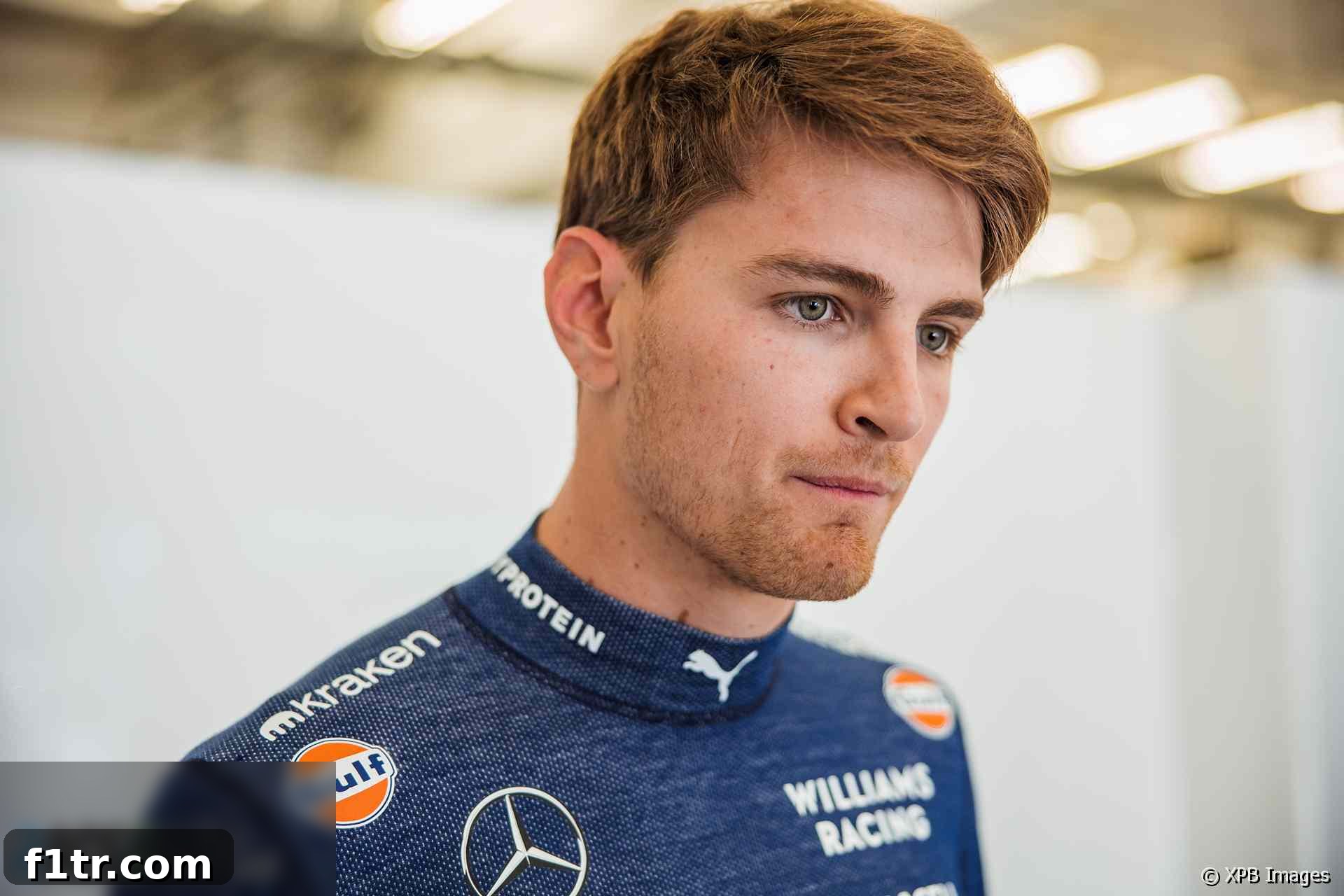
The world of Formula 1 is notoriously unforgiving, a crucible where talent meets immense pressure and expectations. For Logan Sargeant, his entry into the 2024 season with Williams Racing was laden with significant challenges and a clear mandate: to prove his worth. Following a debut season in which he consistently found himself out-qualified by his seasoned teammate, Alexander Albon, and managed to secure only a solitary point, Sargeant faced an uphill battle. The young American driver was under intense scrutiny, battling not just on the track, but against the clock and the high-stakes environment of elite motorsport to secure his future in the sport.
The challenging nature of Formula 1 driver assessments often revolves around direct comparisons with teammates. For Sargeant, Albon, a driver with proven F1 experience and a knack for maximizing the potential of the Williams car, set a formidable benchmark. The consistent qualifying deficit was more than just a statistic; it represented a fundamental struggle to extract pace and demonstrate the raw speed required at the pinnacle of racing. Furthermore, a single point in an entire season, while a personal milestone, underscored the broader performance gap. This placed an enormous burden on Sargeant as he embarked on his second year, knowing that every session, every race, would be meticulously analyzed by the team, the media, and a global fanbase, all keenly observing his ability to adapt and improve.
The gravity of Sargeant’s situation was underscored early in the 2024 season by a stark decision from Williams Racing during the Australian Grand Prix. With one chassis damaged, the team unequivocally demonstrated their pecking order by allocating their sole remaining chassis to Alexander Albon. This allocation occurred despite Albon himself being responsible for the damage to the other car during a practice incident. Such a move is rare and carries significant weight in Formula 1, signaling a definitive assessment of driver capability and priority within the team. For Albon, the pressure to deliver was immense, and he responded by skillfully guiding the car to an impressive 11th place finish. This result, achieved under challenging circumstances and with a compromised car, was a testament to his talent and ability to perform when it mattered most. Crucially, it was a performance level that Sargeant, throughout his own truncated season, only managed to replicate once, further highlighting the discernible performance disparity between the two drivers.
The implications of the chassis decision extended far beyond a single race weekend. It was a clear, if brutal, message about the team’s confidence in their lead driver versus their rookie. In the highly competitive and financially constrained world of F1, particularly for independent teams like Williams, resources are precious. Prioritizing one driver with limited hardware is a strategic choice aimed at maximizing the team’s overall points potential. For Sargeant, this decision, while perhaps understandable from a team’s perspective, undoubtedly delivered a significant psychological blow, potentially eroding confidence and reinforcing the perception of his junior status within the squad. This kind of preferential treatment, even if justified by performance, can create an environment of increased pressure for the less favored driver, making their already steep learning curve even more challenging.
One of the recurring narratives surrounding Logan Sargeant’s tenure at Williams involved the availability and allocation of crucial car upgrades. In his defence, it is important to acknowledge that Sargeant did not always have access to Williams’ latest performance parts. The team, often operating on tighter budgets compared to their front-running rivals, frequently fell behind schedule with its upgrade development plan during the season. When new hardware did become available, the established protocol, and indeed common practice across many F1 teams, dictated that the more experienced and consistently performing driver – in this case, Alexander Albon – invariably received the new components first. This meant Sargeant was often left to compete with an older specification of the car, a scenario that can significantly hinder a driver’s ability to demonstrate their full potential or make direct performance comparisons against their teammate. The nuanced impact of this resource allocation meant Sargeant was fighting not just the competition, but also a slight technical disadvantage, complicating an already challenging learning curve in Formula 1. The delay in receiving upgrades meant a constant struggle to keep pace, both literally and figuratively, with the evolving performance benchmarks of the grid.
However, while the staggered rollout of upgrades offered a partial explanation for some of Sargeant’s struggles, it was also partly a direct consequence of the extensive damage he incurred throughout the season. Early in the year, a series of costly incidents put immense financial and logistical strain on Williams, a team already managing its resources carefully. He crashed during practice sessions at critical venues like Jeddah and Suzuka, both circuits known for their high-speed demands and unforgiving nature. These incidents not only resulted in lost track time, crucial for a developing driver, but also led to substantial repair bills that diverted valuable resources. Furthermore, an error-strewn race in Canada culminated in yet another crash, compounding the team’s challenges and further denting confidence. Such recurring incidents, particularly in a season where Williams was striving to optimize its performance and resource management, inevitably influenced decisions regarding part allocation and upgrade prioritization. The financial burden of these accidents meant that instead of investing in new development, a significant portion of the budget had to be diverted towards repairs, inadvertently impacting Sargeant’s own access to the latest machinery and potentially slowing his development.
Logan Sargeant: 2024 Performance Overview
| Statistic | Best Result | Worst Result |
|---|---|---|
| GP Start Position | 12th | 20th |
| GP Finish Position | 11th | 20th (x2) |
| Points Scored | 0 | |
These statistics paint a clear picture of the challenges Logan Sargeant faced during his 2024 campaign. While a 12th place start position and an 11th place finish show flashes of potential and moments where he was able to extract more from the car, the overall trend reflects a struggle for consistent performance and points. The absence of points, in particular, stands as a stark indicator of the competitive hurdles he encountered, especially when compared to his teammate’s ability to consistently contend for top-10 finishes. The repeated 20th place finishes highlight the difficulties in navigating the complex world of F1 without significant experience or a fully optimized package, underscoring the gap between occasional promise and sustained delivery.
The climax of Sargeant’s challenging season, and ultimately his tenure with Williams, arrived at the Dutch Grand Prix in Zandvoort. This particular weekend held heightened significance, as it was finally the occasion where Sargeant gained access to Williams’ latest significant hardware upgrades. The expectation was that with a more competitive package, he would be able to demonstrate a clearer picture of his capabilities and begin to close the gap to Albon. However, fate, or perhaps a moment of over-eagerness, intervened during the crucial final practice session. Sargeant carelessly ran wide onto the wet grass, losing control and comprehensively destroying his FW46 against the barriers. The impact was severe, leaving the team with another extensive and incredibly expensive rebuilding job. This incident, occurring just as he received the crucial upgrades, was a critical blow, not only to the team’s already stretched resources but also to Sargeant’s own credibility. It became, somewhat tragically, his final appearance for the team, sealing a narrative of missed opportunities and unfortunate mishaps at the worst possible moment.
The Zandvoort crash proved to be the final straw for Williams. By this stage in the season, the writing was already on the wall, as Williams had previously announced that Logan Sargeant would not retain his seat for the 2025 season. While there is certainly no shame in being replaced by a driver of the caliber of someone like Carlos Sainz Jnr – a driver consistently performing at the top tier of Formula 1 – Williams’ subsequent decision to show Sargeant the door a full nine races before the official end of the season delivered an even more damning verdict on his performance. The move indicated a readiness to take a chance on an untried rookie, or at least a fresh face, rather than continuing with Sargeant for the remainder of the campaign. This was a clear sign that the team had exhausted its patience and was prepared to make an immediate change, signaling a complete loss of confidence in his ability to improve or contribute effectively in the short term. Such an early termination of a contract is a rare and severe measure in Formula 1, underscoring the team’s urgent need for a different direction and its definitive conclusion regarding Sargeant’s F1 suitability.
The challenging trajectory of Logan Sargeant’s career at Williams serves as a poignant reminder of the relentless pressures and high standards demanded in Formula 1. For any aspiring driver, breaking into F1 is an achievement, but sustaining a career requires consistent, error-free performance, rapid adaptation, and the ability to maximize any given machinery. Sargeant’s journey highlights the multifaceted difficulties faced by rookie drivers, from navigating complex team dynamics and resource allocation to managing the psychological burden of public scrutiny and the financial consequences of on-track errors. While his raw speed was occasionally evident, the accumulation of incidents and the performance gap to his teammate ultimately proved insurmountable. Williams, as a team striving to climb back up the constructor standings and secure its financial future, simply could not afford to continue with a driver who was consistently struggling to deliver on all fronts, reinforcing the meritocratic and cutthroat nature of the sport.
Assessing driver performance in Formula 1 is a complex task, often involving a blend of subjective analysis and objective data. RaceFans’ driver rankings, for instance, are based partly on the scores awarded to drivers for their performances in each round, taking into account factors like qualifying results, race craft, consistency, and how well a driver performs relative to their car’s potential. Beyond these round-by-round evaluations, broader factors such as contribution to team morale, adaptability to new regulations, and the ability to provide crucial technical feedback also play a significant role in a driver’s overall standing and perceived value within the paddock. For Sargeant, the cumulative assessment across these various metrics ultimately led to the tough decision by Williams, highlighting that a Formula 1 seat is earned and maintained through relentless performance and reliability.
Formula 1 Insights & Analysis
- F1 returning to India soon after 2027 sounds like wishful thinking
- Verstappen loathes F1’s new generation of cars – but what do his rivals reckon?
- The ‘throwback weekend’ is back in fashion. But it’s a flawed concept – especially for F1
- Is Formula 1’s double race cancellation a blessing in disguise?
- Todt admits Schumacher crashed on purpose – but did it really cost him two titles?
Browse all Formula 1 articles