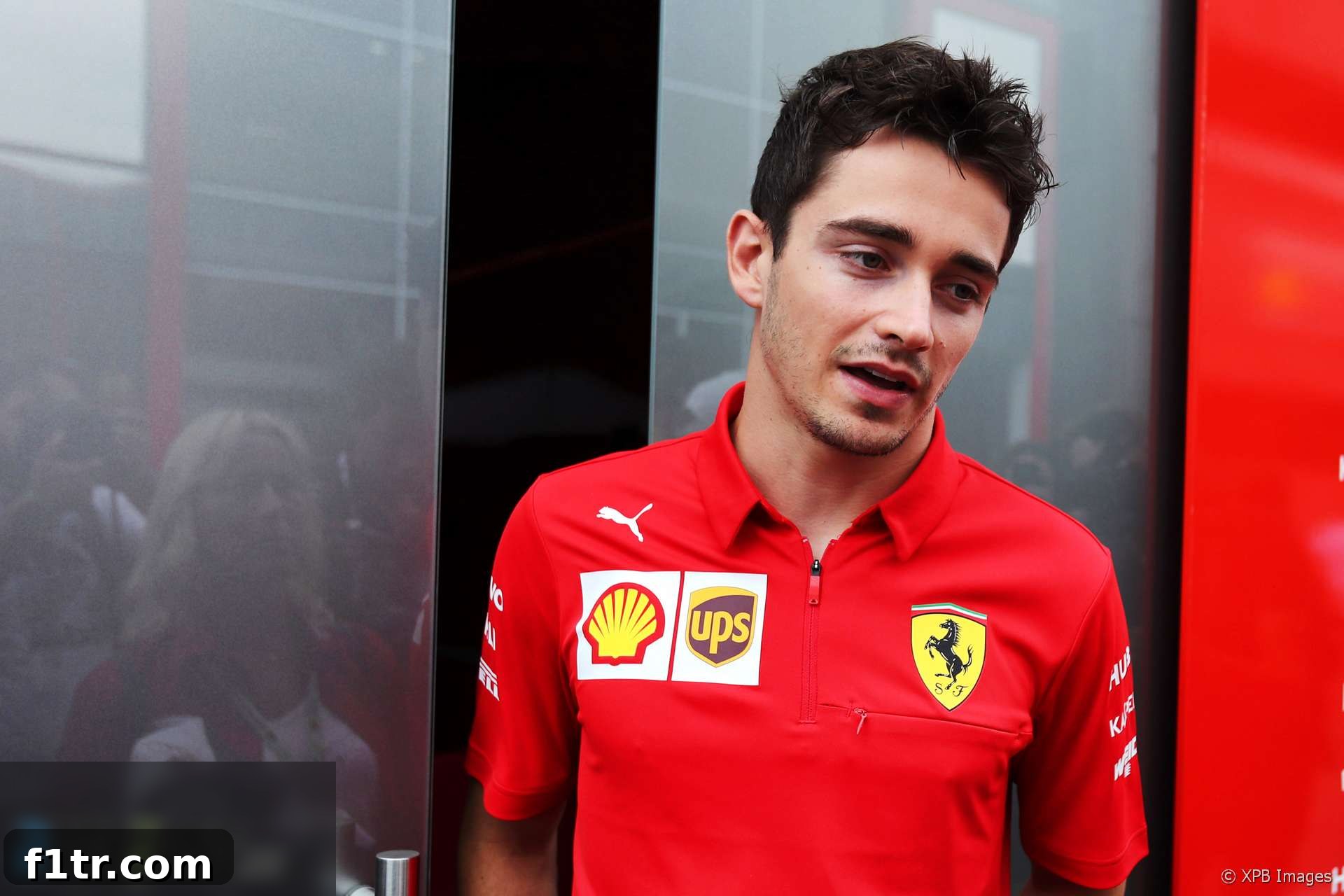
Leclerc’s German Grand Prix Qualification Heartbreak: A Double Blow for Ferrari
The pinnacle of motorsport, Formula 1, is often a cruel mistress, capable of delivering elation and despair in equal measure, sometimes within mere moments. Such was the narrative at the 2019 German Grand Prix qualifying session, where Charles Leclerc, a driver touted for future championship glory, experienced a profound setback. His calm, almost stoic reaction to a devastating fuel system fault that denied him a shot at pole position painted a vivid picture of the relentless pressures and unforeseen challenges inherent in elite racing. This technical malfunction was not an isolated incident but part of a larger, more troubling pattern for Scuderia Ferrari, which saw its hopes for a dominant weekend dashed by mechanical woes affecting both its drivers.
The anticipation surrounding the German Grand Prix had been palpable, with Leclerc showing exceptional pace throughout the practice sessions. Indeed, he emerged as the quickest driver in final practice ahead of qualifying, fueling optimism within the Ferrari camp and among their legions of Tifosi. The Hockenheimring, a circuit renowned for its mix of high-speed straights and challenging technical sections, seemed perfectly suited to Ferrari’s SF90 challenger and Leclerc’s aggressive driving style. As qualifying progressed, the young Monegasque driver continued to impress, seemingly on track to battle for the coveted pole position. However, fate, or rather a critical mechanical failure, intervened dramatically.
Ferrari’s Crushing Qualifying Setback at Hockenheim
The moment of truth arrived during Q3, the final and most crucial segment of qualifying, where the fastest drivers compete for pole. Leclerc was poised, strapped into his machine, ready to unleash its full potential. But it was not to be. A sudden and unyielding fuel system fault rendered his car immobile, preventing him from even leaving the garage. The sight of his mechanics frantically working on the car, knowing time was slipping away, underscored the agonizing nature of the situation. This technical glitch meant Leclerc, despite his prior blistering pace, was unable to set a time in Q3, relegating him to a starting position far below his demonstrated capability.
The disappointment was magnified by the fact that this was not Ferrari’s only reliability nightmare of the day. The team suffered a bitter double setback, as Leclerc’s seasoned teammate, Sebastian Vettel, also endured a torrid qualifying session. Vettel, driving on home soil, was unable to set a competitive time in Q1 due to a severe problem with his turbo air intake. For a team of Ferrari’s stature, with their rich history and championship aspirations, such widespread mechanical failures during a critical qualifying session were not just unfortunate; they were deeply concerning. The combined issues effectively dismantled Ferrari’s strategic advantage and left both their star drivers starting from compromised grid positions.
Charles Leclerc’s Measured Response to Adversity
In the aftermath of such a frustrating turn of events, many drivers might succumb to visible anger or profound dejection. Yet, Charles Leclerc displayed a remarkable level of composure and maturity, characteristic of a driver beyond his years. Reflecting on the lost opportunity, Leclerc stated, “I felt great in the car and the car felt great all weekend so it’s a shame it ends up like this.” His words, delivered with a hint of resignation but no trace of bitterness, highlighted the cruel irony of the situation: a car that felt inherently strong was betrayed by a critical component failure.
Leclerc’s philosophical outlook on the inherent unpredictability of Formula 1 further revealed his mental fortitude. “It’s part of the game sometimes, and of the sport,” he reflected, acknowledging that mechanical failures are an unfortunate, albeit integral, aspect of racing at the highest level. What truly set his reaction apart was his willingness to take partial responsibility, even when the fault lay clearly with the machine. “It’s true that we’ve had two times problems like this but I’ve also did a lot of mistakes on my side. It compensates.” This introspective view, where he balanced the team’s technical issues with his own past errors, showcased a mature understanding of collective responsibility and the highs and lows of a demanding career.
Beyond personal disappointment, Leclerc also expressed genuine empathy for his team, underscoring the collaborative spirit that defines a successful F1 operation. “But we need to understand the issues to try and not reproduce them. I obviously feel for the team, one car is difficult, two cars is very unlikely and very difficult for the team.” This statement highlighted the immense pressure on the engineers and mechanics to deliver a reliable package, and the collective burden felt when both cars are compromised. His resolve to perform for the team was palpable: “So I’m really determined to do a good race tomorrow for all of them.” This commitment to turn disappointment into a driving force for a strong race performance is a testament to his fighting spirit.
The Quest for Redemption: Hoping for a ‘Casino’ Race
Starting from 10th position on the grid at the German Grand Prix presented a formidable challenge for Charles Leclerc, especially considering the competitive field. However, F1 races are rarely straightforward, and Leclerc immediately turned his thoughts to potential variables that could upset the established order. His hopes for competing for victory from a compromised starting spot were significantly tied to the capricious Hockenheim weather forecast – specifically, the prediction of rain during Sunday’s main event.
Rain in Formula 1 is often described as an equalizer, a factor that can introduce a ‘casino’ element to the race, as Leclerc aptly put it. “I hope for the rain for it to put a bit more inconsistency and a bit more of a casino into the race,” he articulated. “Hopefully it can play a good part for us.” This sentiment is widely shared among drivers starting outside the very front rows. Wet conditions drastically alter grip levels, braking points, and strategic considerations, creating opportunities for those with superior car control, shrewd strategy, and a willingness to take calculated risks. It can turn a predictable procession into a strategic chess match interspersed with daring overtakes and unexpected twists.
For a driver like Leclerc, whose raw speed and aggressive style often thrive in challenging conditions, rain could indeed be a blessing. It would allow him to leverage his talent to carve through the field, making up positions that would be far harder to gain in a dry race where overtaking can be at a premium. The German Grand Prix itself has a rich history of dramatic, rain-affected races, adding to the anticipation that this weekend’s event might follow suit. For Ferrari, with both drivers out of position, changeable weather represented their best chance to salvage a strong result and demonstrate their true pace, turning a potential disaster into an opportunity for a heroic comeback.
Ferrari’s 2019 Season: A Narrative of Highs and Lows
The events at the 2019 German Grand Prix qualifying were unfortunately symptomatic of Ferrari’s broader narrative throughout that Formula 1 season. While the SF90 challenger often displayed formidable speed, particularly on power-sensitive circuits, it was frequently plagued by a combination of reliability issues, strategic missteps, and occasional driver errors. Charles Leclerc himself had moments of brilliance, securing his maiden F1 victory in Belgium and following it up with another win at Monza, but these triumphs were often interspersed with weekends like Hockenheim where promising performances were undermined by circumstances beyond his control.
The pressure on Scuderia Ferrari is perpetually immense. As the sport’s most iconic and longest-standing team, the expectation is always to compete for championships. The 2019 season saw them locked in a fierce battle with Mercedes, and to a lesser extent, Red Bull. Every point, every grid position, every strategic decision carried significant weight. Technical failures like the fuel system issue for Leclerc and the turbo problem for Vettel were not just individual race setbacks; they chipped away at the team’s morale and its championship aspirations. Such incidents necessitate rigorous analysis back at the factory, pushing engineering teams to identify root causes and implement robust solutions in a sport where marginal gains and absolute reliability are paramount. The continuous development cycle in F1 means that lessons learned from such failures are crucial for future performance and indeed, for the very credibility of the team.
Looking Ahead: The Resolve to Overcome
Despite the profound disappointment of qualifying, Charles Leclerc’s determined outlook for the race embodied the spirit of a true competitor. His readiness to fight from 10th on the grid, coupled with his hope for challenging weather conditions, set the stage for a potentially thrilling German Grand Prix. For Ferrari, the Hockenheim weekend presented a microcosm of their 2019 season: immense potential shadowed by frustrating technical woes. However, it also offered an opportunity for resilience, strategic brilliance, and a demonstration of fighting spirit.
The outcome of the race would not only define their performance at Hockenheim but also serve as a crucial test of the team’s ability to bounce back from adversity. Leclerc’s composed reaction and unwavering focus on a strong Sunday performance were clear indicators that despite the setbacks, the ambition within Ferrari remained undimmed. The German Grand Prix would undoubtedly be a race of strategic gambles, daring overtakes, and unpredictable moments, where a driver of Leclerc’s caliber, armed with determination and perhaps a bit of rain, could still conjure a remarkable recovery. The stage was set for a dramatic chapter in the 2019 F1 season, showcasing not just the speed of the cars, but the resilience of the drivers and teams facing the ultimate test of motorsport.
2019 F1 season: Related Articles
- Crying in the Melbourne car park at 2019 grand prix was my career low – Ocon
- McLaren Racing reports reduced £71 million loss in 2019
- Kvyat: Hockenheim podium last year was “my biggest achievement” so far
- How the FIA’s new encrypted fuel flow meter targets Ferrari’s suspected ‘aliasing’ trick
- “He smashed my office door”: 23 must-see moments from ‘Drive to Survive’ season two
Browse all 2019 F1 season articles