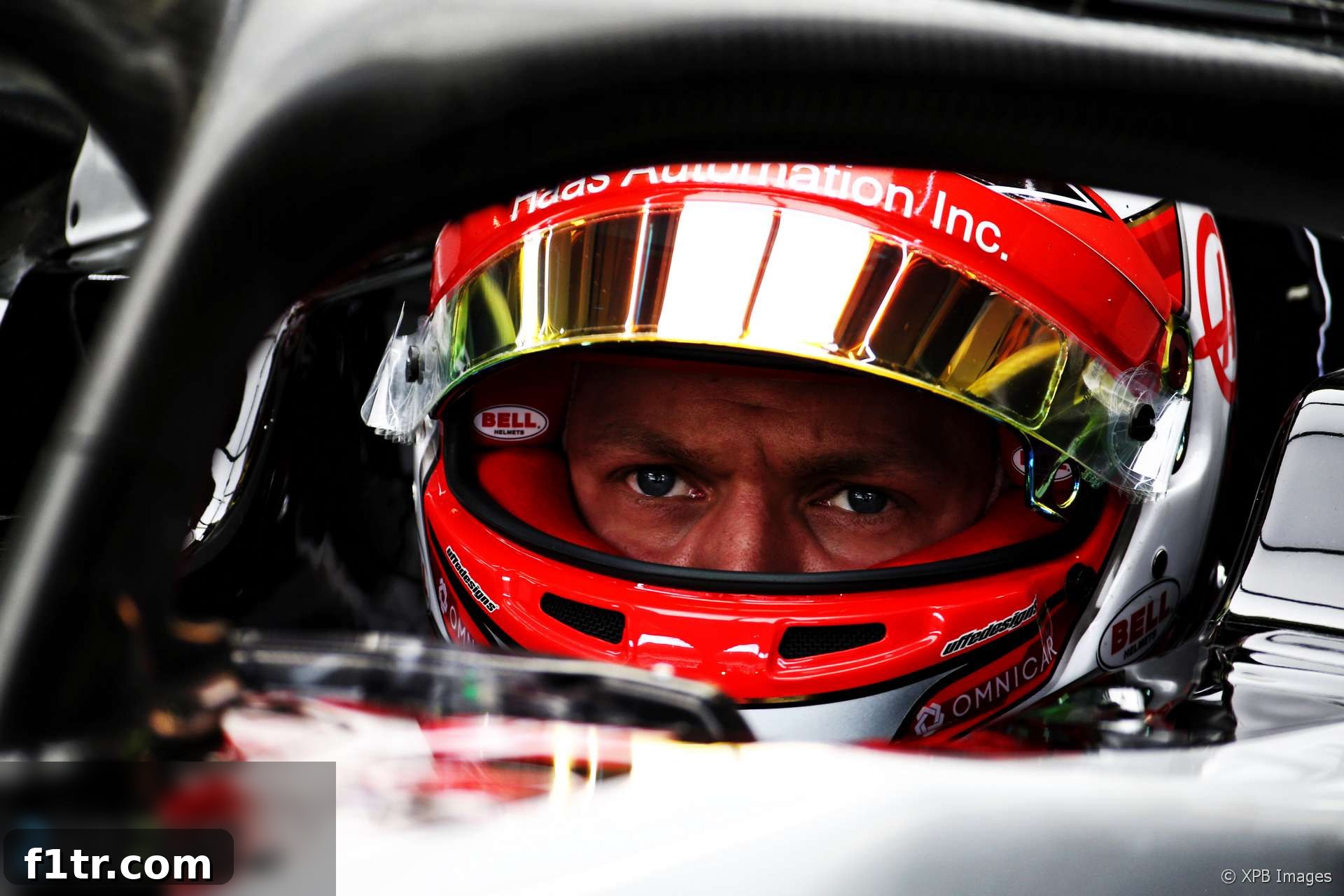
In a turn of events highlighting the meticulous scrutiny and strict adherence to regulations within Formula 1, Haas driver Kevin Magnussen has once again found himself under the stewards’ magnifying glass. The Danish racer has received his second reprimand of the current season, a consequence that carries significant implications for his immediate future on the grid. The stewards’ decision came after they ruled he drove too slowly during a crucial phase of the qualifying session, a judgment that underscores the tightrope drivers walk between competitive pace and regulatory compliance.
The infraction occurred during Q2, a segment of qualifying where every tenth of a second and every rule adhered to can be the difference between a strong starting position and a struggle from the back. Magnussen was found to have exceeded the specified maximum time between the Safety Car lines during his post-qualifying in-lap as he returned to the pits. This particular rule is in place to ensure a consistent and safe flow of traffic, preventing drivers from deliberately slowing down excessively to create gaps or to cool their tyres to an unsafe degree, which could impede faster cars or create dangerous closing speeds.
Advert | Become a Supporter & go ad-free
The stewards’ detailed ruling shed light on the complexities of such decisions. Their statement confirmed, “Car 20 exceeded the specified maximum time between Safety Car Lines on its post-qualifying in-lap.” However, they also acknowledged the nuances of Magnussen’s situation, noting, “The stewards closely examined the driver’s in-lap and found that Car 20 took particular care not to impede other drivers. The driver also noted that he was concerned with the rain in the circumstances.” This insight offers a glimpse into the driver’s thought process under pressure: a concern for safety due to impending weather and a conscious effort to avoid obstructing competitors – commendable intentions that nonetheless did not absolve him from the breach.
Despite these considerations, the stewards ultimately upheld the regulation. They pointed out, “However, the stewards noted that other drivers were setting representative times at this moment, and that the delta time is based on 145% of a representative lap.” This part of the ruling is critical. The “delta time” refers to a minimum lap time that drivers must adhere to, calculated as 145% of an average representative lap time. This buffer is designed to give drivers sufficient leeway for cooling down, saving fuel, or navigating traffic without excessively slowing down. The fact that other drivers were able to maintain legal speeds and set representative times suggested that Magnussen’s perceived need to slow down beyond the permissible limit was not universally dictated by the track conditions or traffic. Consequently, while acknowledging his concerns, the stewards concluded that “a breach was committed, but took into account the driver’s concern about rain and imposed a reprimand.” This implies that had the mitigating circumstances not been present, a more severe penalty, such as a time penalty or a grid drop, might have been considered.
This incident is not Magnussen’s first encounter with the stewards this season. His initial reprimand was issued during the first practice session for the Spanish Grand Prix, where he was judged to have impeded Charles Leclerc. That incident, involving a fast-approaching Ferrari and a Haas on a slower lap, underscored the constant vigilance required in F1 to avoid hindering competitors, even in practice sessions where the stakes might seem lower. Each reprimand serves as an official warning, a black mark against a driver’s record, signaling a violation of the sporting regulations.
The accumulation of reprimands in Formula 1 carries a significant and escalating penalty. The regulations stipulate a strict hierarchy: if a driver collects three reprimands within a season, they are automatically handed a 10-place grid penalty for the subsequent race. Crucially, this penalty is triggered even if the third reprimand is for a non-driving infringement, such as an administrative error or a pit lane infraction. This comprehensive rule ensures that drivers are held to a high standard of conduct both on and off the track. For Magnussen, having now amassed two reprimands specifically for rule-breaking while driving, the pressure intensifies considerably. He now stands just one more reprimand away from facing an automatic and potentially devastating 10-place grid drop, a consequence that could severely hamper his and his team’s race prospects.
The 10-place grid penalty is a particularly harsh consequence in the highly competitive world of Formula 1. Starting ten positions lower than earned can turn a strong qualifying performance into an uphill battle for points. It forces drivers into more aggressive strategies, potentially risking further incidents, and significantly reduces the chances of securing valuable championship points for their team. For Haas, a team that often battles in the midfield, every point is vital, and an avoidable grid penalty due to a driver’s accumulated reprimands would be a significant blow to their Constructors’ Championship aspirations.
Magnussen’s situation now demands an extremely cautious approach to every session, every lap, and every interaction on track for the remainder of the season. Given his reputation for aggressive racing and his often uncompromising style, avoiding a third reprimand will be a considerable challenge. He will need to strike a delicate balance between pushing the limits to extract performance from his Haas car and meticulously adhering to every nuanced regulation to stay out of the stewards’ crosshairs. The threat of a grid penalty will loom large over his head, influencing his decision-making in future qualifying sessions, practice laps, and even during administrative processes. This constant vigilance adds another layer of mental pressure to the already demanding role of a Formula 1 driver.
Despite this looming threat, the Haas driver is currently set to start Sunday’s race from a respectable 10th position on the grid. This solid qualifying result underscores the potential of both Magnussen and the Haas team, and the importance of converting such performances into points. However, the shadow of the second reprimand and the potential for a third will undoubtedly be a talking point and a strategic consideration as the team prepares for the race and for the rest of the season. The story of Kevin Magnussen’s 2024 season is increasingly becoming one of speed, skill, and the intricate dance with Formula 1’s unforgiving rulebook, where every decision, no matter how small, can have significant repercussions on his championship campaign and that of the Haas F1 team.
Don’t miss anything new from RaceFans
Follow RaceFans on social media:
- Join RaceFans on Facebook
- Follow RaceFans on Twitter
- Get daily email updates from RaceFans
Advert | Become a RaceFans supporter andgo ad-free
2018 F1 season
- F1 feared “death knell” for Drive to Survive after Ferrari and Mercedes snub
- McLaren staff told us we were “totally crazy” to take Honda engines in 2018 – Tost
- ‘It doesn’t matter if we start last’: How Red Bull’s junior team aided Honda’s leap forward
- Honda’s jet division helped F1 engineers solve power unit problem
- McLaren Racing losses rise after Honda split
Browse all 2018 F1 season articles