The 2020 Turkish Grand Prix, while ultimately culminating in Lewis Hamilton’s remarkable tenth victory of the season, stood out as arguably one of the most unpredictable and talked-about races of the year. Held at the revered Istanbul Park circuit, returning to the Formula 1 calendar after a nine-year hiatus, the event was a whirlwind of unexpected challenges and dramatic twists. While fan polls indicated high satisfaction with the spectacle, the underlying conditions ignited significant criticism and frustration among drivers and teams alike, sparking a broader discussion about the very nature of modern Formula 1 racing.
Anticipation was palpable as Istanbul Park, celebrated for its unique layout and the iconic multi-apex Turn 8, rejoined the F1 schedule. Many drivers and pundits predicted a thrilling showcase of modern F1 car performance, believing the high-speed corners would truly test the limits of these sophisticated machines. However, these expectations were dramatically altered by an eleventh-hour decision to completely resurface the track just weeks before the Grand Prix weekend. This last-minute intervention proved to be the catalyst for the extraordinary conditions that unfolded, transforming a potentially spectacular event into a gripping, yet often frustrating, battle for grip.
The consequences of the new tarmac were immediately apparent during Friday practice sessions. Drivers struggled immensely to find any meaningful grip, with lap times soaring over ten seconds slower than initial predictions. The stark difference left seasoned professionals bewildered, many admitting they had never encountered such an extreme lack of traction. Mercedes star Lewis Hamilton succinctly captured the prevailing sentiment, suggesting in an interview with Stephen Colbert, “Usually over the weekend it gets more and more rubber from the tyres and it gets better and better but it wasn’t happening. It was maybe a cheap job, I don’t know.” His comments underscored the profound difficulties faced by every competitor attempting to tame the untamed surface.
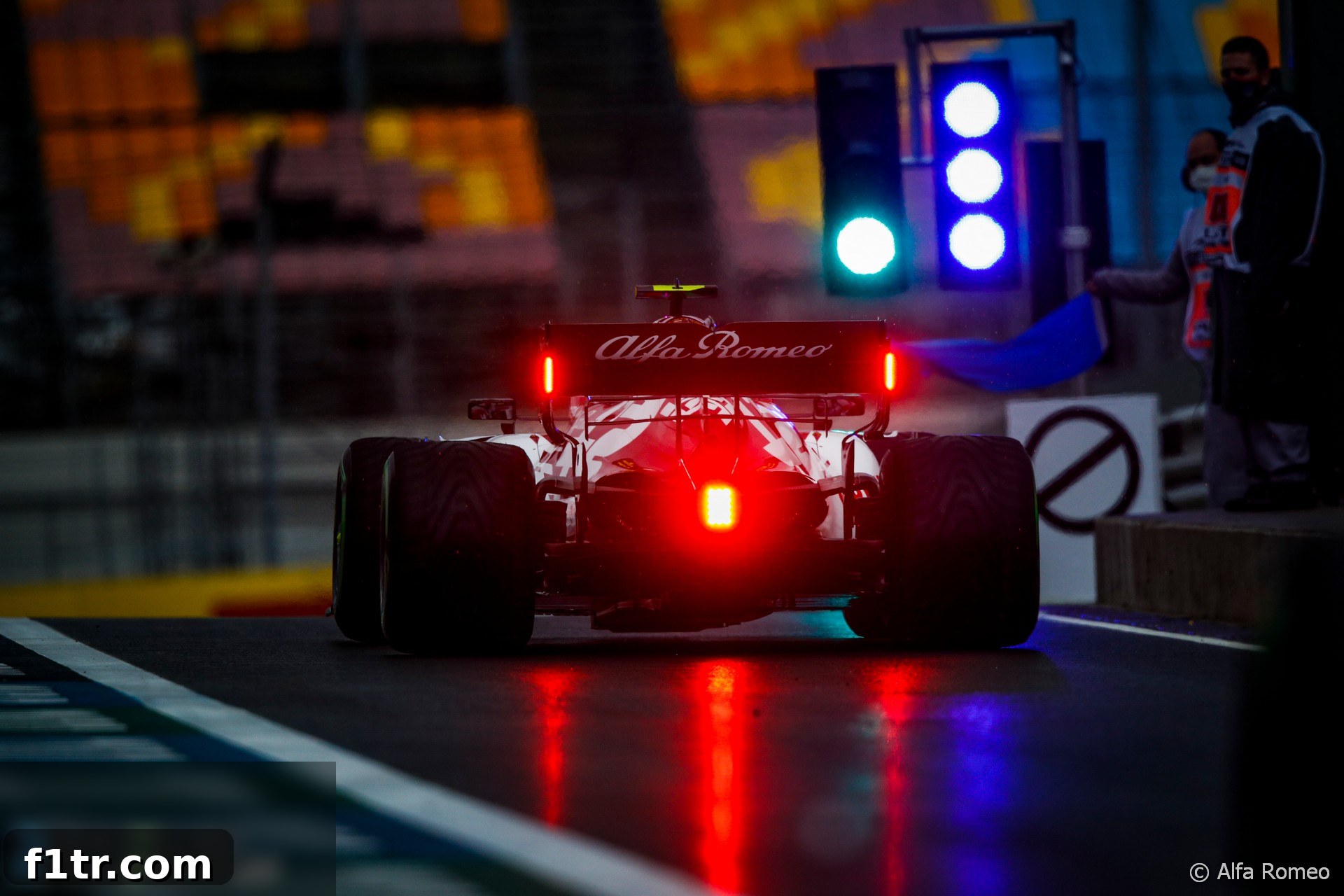
The situation only deteriorated further as the weekend progressed, with persistent rain adding another layer of complexity on both Saturday and Sunday. The combination of minimal grip, unusually low track temperatures, and inconsistent weather conditions threw teams into disarray. Finding the ‘sweet spot’ for tyre performance became an almost impossible task, with teams and drivers constantly falling in and out of optimal operating windows, seemingly at random. This volatile environment led to unprecedented swings in performance across the grid, turning the qualifying and race sessions into a genuine lottery.
Qualifying, in particular, produced astonishing results that highlighted the extraordinary challenges. Mercedes, a team that had dominated the season with a near-unbroken run of pole positions, found themselves struggling immensely, lapping a staggering 4.7 seconds off the pace. In a dramatic turn of events, Racing Point, who had experienced their worst qualifying performance of the year at the preceding round, capitalized on the chaos. They sensationally clinched pole position, and could have locked out the front row entirely had Antonio Giovinazzi not inadvertently impeded Sergio Perez during his crucial final flying lap. These wild fluctuations perfectly encapsulated the unpredictable nature of the weekend, where traditional form guides were rendered utterly meaningless.
Under such unique and challenging circumstances, some drivers tempered their criticism, acknowledging the difficulties faced by the race promoters. Daniel Ricciardo, known for his pragmatic approach, described the situation as an “anomaly.” However, he also conveyed a palpable sense of frustration: “If it was all the time, it would feel like a robbery. It’s like, why are we putting so much into these cars if we can’t actually push the limits?” For a sport built on pushing the boundaries of engineering and human skill, the inability to truly unleash an F1 car was a bitter pill to swallow.
Ricciardo further elaborated on the paradox of the weekend. “We didn’t really get to push an F1 car this weekend,” he admitted. “Sure it made a tricky and exciting but it was hard to get a lot of satisfaction out of it from a driving point of view.” While recognizing the event’s last-minute addition to the COVID-19 impacted calendar and expressing sympathy for the organizers, he issued a clear cautionary note: “I don’t recommend they resurface the tracks like this a month before we come here deliberately.” His comments highlighted the fine line between creating an exciting spectacle and ensuring the integrity of the racing experience for the drivers.
Other drivers, however, expressed more pronounced frustration at what they perceived as a missed opportunity. Istanbul Park is widely regarded as one of the best modern-era F1 circuits, offering a challenging and rewarding layout. The inability to drive these formidable machines at the absolute limit of their capabilities on such a track was a source of deep disappointment. George Russell, an emerging talent, articulated this sentiment powerfully, stating, “This weekend has not been really what Formula 1 is about.”
Russell acknowledged that the race might have looked fantastic from a spectator’s viewpoint, confessing, “I’m sure the show looked great and I’m sure I would have loved watching it from my sofa at home but it’s just been a lottery for everybody out there.” He differentiated between genuinely challenging wet conditions, which he enjoys, and the utterly unprecedented lack of grip experienced in Turkey. “I love driving in wet conditions, but this was just something else,” he emphasized, highlighting the unique and overwhelming nature of the problem.
The frustration of not being able to fully exploit Istanbul’s fantastic design was a recurring theme. “I think everybody was so excited to come here and from the very first lap in first practice, we just had absolutely no grip,” Russell continued. He pinpointed the new resurfacing as the primary culprit, acknowledging the logistical challenges behind it. “From what I understand it all had to be done very last-minute. The Turkish corporation or whoever ran the race did a really good job to get everything done in time and they were delayed by some really poor weather a month or two ago when they planned to resurface it and then planned for other categories to race on it. I understand and appreciate all of that. Ultimately it’s nobody’s fault.” Despite this understanding, the impact on the racing experience was undeniable.
Russell’s most stinging critique came when he compared the grip on the pit lane’s concrete apron to that of the actual racetrack, humorously noting the apron “had a hell of a lot more grip than the actual race track.” He argued that such conditions ultimately reflected poorly on Formula 1 as a pinnacle of motorsport. “If you want chaos and carnage and drivers being made to idiots there are other categories and sports out there you can go and watch. Formula 1 is about the best cars, the best drivers, the best teams, going into the best tracks and showing what they can do. And this weekend was not that,” Russell concluded, firmly asserting his vision for the sport’s identity.
The Turkish Grand Prix of 2020 drew comparisons, albeit less extreme, to the 2010 Canadian Grand Prix, where teams also encountered unexpectedly low grip levels with their Bridgestone tyres, leading to an unpredictable race. Following that event, the sport, in collaboration with incoming tyre supplier Pirelli from 2011, actively sought to replicate some of that unpredictability by encouraging the production of tyres designed for quick degradation, thereby forcing multiple pit stops and varying strategies. However, the conditions in Istanbul far exceeded anything intended, demonstrating that while unpredictability can be thrilling, an uncontrollable “lottery” is not what teams or drivers desire for regular racing.
Ferrari’s sporting director, Laurent Mekies, who oversaw the team in the absence of team principal Mattia Binotto, echoed the sentiment that while the Turkish Grand Prix was a spectacular show, it should not serve as a blueprint for future events. “We all know that wet races produce a great show, a great spectacle. It puts things more in the hands of the drivers and they can show their skills better. In some respects Friday’s grip level was a bit like a wet [track],” Mekies observed. He conceded that the race was “a fantastic show” but stressed, “we are conscious that this cannot be the normal because you would not target for these sort of things.” The essence of F1, for teams, remains a balance of driver skill, engineering excellence, and controlled competition, not a dependence on extreme, random variables.
Despite the singular drama and controversy of the 2020 Turkish Grand Prix, many within the sport remain optimistic about the future of Formula 1. McLaren team principal Andreas Seidl articulated this hope, pointing to the meticulously planned rule changes set to be introduced for the 2022 F1 season and beyond. These regulations, he believes, are designed to consistently deliver better and more competitive racing without resorting to artificial or accidental chaos. “It’s clear everyone wants to see cars fighting, wants to see overtaking manoeuvres, wants to see also that not always the same cars out the front, wants to see that people can actually make up positions coming through the field from the back,” Seidl stated, outlining the common aspirations for the sport.
Seidl acknowledged the inherent duality of Formula 1: “But at the same time Formula 1 is also about, in normal conditions, putting up or deciding the best car, the best performing car, and then it’s also normal that the best car is in front in qualifying and in the race as well. That’s part of the DNA as well at Formula 1.” He then highlighted how the upcoming changes aim to enhance the spectacle while preserving this core identity. “There’s a lot of positive stuff coming from ’22 onwards with the new technical regulations that should allow the cars to race closer together. It should help then also to see more overtaking manoeuvres. All the other stuff that’s also happening like the financial cap should also help to get all the field closer together. There is no reason to be pessimistic.”
The 2020 Turkish Grand Prix will undoubtedly be remembered as a landmark event in Formula 1 history – a race that delivered extraordinary drama and an unexpected champion in Lewis Hamilton, but also one that exposed significant vulnerabilities in track preparation and sparked heated debates about what constitutes ‘good’ racing. While the spectacle captivated audiences, the collective sentiment from within the paddock was clear: true Formula 1 excellence lies in challenging, fair competition, not in a chaotic lottery of grip. The lessons learned from Istanbul Park will undoubtedly influence discussions as the sport continues to evolve, striving to balance thrilling entertainment with the integrity of elite motorsport.
Explore More F1 Insights
If you’ve enjoyed this in-depth analysis of the Turkish Grand Prix and other motorsport coverage, we invite you to support independent journalism. Learn more about how you can contribute to quality, original F1 content.
- Support Independent F1 Journalism!
Related 2020 F1 Season Articles
- Grosjean to make F1 test return tomorrow for first time since Bahrain horror crash
- Pictures: Wrecked chassis from Grosjean’s Bahrain fireball crash to go on display
- Bottas vs Rosberg: Hamilton’s Mercedes team mates compared after 78 races each
- F1 revenues fell by $877 million in Covid-struck 2020 season
- Hamilton and Mercedes finally announce new deal for 2021 season
Browse all 2020 F1 season articles