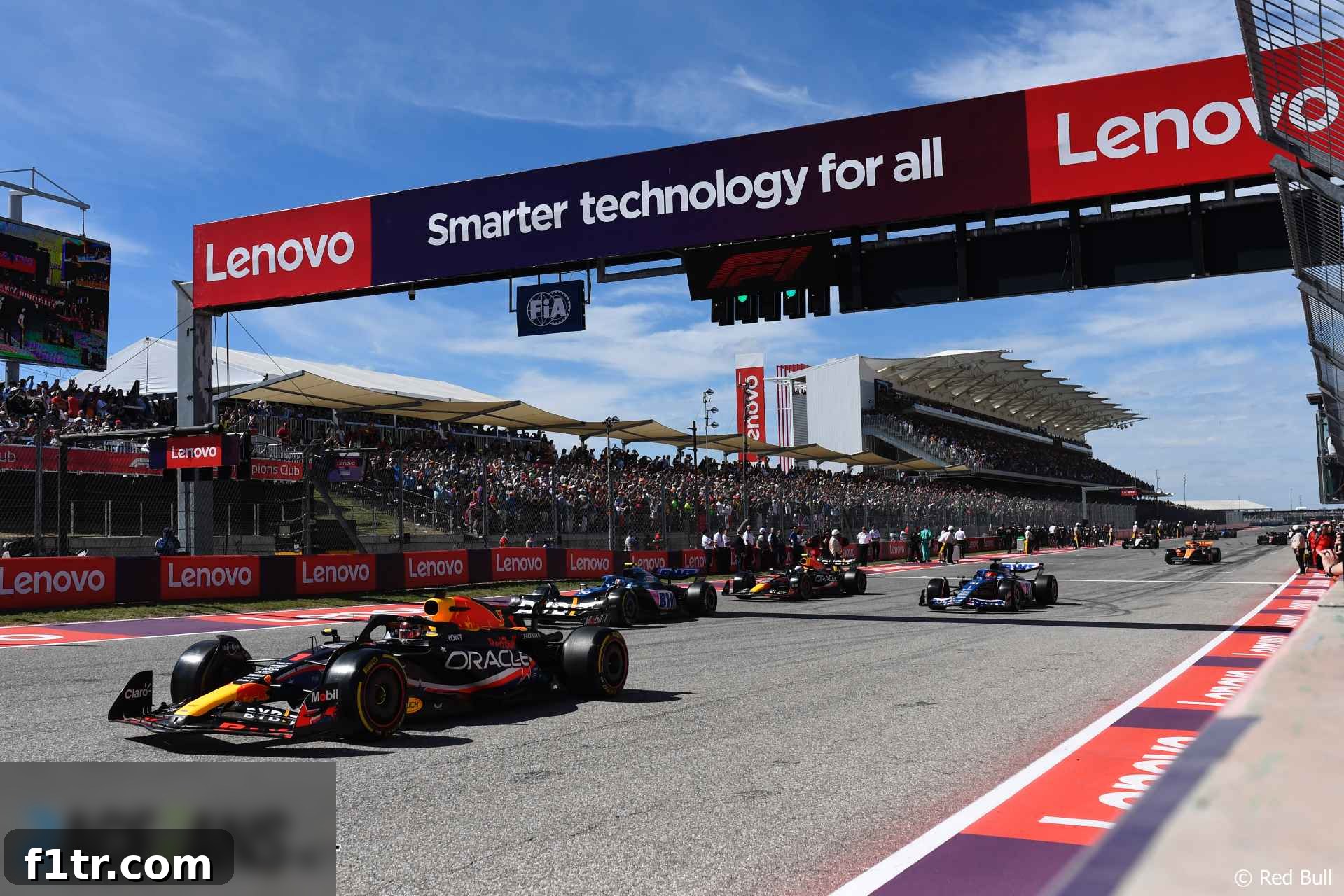
Formula 1’s experimental sprint race format remains a topic of intense debate, and Red Bull team principal Christian Horner has once again called for a critical re-evaluation of its effectiveness. Horner candidly admitted that F1 needs to thoroughly examine how to overcome the format’s inherent shortcomings, particularly its perceived lack of drama and the overly restrictive parc fermé rules that have plagued teams and drivers.
Advert | Become a Supporter & go ad-free
Since its introduction in 2021, the sprint race concept has been an evolving experiment, with F1 revising its structure annually in an ongoing effort to address widespread criticism. Despite these continuous adjustments, Horner’s recent comments underscore the persistent challenges. He highlighted that these shorter races frequently fail to deliver the thrilling spectacle expected by fans and impose stringent limitations on how teams can modify their cars, a factor that notoriously led to significant problems at the recent United States Grand Prix.
The Parc Fermé Conundrum: A “Joke” for Engineers
“For me, parc ferme is a bit of a joke,” Horner stated unequivocally, echoing a sentiment widely shared within the paddock. He elaborated on the frustration it creates: “You have one session to set your car up and then the engineers may as well go home at that point.” This rigid regulation dictates that once cars leave the garage for the initial qualifying session of a sprint weekend, they are effectively ‘locked in’ for both the sprint and the main Grand Prix, with only minor adjustments permitted. This severely limits a team’s ability to react to changing track conditions, driver feedback, or unforeseen setup issues.
Horner firmly believes that this restrictive parc fermé rule warrants an urgent review. He posited that it was a significant “contributing factor to the ride height issues” that saw several teams, most notably Mercedes and Ferrari, fall foul of technical regulations at the United States Grand Prix in Austin. In that incident, post-race scrutineering found that the plank wear on certain cars exceeded the permitted limits, resulting in disqualifications. Critics argue that with only one practice session before parc fermé kicks in, teams have insufficient time to fine-tune setups, especially on bumpy circuits, making them vulnerable to such technical breaches.
Beyond the technical headaches, Horner also pointed to the fundamental issue of engagement. “Effectively it’s just a long run on a sprint race and there’s no real jeopardy to it. There’s no real incentive behind it,” he lamented. This critical assessment highlights a core complaint: without genuine risk or compelling strategic opportunities, sprints often devolve into processions rather than high-stakes contests, failing to captivate the audience.
Max Verstappen: A Champion Yet a Staunch Critic
Ironically, Red Bull’s star driver, Max Verstappen, has been the most dominant figure in the sprint race era. He has won more sprint races than any other driver and even clinched his third drivers’ championship during a sprint race in Qatar. Yet, despite his unparalleled success, Verstappen remains one of the format’s most vocal and consistent critics. He has repeatedly called for Formula 1 to abandon the concept altogether, expressing a preference for the traditional Grand Prix weekend structure that emphasizes strategic depth, longer race distances, and a more organic build-up to the main event.
Verstappen’s stance underscores a fundamental disconnect: while the sprints might occasionally produce dramatic moments, they often fail to deliver the pure racing satisfaction that elite drivers crave. For many, the thrill of F1 lies in the intricate balance of strategy, tire management, and the relentless pursuit over a full Grand Prix distance, elements that are often diluted or absent in the shorter sprint format.
Horner’s Vision for Improvement: Satisfying All Stakeholders
Despite his candid criticisms, Horner is not advocating for the complete abolition of sprint races. Instead, he maintains a belief that their shortcomings can be adequately addressed through thoughtful modification. “I think it just needs to be looked at and modified to say how can it be improved? How can we make this better? How can it be more satisfying for the drivers?” he pondered.
His vision for improvement extends beyond just technical regulations. Horner emphasized a holistic approach, asserting that if the drivers find the format enjoyable and rewarding, and the teams feel it serves a valuable purpose, then the fans will ultimately benefit. This interconnectedness highlights the importance of aligning the interests of all key stakeholders: the athletes, the engineers, and the global fanbase.
Crucially, Horner stressed the paramount importance of fan feedback in this process. “But I think we should really go to the fans and get their feedback, as well of what is it that they want?” he insisted. Engaging directly with the fanbase, understanding their preferences, and adapting the format based on their desires is essential for ensuring the long-term success and popularity of any sporting innovation.
The Evolution of the Sprint Format: A Continuous Experiment
Formula 1’s commitment to the sprint concept has been evident in its continuous evolution. Following its inaugural season with three sprint races in 2021, the series opted to double the number to six events for the 2023 season. This expansion also brought a significant structural change: for the first time, sprint races became standalone events. This meant they no longer determined the starting grid for the Grand Prix, a major shift from previous iterations. Instead, a dedicated “Sprint Shootout” qualifying session was introduced on Saturday morning to set the grid for the sprint race, completely separating it from the main event’s qualifying.
This strategic move was intended to inject more excitement into Saturday’s proceedings without compromising the integrity or strategic depth of the Sunday Grand Prix. However, even with these adjustments, the format has continued to draw mixed reactions, reinforcing the need for further refinement. With only one sprint race remaining in Brazil next week before the season concludes, Horner reiterated that F1 must meticulously analyze the format’s popularity and overall impact once all the data is collected.
A Call for Honest Assessment and Future Refinement
“It’d be interesting to look at the data at the end of the year of how popular have the sprint races been because, at the end of the day, it’s all about the fans and the reason we do sprint races is to try and provide more entertainment to create a more attractive event,” Horner explained. This data-driven approach is vital for F1 to make informed decisions moving forward. Metrics such as viewership figures, social media engagement, fan sentiment polls, and attendance at sprint weekends will be crucial in painting a comprehensive picture of the format’s success.
Despite the ongoing challenges, Horner remains optimistic about the potential for improvement. “I think that it’s still a very new concept. And I think we have to be honest with ourselves and like I say we can always improve the car, I think we can always improve the format,” he mused, drawing a compelling analogy between car development and format evolution. Just as teams endlessly strive to extract more performance from their machinery, F1 should apply the same rigorous pursuit of excellence to its racing product.
He concluded with a powerful call for transparency and an open mind: “We need to look openly and honestly at the end of the year, when we’ve got all the samples of the sprint races and say ‘okay, what can we do better, what can be learned, and how can we improve the spectacle and the event and I think there’s many things that could be done to improve it.” This sentiment reflects a crucial understanding: F1 is a dynamic sport, and its formats must adapt to continue captivating a global audience while preserving the core essence of Grand Prix racing.
Bringing the F1 news from the source
RaceFans strives to bring its readers news directly from the key players in Formula 1. We are able to do this thanks in part to the generous backing of our RaceFans Supporters.
By contributing £1 per month or £12 per year (or the equivalent in other currencies) you can help cover the costs involved in producing original journalism: Travelling, writing, creating, hosting, contacting and developing.
We have been proudly supported by our readers for over 10 years. If you enjoy our independent coverage, please consider becoming a RaceFans Supporter today. As a bonus, all our Supporters can also browse the site ad-free. Sign up or find out more via the links below:
- Become a RaceFans Supporter
- RaceFans Supporter FAQ
Advert | Become a RaceFans supporter andgo ad-free
2023 Mexican Grand Prix
- ‘I’m so s*** in qualifying’: Norris berates himself despite pole-winning lap
- Ferrari reaping the benefits of having F1’s most closely-matched team mates
- Norris had “no chance” to beat Verstappen in Mexico even without Q1 exit
- Transcript: How Ricciardo’s race went awry soon after he was told to “bring it home”
- Mercedes see “very encouraging signs” from Austin floor update
Browse all 2023 Mexican Grand Prix articles