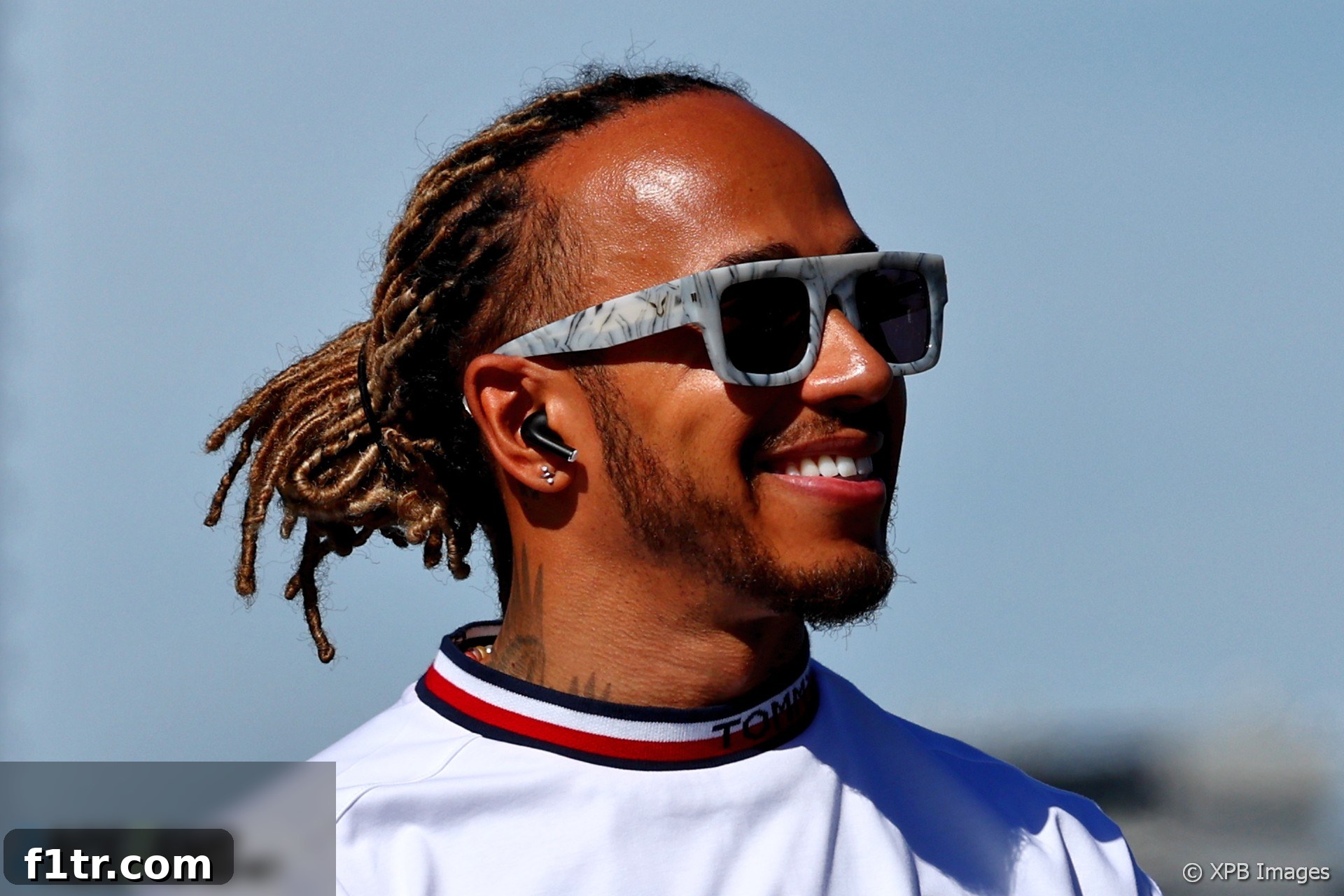
Seven-time Formula 1 world champion Lewis Hamilton has firmly stated his inability and unwillingness to comply with the FIA’s recent mandate requiring drivers to remove all body piercings. This declaration has ignited a significant discussion within the paddock and among fans, highlighting the intricate balance between driver safety, personal freedoms, and the strict enforcement of sporting regulations.
The directive was re-emphasised during the 2022 Australian Grand Prix weekend by the new FIA Formula 1 race director, Niels Wittich. Wittich issued a formal reminder to all competitors, reiterating that the International Sporting Code (ISC) explicitly prohibits drivers from wearing jewellery, including body piercings, during competition. This specific article of the ISC has been in place for many years but has seen varying degrees of enforcement over time, making Wittich’s renewed focus particularly notable.
In his communication, Wittich specified the exact nature of the prohibition: “The wearing of jewellery in the form of body piercing or metal neck chains is prohibited during the competition and may therefore be checked before the start.” This clear statement underscores the FIA’s intention to rigorously enforce a rule primarily rooted in safety concerns. The governing body views jewellery as a potential hazard in the event of an accident, where metal objects could snag, cause further injury, or even interfere with critical medical procedures or emergency extraction.
Despite the FIA’s clear stance on driver safety, Hamilton expressed his strong disagreement, asserting that some of his earrings are permanently fixed and cannot be easily removed. “I don’t have any plans on removing them,” Hamilton declared, making his position unequivocal. The Mercedes driver, who began getting piercings after his F1 debut in 2007, views this as a matter of personal identity and expression. “I feel there are personal things, you should be able to be who you are.”
Elaborating on the practical challenges, Hamilton explained the difficulty in complying with the directive. “They’re stuff that I can’t move. I literally can’t even take these out – these ones in my right ear – they’re literally welded in, so I’d have to get them chopped off or something like that. So they’ll be staying.” This statement not only highlights the physical impossibility for him to adhere to the rule without drastic measures but also reinforces his commitment to his personal style, even if it puts him at odds with the sport’s governing body.
The FIA’s regulations concerning jewellery are not arbitrary; they are an integral part of the broader safety equipment guidelines designed to protect drivers from a myriad of risks inherent in high-speed motorsport. Over the decades, Formula 1 has continually evolved its safety standards, learning from past incidents and implementing stringent measures to mitigate dangers. From the introduction of mandatory helmets and fireproof overalls to more recent innovations like the HANS device and the Halo cockpit protection system, every safety protocol aims to create the safest possible environment for competitors. In this context, the ban on jewellery is intended to prevent injuries such as burns if metal heats up in a fire, potential lacerations from sharp edges during an impact, or complications during medical interventions where piercings might obstruct imaging or surgical procedures.
This re-enforcement of the jewellery ban follows a broader pattern of the FIA tightening its grip on driver conduct and safety compliance. Just prior to the discussion on piercings, drivers were also reminded to strictly comply with the sport’s regulations on fireproof underwear. This seemingly minor detail is, in fact, crucial for driver safety. Fireproof underwear, made from Nomex or similar flame-retardant materials, forms a vital layer of protection against fire, giving drivers precious extra seconds to escape a burning vehicle. The use of non-compliant materials, such as cotton or synthetic fabrics, could significantly compromise this protection, escalating the risk of severe burns in an accident. The concurrent reminders serve as a clear indication that the FIA is adopting a more stringent approach to ensure every aspect of driver safety equipment adheres to the established standards.
The current standoff with Hamilton raises several intriguing questions about the limits of regulation versus individual autonomy in elite sports. While safety is paramount, athletes often seek ways to express their individuality and personal brand. Hamilton, known for his unique fashion sense and outspoken personality, embodies this struggle. The decision to maintain his piercings, even when faced with potential penalties, could be seen as a statement on personal freedom within a sport that demands rigorous conformity in many other areas. This conflict between adherence to rules and the desire for self-expression is not unique to Formula 1 but resonates across various high-stakes professional sports.
What potential repercussions could Hamilton face? The International Sporting Code allows for various penalties for non-compliance, ranging from fines to grid penalties or even disqualification, although such severe measures are typically reserved for more egregious safety violations or sporting infringements. Given Hamilton’s high profile and the public nature of his defiance, the FIA will need to carefully consider its next steps. An aggressive enforcement could lead to a protracted battle, drawing unwanted negative attention to the sport. Conversely, a relaxed approach might undermine the authority of the race director and the integrity of the safety regulations. This situation could set a precedent for how the FIA handles similar matters of personal compliance in the future.
The broader implications extend beyond just Lewis Hamilton. How will other drivers react? Will some feel compelled to remove their jewellery, while others might be emboldened to challenge other regulations? The FIA’s commitment to driver safety is unwavering, a principle that has dramatically improved the sport over decades. However, the interpretation and enforcement of these rules, especially when they touch upon personal choices, can sometimes lead to unexpected friction. This particular debate serves as a microcosm of the larger tension between the institutional demands for order and safety, and the human desire for identity and freedom, playing out on the global stage of Formula 1.
Don’t miss anything new from RaceFans
Follow RaceFans on social media to stay updated with the latest news, analysis, and insights from the world of Formula 1:
- Join RaceFans on Facebook
- Follow RaceFans on Twitter
- Get daily email updates from RaceFans
2022 Australian Grand Prix Insights
Delve deeper into the events and discussions surrounding the 2022 Australian Grand Prix:
- Aston Martin’s porpoising “does not allow us to exploit the progress the guys have made”
- Wolff puts Mercedes’ odds of championship victory at “two to eight”
- FIA responds to Verstappen’s criticism of Safety Car performance
- “So this is the end of our race, I guess?” How Alonso’s luckless Australian GP unfolded
- Two-degree temperature rise led to Hamilton’s “difficult position” radio message
Browse all 2022 Australian Grand Prix articles