While Lewis Hamilton continues his relentless pursuit of Formula 1’s most significant records, establishing a new benchmark for on-track achievement, Kimi Raikkonen quietly added another impressive milestone to his extraordinary career, cementing his status as a titan of longevity. The Spanish Grand Prix served as a compelling chapter in the 2020 F1 season, offering a rich tapestry of dominant performances, enduring careers, and unexpected championship dramas that continue to unfold.
Advert | Become a Supporter & go ad-free
Lewis Hamilton’s Relentless Pursuit of Formula 1 History
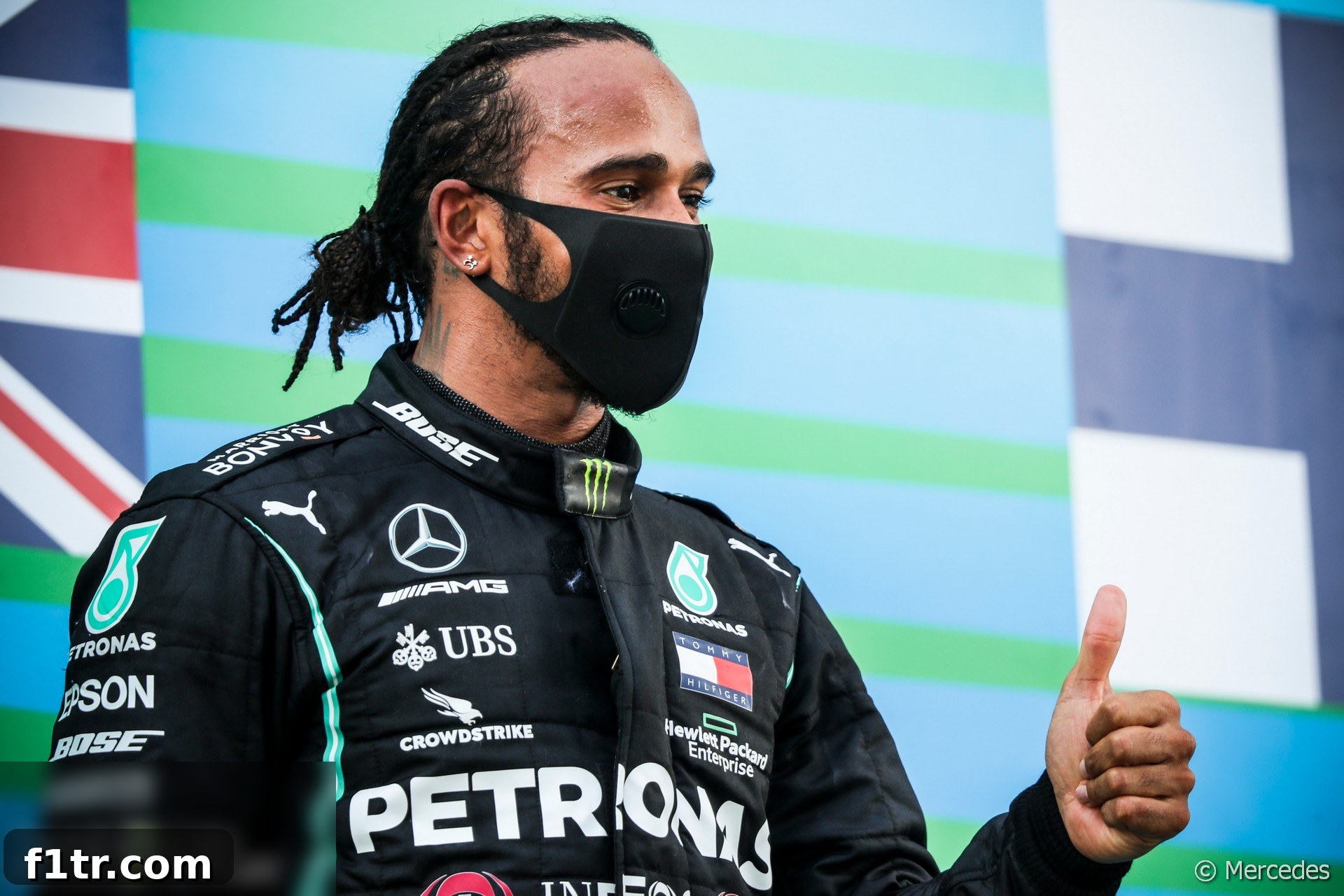
The Spanish Grand Prix was yet another demonstration of Lewis Hamilton’s unparalleled dominance in Formula 1. The six-time world champion came remarkably close to achieving a coveted ‘Grand Slam’ – securing pole position, leading every lap, achieving the fastest lap, and winning the race. He successfully clinched his 92nd career pole position and an astonishing 88th victory, maintaining a commanding lead from start to finish.
The only piece of the Grand Slam puzzle that eluded Hamilton was the fastest lap, which was snatched by his Mercedes teammate Valtteri Bottas. Bottas, strategizing a late pit stop for fresh tyres, unleashed a blistering final lap in the dying moments of the race, claiming his 14th career fastest lap. This minor detail underscored the competitive spirit even within the same team, highlighting Bottas’s determination to leave his mark despite a challenging race weekend.
Hamilton’s triumph in Spain brought him even closer to surpassing some of the most iconic records in Formula 1 history. He is now within a mere three victories of Michael Schumacher’s all-time record of 91 Grand Prix wins – a feat that many once deemed insurmountable. The prospect of Hamilton not only matching but ultimately surpassing this legendary benchmark is a narrative that has captivated the motorsport world, hinting at a potential redefinition of the sport’s greatest drivers.
Furthermore, Hamilton’s 156th career podium finish in Spain established a brand new record, moving him ahead of Michael Schumacher’s previous high of 155. This incredible consistency across more than a decade at the pinnacle of motorsport speaks volumes about his sustained excellence, adaptability, and the enduring strength of the Mercedes-AMG Petronas F1 Team. It is a testament to a career built on a relentless drive for perfection and an ability to perform at the highest level season after season.
Beyond his individual accolades, Hamilton’s pole position also celebrated a significant collective achievement: it marked the 200th pole position for a Mercedes-powered engine in Formula 1. This statistic places Mercedes among an elite group of engine manufacturers with a rich heritage in the sport, trailing only Renault (who have 213 pole positions, plus three under the TAG Heuer branding) and Ferrari, who hold the all-time record with 229 pole positions. This milestone underlines the formidable engineering prowess that has underpinned Mercedes’ era of dominance.
Max Verstappen continues to emerge as the most consistent and credible challenger to Hamilton’s ambition of securing a record-equalling seventh World Championship title this season. The young Dutch driver and Hamilton have shared the podium for an impressive five consecutive races, a clear indicator of their individual brilliance and the competitive gap between their teams and the rest of the grid. Verstappen’s ability to consistently extract maximum performance from his Red Bull Racing machine, even when it isn’t the fastest car on track, positions him as the primary antagonist in what promises to be a historic championship battle.
Kimi Raikkonen: The ‘Iceman’s’ Unrivaled Longevity in F1
While Lewis Hamilton is busy rewriting the records for speed and victories, Kimi Raikkonen continues to set his own unique set of milestones, solidifying his reputation as Formula 1’s ‘Iceman’ and a symbol of extraordinary longevity. The veteran Finnish driver is rapidly approaching another monumental achievement, poised to become the most experienced driver in terms of starts at the upcoming Eifel Grand Prix. This incredible journey reflects a career spanning two decades, marked by a world championship title, countless memorable moments, and an unwavering commitment to the sport.
Even before his potential Eifel Grand Prix record, Raikkonen has already quietly achieved other significant longevity milestones. In Spain, he surpassed Fernando Alonso’s record for the total distance covered in Formula 1 races. As the chequered flag waved, Raikkonen’s career mileage reached an astounding 84,013 kilometres. To put this into perspective, this distance is equivalent to driving around the Earth’s circumference more than twice. This monumental achievement showcases not just his enduring presence, but the sheer volume of competitive racing he has undertaken at the sport’s most demanding level.
Earlier in the 2020 season, Raikkonen also surpassed Michael Schumacher’s record for the total number of laps completed in Formula 1. These records are not about raw pace or individual race wins; instead, they are a testament to incredible endurance, remarkable consistency, and a profound love for the sport that has kept him competing at the pinnacle of motorsport for an extended period. Kimi Raikkonen’s career is a masterclass in resilience, a unique narrative within F1 history that truly celebrates the spirit of an enduring racer.
Ferrari’s Deepening Crisis: A Season of Unprecedented Struggles
The most pressing question reverberating through the Formula 1 paddock is undoubtedly: just how dire will the 2020 season turn out for Ferrari? The revered Scuderia, a cornerstone of F1 history, has not finished outside the top four in the Constructors’ Championship since a notably challenging 1981 season. Yet, after the Spanish Grand Prix, Ferrari found itself in an alarming position, slipping from third place in the points standings down to a disheartening fifth. This downward trajectory signals what could become one of their most difficult seasons in nearly four decades, prompting widespread concern among their loyal fanbase and within the sport.
Ferrari’s drop in the standings was largely influenced by the stellar performance of Racing Point in Spain, who secured strong fourth and fifth-place finishes. These crucial points propelled Racing Point up to third in the Constructors’ Championship, a remarkable achievement that came despite an unprecedented 15-point deduction handed down earlier in the year due to the controversial brake duct design saga. The “Pink Mercedes” has undeniably lived up to its nickname, demonstrating a competitive pace that has significantly reshaped the traditional pecking order in the midfield and beyond.
After six rounds of the intensely competitive 2020 season, the Constructors’ Championship table paints a stark and challenging picture for Ferrari. Racing Point currently holds 63 points (after their deduction from an initial 78), McLaren sits closely behind with 62 points, and Ferrari trails with a precarious 61 points. Renault, who endured their first non-scoring weekend of the season, are a more distant sixth with 36 points. The tight margins between these teams highlight the fierce battle for valuable championship positions, a battle in which Ferrari finds itself uncharacteristically struggling to gain an advantage.
The controversy surrounding Racing Point’s car design, particularly their brake ducts, continues to be a contentious topic within the sport. Renault has been vocal in its protests against the initial ruling, actively advocating for a harsher penalty and raising serious concerns over intellectual property rights and fair competition. Significantly, Ferrari has also submitted an appeal against the decision, signaling their profound dissatisfaction and underscoring the widespread implications of the ruling across the paddock. This ongoing dispute adds another layer of intrigue and tension to the Constructors’ Championship, with potential ramifications that could further alter the standings and influence future design philosophies across the grid.
Ferrari’s current predicament is a multi-faceted challenge, stemming from a combination of factors including a notable deficit in engine performance, inconsistencies in aerodynamic efficiency, and strategic missteps during races. The once-dominant powerhouse of Formula 1 is now grappling with fundamental issues that demand a significant overhaul and a rapid turnaround. Fans and pundits alike are keenly observing how quickly the Scuderia can address these challenges, regain its competitive edge, and restore its standing, especially amidst an increasingly competitive midfield that is leaving no room for error.
The 2020 Formula 1 season, while prominently featuring Lewis Hamilton and Mercedes’ relentless dominance, is equally defined by these contrasting narratives: the pursuit of historic records, the quiet endurance of a veteran, and the unexpected struggles of a legendary team. The Spanish Grand Prix served as a compelling snapshot of these intertwining stories, providing abundant talking points and setting a dramatic stage for the remainder of the championship battle.
2020 Spanish Grand Prix Insights and Analysis
The Spanish Grand Prix delivered a wealth of compelling stories, from individual brilliance and strategic triumphs to team struggles and the ever-present controversies that shape the world of Formula 1. Below, you’ll find a curated selection of related discussions and in-depth articles that delve deeper into the key events and outcomes of the weekend at Circuit de Catalunya:
- 2020 Spanish Grand Prix Star Performers: An analysis of who truly excelled and who faced challenges at Circuit de Catalunya.
- Hamilton’s record podium, Raikkonen’s record mileage: A closer look at the key statistics and personal milestones achieved.
- F1 teams welcome ban on testing at new tracks for 2020: Understanding how new regulations are influencing the championship and team preparations.
- Perez felt fit enough to return earlier – Szafnauer: Insights into driver health, recovery, and team management strategies.
- Bottas describes his season as “pretty bad” since the first race: A candid assessment and reflections from Valtteri Bottas on his performance so far.
Browse all 2020 Spanish Grand Prix articles and comprehensive analysis.
Advert | Become a RaceFans supporter andgo ad-free