Lewis Hamilton’s Monaco Grand Prix Struggles: A Deep Dive into Mercedes’ Setup Missteps
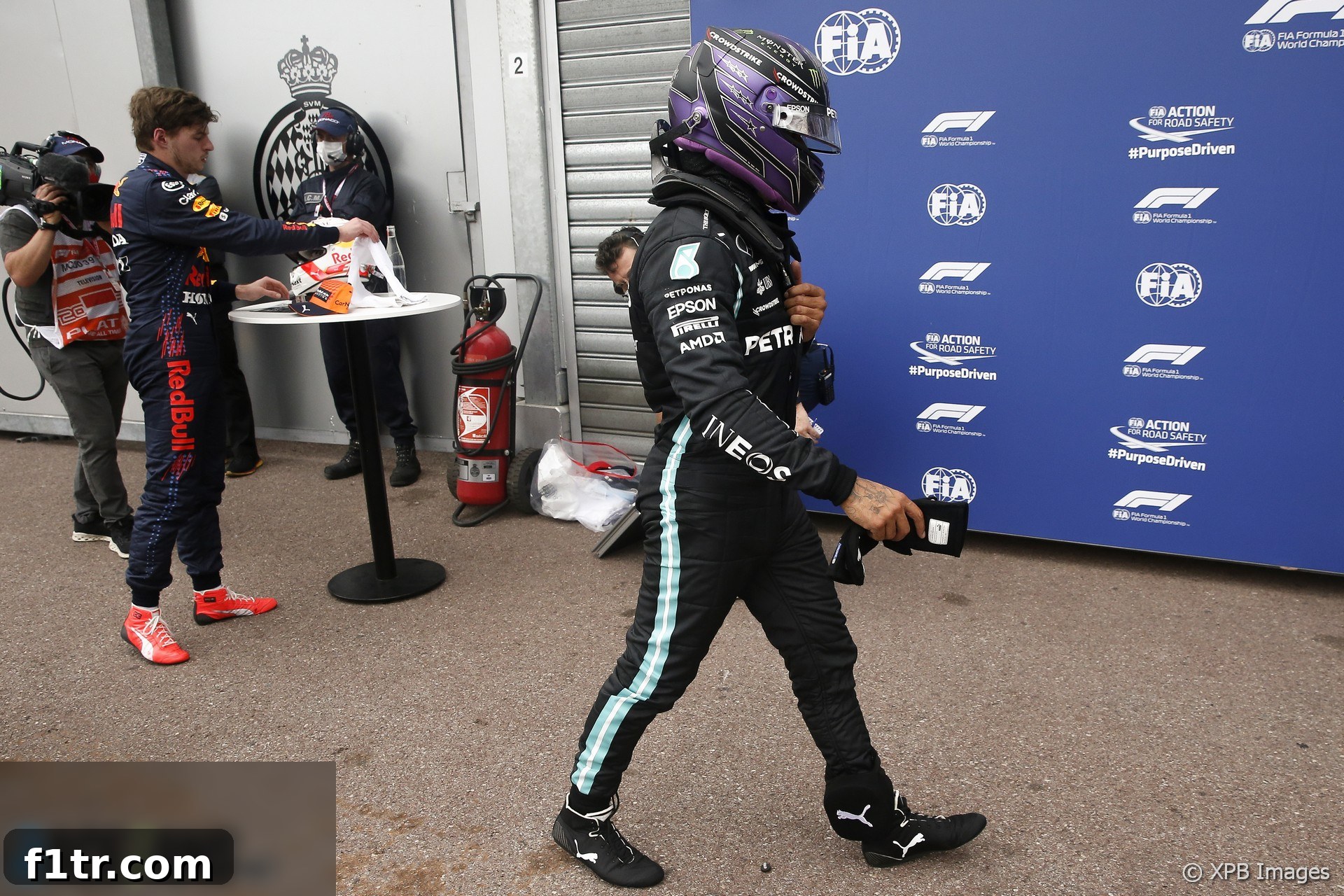
Lewis Hamilton, the reigning Formula 1 world champion, openly expressed his significant frustration and called for “tough discussions” with his Mercedes engineers following a perplexing and ultimately disappointing qualifying session at the Monaco Grand Prix. The British driver found himself starting tomorrow’s iconic race from an unfamiliar seventh position on the grid, a stark contrast to the team’s usual front-running dominance and a major blow given the notoriously difficult overtaking opportunities in Monaco.
The Unexpected Drop in Performance
The Mercedes-AMG Petronas F1 Team had shown promising pace during Thursday’s practice sessions, suggesting they might be competitive around the challenging street circuit. However, a noticeable decline in performance emerged by Saturday, leaving Hamilton and the team scratching their heads. Hamilton pinpointed a critical factor: the track’s environmental conditions. “It wasn’t feeling bad on Thursday,” Hamilton explained, reflecting on the initial optimism. “I think we had slightly better pace, we were closer to the front on Thursday. But [we’ve] not gone in the right direction over the last day, and then today was the result of that.”
A significant contributing factor, according to Hamilton, was the change in weather. “Today was a question of tyres,” he added. “The tyres just stopped working so you’re just sliding around.” The lower temperatures on Saturday, compared to Thursday’s warmer conditions, proved to be a critical challenge for the Mercedes W12, preventing its tyres from reaching their optimal operating window. This inability to generate and maintain tyre temperature effectively meant a severe loss of grip and overall car performance, turning a potential pole position fight into a midfield battle.
The Setup Conundrum: A Completely Wrong Direction
The team’s struggles were not merely down to external factors; Hamilton also highlighted internal decisions regarding the car’s setup. Following a disastrous Free Practice 3 session, where the car felt significantly off-pace, Mercedes engineers made a series of drastic changes in an attempt to rectify the issues before qualifying. However, these adjustments, intended to improve the car’s balance and grip, unfortunately backfired. Hamilton’s frustration was palpable as he described the team’s strategic misstep:
“There was lots of changes that we did to the car after FP3 because FP3 was a disaster. And that’s from the work that’s been done over last day or so. It’s a completely wrong direction, [we] completely missed the ball.” He further elaborated on the team’s desperate attempts to correct course, stating, “We then made some changes to try and take steps backwards and move the car to a different place. And the car was worse than ever. So I think we really lost our way from Thursday.” This candid admission underscores the severity of the setup problems and the difficulty the team faced in understanding and adapting to the unique demands of the Monaco circuit in cooler conditions.
Rivals Capitalize on Mercedes’ Woes
While Mercedes grappled with their setup and tyre issues, their rivals seemed to thrive. Both Ferrari drivers, Carlos Sainz and Charles Leclerc, demonstrated superior pace and tyre management, with Leclerc securing a sensational pole position. Moreover, Red Bull Racing’s Max Verstappen, a direct championship rival, comfortably out-qualified Hamilton, as did McLaren’s Lando Norris and AlphaTauri’s Pierre Gasly. This diverse group of competitors ahead of Hamilton painted a clear picture of Mercedes’ struggles across the field.
Hamilton acknowledged the competitive advantage of other teams: “The Ferraris obviously and Red Bulls definitely have better capability in getting their tyres working. And we as a team didn’t do a good enough job in providing us with opportunity in order to do the same.” This observation highlights a fundamental difference in how different car philosophies and setups respond to varying track conditions, particularly concerning tyre performance. The inability to switch on the tyres effectively cost Mercedes crucial tenths, which are magnified on a circuit like Monaco where every millisecond counts.
The frustration for Hamilton, a driver renowned for his meticulous preparation and unparalleled talent, was understandable. Starting seventh at a track where overtaking is notoriously difficult means that even a perfect race drive is unlikely to yield a significant points haul. “It’s a little frustrating,” Hamilton admitted, though quickly adding, “I don’t want to be critical of the team, but behind closed doors, I will be. And we’ve got to work harder.”
Accountability and the Path Forward
Hamilton’s call for “tough discussions” is a testament to his commitment to the team’s success and his no-nonsense approach to identifying and solving problems. “There will be some tough discussions that we’re going to have, that I’m going to have with my engineers,” he reiterated. “Tonight, or maybe after the weekend, because there’s things that should have been done and haven’t been done and we’ll learn from it and we’ll come together stronger in the next race.” This statement is not an indictment of blame but a clear demand for accountability and a promise to collectively improve. It underscores the intense pressure within Formula 1, where every decision, no matter how small, can have massive implications.
Mercedes CEO and Team Principal Toto Wolff, known for his pragmatic leadership, was not surprised by Hamilton’s candid criticism. In fact, he sees it as a healthy and necessary part of the team’s culture. “First of all, we want the drivers also to speak their mind, and there was a lot of frustration when you’re finishing P7 in Monaco. Pretty much that’s the end of potential, the end of the of the week,” Wolff commented, understanding the emotional toll of a poor result on a highly competitive driver.
Wolff emphasized the team’s open communication policy: “Then venting your frustration is absolutely okay. Nobody in the team takes this the hard way because we express it the other way around, too. He is the first one to acknowledge and to apologise when things go wrong. He’s done that in public and privately. And as a group, I think that’s one of our big assets that made us champions in the past, that we are able to take it on the chin.” This mutual respect and willingness to accept responsibility, from driver to management, has been a cornerstone of Mercedes’ championship-winning success over the years. It allows for critical self-analysis without dissolving into internal conflict, fostering an environment of continuous improvement.
Learning from Monaco: Adapting for Future Challenges
The team has already begun the process of debriefing and analyzing what went wrong, particularly focusing on the crucial aspect of tyre heating. Wolff revealed that there had been discussions earlier in the week about alternative strategies that were ultimately not pursued. “There was one particular aspect of tyre heating that we discussed this morning and on Thursday night where we could have taken a different direction, a direction that [Hamilton] was interested to pursue that we didn’t. And that was exactly the content of our discussions now, how can we go into an exploration mode when we expect much colder temperatures?” This insight points to a critical learning opportunity for Mercedes: how to better anticipate and adapt to colder track conditions, which can significantly alter tyre performance and thus car balance. The ability to quickly pivot and explore different setup philosophies when faced with unexpected environmental variables will be key to maintaining their competitive edge in future races.
While the Monaco Grand Prix presented an unexpected setback for Lewis Hamilton and the Mercedes F1 team, it also serves as a potent reminder of the intense competition in Formula 1 and the fine margins between success and struggle. The willingness to confront difficulties head-on, engage in candid discussions, and commit to learning from mistakes is precisely what has defined Mercedes’ era of dominance. As the championship battle intensifies, their ability to bounce back from this challenging weekend will be a true test of their collective resilience and innovation.
You can support independent Formula 1 journalism and enjoy an ad-free experience by becoming a RaceFans supporter.
Related Articles: 2021 Monaco Grand Prix Insights
- ‘I need that point, we’ve lost a ton’: Hamilton team radio transcript analysis
- Perez sees Austrian double-header as valuable chance to master his RB16B
- No fun to be had in Monaco Grand Prix even if you’re winning, says Hamilton
- Mercedes explain Bottas’ Monaco pit stop failure
- F1 will consider adopting “intelligent” IndyCar rule in wake of Leclerc crash
Browse all 2021 Monaco Grand Prix articles