Lewis Hamilton on Racing Without Fans: The Empty Feeling at Silverstone and F1’s Return
The iconic roar of the crowd, the fervent cheers, and the palpable energy of thousands of fans are intrinsic to the spectacle of Formula 1 racing, especially at legendary venues like Silverstone. Yet, as the world navigates unprecedented challenges, the prospect of motorsport returning without its passionate audience has become a stark reality. Reigning world champion Lewis Hamilton has voiced his candid reflections on this new era, admitting that the thought of competing at his home Grand Prix without spectators evokes an “empty feeling.” However, he unequivocally believes that even a race behind closed doors is preferable to the complete absence of the British Grand Prix from the 2020 F1 season calendar.
The Unmistakable Power of the F1 Fanbase
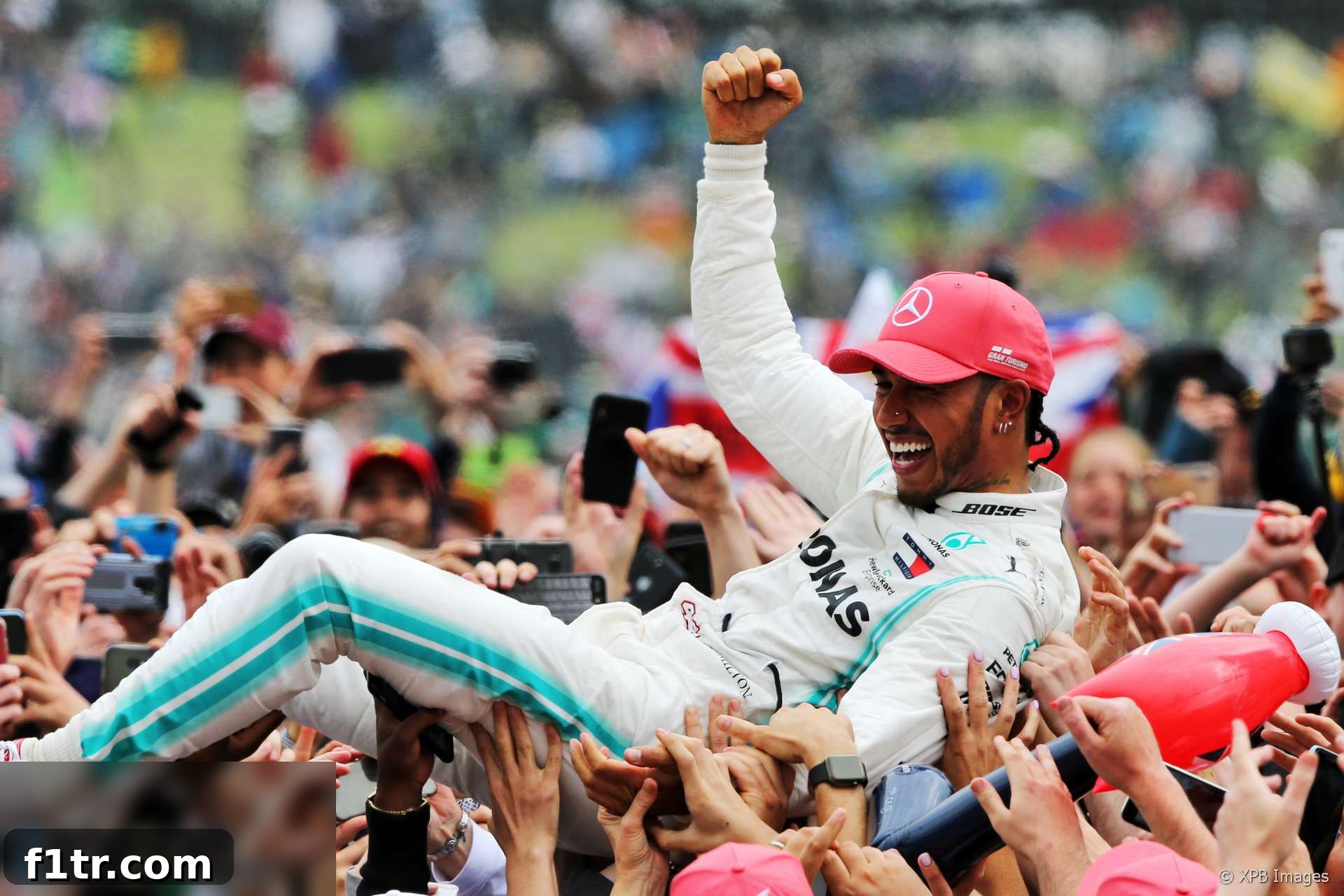
For Hamilton, the presence of fans is not merely an added bonus; it’s a fundamental component that elevates the racing experience. “The fans really make that race,” Hamilton emphasized in a recent video released by Mercedes. This sentiment resonates deeply within the sport, where the sheer volume and enthusiasm of spectators at circuits worldwide contribute significantly to the atmosphere. He drew parallels with other historic tracks, stating, “Around the world, all the races we go to, the more fans there, the more atmosphere you have. That’s why you have places like Silverstone and Monza.” These venues are renowned not just for their challenging layouts and rich history, but for the sea of devoted supporters who transform a race into an unforgettable event. The absence of this vibrant crowd at Silverstone, his home race and a highlight of the Formula 1 calendar, will undoubtedly leave a profound void, making it “very empty.” The emotional connection between driver and fan is a unique aspect of F1, providing an extra surge of adrenaline and motivation that will be noticeably absent in the silent stands.
Beyond the Track: Sport’s Vital Role in Society
Despite the somber reality of empty grandstands, Hamilton also highlighted a profound silver lining emerging from the global lockdown. The outpouring of messages from fans across the globe, expressing their longing for live sports, underscored its vital significance in people’s lives. “What’s great is the messages from people around the world, because they’re not getting to watch sports, it just shows how significant sport is in people’s lives,” he noted. Sport, in its essence, possesses a unique power to unify, thrill, and captivate audiences, providing a much-needed escape and a shared experience, particularly during times of widespread isolation. This collective appreciation for sport’s ability to bring us all together makes the return of Formula 1 even more poignant, even if it must initially proceed without its live audience. It serves as a reminder that beyond the competition, the entertainment value and cultural impact of F1 are immense, offering a beacon of normality and excitement in an otherwise uncertain world.
A Race Day Unlike Any Other: The “Test Day” Analogy
Envisioning a Grand Prix weekend devoid of spectators, Hamilton anticipates an atmosphere starkly different from the electrifying events fans are accustomed to. He likened the potential experience to a pre-season test session – a comparison that might initially seem benign, but which he quickly qualified as potentially “even worse than a test day in a sense.” At a typical test day, such as those held at Barcelona, a modest number of devoted fans still gather, adding a faint hum of activity to the circuit. However, a Grand Prix event, designed for tens of thousands, with “nobody in the crowd” and only “empty seats as you’re driving down,” presents a far more desolate picture. For both drivers and broadcasters, this will be an unprecedented adjustment, shifting the focus entirely to the pure sporting contest, stripped of its usual pageantry. “I don’t know how exciting it’s going to be for people watching on TV but it’s going to be better than nothing,” he conceded, reflecting the widespread desire to see racing resume, irrespective of the altered circumstances. This ‘new normal’ will challenge F1 to find innovative ways to engage its global audience and recreate a sense of the excitement typically generated by the live crowds.
The Australian GP: A Shock to the System and a Lingering Disappointment
The 2020 F1 season was initially slated to commence almost two months prior to Hamilton’s remarks, with the Australian Grand Prix in Melbourne. The days leading up to its eventual cancellation were fraught with uncertainty and mounting tension, a scene replayed across various major sports events globally. Hamilton himself had been an outspoken critic of F1’s initial attempts to proceed with the race amidst rising global health concerns, advocating for the safety of all involved. This public stance was followed by the abrupt decision to call off the event just hours before free practice was scheduled to begin, a moment Hamilton described as “a shock to the system.”
He recounted the surreal experience: “Obviously on that Thursday, I commented my opinion on whether or not we should have been there. Then to wake up the next day, honestly with excitement that I’m going to be getting in the car, and then to hear that we’re not going to be going to the track it was very, very surreal.” The emotional rollercoaster, from the anticipation of getting into his Mercedes to the crushing disappointment of the cancellation, left a lasting impression. “We weren’t quite sure whether it was going to happen. We missed practise one and then practice two went and qualifying went. But I stayed there through the weekend and it was tough.” This unexpected halt to the season, after months of meticulous preparation and anticipation, underscored the unprecedented nature of the crisis facing global sports and the personal toll it took on the athletes.
The Paddock Bubble: F1’s Approach to Social Distancing
As Formula 1 gears up for its eagerly awaited return, significant logistical and health protocols are being meticulously planned to ensure the safety of all participants. A key strategy involves the creation of a “paddock bubble” – a stringent environment designed to minimize contact and prevent the spread of illness. This concept entails severely restricted access to the paddock, with only essential personnel, who will undergo rigorous testing and adhere to strict social distancing measures, being permitted entry. Teams will operate in smaller, self-contained units, limiting interaction between different groups. This innovative approach aims to safeguard drivers, engineers, and support staff, allowing the racing to proceed while mitigating health risks. The implementation of such a bubble is crucial for gaining governmental approval for events and demonstrating F1’s commitment to public health during these challenging times, paving the way for a safe and responsible restart to the 2020 F1 season.
Anticipation Builds for the Austrian Grand Prix and the Unleashing of Potential
With the 2020 F1 season now expected to kick off with the Austrian Grand Prix on July 5th, the excitement among drivers and teams is palpable. Hamilton, in particular, expressed his keen anticipation to finally unleash the full potential of his Mercedes challenger. “I don’t think any of us have had enough time to truly unleash the potential of ours cars so I’m excited to get back in,” he stated, highlighting the truncated pre-season testing period that left many questions unanswered about the pecking order. The forced break, while unprecedented, has only intensified his longing for the thrill of competition. “I really do miss it,” he confessed, a sentiment undoubtedly shared by millions of Formula 1 fans worldwide.
Beyond the competitive drive, Hamilton views this period of lockdown and reflection as a profound personal experience. “This has been almost a blessing on one side because it gives you even more appreciation for the things that you love and the things that you do.” The time away from the relentless F1 schedule has provided a renewed perspective, fueling his passion and commitment. “This has given me more energy and inspiration and determination to keep delivering and keep working with this great team and so I’m excited for the future.” As Formula 1 prepares for its unique return, Hamilton’s enthusiasm encapsulates the collective eagerness for the sport to provide a much-needed spectacle, even if the silence of the crowds will be a constant, poignant reminder of the times we live in. His focus remains firmly on securing another world championship, armed with fresh determination and an even deeper appreciation for the sport he dominates.
More from the 2020 F1 Season
- Grosjean to make F1 test return tomorrow for first time since Bahrain horror crash
- Pictures: Wrecked chassis from Grosjean’s Bahrain fireball crash to go on display
- Bottas vs Rosberg: Hamilton’s Mercedes team mates compared after 78 races each
- F1 revenues fell by $877 million in Covid-struck 2020 season
- Hamilton and Mercedes finally announce new deal for 2021 season
Browse all 2020 F1 season articles