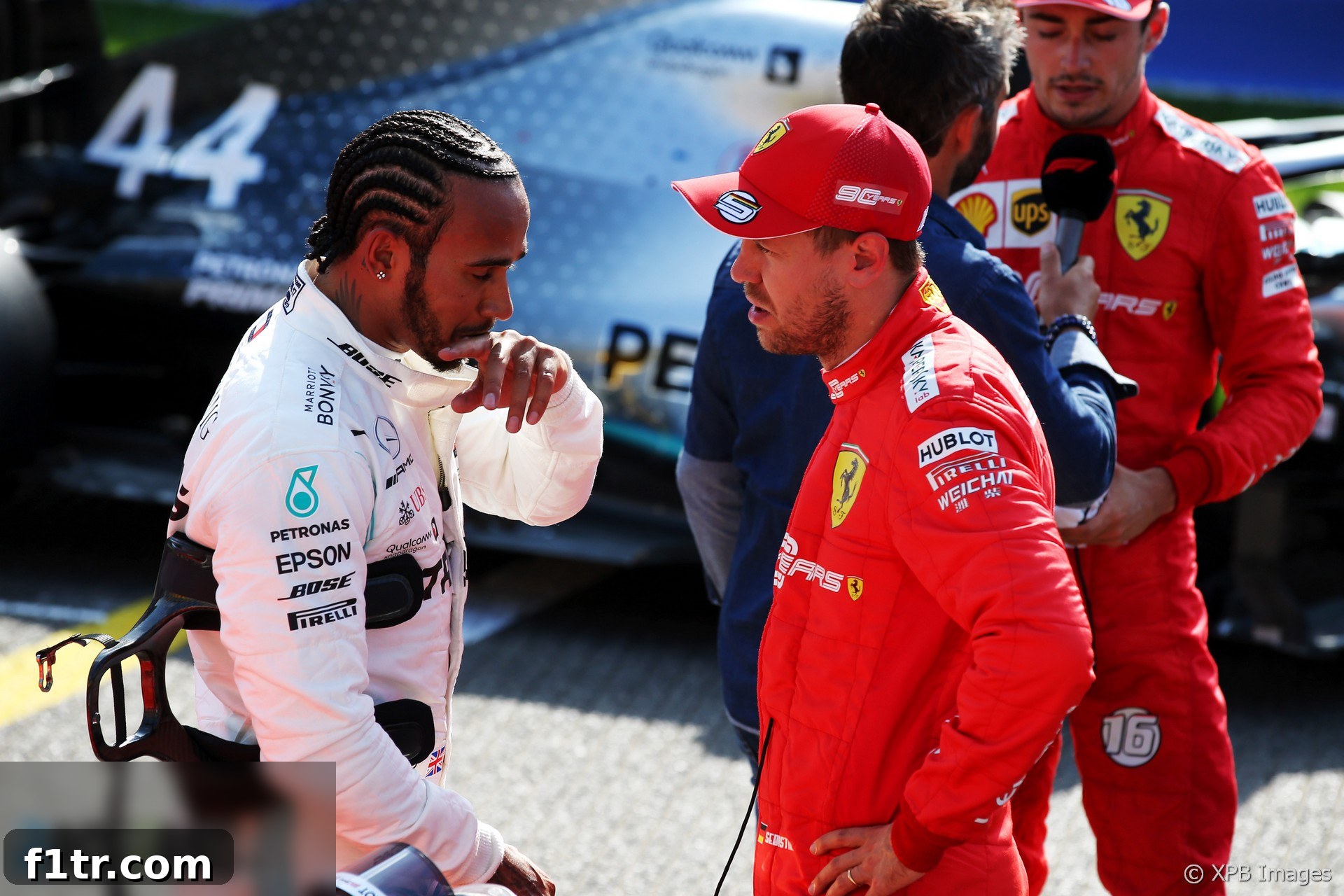
F1 Tyre Woes: Hamilton and Vettel Warn of Dangerous Qualifying Situations Amidst Slipstream Battles
Formula 1 superstars Lewis Hamilton and Sebastian Vettel have jointly raised serious concerns about the escalating risks during qualifying sessions, attributing a string of “dangerous” situations to the delicate balance required to maintain F1 tyres within their optimal operating window. The quest for crucial slipstreams, compounded by unique car characteristics and stringent tyre regulations, is pushing drivers to the limit and creating hazardous scenarios on track.
At various circuits throughout the season, drivers face an intricate challenge: they must meticulously prepare their tyres to achieve the perfect temperature and grip, while simultaneously attempting to position themselves close enough to cars ahead to benefit from a slipstream. This tactical dance often leads to drivers deliberately slowing down significantly on out-laps, creating speed differentials that have resulted in near-misses and compromised qualifying runs. Instances of drivers failing to start their Q3 laps on time or having their attempts spoiled due to these dynamics have become increasingly common.
The Perilous Pursuit of Performance: Tyre Management vs. Slipstream Tactics
The core of the problem lies in the narrow performance window of modern F1 tyres. For tyres to deliver their maximum grip and speed, they must operate within a very specific temperature range. Drivers employ various techniques, such as weaving from side to side and aggressive acceleration/braking, to generate the necessary heat. However, this process becomes complicated by the immense power of the slipstream, particularly with the 2019 generation of cars.
A slipstream, or “tow,” occurs when one car follows closely behind another, reducing aerodynamic drag and allowing the trailing car to achieve higher speeds on straights. This effect is so potent in F1 that securing a good tow can mean the difference between making it into the next qualifying segment or securing a pole position. Consequently, drivers will often slow dramatically on their out-laps, creating large gaps to the car in front, only to then accelerate rapidly into the slipstream of a targeted rival. This creates a concertina effect on track, where some cars are at racing speed while others are crawling, setting the stage for potential accidents.
Hamilton’s Near-Miss and Vettel’s Frustration
The intensity of this problem was vividly illustrated during a recent qualifying session. Lewis Hamilton himself recounted a tense moment involving his own teammate: “Today felt a little bit dangerous at one point because we were going round Turn 15 on the kerb and there was a car coming and I couldn’t move, go on the grass. I was stuck behind Valtteri and I think the next – Hulkenberg or whatever.” This harrowing incident underscores the inherent risks when high-speed laps intersect with cars deliberately trundling at greatly reduced speeds to set up a tow.
Sebastian Vettel echoed Hamilton’s sentiments, describing his Q3 session as “a mess.” He lamented the constant struggle to simultaneously keep his tyres within their optimal temperature window while also attempting to position himself strategically for a slipstream. “Obviously you’re fighting for a tow and so on but you’re also fighting to get into the optimum window, which years ago it wasn’t that critical, whereas now it is,” Vettel explained in the post-qualifying press conference.
The Tyre Dilemma: Overly Critical Operating Windows
Vettel believes the fundamental issue lies with the characteristics of the current tyres, rather than a need for extensive rule changes. He advocated for a shift in tyre philosophy: “What should change, what we should take from this, is that tyre-wise we shouldn’t be so much on the limit.” His argument points to a bygone era when tyre management was less of a knife-edge act, allowing drivers more flexibility without compromising safety or performance. The extreme sensitivity of the tyres means that even minor deviations from the ideal temperature can severely impact grip and lap times, compelling drivers to take greater risks to hit that sweet spot.
The severity of this tyre temperature challenge, and by extension the slipstream dilemma, varies significantly from track to track. Vettel anticipated that this problem would reach its zenith at the upcoming Italian Grand Prix at Monza, a circuit notorious for its long straights where the slipstream effect is incredibly powerful. “You’re fighting for the best spot on the track which will hit the peak next week in Monza for finding the right tow because it does make a difference,” he stated, highlighting the strategic importance and potential dangers of the ‘tow’ at such high-speed venues. He added, “I feel if we had better tyres we could play with probably a bit more speed and so on.”
Pirelli Pressures and the Draggy 2019 Cars: A Double Whammy
Lewis Hamilton further elaborated on the contributing factors, pointing an accusatory finger at Pirelli’s minimum tyre pressure regulations. “Every weekend they put the pressures up so high it’s crazy, which again makes it a little bit harder for us. The tyres are so hard so getting them working,” Hamilton explained. Higher minimum pressures generally mean a stiffer tyre carcass, which makes it more difficult to generate and maintain the necessary heat. This forces drivers to push even harder on their out-laps, exacerbating the slow-moving traffic issue.
Pirelli had, for instance, increased the minimum pressures for rear slick tyres to 21psi after the second practice session at Spa, a decision that while potentially aimed at preventing structural failures, inadvertently added another layer of complexity to tyre management for the drivers.
Adding to this complex mix is the aerodynamic design of the 2019 cars. Hamilton believes that while the intention was to make following other cars easier, the reality has been an increase in aerodynamic drag. “They talk about the front wing [making it] easier to follow, it’s just caused a lot more drag. This is a draggier car this year so the slipstream is even more powerful or the tow is more powerful than we’ve ever experienced,” he asserted. A ‘draggier’ car relies more heavily on slipstreaming to achieve top speeds, making the tactical pursuit of a tow even more critical and, consequently, the associated dangers more pronounced.
The Escalation of Danger and Driver Frustration
The world champion leader articulated his concern that the situation has deteriorated significantly since the previous season. The combination of sensitive tyres, high pressures, and potent slipstreams means drivers are forced into precarious situations. Hamilton vividly described the bizarre and unnerving experience of crawling at extremely low speeds on track while preparing for a lap. “You shouldn’t be able to go five miles an hour or two or whatever we were doing,” he argued, emphasizing that they were “literally going as slow as possible to let people past.”
This necessity to create large gaps and then search for a tow creates a stark contrast in speeds on the circuit. Imagine a scenario where some cars are approaching at over 200 mph while others are barely moving. As Hamilton highlighted, “I can imagine if I was on a lap and I was coming round that everyone was crawling around at five miles per hour it would be a bit of a worry and a bit of a distraction.” Such a discrepancy in speeds is a fundamental safety concern in any motorsport, let alone the pinnacle of racing.
Hamilton recalled a previous instance in Austria where he was the first car out and had to slow down excessively to allow others to pass, all because “the tow is so strong this year with this car.” This repetitive pattern underscores a systemic issue that impacts not just individual drivers’ qualifying performances but the overall safety of the event.
Towards a Safer Future: Addressing the Core Issues
The warnings from two of Formula 1’s most experienced and successful drivers cannot be ignored. The current qualifying dynamics, driven by overly sensitive tyres, high minimum pressures, and the powerful slipstream effect of the 2019 cars, are creating an environment ripe for accidents. While Vettel suggested that the problem does not necessarily require complex rule changes, his call for “better tyres” is a clear message to Pirelli and the sport’s governing bodies.
Addressing this issue will likely involve a multi-faceted approach. Pirelli may need to re-evaluate its tyre philosophy to create compounds with a wider operating window, reducing the criticality of temperature management. Simultaneously, the FIA could explore regulations that mitigate the extreme tactical advantages of slipstreaming during qualifying, perhaps through designated slow zones or revised minimum lap times for out-laps. The safety of the drivers and the integrity of the sport depend on finding a sustainable solution to this growing concern.
2019 F1 Season Insights
- Crying in the Melbourne car park at 2019 grand prix was my career low – Ocon
- McLaren Racing reports reduced £71 million loss in 2019
- Kvyat: Hockenheim podium last year was “my biggest achievement” so far
- How the FIA’s new encrypted fuel flow meter targets Ferrari’s suspected ‘aliasing’ trick
- “He smashed my office door”: 23 must-see moments from ‘Drive to Survive’ season two
Browse all 2019 F1 season articles