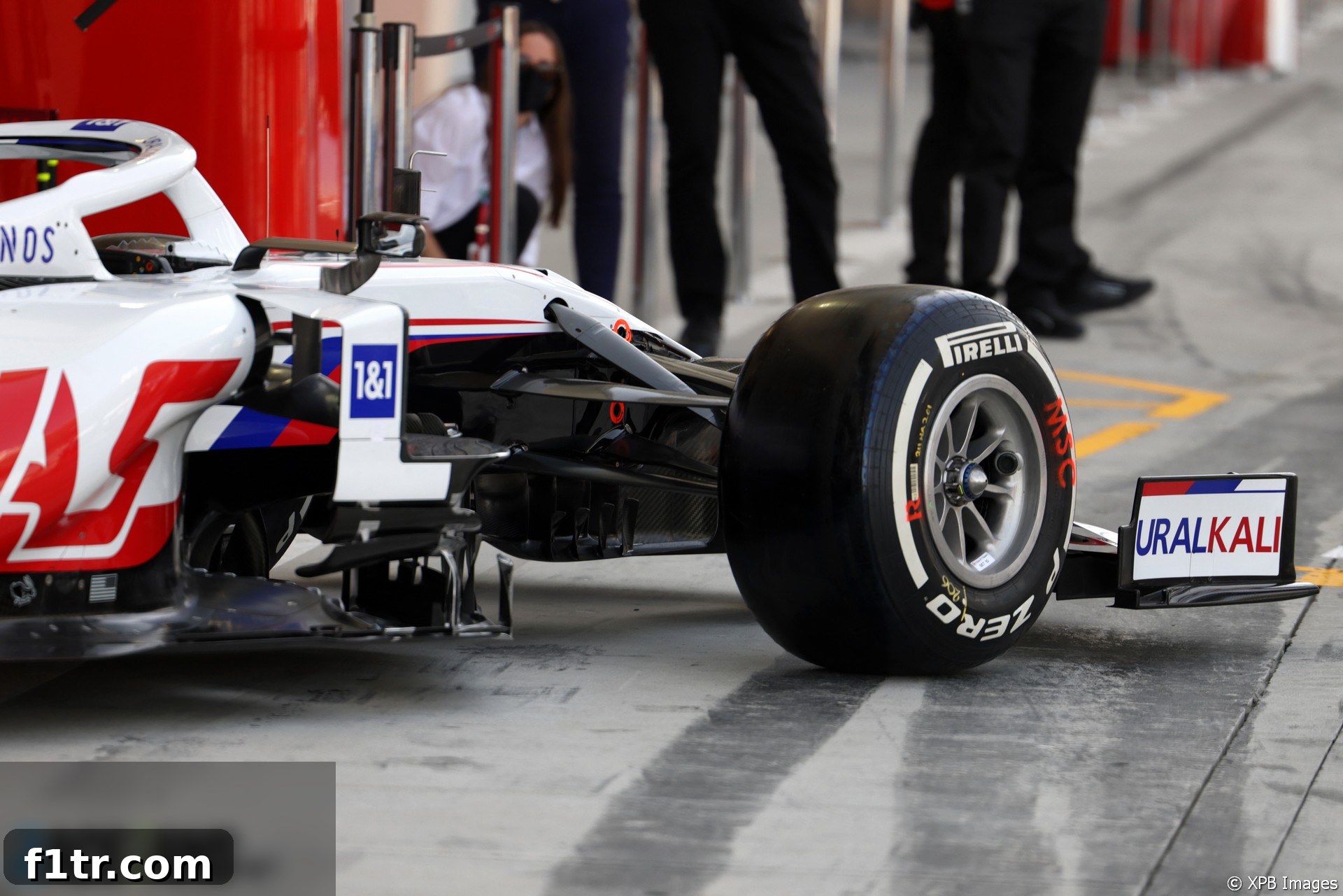
Haas F1’s Strategic Gamble: The VF-21’s Limited Development for a Brighter Future
The Haas Formula 1 team is embarking on a unique and strategically focused journey for the 2021 season. In a move that clearly signals their long-term ambitions, the American outfit has confirmed that its VF-21 challenger will receive its final significant update package at the Emilia-Romagna Grand Prix, the second round of the championship, held at Imola. This decisive approach underscores the team’s commitment to prioritizing the radical new technical regulations set to revolutionize Formula 1 in 2022, effectively putting a cap on the current car’s development cycle early in the season.
Advert | Become a Supporter & go ad-free
The Ferrari-powered VF-21 is, by design, an iteration rather than a revolution. It represents a moderately upgraded version of its predecessor, last year’s VF-20. While essential modifications have been meticulously implemented to ensure compliance with the latest technical regulations, the team has consciously refrained from making extensive changes or pursuing aggressive development. This conservative approach is a direct result of a calculated decision made months ago to redirect the majority of their engineering and financial resources towards the comprehensive overhaul required for the 2022 championship car, a season seen as a potential reset for the entire grid.
A Calculated Decision: Prioritizing the Future
Haas had previously indicated their intention to bring a largely finalized car to pre-season testing, with only minor refinements anticipated for the season-opening Bahrain Grand Prix. The plan was clear: minimal further development on the 2021 machine, allowing a full-scale assault on the 2022 project. However, the VF-21 that made its debut in Bahrain was not in its absolute final form, as team principal Guenther Steiner clarified during the Bahrain weekend.
“We had a late development which we will introduce in Imola, but then it’s the last step of this car,” Steiner explained candidly. He elaborated further, detailing the nature of these impending additions: “There will be some smaller parts for Imola, no big changes, to be honest. It’s just some small parts which didn’t get ready in time. We will have some parts in Imola that will be [added], but then we don’t change the car any more, as I said before.” This statement solidifies Haas’s commitment to their strategy, highlighting that once the Imola package is integrated, the VF-21’s evolution for the 2021 season will effectively cease.
With the Emilia-Romagna Grand Prix scheduled for April 18th, Haas has a tight window of three weeks from the Bahrain season opener to finalize and implement these “smaller parts” for the VF-21. This timeline allows for a swift conclusion to the current car’s development, enabling the team to fully pivot its focus towards the monumental task of designing and building a competitive car under the dramatically different 2022 regulations.
Navigating Regulations Without Development Tokens
Unlike many of its rivals, Haas has notably chosen not to utilize any of the allocated development ‘tokens’ to upgrade its VF-21 chassis. These tokens were introduced as a cost-saving measure for teams during the unprecedented challenges posed by the COVID-19 pandemic, limiting the scope of major modifications teams could make between the 2020 and 2021 seasons. Despite not spending any tokens, Steiner emphasized that the VF-21 has undergone “quite a bit” of transformation compared to last year’s chassis, primarily driven by the mandatory changes necessitated by the updated technical regulations.
“The floor has changed and it’s a different front wing,” Steiner elaborated when questioned about the extent of the alterations. “The bodywork has changed because there were some changes to the engine, obviously. The brakes [too]… there have been some quite big changes if you compare it with last year’s car.” These remarks highlight that even without employing development tokens for performance upgrades, teams still had to invest significant engineering effort to adapt their cars to the revised aerodynamic rules, particularly concerning the floor and rear diffuser area, which aimed to reduce downforce for the 2021 season.
Performance Outlook: A Challenging Season Ahead
The strategic decision to limit development naturally comes with performance implications. Pre-season testing offered an early glimpse into the VF-21’s pace, with Nikita Mazepin setting the car’s fastest lap at 1’31.531 on the C4 compound tyre. While testing times can be misleading due to varying fuel loads and engine modes, this lap time was a notable 1.420 seconds slower than the best lap recorded by the VF-20 during last year’s Bahrain Grand Prix weekend. This early indicator suggests that Haas might face a challenging season, likely occupying the back of the grid as other teams continue to push development throughout the year.
For their rookie drivers, Mick Schumacher and Nikita Mazepin, this scenario presents both a steep learning curve and a unique opportunity. Driving a car with limited development means they will need to focus on maximizing the existing package, understanding its nuances, and honing their race craft without the constant influx of new components. This experience, though potentially frustrating from a competitive standpoint, could prove invaluable in developing fundamental driving skills and preparing them for a more competitive car in the future.
Advert | Become a RaceFans supporter andgo ad-free
The Ferrari Power Unit Factor
Haas’s performance is intrinsically linked to its engine supplier, Ferrari. The Scuderia endured a particularly difficult 2020 season, with its power unit lagging behind competitors. However, Ferrari has shown promising signs of recovery and significant improvements for the 2021 season, with an upgraded power unit expected to deliver more horsepower. While Haas’s chassis development is capped, any gains made by the Ferrari engine could indirectly benefit the VF-21, providing a slight uplift in performance that might help mitigate the lack of chassis upgrades. This symbiotic relationship means that Ferrari’s progress on the engine front will be a crucial, albeit external, factor in Haas’s 2021 campaign.
Looking Ahead: The Promise of 2022
The core of Haas’s 2021 strategy lies in its unwavering focus on the future. The 2022 regulations represent the most significant overhaul of Formula 1 cars in decades, introducing ground-effect aerodynamics and a host of other changes designed to promote closer racing and greater competitive parity. For a team like Haas, which operates on a more modest budget compared to the sport’s giants, this regulatory reset is perceived as a golden opportunity. By sacrificing significant development on the 2021 car, they are making a bold bet that early and extensive investment in the 2022 project will yield a more competitive car and a stronger foundation for sustained success in the new era of Formula 1.
This long-term vision requires patience and a robust strategy. While the 2021 season may be challenging, with the team potentially fighting at the very back of the grid, it is viewed as a necessary stepping stone. The experience gained by their young drivers, the engineering resources freed up, and the focused effort on the 2022 car are all part of a calculated risk to reposition Haas F1 Team for a more prosperous future in the sport.
Related Articles from the 2021 Season
- Why one driver says there’s no easy solution to F1’s ‘messy’ track limits problem
- Verstappen: Lost win in Bahrain “is not going to matter” if we have fastest car
- The classic rivalry for ‘best of the rest’ and six more Imola talking points
- Ocon: We need to extract the maximum from the car to score points
- Vettel feeling “not at home in the car yet” after tough weekend
Browse all 2021 Season articles