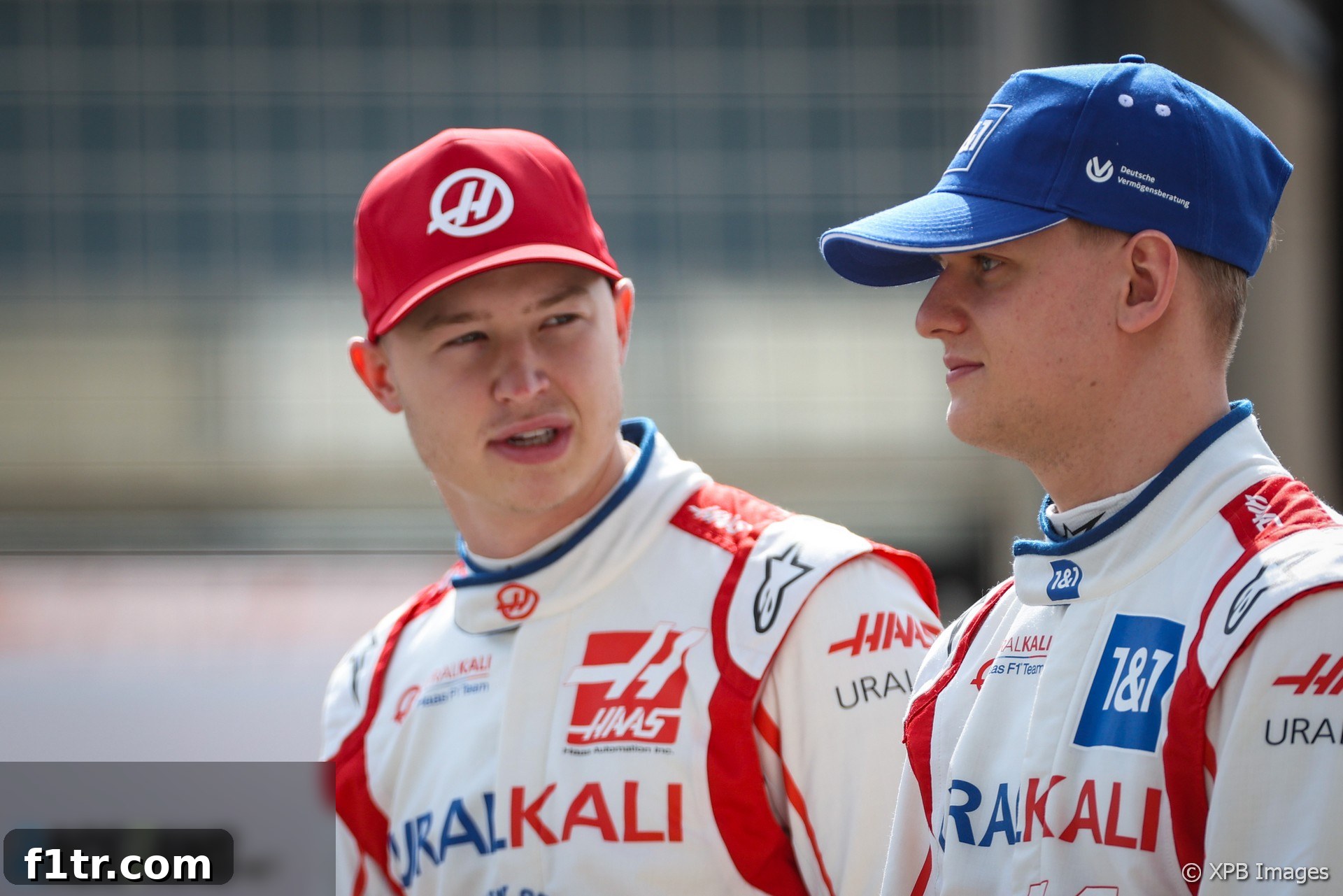
The 2022 Formula 1 season represented a pivotal moment for Haas, particularly concerning the validation of its driver lineup. Team Principal Guenther Steiner openly acknowledged the imperative for the team to demonstrate that the decision to bring in Mick Schumacher and Nikita Mazepin for their rookie year in 2021 was indeed the correct long-term strategy. This sentiment underscored the high stakes involved, not just for the drivers’ budding careers, but for the trajectory and credibility of the Haas F1 team within the fiercely competitive world of motorsport. With significant regulation changes coming into effect for 2022, the pressure mounted on the young duo to translate their initial learning curve into tangible on-track performance, proving their worth and contributing to the team’s resurgence.
Mick Schumacher and Nikita Mazepin embarked on their Formula 1 journeys with Haas in the 2021 season, a year that presented immense challenges for both rookies and the team alike. Placed in an uncompetitive VF-21 car, which saw minimal development as the team shifted its focus entirely to the new 2022 regulations, neither driver managed to score a single championship point. The 2021 season was largely considered a ‘learning year,’ a baptism of fire where the primary objective was for Schumacher and Mazepin to acclimatize to the demanding environment of Formula 1. They navigated the complexities of Grand Prix weekends, understood the intricate workings of an F1 car, and developed crucial relationships with their engineers and team personnel, all without the added pressure of consistently fighting for points.
However, the narrative was set to dramatically change for 2022. Guenther Steiner, with renewed optimism, articulated clear expectations for the upcoming season. He firmly believed that with the new VF-22 car – early renderings of which had already generated considerable excitement – his drivers would be in a position to contend for points finishes. “The expectation is to be able to fight for points, to fight with the other drivers which are in Formula 1,” Steiner stated, signaling a significant shift from the team’s 2021 aspirations. This ambition was not merely about occasional top-ten finishes; it was about establishing Haas as a more consistent midfield contender, a crucial step for the team’s long-term sustainability and reputation in the sport.
Steiner emphasized the natural progression expected from his young talents. Having completed their challenging rookie season, during which the team had deliberately kept expectations low, the drivers had been afforded an invaluable opportunity to learn, adapt, and establish themselves within the Formula 1 paddock. “They had one year of their rookie year, we always were very open about the expectations last year were not high. But it gave them the opportunity to learn, to establish them in Formula 1,” he reflected. The 2022 season, therefore, was earmarked as the critical juncture where this foundational experience needed to manifest in improved results. “Now it’s the year we have to prove that we are on the right track with the drivers,” Steiner affirmed, underscoring the necessity for both Schumacher and Mazepin to deliver on their potential and justify the team’s faith in their abilities.
A closer look at their debut season revealed a clear disparity in performance between the two rookies. Mick Schumacher consistently demonstrated a notable advantage over his teammate, Nikita Mazepin. Throughout their first season together, Schumacher was emphatically the quicker of the pair in qualifying, frequently outperforming Mazepin by significant margins. This superior qualifying pace often translated into better starting positions, which are vital in F1, especially for a team at the back of the grid. Furthermore, he almost invariably finished ahead of his team mate too, showcasing better race management, consistency, and overall race craft. While both drivers were limited by the car’s performance, Schumacher’s ability to extract more from the package, provide valuable feedback, and avoid major incidents highlighted his potential, drawing positive attention from within the paddock, including from Ferrari, the team that supported his career development.
Despite the observable performance gap in their rookie season, Guenther Steiner firmly reiterated Haas’s policy of driver equality for the 2022 campaign. This philosophy dictates that both drivers are treated as equals within the team, with no hierarchical structure imposing a predefined “number one” or “number two” status. “Both drivers are equal in our team,” Steiner confirmed. “They’ve got equal status contracts, so there will be no leader.” This approach is fundamental to fostering a competitive yet fair environment, encouraging both drivers to push themselves to their limits without the added burden of internal politics or favoritism. Such a policy is particularly vital for a developing team like Haas, as it ensures that maximum performance is extracted from both cars, rather than prioritizing one driver over the other.
Steiner further elaborated on how the team would manage driver dynamics on a race-by-race basis. The absence of a permanent team leader does not imply a lack of structure; rather, the leadership role is earned through performance on the track. “The leader will each race come out [from] who does a better job in practice and qualifying,” he explained. This meritocratic approach means that the driver who demonstrates superior pace and execution during the practice sessions and crucial qualifying laps will inherently gain an advantage. “Then when you do that, then in the race obviously you start in front, then you are automatically in a better position.” This system incentivizes consistent effort and raw speed, providing a clear pathway for either driver to assert their dominance on any given weekend, thereby maximizing the team’s chances of securing better grid positions and, consequently, better race results.
This commitment to a level playing field underscores Haas’s belief in its drivers’ abilities and its strategy to extract the best from both. “But the starting point every weekend is the same. There will be no ‘number one’ and ‘number two’ driver,” Steiner concluded, reinforcing the message that both Mick Schumacher and Nikita Mazepin would begin each Grand Prix weekend with identical opportunities and responsibilities. This ensures a healthy internal rivalry, where both drivers are motivated to outperform each other, ultimately benefiting the team’s overall performance. For a team aiming to climb the constructors’ standings and consistently score points, having two highly motivated drivers pushing each other is invaluable. The 2022 season, with its new technical regulations designed to create a more level playing field, presented an ideal scenario for this internal competition to truly flourish, making the validation of Haas’s driver selection a central theme of their campaign.
The significance of the 2022 season extended beyond individual driver performance; it was a testament to Haas’s long-term strategic planning. By sacrificing development on the 2021 car, the team had invested heavily in the new regulatory era, hoping to emerge with a more competitive package. The VF-22, designed under these groundbreaking new rules focusing on ground effect aerodynamics, was envisioned as the car that could finally allow Haas to escape the back of the grid. For Schumacher and Mazepin, this meant transitioning from a learning year to a performance year, where their skills would truly be put to the test against established drivers and fellow young talents in rival teams. Their ability to adapt to the new machinery, provide crucial feedback to engineers, and consistently extract the car’s maximum potential would be instrumental in determining Haas’s success and, by extension, their own futures in Formula 1. The challenge was immense, but so was the opportunity to prove that Haas had indeed made the “right decision” in selecting its young, ambitious driver pairing.
2022 F1 Season Insights
- Mercedes told me “you’re wrong” about 2022 car’s problems – Hamilton
- FIA confirms all 10 F1 teams complied with 2022 cost cap
- Steiner “not ashamed” of panning “slow” Schumacher in Drive to Survive
- Albon believes year out of F1 improved him as a driver
- Hamilton sees diversity gains in F1 years on from his ‘traumatising’ experience of racism
Browse all 2022 F1 season articles