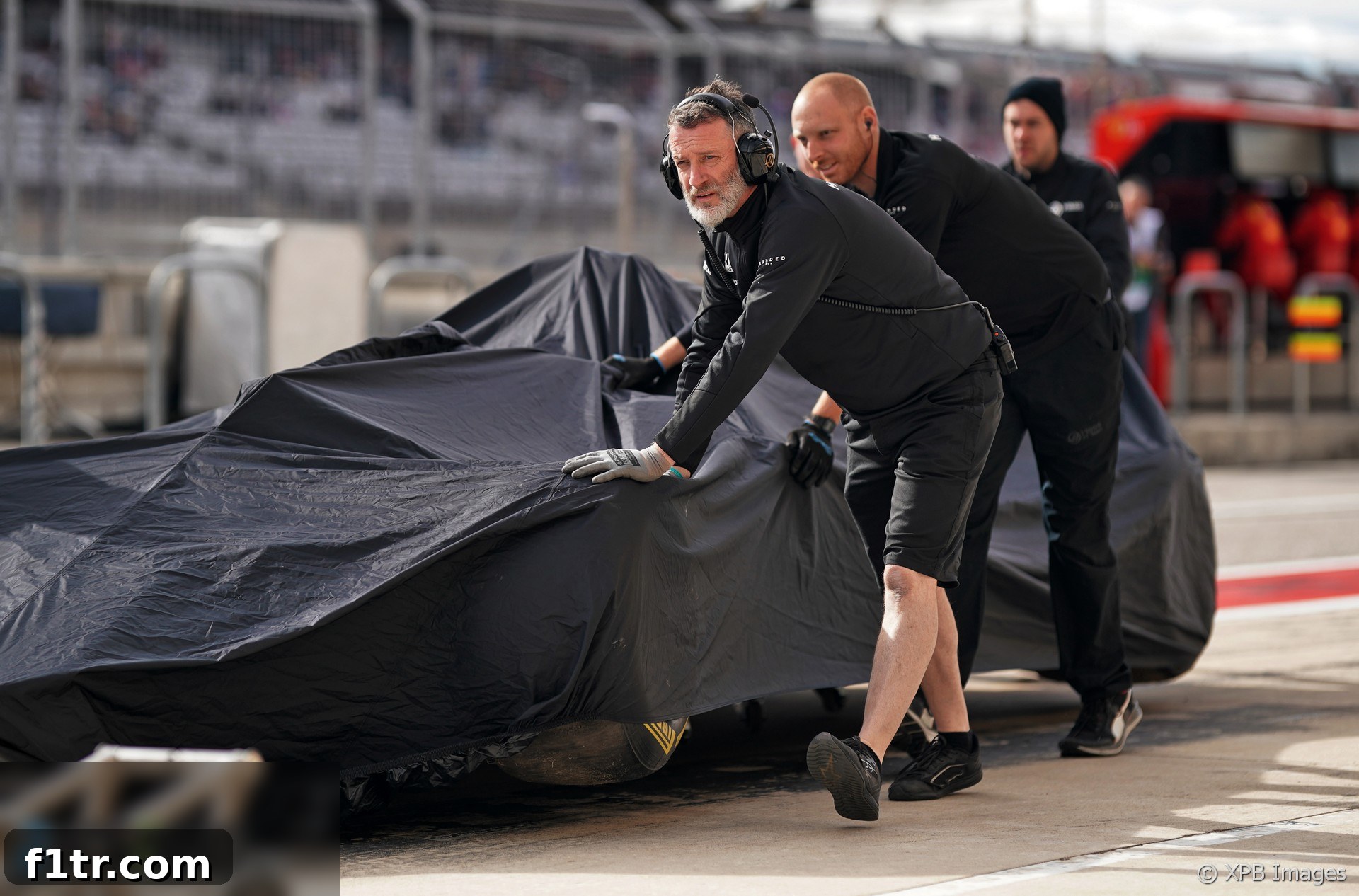
The exhilarating world of Formula 1 often delivers unexpected twists, even during what might seem like routine practice sessions. One such moment unfolded at the Circuit of the Americas (COTA), where Romain Grosjean, piloting his Haas F1 machine, experienced a significant setback during the second free practice session (FP2). His crash, an abrupt end to a critical session, left both the driver and his team in a state of bewilderment. Grosjean openly admitted that the precise cause of the incident remained elusive, prompting an immediate and thorough investigation by the Haas F1 team to unravel the mystery and understand what exactly went awry.
FP2 sessions are crucial for teams to gather vital data, conduct long runs, and fine-tune car setups for the demanding qualifying and race conditions. Losing precious track time due to an unexpected incident can significantly hamper a team’s preparation. For Grosjean and Haas, this crash was more than just a momentary lapse; it was a disruption that threatened to derail their weekend strategy, forcing them to rely heavily on teammate Kevin Magnussen’s data and a rapid reassessment of their technical approach. The incident highlighted the razor-thin margins and the inherent unpredictability that defines the pinnacle of motorsport, where even the smallest variables can lead to dramatic consequences.
One of the primary suspects in any unexplained F1 incident is often the car’s setup. Grosjean confirmed that the Haas team had implemented significant changes to the car’s configuration between the first and second practice sessions. Reflecting on the aftermath, he mused, “We changed the set-up from [first practice to second practice] and in hindsight maybe the set-up was less good in there.” This candid admission underscores the challenging tightrope walk F1 engineers and drivers navigate when searching for optimal performance. Setup adjustments, which can include modifications to aerodynamic elements, suspension stiffness, ride height, and differential settings, are designed to unlock more speed and better handling characteristics. However, an incorrect or poorly optimized setup can have the opposite effect, making the car unpredictable and difficult to control, especially at the limit. The team’s immediate focus turned to analyzing telemetry data, scrutinizing every sensor reading to identify any anomaly that might have contributed to the sudden loss of control. The intricate dance of variables, from tire pressures to brake bias, creates a complex puzzle, and solving it swiftly is paramount for competitive success.
The Circuit of the Americas is renowned for its unique characteristics, not least of which are its undulating topography and notoriously bumpy surface. These bumps have been a consistent talking point among drivers since the track’s inception, often leading to complaints about discomfort and the car’s stability. Several drivers had voiced their concerns about the COTA bumps on Friday, noting their impact on the car’s behavior. However, Grosjean was quick to dismiss the bumps as the primary cause of his specific incident. He clarified, “The previous lap was absolutely fine and that lap was pretty much the same thing,” suggesting that the track’s unevenness was a constant, rather than a sudden trigger for his crash. While acknowledging their presence, Grosjean even offered a nuanced perspective, stating, “The bumps are there, I think it’s actually quite cool. Maybe turn one is a bit too bumpy in the braking zone and it’s slightly painful on the back. The rest of the lap, I think it gave some character to the circuits and it’s all right.” This view highlights how drivers adapt to track conditions, often appreciating features that add a unique challenge to a circuit, even if they pose physical demands. Nevertheless, the continuous impact of these bumps on an F1 car’s delicate aerodynamic balance and mechanical components remains a significant engineering challenge throughout the race weekend, requiring robust design and careful setup choices to maintain performance and driver comfort.
The incident itself occurred relatively early in the second practice session, specifically between turns five and six, a challenging section of the track that demands precision and confidence. Grosjean’s car spun dramatically before making contact with the barrier, bringing the session to a temporary halt. An important detail emerged regarding the car’s specifications at the time of the crash. Grosjean confirmed that he was running the Haas team’s older specification front wing, a crucial aerodynamic component that dictates a significant portion of a car’s downforce and balance. In contrast, his teammate, Kevin Magnussen, was concurrently testing the new, updated front wing design. This split strategy is common in F1, allowing teams to gather comparative data on new components without risking both cars on untested parts. The front wing is not merely a piece of carbon fiber; it’s a finely sculpted instrument that directs airflow over and around the car, fundamentally influencing its stability and grip. Any change, no matter how subtle, can have a profound effect on the car’s handling characteristics. While Grosjean didn’t attribute the crash directly to the older wing, the different aerodynamic configurations between the two cars undoubtedly presented varying handling traits, adding another layer to the team’s diagnostic process. Understanding how each specification performs under different track conditions, and at the limit, is essential for future development and performance gains.
Fortunately, initial assessments of the damage to Grosjean’s car indicated that it was not as severe as it could have been. The driver himself reported, “I don’t think there was much damage. Basically the front wing and the front track rod.” This relatively limited damage, primarily confined to the car’s front end, was a small mercy given the speed and nature of the impact. The front wing, a component designed to be sacrificial in many minor incidents, bore the brunt of the contact. The track rod, a critical part of the car’s suspension and steering assembly, also sustained damage, indicating a need for careful repair or replacement. In the fast-paced world of Formula 1, the immediate aftermath of a crash triggers a rapid response from the dedicated mechanics. Grosjean acknowledged their tireless efforts, stating, “The boys are doing the best they can.” Their expertise and efficiency are paramount in these situations, working against the clock to repair or rebuild the car for subsequent sessions. Even with minor damage, the time lost in FP2 for repairs meant valuable data collection was halted, impacting the team’s ability to fine-tune the car and assess tire performance over long runs. The pressure on the garage crew is immense, as every minute counts in preparing a competitive package for qualifying and the race.
Losing an entire session to an accident is undoubtedly frustrating for any racing driver, and Grosjean was no exception. “It’s a bit frustrating that we lost second practice,” he admitted, lamenting the lost opportunity for further setup exploration and data gathering. The ideal scenario for any driver is to bring the car back to the pits under its own power, minimizing damage and recovery time. Grosjean wistfully remarked, “I wish the car had come back more on the left-hand side in order to avoid the barriers,” highlighting the tiny margins and split-second decisions that separate a minor moment from a session-ending crash. Despite the setback, the Haas F1 team, like all F1 outfits, is adept at adapting their plans. The strategy moving forward became clear: “But we’ll take what Kevin has done in the afternoon and revert back to the set-up from the morning where the car felt really good.” This cooperative approach is a cornerstone of team racing; one driver’s data can prove invaluable for the other, especially when one’s session is compromised. Reverting to the FP1 setup indicates that the initial configuration showed promise and provided a reliable baseline, offering a sensible starting point for FP3 and qualifying. This pragmatic decision aims to ensure that both cars are competitive, utilizing all available information to maximize their chances for the remainder of the F1 weekend, underscoring the resilience and analytical prowess required to succeed at the highest level of motorsport.
The broader context of an F1 practice session, particularly FP2, cannot be overstated. These sessions are not merely warm-up laps; they are intensive testing and development periods. Teams use FP2 to simulate race conditions, conduct long runs on various tire compounds, evaluate fuel loads, and fine-tune aerodynamic balance and suspension settings. Every lap provides a wealth of telemetry data, from tire temperatures and brake wear to engine performance and driver input. Losing this critical data means operating with a partial picture, potentially compromising race strategy and setup choices. For a team like Haas, often battling in the competitive midfield, every fraction of a second and every piece of information is vital for gaining an edge. A crash, even a minor one, represents a significant setback, not just in terms of repair costs and mechanic workload, but more importantly, in lost development time and data. The pressure on Grosjean and the entire Haas team to bounce back from this incident would be immense, requiring rapid analysis, effective communication, and flawless execution in the subsequent sessions to regain momentum and salvage their race weekend aspirations at the Circuit of the Americas. The ability to recover from such setbacks is a true testament to the strength and adaptability of a Formula 1 team.
In conclusion, Romain Grosjean’s FP2 crash at the Circuit of the Americas served as a stark reminder of the fine line between pushing limits and overstepping them in Formula 1. While the immediate cause remained subject to detailed team analysis, the incident highlighted the critical interplay of setup changes, unique track characteristics like COTA’s bumps, and the relentless pursuit of performance through component development. The relatively minor damage to the car, alongside the invaluable data gathered by teammate Kevin Magnussen, provided a lifeline for Haas to recover. Their decision to revert to a proven FP1 setup and meticulously scrutinize all available data demonstrates the methodical and resilient approach required in F1. As the weekend progressed, the focus for Grosjean and the Haas F1 Team would undoubtedly shift to applying the lessons learned, aiming to translate their investigative efforts into a stronger performance in qualifying and the race, reaffirming the constant challenges and dynamic nature of top-tier motorsport.
2019 F1 season
- Crying in the Melbourne car park at 2019 grand prix was my career low – Ocon
- McLaren Racing reports reduced £71 million loss in 2019
- Kvyat: Hockenheim podium last year was “my biggest achievement” so far
- How the FIA’s new encrypted fuel flow meter targets Ferrari’s suspected ‘aliasing’ trick
- “He smashed my office door”: 23 must-see moments from ‘Drive to Survive’ season two
Browse all 2019 F1 season articles