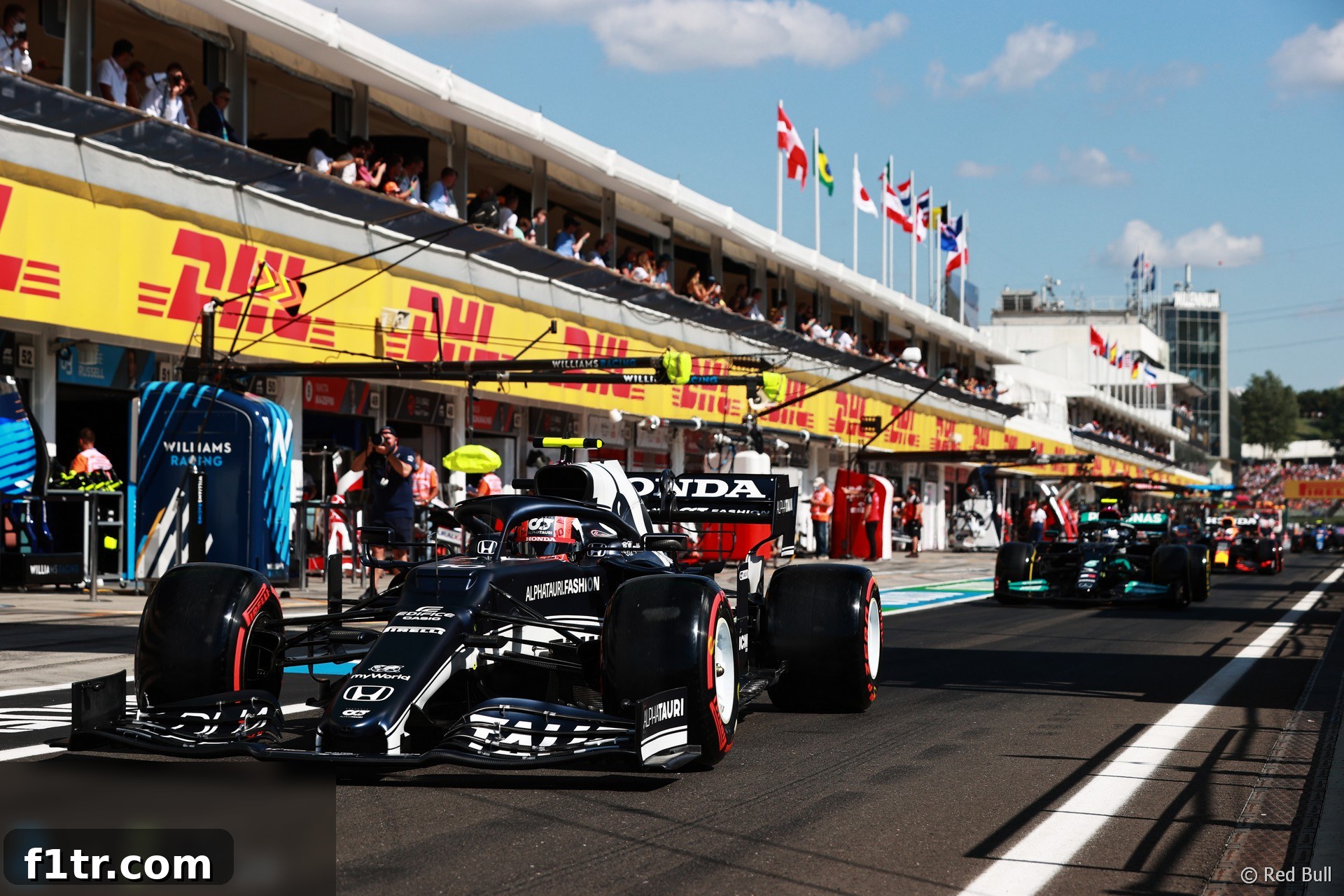
Welcome to our latest Formula 1 round-up, where we delve into the strategic aftermath of the Hungarian Grand Prix, the dynamic world of driver transfers, and other compelling stories from across motorsport. From Pierre Gasly’s candid reflections on crucial race decisions to the ever-present buzz surrounding the 2022 grid, there’s no shortage of talking points shaping the F1 landscape.
Strategic Misstep? Pierre Gasly Reflects on Hungary Tyre Choice and the Need for Track Spotters
AlphaTauri driver Pierre Gasly has voiced a significant concern regarding the team’s — and indeed, the entire grid’s — collective decision-making process during the pivotal restart at the Hungarian Grand Prix. Gasly believes that a crucial opportunity was missed, asserting that teams should have had dedicated personnel advising drivers on the rapidly changing track conditions, which he felt were “very obvious” even before the race resumed.
The Hungary Tyre Conundrum: Intermediate or Slick?
The second start of the Hungarian Grand Prix saw an almost comical procession as nearly every car, except for Lewis Hamilton, immediately dived into the pits to switch from intermediate tyres to dry slicks. Gasly contends that this collective miscalculation could have been avoided with better real-time intelligence. “It was very, very obvious because the track is very dark, so as soon as the sun comes out, it dries very fast,” Gasly explained. He highlighted how quickly the Hungaroring circuit transitioned from damp to dry, making the intermediates an instantly suboptimal choice.
This critical observation raises questions about the communication channels and data analysis available to drivers and strategists in the heat of the moment. Gasly went on to suggest that a more audacious approach might have yielded significant dividends. “Actually, it’s maybe something where we should have risked to go outside with the medium [slick]. When everybody boxed, we should have taken the start with the medium,” he mused. This sentiment underscores a broader point about the fine line between risk and reward in Formula 1 strategy, especially when weather conditions are unpredictable and decisions must be made in fractions of a second. The collective misjudgment by the majority of the grid emphasizes the high-stakes nature of tyre calls in Formula 1.
The Untapped Potential of Track Spotters in F1
A key aspect of Gasly’s critique revolves around the absence of “spotters” – personnel strategically positioned around the circuit to provide real-time updates on track conditions, incidents, and other vital information. Such roles are common in other forms of motorsport, particularly in North American series like IndyCar and NASCAR, where they often act as an additional set of eyes for the team, relaying crucial data that telemetry might miss or confirm. “It’s something we need to do better,” Gasly affirmed. “If we had a spotter around the track, someone would have told us the track is completely dry. It was completely dry, so I’m surprised no one did it, but it was a very obvious choice.”
The implications of this oversight were profound. While Lewis Hamilton famously stayed out on intermediate tyres before pitting alone a lap later – a strategic gaffe that cost him dearly but was an isolated incident – the rest of the field collectively chose the wrong tyre for the restart. Had real-time information been relayed efficiently, teams might have opted for slick tyres from the outset, potentially altering the entire dynamic of the race’s crucial early stages. This incident highlights a potential area for improvement in Formula 1’s operational protocols, suggesting that even with advanced telemetry and sophisticated weather radars, the human element of on-track observation remains invaluable for critical decision-making. The absence of such a simple yet effective communication channel left teams reacting rather than proactively strategizing, ultimately impacting the race’s outcome for many drivers.
Advert | Become a RaceFans supporter andgo ad-free
ADVERTISEMENT
Social Media Pulse: Connecting with the Fans
Social media continues to be an integral part of Formula 1, offering fans unprecedented access to drivers, teams, and behind-the-scenes content. From celebratory posts to poignant reflections, platforms like Instagram and Twitter provide a direct conduit between the sport and its global audience, fostering a deeper sense of community. Here’s a glimpse into the recent social buzz:
For more engaging content, check out this recent post:
https://www.instagram.com/p/CSZEuL3tvWa/
Drivers and teams frequently use these channels to share updates, engage with fan questions, and provide a personal touch, allowing fans to feel closer to the action and the personalities involved. This dynamic interaction has become a cornerstone of modern F1’s engagement strategy, building a loyal and active fanbase.
- Find more official F1 accounts to follow in the F1 Twitter Directory
Motorsport Insights: A Roundup of Key Headlines
Beyond the immediate aftermath of the Grand Prix, the motorsport world is constantly buzzing with news, rumors, and developments across various championships. Here’s a curated selection of interesting links and their broader implications, offering a snapshot of current events and future predictions shaping the racing landscape:
F1 Driver Market Rumblings: Vettel, Russell, and Bottas in Focus
Aston Martin-Teamchef: Vettel soll bleiben (AutoBild – German)
The Formula 1 driver market for the 2022 season is heating up, with much speculation surrounding several key figures. Ralf Schumacher recently weighed in, predicting that George Russell is poised to join Lewis Hamilton at Mercedes, a move that would send significant ripples through the grid. Should this materialize, it leaves Valtteri Bottas in a precarious position, with potential landing spots including Alfa Romeo, Williams, or even Aston Martin. The suggestion that Aston Martin’s team principal wants Sebastian Vettel to remain adds another layer of complexity to this intricate puzzle, as teams look to finalize their lineups for the new regulatory era. The domino effect of a major move like Russell to Mercedes could reshape multiple teams’ futures, initiating a chain reaction of driver transfers. These discussions are a dominant theme in the paddock, influencing team strategies and driver careers significantly as the sport prepares for substantial technical regulation changes in 2022.
IndyCar Thriller: Hinchcliffe’s Fortunate Podium Finish
Hinchcliffe finally catches good break for podium finish (IndyCar)
In the high-octane world of IndyCar, luck often plays as significant a role as skill, particularly in chaotic races. James Hinchcliffe’s recent podium finish is a testament to this, benefiting from a well-timed red flag that salvaged his race after being caught up in a multi-car incident. Hinchcliffe expressed relief, noting, “What saved us is going red. As much as we hate that happening, I thought they were going to drive the field through pit lane until we cleared the traffic jam, and we were going to be three, four laps down and kind of out of it.” This incident highlights the challenges of racing in close quarters, especially on oval tracks, and the crucial decisions race control must make to ensure safety and fair competition. Credit was given to IndyCar for managing the situation effectively, preventing further eliminations and allowing those who avoided damage to continue their fight for a strong finish, showcasing the unpredictable nature of American open-wheel racing.
Bottas’s Hopes for a Turnaround Amidst 2022 Preparations
Bottas hopes to out-pace this season’s bad luck (Hypebeast)
Valtteri Bottas has had a challenging season, often plagued by misfortune despite flashes of strong performance. In a recent interview, he expressed optimism for an upturn in luck, particularly with new parts introduced at Silverstone and the promise of more developments to come. However, the looming 2022 regulation changes cast a long shadow, as teams must delicately balance current season performance against the imperative to develop their cars for the massive overhaul. Bottas acknowledged this strategic dilemma, stating, “At some point that will have to stop, because obviously next year there’s a big regulation change and the team needs to balance out the car’s performance this year versus next year.” This strategic balancing act is critical for top teams like Mercedes, as resources shift focus towards the future while still contending for current championships, adding immense pressure on drivers to perform consistently while their teams look ahead.
The “Drive to Survive” Effect: F1’s Surging Popularity in the US
What’s driving F1’s US boom? (Racer)
Formula 1 has witnessed an undeniable surge in popularity in the United States, a market historically dominated by NASCAR and IndyCar. Many credit Netflix’s acclaimed docuseries “Drive to Survive” as a significant catalyst for this growth. The series has captivated a new, more casual fanbase, introducing the drama, personalities, and intricate politics of F1 to a wider audience. As one analyst noted, “There’s no way to quantify it, but I think we all would agree that (Netflix) certainly has helped. It’s brought in a more casual fan that probably was not even a Formula 1 fan.” This cultural phenomenon has translated into increased viewership, merchandise sales, and even the addition of a new Grand Prix in Miami, solidifying F1’s growing footprint across the Atlantic and demonstrating the power of modern media in expanding a sport’s global reach.
Sportsmanship at Zandvoort: Lammers Urges Respect for Hamilton
Lammers rekent op doorgaan GP Zandvoort en vraagt respect voor Hamilton (NU – Dutch)
As the Dutch Grand Prix prepares for its highly anticipated return to Zandvoort, organizer and former F1 driver Jan Lammers has issued a plea for sportsmanship. Following incidents of booing directed at Lewis Hamilton at the Hungaroring, Lammers urged fans attending the home race of Max Verstappen to demonstrate respect and hospitality. The passionate F1 fanbase, particularly in countries with a strong national hero, can sometimes overstep the line, blurring the distinction between rivalry and unsportsmanlike conduct. Lammers’s call serves as a timely reminder that while fierce competition and rivalries are an integral part of the sport, mutual respect among competitors and fans is paramount for maintaining a positive, inclusive, and enjoyable atmosphere for everyone involved in Formula 1.
Junior Series Updates: Daruvala’s F2 Season and F3’s Young Talent
My mid-season report card: Jehan Daruvala (Formula 2)
In the fiercely competitive FIA Formula 2 Championship, every detail matters, especially consistent performance. Jehan Daruvala reflected on his mid-season performance, pinpointing qualifying as his primary weakness. “I think my weakest point this year has been making a little mistake here and there in qualifying and not putting my lap quite together. I’m not qualifying as high up as I’d want to do and I think that is affecting the performance and the result of the races,” he shared. Strong qualifying positions are crucial in F2, dictating grid placement for multiple races and setting the tone for the entire weekend, highlighting the pressure young drivers face to maximize every opportunity on their path to F1.
Oakes expected young trio to experience ‘growing pains’ and says we’ll now ‘see what they’re made of’ (Formula 3)
Meanwhile, in the FIA Formula 3 Championship, team principals are nurturing the next generation of talent, keenly observing their development. Oakes, a team boss, acknowledged the “growing pains” his young trio of Jak Crawford, Ayumu Iwasa, and Roman Stanek are experiencing. Despite challenges, he noted, “All three of them have shown pace in the last few rounds.” He highlighted Crawford’s bad luck, Iwasa’s consistent presence, and Stanek’s significant improvement, emphasizing that the development of young drivers is a journey filled with highs, lows, and crucial learning experiences as they prove their mettle and aspire to climb the motorsport ladder.
F1 2021 Game Dominates UK Charts
Official Olympics video game jumps to number three (Games Industry)
The enduring popularity of Formula 1 extends beyond the track into the virtual world, with the official video game consistently performing strongly. Codemasters’ F1 2021 video game continues its impressive run, holding the number one spot in the UK boxed charts for a third consecutive week. This consistent performance underscores the broad appeal of realistic racing simulations and the strong brand loyalty F1 enjoys among gaming enthusiasts. Even with other major titles releasing, the official F1 game remains a top choice for fans looking to experience the thrill, strategy, and high-speed action of the sport from their consoles, further cementing F1’s presence in the entertainment industry.
We always endeavour to credit original sources. If you have a tip for a link relating to single-seater motorsport to feature in the next RaceFans round-up, please send it in via the contact form.
Advert | Become a RaceFans supporter andgo ad-free
ADVERTISEMENT
Fan Dialogue: The Debate Around Crash Damage Compensation
One of the most persistent and passionately debated topics among Formula 1 fans and within the paddock itself is the concept of compensation for crash damage, especially when one party is clearly deemed at fault. Our ‘Comment of the Day’ from Rowmk9 perfectly encapsulates the complexity of this issue, highlighting the various angles and potential pitfalls:
“Its a tricky subject because if you start getting guilty parties to pay for damages, we’ll see lots of excruciating court cases between teams trying to contest or overturn decisions of blame, as millions will be at stake. I don’t want to see F1 turn into the World Insurance Championship please.”
Rowmk9’s concern highlights a significant risk: introducing direct financial penalties for crash-related blame could transform F1 into a bureaucratic nightmare. It could lead to endless disputes over incident responsibility and associated costs, with teams potentially spending more time in legal battles than on track. This would undoubtedly detract from the on-track action and shift the sport’s focus to legal and financial arguments, ultimately compromising the sporting integrity and entertainment value of the championship.
“At the other end of it, the cost of damages when you’re not at fault does seem like an unfair burden, so some provision should be made to allow a team to repair/replace damaged parts without going over budget or gaining an advantage (replacing a broken old spec wing for a non-cost capped newer spec, for example).”
However, as Rowmk9 also points out, the current system places an unfair burden on innocent teams, especially under the new budget cap regulations. Teams already operate with stringent financial limits, and unexpected, substantial repair costs can severely impact their development budget for the season, potentially hindering their competitiveness. This dual perspective underscores the need for a balanced and carefully considered solution. While a full “World Insurance Championship” scenario is undesirable, a mechanism to alleviate the financial strain on non-faulting teams—perhaps a separate fund or a special allowance for specific crash-related repairs that do not contribute to performance upgrades—could be a fair compromise, ensuring that innocent parties are not unduly penalized within the cost-capped environment and maintaining the focus on racing.
Celebrating Milestones: Happy Birthday to Our Readers
A very happy birthday goes out to Glue and Leah Kernahan! We hope you both have a fantastic day filled with celebration and joy.
If you’d like a birthday shout-out in a future round-up, be sure to tell us when yours is via the contact form or by adding your date to our list here. We love celebrating with our dedicated readers!
On This Day in Motorsport History
- Thirty years ago today, the legendary Ayrton Senna delivered a masterful performance at the Hungarian Grand Prix, triumphing over the formidable Williams drivers. Senna’s victory at the twisty Hungaroring further cemented his reputation as one of the sport’s all-time greats, showcasing his unparalleled skill, strategic prowess, and ability to extract maximum performance from his car even under immense pressure. It remains a memorable race in the annals of Formula 1 history.